

Many Bulldog owners find themselves wondering why house training seems to take longer with their dog compared to other breeds. The answer lies in understanding what makes these dogs unique. Their strong-willed personality, combined with physical characteristics that affect their comfort and development, means traditional potty training approaches often need adjustment.
Research shows that Bulldogs typically require 6-12 months to achieve reliable house training, compared to 3-6 months for many other breeds. This isn't due to lack of intelligence, but rather their independent nature and the fact that they develop bladder and bowel control more gradually, especially in those crucial first 4-6 months.
Understanding your dog's unique challenges
When it comes to house training, Bulldogs present several breed-specific considerations that affect your approach. Their brachycephalic anatomy makes them sensitive to temperature extremes and prone to overheating, which means those frequent outdoor potty breaks need careful timing.
These dogs are also notably people-oriented and thrive on routine and attention. They don't respond well to isolation or harsh corrections, making positive reinforcement absolutely essential. Their stubborn streak means they'll simply shut down if training becomes unpleasant, rather than comply out of fear like some breeds might.
You might notice your dog shows more subtle signs when they need to eliminate compared to other breeds. Watch for sniffing, circling, or quiet whining rather than obvious signals like scratching at the door.
Building the foundation with crate training
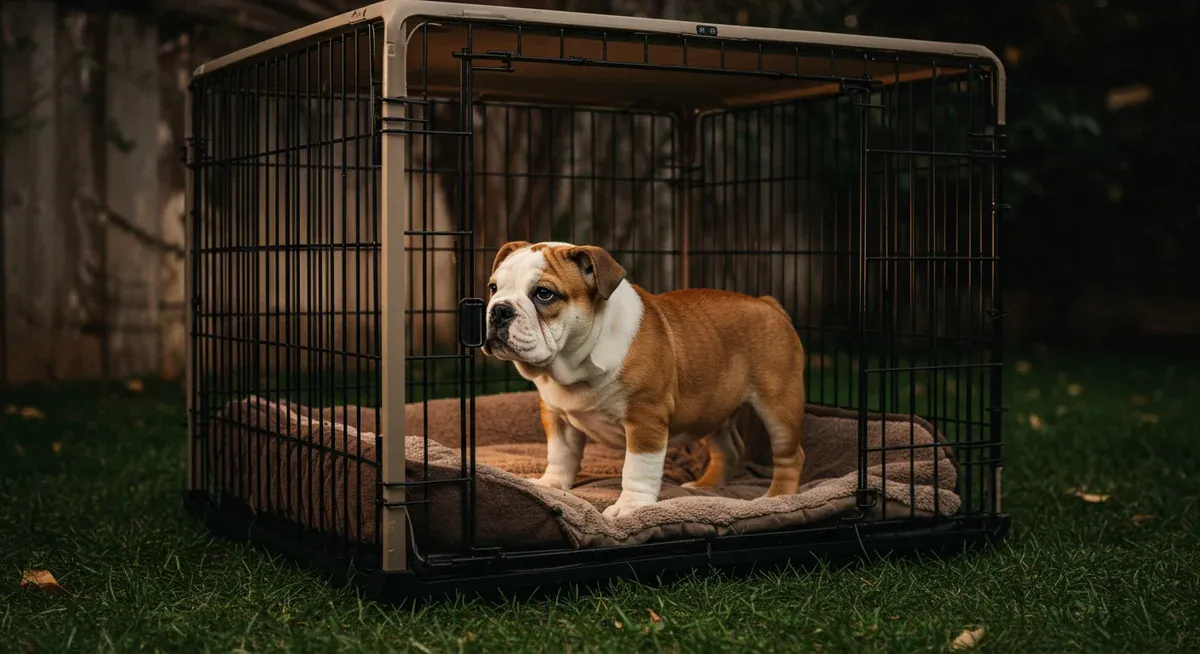
Crate training forms the cornerstone of successful house training for these dogs. As one expert notes, "Crating Bulldog puppies when you're asleep keeps them out of trouble, keeps them from chewing things you don't want them to, and prevents accidents."
Your dog should never be left in a crate for more than 2-3 hours at a time, especially when young. The crate needs adequate ventilation, and wire crates should be avoided if your dog tends to overheat. Size the crate so they can stand, turn around, and lie down comfortably, but not so large that they can eliminate in one corner and sleep in another.
The Midwest iCrate or Petmate Ultra Vari Kennel are recommended options, typically costing $50-150 depending on size. Focus on good ventilation and easy cleaning when making your selection.
Establishing the right routine
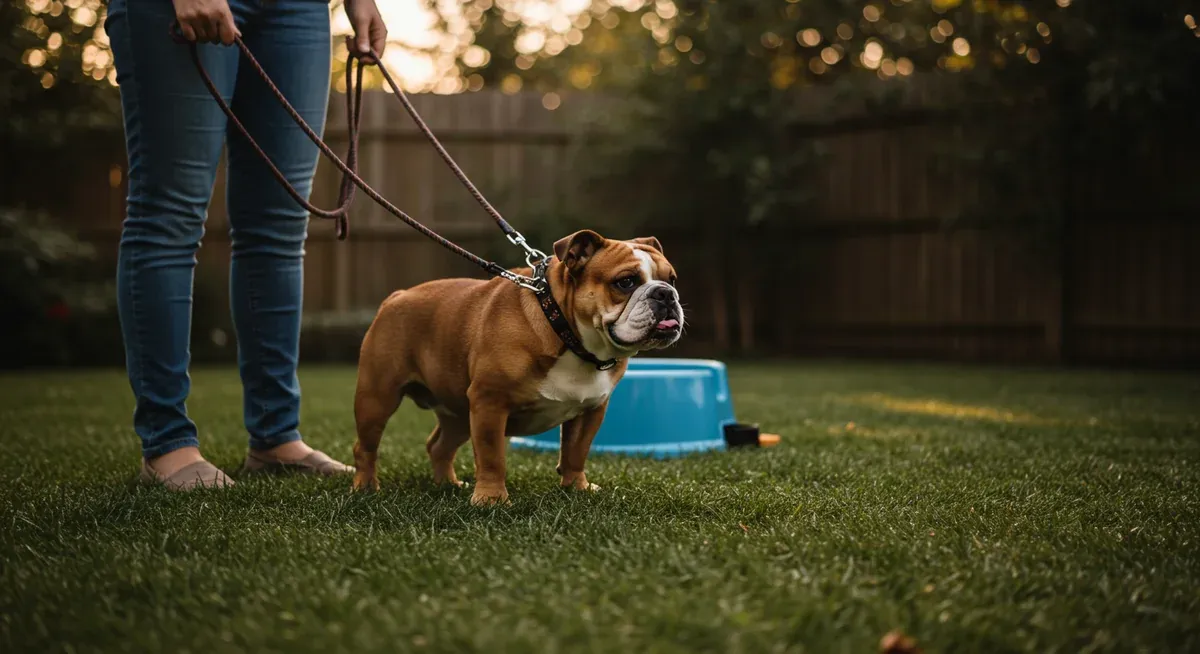
These dogs thrive on predictability, making routine absolutely crucial. Take your puppy outside every hour during the day, with additional trips after eating, drinking, waking up, or playing. Use the same outdoor spot each time to help them associate that location with elimination.
Remove food and water 3-4 hours before bedtime to reduce nighttime accidents. Schedule the final potty break just before bed and make it the first activity in the morning. During hot weather, time these breaks for early morning and evening when temperatures are cooler.
Even in a fenced yard, use a leash during potty breaks to keep your dog focused on eliminating rather than playing or exploring. Walk directly to the designated spot and use a consistent cue like "go potty."
Using positive reinforcement effectively
Reward your dog immediately after they eliminate in the correct spot using high-value treats, praise, or a favourite toy. Small, soft treats like Zuke's Mini Naturals or Blue Buffalo Blue Bits work well, costing around $5-15 and providing the quick reward these dogs need.
Never scold for indoor accidents, as this increases anxiety and makes training more difficult. These dogs are particularly sensitive to stress, and harsh corrections often backfire completely. Instead, simply clean the accident thoroughly and return to your consistent routine.
When accidents happen indoors, clean them with an enzymatic cleaner like Nature's Miracle or Rocco & Roxie ($10-20) to completely remove odours. Avoid ammonia-based cleaners, as they can mimic the smell of urine and attract your dog back to the same spot.
Troubleshooting common problems
Frequent indoor accidents usually stem from inconsistent routines, lack of supervision, or medical issues like urinary tract infections. If accidents persist despite consistent training, consult your vet to rule out health problems.
Some dogs show reluctance to go outside, particularly in extreme weather. These dogs are sensitive to both cold and heat, so consider using a jacket or sweater in cold weather and choosing a quiet, sheltered potty spot. During summer months, limit outdoor time and provide plenty of water.
Marking or inappropriate elimination often indicates stress or routine disruption. Maintain consistent schedules and reduce environmental stressors where possible. If the behaviour continues despite these adjustments, veterinary consultation is warranted.
Timeline and expectations
At 8-12 weeks, begin house training while expecting frequent accidents as normal. Most dogs show improved bladder and bowel control between 3-6 months, though accidents may still occur regularly. By 6-12 months, most should be reliably house trained, though some individuals take longer.
You'll typically see initial progress within the first week of consistent training, but lasting change usually takes three to four weeks. Don't be discouraged if progress seems slow, this is normal for the breed.
When to seek professional help
Consider professional assistance if your dog is over 6 months old and still having frequent accidents, shows signs of pain or straining during elimination, or displays excessive anxiety during training. Sometimes the reasons are medical, sometimes behavioural, and a professional can help determine the difference.
Veterinary consultation is particularly important if you notice blood in urine or stool, or if your dog seems to be in discomfort when eliminating. These signs could indicate underlying health issues that affect house training success.


