
You take your dog to the vet for what you think will be a routine check-up, and they hand you a quote for $1,200 to clean their teeth. It hits like a sucker punch. You're not alone. Across Australia, professional dog dental cleaning is one of the most expensive, most commonly deferred vet procedures. This guide breaks down exactly what you're paying for, what affects the final bill, and how smart home care can save you thousands over your dog's lifetime.
Australian Dog Dental Cleaning Costs at a Glance (2026)
The short answer: professional dog dental cleaning in Australia typically costs between $600 and $2,500, depending on the severity of the dental disease, your dog's size, and where you live.
Here's a breakdown of typical pricing tiers you'll see at Australian vet clinics in 2026:
Dental Grade Condition Estimated Cost (AUD) What's Included Grade 1: Early Light tartar, mild gingivitis $550 – $850 Pre-anaesthetic check, general anaesthesia, scale and polish, basic monitoring Grade 2–3: Moderate Heavy tartar, gum recession, possible pocketing $950 – $1,600 Pre-anaesthetic bloods, dental X-rays, scale and polish, 1–2 minor extractions Grade 4: Advanced Severe periodontal disease, abscesses, bone loss $1,800 – $2,500+ Full-mouth dental X-rays, multiple complex extractions, IV fluids, pain management, antibioticsRegional note: Expect to pay 15–20% more at clinics in Sydney, Melbourne, and other major metro areas compared to regional towns. This reflects higher overheads, not better care.
Why Does Dog Dental Cleaning Cost So Much?
A professional vet dental is not the same as getting your own teeth cleaned. It's closer to human oral surgery. Here's where the money actually goes:
1. General Anaesthesia
Anaesthesia is the single biggest cost driver. Dogs cannot be told to "open wide and stay still" while an ultrasonic scaler vibrates against their sensitive gums. They need to be fully under, which means:
- A vet to administer and manage the anaesthetic drugs
- A dedicated vet nurse monitoring heart rate, blood pressure, and oxygen saturation throughout
- Specialised equipment for temperature regulation and airway management
The anaesthesia component alone typically costs $200–$500, and that's before a single tooth is touched.
2. Dental X-Rays
Up to 60% of a dog's tooth structure sits below the gumline. You cannot see bone loss, abscesses, or rotting roots by looking at the surface. Quality vet clinics now treat dental X-rays as standard practice, because cleaning a tooth with a diseased root is pointless: it will cause pain and infection within months.
Full-mouth X-rays add $150–$250 to the bill, but they're genuinely worth it. Without them, your vet is working blind.
3. Professional Scaling and Polishing
Vets use ultrasonic scalers to remove tartar from both the visible surface and below the gumline (the subgingival zone). This is where the bacteria causing heart and kidney disease actually lives. After scaling, the teeth are polished to create a smoother surface that resists new plaque build-up.
4. Pre-Anaesthetic Blood Tests
For any dog over five years old, most vets strongly recommend pre-anaesthetic blood work ($150–$300) to check kidney and liver function before sedation. This is not upselling; it's responsible medicine. Anaesthesia is metabolised by these organs, and knowing they're healthy reduces risk significantly.
5. Post-Procedure Care
After extractions, your dog typically goes home with pain relief and sometimes a short course of antibiotics. These add $50–$150 to the final bill, but you want your dog comfortable during recovery.
What Else Affects the Final Bill?
Two dogs of the same breed can receive quotes that differ by $400 or more. Several factors drive that gap:
- Dog size: Larger dogs require more anaesthetic drugs and take longer to scale. Expect to pay more for a Labrador than a Cavalier.
- Number of extractions: Simple extractions run $100–$200 per tooth; complex surgical extractions (sectioning the root) can reach $400 per tooth.
- Geographic location: Metro clinics in Sydney, Melbourne, and Brisbane consistently charge more than regional vets. A "dental" that costs $750 in Wagga Wagga might be $1,100 in Bondi.
- Clinic type: Specialist dental referral centres charge more than general practice vets, but they also have dedicated dental suites and higher-resolution X-ray equipment.
- Your dog's health: Dogs with complicating factors (heart murmurs, obesity, brachycephalic anatomy) require additional monitoring and anaesthetic management, which increases cost.
The Anaesthesia-Free Dental Trap
You've probably seen grooming salons or mobile services offering "anaesthesia-free dental cleaning" for $150–$250. This sounds like a bargain. It isn't.
Anaesthesia-free scaling is cosmetic only. The operator can only remove tartar they can see on the visible tooth surface. They cannot clean below the gumline, which is exactly where periodontal disease starts and progresses. Worse, scraping the tooth surface without polishing leaves microscopic scratches that allow plaque to adhere faster than before the procedure.
The Australian Veterinary Association (AVA) does not endorse anaesthesia-free dental procedures for this reason. If you pay $200 for one of these services, you haven't saved $800; you've spent $200 to delay the inevitable while letting the disease advance.
Does Pet Insurance Cover Dog Dental Cleaning?
This one frustrates a lot of Australian pet owners. Standard pet insurance policies typically do not cover routine dental cleaning, because it's classified as a preventative procedure rather than illness treatment.
However, there are options worth exploring:
- Routine care add-ons: Some insurers (including Medibank and Vets Choice) offer optional dental extras that reimburse a portion of cleaning and scaling costs.
- Dental illness cover: If your dog's dental disease progresses to a diagnosable condition (such as a dental abscess or advanced periodontal disease), some policies will contribute to treatment costs.
- Accident cover: Broken teeth from trauma are generally covered as accidents under most comprehensive policies.
Before assuming your policy covers dental work, read the Product Disclosure Statement carefully. "Dental cover" often means something quite specific. If you're shopping for new insurance, ask directly: "Does this policy cover routine scale and polish?" The answer will tell you a lot.
How to Reduce Long-Term Dental Costs
The most effective strategy for managing dental bills isn't finding a cheaper vet. It's reducing how often your dog needs professional intervention in the first place. Here's what the evidence supports:
Daily Toothbrushing
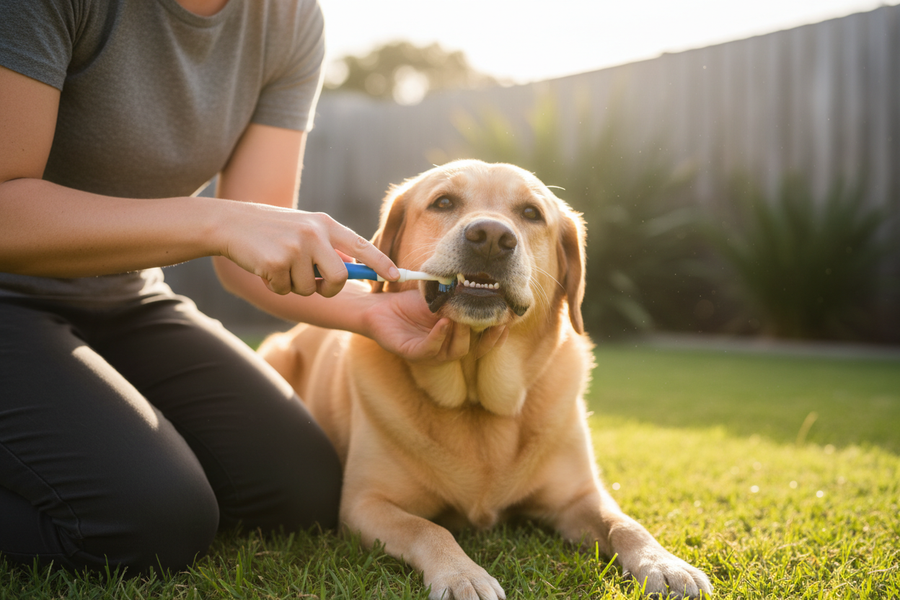
Nothing beats brushing. Even a 30-second scrub of the outer surfaces of the back teeth three to four times a week can dramatically slow plaque accumulation. Use a toothpaste formulated for dogs (never human toothpaste, which contains xylitol). Your vet can demonstrate technique at your next check-up.
Starting this habit when your dog is a puppy makes it far easier. If you have a young dog, now is the time to build the routine. For tips on supporting your puppy's overall health during those early months, see our guide to probiotics for puppies in Australia.
Dental Chews
Dental chews approved by the Veterinary Oral Health Council (VOHC) have evidence behind them for reducing plaque and tartar. Look for the VOHC seal on the packaging. Not all chews marketed as "dental" actually do anything measurable: the VOHC seal is your filter.
Water Additives
Tasteless, odourless water additives use enzymes to break down the biofilm that calcifies into tartar. They won't replace brushing, but they're a practical "lazy win" for owners whose dogs refuse a toothbrush.
Diet Considerations
Dry kibble does not clean teeth the way some packaging implies. Most dogs crush kibble without any meaningful scrubbing action. That said, some specific prescription dental diets (designed to require more chewing force) do have VOHC approval for plaque reduction. Ask your vet if one is appropriate for your dog.
The Gut-Oral Connection
Research increasingly points to the connection between gut microbiome health and oral microbiome balance. A dog with poor gut health may show higher systemic inflammation, which can worsen gum disease progression. Supporting gut health through a quality probiotic is not a replacement for dental care, but it may support your dog's overall inflammatory response. Our complete guide to probiotics for dogs in Australia covers what to look for and how to choose the right formula.
This connection becomes especially relevant for older dogs, whose immune and digestive systems are less robust. If your dog is approaching their senior years, this is worth a conversation with your vet. See our guide to probiotics for senior dogs in Australia for more on supporting ageing dogs through nutrition.
Regular Check-Ups (The $80 Investment That Saves $1,000)
Annual or bi-annual dental check-ups (not cleanings, just checks) cost very little at most clinics. Your vet grades the dental disease from 1 to 4. A dog caught at Grade 1 requires minimal intervention; left until Grade 3 or 4, you're looking at a very different conversation and a very different bill.
After a Dental Procedure: Supporting Your Dog's Recovery
If your dog has just had a professional dental, especially one involving extractions, they will likely be sent home with a course of antibiotics. Antibiotics are effective at preventing post-surgical infection, but they also disrupt your dog's gut bacteria.
Supporting the gut microbiome during and after antibiotic treatment can help reduce digestive upset and restore healthy bacterial balance. Our guide to probiotics for dogs after antibiotics explains when to introduce probiotics and what to look for in a formula.
When Does Your Dog Actually Need a Professional Clean?
Not every dog needs an annual dental under anaesthesia. Signs that your vet should take a closer look include:
- Persistent bad breath (not just "dog breath," but noticeably foul odour)
- Visible brown or yellow tartar build-up, especially near the gumline on the back teeth
- Red, swollen, or bleeding gums
- Pawing at the mouth or face
- Reluctance to eat hard food, or dropping food while eating
- Excessive drooling or saliva
- A tooth that looks discoloured or fractured
If you're noticing changes in your dog's behaviour around food or signs of discomfort, it's worth a vet check sooner rather than later. Dental pain is consistently underestimated in dogs, partly because they're instinctively good at hiding it. For a broader look at signs that something might be off with your dog's health, see our guide to signs your dog needs a probiotic, which covers a range of gut and systemic health signals worth knowing.
The 10-Year Cost Comparison
Here's a practical way to think about the numbers over a decade with a medium-sized dog:
Approach Annual Spend Estimated 10-Year Total No home care, reactive treatment Professional dental every 18 months + periodic extractions $8,000 – $12,000+ Consistent home care, one professional clean $0.80/day on dental chews and toothpaste, one professional clean $3,500 – $5,000The gap widens as dogs age. A 10-year-old dog with a lifetime of poor oral care doesn't just need a cleaning; they often need complex extractions, pain management, and treatment for the systemic effects of chronic dental disease. Prevention genuinely is the cheaper option, not just the healthier one.
Frequently Asked Questions
How often should dogs have their teeth professionally cleaned in Australia?
There's no single answer that applies to every dog. Breed, diet, genetics, and home care habits all play a role. Some dogs with good home care routines may only need a professional dental every two to three years; others need one annually. Your vet will grade the dental disease at each check-up and recommend timing based on what they actually see, not a blanket schedule.
What is the cheapest way to clean my dog's teeth?
Toothbrushing at home is the most effective and lowest-cost intervention available. A dog toothbrush and enzymatic toothpaste costs around $15–$25 and can significantly reduce how often professional cleaning is needed. VOHC-approved dental chews are the next best option if brushing isn't feasible. Avoid anaesthesia-free services; they don't address the disease below the gumline and provide false reassurance.
Is dog dental cleaning under anaesthesia safe?
Modern veterinary anaesthesia is very safe for healthy dogs. Risk increases in older dogs or those with pre-existing conditions, which is why pre-anaesthetic blood tests are recommended. Speak to your vet about your dog's specific risk profile. In most cases, the risk of unmanaged dental disease (which can damage the heart, kidneys, and liver over time) significantly outweighs the anaesthetic risk.
Do small dogs need more frequent dental cleaning than large dogs?
Yes, generally. Small breeds (Cavoodles, Maltese, Chihuahuas, French Bulldogs) tend to have more crowded teeth, which increases plaque and tartar accumulation. They're also more prone to early-onset periodontal disease. If you have a small breed, discuss a proactive dental check schedule with your vet from puppyhood.
Does my dog need antibiotics after a dental cleaning?
Not always. Antibiotics are typically prescribed when there are active infections, abscesses, or significant tissue trauma from multiple extractions. A routine scale and polish on a Grade 1–2 mouth often doesn't require antibiotics. Your vet will make this call based on what they find during the procedure.
Can I claim dog dental cleaning on pet insurance in Australia?
Routine dental cleaning is excluded from most standard pet insurance policies. Some insurers offer optional routine care or dental add-ons that provide partial reimbursement. Dental disease that progresses to a diagnosable condition may be covered under illness benefits on comprehensive policies. Read the PDS carefully and confirm with your insurer before the procedure.
At what age should I start caring for my dog's teeth?
As early as possible. Puppies should start getting used to having their mouth handled and gums touched from eight weeks of age. Introduce a toothbrush around 12–16 weeks. The sooner this becomes a normal part of your dog's routine, the easier it stays for life. Your first vet visit is a good time to ask for a demonstration of correct technique.
Ready to build your dog's home dental routine? After any procedure involving antibiotics, support your dog's gut recovery with a quality probiotic. Hero's Probiotic Daily Chews deliver 10 billion CFU of Saccharomyces boulardii per chew, the only probiotic species that survives concurrent antibiotic treatment. Explore Hero Probiotic Daily Chews.
The Bottom Line
Dog dental cleaning in Australia costs $600–$2,500 depending on the severity of disease, your dog's size, and your location. It's expensive because it requires general anaesthesia, skilled monitoring, dental X-rays, and professional equipment. Cutting corners by choosing anaesthesia-free services saves money in the short term but accelerates disease long term.
The real opportunity is prevention. A consistent home care routine, regular vet check-ups, and early intervention when Grade 1 disease is spotted can genuinely keep a dog's mouth healthy for life, at a fraction of the cost of repeated professional dentals and complex extractions. Talk to your vet about a dental care plan at your next visit. Your dog will thank you in the only way they know how.