
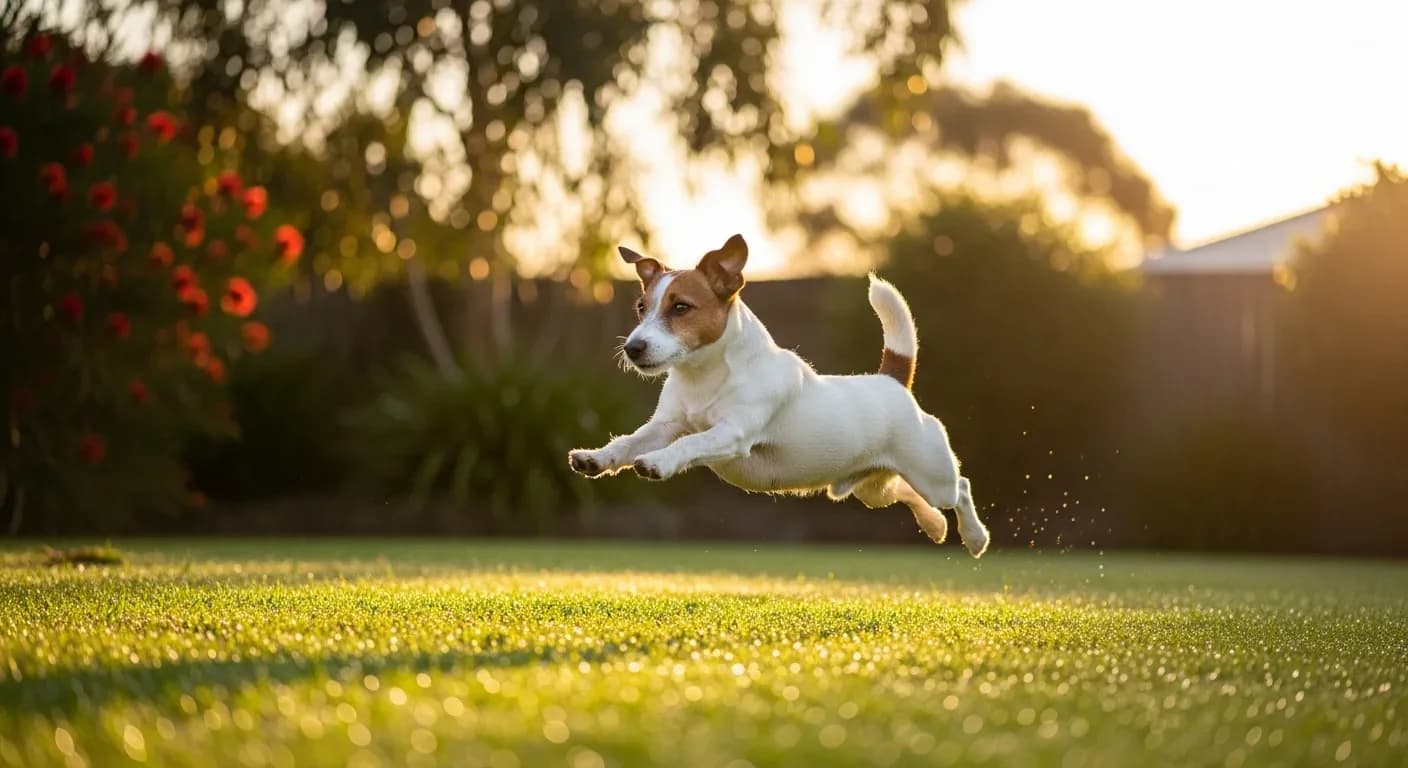
Jack Russell Terriers are fearless, fast, and absolutely convinced they are twice their size. They can flush a rabbit from a burrow, learn a trick in an afternoon, and keep pace with a cyclist on a bush track. What catches many owners off guard is when all that energy and drive turns inward: into frantic barking, destructive behaviour, or a dog that seems genuinely distressed the moment the household routine shifts.
Anxiety in Jack Russell Terriers is more common than most owners expect. The breed's temperament, its genetics, and the environments where most JRTs now live create the right conditions for low-level stress to quietly build over time. The good news is that with consistent daily support, most Jack Russells can settle significantly. This guide covers what drives anxiety in the breed, what the research says about calming supplements, and how to build a daily routine that actually makes a difference.
Why Jack Russell Terriers Are Prone to Anxiety
Jack Russells were developed to hunt. Their working role required fearlessness, an intense prey drive, high energy, and the kind of persistent alertness that made them exceptional in the field. In a modern suburban home, those same traits can tip into hypervigilance, reactivity, and anxiety when there is nothing specific to chase, guard, or solve.
The breed's intelligence amplifies this. Clever dogs process their environment more actively than less sensitive breeds, which means a JRT notices routine changes, reads owner body language, and picks up on household tension in ways that a more laid-back dog simply does not. Understanding how this anxiety fits into the breed's broader health picture is covered in our guide to common Jack Russell Terrier health problems every owner should know.
There is also the stimulation mismatch. Most JRTs live in suburban homes and get one or two walks a day. That is rarely enough for a dog designed to work for hours at a stretch. The gap between what the breed needs and what it gets physically and mentally is a significant driver of the restlessness and anxiety many owners deal with daily.

Recognising Anxiety in Your Jack Russell
JRT anxiety often hides in plain sight because so many of the signs look like normal terrier behaviour. Barking at the fence, pacing before a walk, shadowing you from room to room: these can feel like personality quirks rather than stress signals. Often they are both. The question is whether these behaviours are intensifying or affecting your dog's quality of life.
Watch for patterns that escalate over time or appear in situations where your dog used to be calm:
- Barking that continues well past the initial trigger and becomes difficult to interrupt
- Destructive chewing or digging primarily when left alone
- Pacing, circling, or an inability to settle even in a quiet, safe environment
- Trembling, hiding, or refusing to eat during storms or fireworks
- Excessive licking of paws or flanks, a common self-soothing pattern in anxious dogs
- Yawning, lip licking, or whale eye in non-threatening situations
- Escape attempts from the yard, particularly when left alone
According to VCA Animal Hospitals, anxiety is one of the most frequently addressed behavioural concerns in veterinary practice, with terrier breeds and other high-drive dogs showing particular sensitivity to environmental changes and unpredictable routines.
If several of these signs appear consistently, a daily calming supplement is worth considering alongside any training or environmental changes you make.
Calming Supplement Ingredients: What the Research Supports
Not all calming products work the same way. The most effective daily supplements combine ingredients that act on the nervous system from multiple angles, rather than relying on a single compound. Here is what the research supports for dogs:
L-Tryptophan
L-tryptophan is an essential amino acid that the body uses to produce serotonin, the neurotransmitter most closely tied to mood regulation and feelings of calm. Dogs cannot manufacture tryptophan themselves, so dietary intake is the only way to maintain adequate levels. The MSD Veterinary Manual highlights tryptophan among the nutritional approaches recommended for dogs with heightened stress sensitivity and reactive behaviour patterns.
Magnesium
Magnesium plays a direct role in nervous system regulation. Research in mammals consistently links magnesium deficiency to elevated cortisol output and increased stress reactivity. In dogs, supplementing magnesium helps buffer the physiological stress response, particularly in breeds that are chronically reactive. A Jack Russell running at high alert much of the day is a good candidate for magnesium support.
Ashwagandha
Ashwagandha is an adaptogenic herb that helps the body regulate its own stress response, rather than suppressing it externally. The result is calmer baseline behaviour without sedation. Research published in Frontiers in Veterinary Science has examined adaptogenic compounds in canine stress management with encouraging results, supporting their inclusion in daily calming formulas for anxious breeds.
Chamomile
Chamomile has mild anxiolytic properties and has been used in herbal medicine across both human and veterinary contexts. In dogs, it supports the central nervous system gently and also helps settle the digestive system. Many anxious dogs present with gut symptoms including loose stools or reduced appetite under stress, so the dual action of chamomile is genuinely useful. The connection between gut health and behaviour is explored in our guide to probiotics for Jack Russell Terriers.
Vitamin B1 (Thiamine)
Thiamine is essential for healthy neurological function. Deficiency in B vitamins is directly associated with heightened anxiety responses and impaired stress tolerance in dogs, particularly those on highly processed diets where B vitamin bioavailability can be limited. Maintaining adequate thiamine levels supports normal nerve signalling and helps the nervous system respond proportionally to stimuli.
Jerusalem Artichoke
Jerusalem artichoke is a prebiotic fibre source that feeds beneficial gut bacteria. The gut-brain axis is a real communication pathway: a well-balanced microbiome produces calming neurotransmitters and helps regulate cortisol. Supporting gut health is one of the more underrated tools for managing anxious dogs, and it works alongside calming supplements rather than competing with them.
Daily Supplements vs As-Needed Products
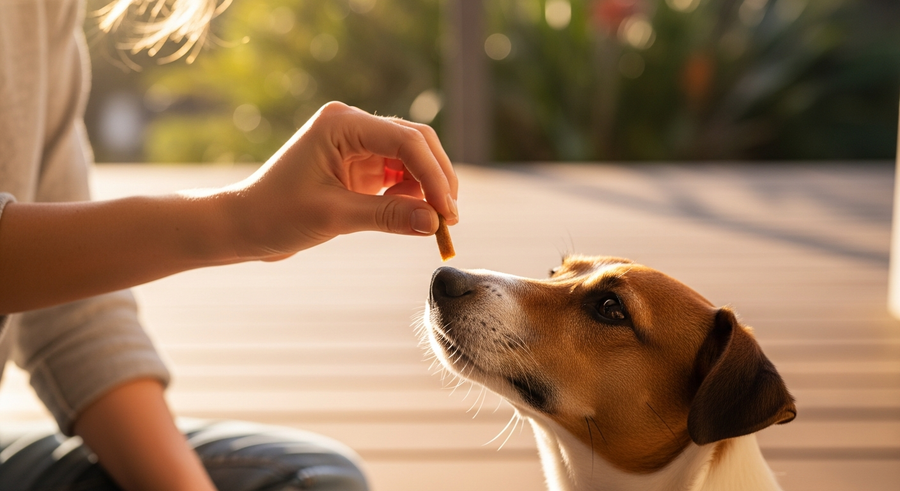
Two types of calming product exist for dogs. Daily supplements gradually lower baseline stress over weeks of consistent use. As-needed products such as ThunderShirts, pheromone sprays, or fast-acting veterinary medications address acute, situational anxiety. They work differently and can complement each other well.
Daily calming supplements typically take 4 to 6 weeks to show their full benefit. Ingredients like tryptophan and ashwagandha need consistent intake to meaningfully shift neurotransmitter levels and stress hormone patterns. Owners often give supplements for one week, see no dramatic change, and stop. The mechanism simply does not work on that timeline. Consistency is everything.
The goal of daily supplementation is to lower your JRT's ambient stress level so that when a trigger occurs, your dog is starting from a calmer baseline. Their reaction becomes proportionally smaller because they have more headroom before tipping into a stress response. You are raising the threshold, not numbing the dog.
Hero's Calming Daily Chews contain all six of these ingredients (Magnesium, L-Tryptophan, Vitamin B1, Jerusalem Artichoke, Ashwagandha, and Chamomile) in a soft chew that most dogs take as willingly as a treat. The formula is Australian-made, vet-reviewed, and designed for consistent daily use. See whether Hero's Calming Chews suit your dog, backed by a lifetime money-back guarantee.
Not sure what your Jack Russell needs most? The Hero Health Assessment takes 2 minutes and gives you a personalised supplement plan based on your dog's age, weight, and specific anxiety patterns.
Start the Free AssessmentSupporting Calm Behaviour Beyond Supplements
Daily supplements work best as one part of a broader approach. A few things that genuinely move the needle for anxious JRTs:
Physical exercise that meets the needs of the breed
Most Jack Russells need significantly more exercise than a single 20-minute walk provides. Off-lead runs, fetch sessions, or structured play that allows sprinting goes a long way toward reducing the restless energy that feeds anxiety. A physically tired JRT settles faster and responds less intensely to environmental triggers.
Mental stimulation as a daily priority
This breed was designed to problem-solve. Puzzle feeders, scent work, and short training sessions burn the mental energy that would otherwise fuel anxious behaviour. Sniff walks, where you let your JRT lead by nose at their own pace rather than walking at your pace, are highly effective and deceptively tiring. A mentally engaged JRT is a calmer JRT.
Predictable daily routines
Anxious dogs thrive on consistency. Regular meal times, walk schedules, and sleep routines reduce the uncertainty that drives vigilance. For a dog wired to scan constantly for what comes next, predictability is itself calming. Even small schedule disruptions can spike a JRT's baseline arousal for hours.
Physical comfort as JRTs age
An often-missed driver of anxiety in older dogs is physical discomfort. A dog dealing with joint stiffness will be harder to settle regardless of what calming support you offer. As your JRT reaches middle age, watching for any changes in how freely they run or jump is worth doing proactively alongside daily supplementation.
When to Talk to Your Vet
Daily calming supplements suit JRTs with mild to moderate generalised anxiety, situational stress from storms or travel, and separation distress that does not cross into self-injury or inability to function. They are not a replacement for veterinary support when anxiety is more serious.
Speak with your vet if your JRT is injuring themselves through anxious behaviour, if anxiety has appeared suddenly in a previously calm dog, if they are refusing food or losing weight from stress, or if the anxiety prevents normal daily function. Your vet may recommend prescription medication alongside supplements and training work, and that is entirely appropriate. Supplements and veterinary care are not mutually exclusive.
For context on how the breed changes across its lifetime, our guide to how long Jack Russell Terriers live and what to expect as they age is worth reading alongside this one.
The Bottom Line
Jack Russell Terriers are wired to be alert, active, and always ready. That energy is part of what makes them such remarkable companions. When the switch from alert to anxious happens too often, daily supplementation with the right ingredients can meaningfully shift that baseline over 4 to 6 weeks, particularly when paired with proper exercise, mental stimulation, and a predictable routine.
Every JRT is different in what drives their anxiety and how it shows up. If you want a personalised supplement recommendation based on your dog's specific age, weight, and patterns, the Hero Health Assessment gives you a clear answer in under two minutes.