

The breeding difference that matters to your dog
You might notice your Cobberdog seems more consistent in temperament compared to Labradoodles you've met. There's a good reason for this. Cobberdogs are bred with strict criteria to ensure genetic stability and consistency, specifically aiming to create dogs suitable for therapy and assistance roles. The name itself reflects this friendly nature and purpose as a companion dog.
Labradoodles, while initially created as hybrids for guide dog training, lack a unified breed standard. This leads to significant variability in temperament and appearance between individual dogs. When you're living with a Cobberdog, you're benefiting from generations of careful breeding decisions focused on creating reliable, calm companions.
What this means for shedding and allergies
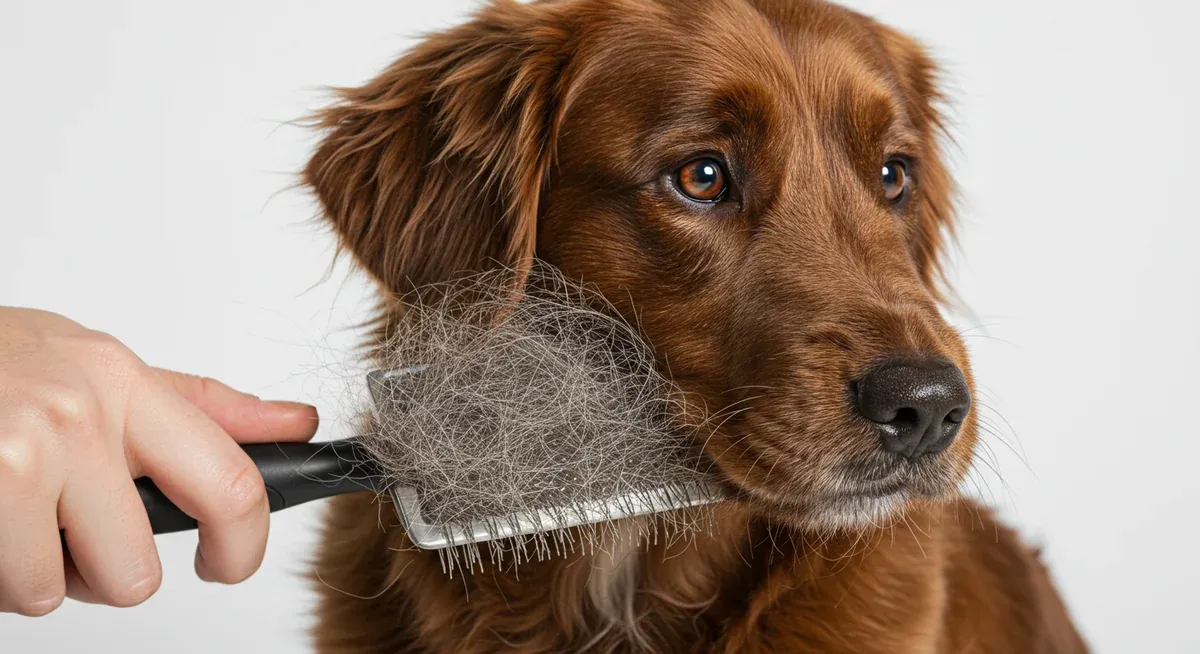
Many Cobberdog owners worry about shedding, especially if they chose the breed for allergy reasons. The good news is that these dogs are known for low to no shedding, making them suitable for allergy sufferers. This trait has been developed over generations of selective breeding.
Labradoodles present a different picture. Early generations often shed similar to Labradors, though later generations can achieve low-shedding coats depending on Poodle influence. Your Cobberdog's more predictable coat characteristics mean you can plan grooming routines with greater confidence.
Temperament patterns you'll likely see
Have you wondered why your dog seems naturally calm in stressful situations? Cobberdogs are generally calm and balanced, making them ideal for therapy and assistance roles. This isn't accidental. Research shows this temperament consistency comes from focused breeding programs.
Labradoodles can vary significantly in temperament due to less strict breeding standards, though many remain friendly and trainable. When you're working with your Cobberdog, you can expect more predictable responses to training and socialisation efforts.
Health considerations specific to your breed
Both breeds can inherit health issues from their parent breeds, including hip dysplasia and eye problems. Regular health screenings remain crucial regardless of which breed you own. However, due to more controlled breeding practices, your Cobberdog may have fewer genetic health issues compared to Labradoodles, though this varies between individual dogs.
Focus on preventive care with regular veterinary check-ups. Monitor for potential issues like hip dysplasia and eye problems, which can affect both parent breeds. Early detection makes treatment more effective and less costly. Source
Training approaches that work best
Your dog benefits from early socialisation and training due to its breeding for therapy work. Consistent, positive reinforcement training typically produces excellent results. Most owners see initial progress within the first week, though lasting behavioural changes usually take three to four weeks of consistent work.
Start with short, five-minute sessions twice daily. These dogs generally respond better to multiple brief sessions than one long training period. The calm, balanced temperament bred into the line means you'll likely find training more straightforward than with more variable breeds.
Grooming needs and practical care
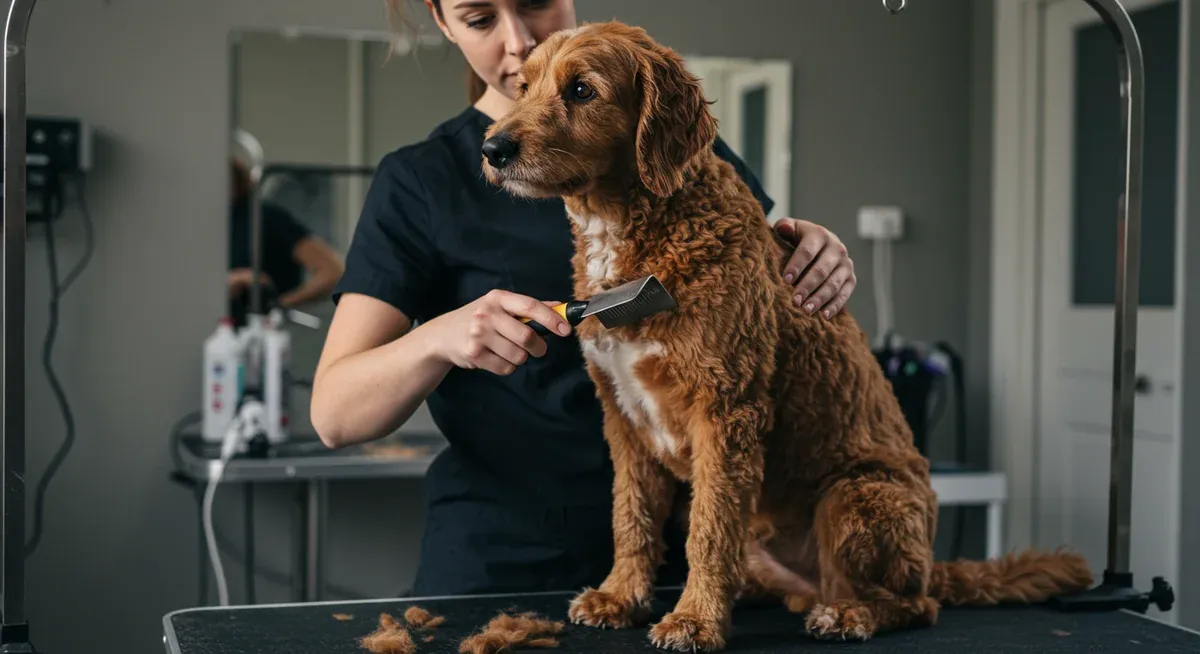
Both breeds require regular grooming to prevent matting and tangling, especially with curly coats inherited from Poodle genetics. Your Cobberdog may need slightly less frequent grooming due to lower shedding, but regular brushing remains necessary.
Use a high-quality brush suitable for curly coats, such as a slicker brush or pin brush, to prevent matting. Even with reduced shedding, occasional loose hair occurs. A deshedding tool can help manage this during seasonal changes.
- Brush every second day to prevent matting
- Professional grooming every 6-8 weeks
- Check ears weekly for moisture and debris
Cost considerations and long-term planning
Understanding the investment in your breed helps with long-term planning. These dogs are generally more expensive than Labradoodles due to strict breeding standards and focus on creating consistent breed characteristics. This higher initial cost often translates to fewer unexpected health issues and more predictable care requirements.
Feed a balanced, nutrient-rich diet that supports your dog's growth and health. Consult with a veterinarian for specific dietary recommendations based on your individual dog's needs. The consistent breeding background means nutritional requirements tend to be more predictable than with highly variable crossbreeds.
Consider joining a breed community or maintaining contact with your breeder for ongoing support. These resources prove invaluable for addressing breed-specific questions and concerns as they arise throughout your dog's life.