

If you share your home with a Cavalier King Charles Spaniel, you know what a privilege it is. These dogs are warm, gentle, and quietly devoted in a way that makes you feel seen every time you walk through the door. They follow you from room to room, curl up next to you without being asked, and seem to sense when you need company.
But Cavaliers are also one of the most health-burdened purebred dogs in the world. That is not said to alarm you. It is said because understanding what this breed is likely to face, and when, gives you a real advantage. Most of the conditions Cavaliers develop are manageable when caught early. The owners who struggle are usually the ones who were not warned in time.
This guide covers the conditions your vet is most likely to discuss with you over a Cavalier's lifetime, what the warning signs look like, and what proactive care can do to keep your dog comfortable for as long as possible.
Mitral Valve Disease: The Most Serious Concern for Cavaliers
Mitral valve disease (MVD) is the defining health challenge of the Cavalier King Charles Spaniel breed. According to research published in the Journal of the American Veterinary Medical Association, nearly half of all Cavaliers develop a detectable heart murmur by the age of five, and almost all are affected by age ten. That prevalence is roughly 20 times higher than in most other dog breeds.
MVD causes the mitral valve, the valve that keeps blood flowing in the right direction through the left side of the heart, to gradually thicken and deform. As the valve deteriorates, blood leaks backwards with each heartbeat. The heart works harder to compensate, eventually enlarging and, in later stages, failing.
The earliest sign is a heart murmur picked up by your vet during a routine check. Not every murmur leads to heart failure, and some dogs live for years after diagnosis with good quality of life. But the murmur is a signal to take seriously. Your vet will likely recommend echocardiograms to monitor progression, and at certain stages, prescription cardiac medication to slow the deterioration.
There is no cure for MVD, but early detection and appropriate medical management genuinely extend life. Regular annual vet checks, starting from puppyhood, are the single most important thing you can do for a Cavalier's cardiac health. If your vet detects a murmur, ask for a referral to a veterinary cardiologist for baseline imaging.
Syringomyelia and Chiari-Like Malformation
This is the condition that surprises most new Cavalier owners because it is so specific to this breed, and because it can cause significant suffering in dogs that look perfectly healthy on the surface.
Chiari-like malformation (CM) refers to a structural problem in the skull: the bone of the skull is too small for the brain it contains. This crowding pushes part of the brain into the spinal canal, disrupting the flow of cerebrospinal fluid. The result can be syringomyelia (SM), where fluid-filled cavities form within the spinal cord itself.
Signs of SM vary from mild to severe. Some dogs never show obvious symptoms despite having the condition on MRI. Others experience significant pain, particularly around the head, neck, and shoulders. The most recognisable sign is phantom scratching: the dog repeatedly scratches at one side of the neck or shoulder, often without making skin contact, typically during exercise or when excited. Other signs include yelping without apparent cause, reluctance to lower the head, and changes in gait.
Diagnosis requires an MRI. Management depends on severity and ranges from medical pain control to surgical intervention in the most affected dogs. Breeding protocols aimed at reducing CM/SM in the breed have been established by veterinary specialists, so asking your breeder about MRI screening history is an important step before choosing a puppy.
Hip Dysplasia
Hip dysplasia is more commonly associated with large and giant breeds, but Cavaliers are affected at a rate that surprises many owners. Research from cavalierhealth.org, which compiles veterinary research on the breed, notes that up to one in four Cavaliers may be affected by some degree of hip dysplasia.
Hip dysplasia occurs when the ball-and-socket joint of the hip develops abnormally, causing a poor fit between the two surfaces. Over time, this abnormal contact causes inflammation, cartilage breakdown, and osteoarthritis. In younger dogs, you may notice occasional lameness or reluctance to use stairs. In older dogs, the accumulated joint damage can significantly affect mobility and quality of life.
Hip dysplasia is genetic, meaning breeding dogs should be X-rayed and scored before producing offspring. Ask your breeder for hip scores on both parents. For dogs already affected, management includes weight control, appropriate low-impact exercise, physiotherapy, and often daily joint support as part of the care routine. Severe cases may require surgical intervention.

Episodic Falling
Episodic falling is a neurological condition found almost exclusively in Cavalier King Charles Spaniels. It is caused by a genetic mutation that disrupts normal muscle tone regulation. During an episode, the dog's muscles stiffen, which causes it to fall or collapse. The dog typically remains conscious throughout and recovers within a few minutes, though episodes can be distressing to witness.
Triggers vary and may include excitement, exercise, stress, or seemingly nothing at all. Some dogs experience very occasional mild episodes. Others may have them frequently enough that management becomes necessary. Affected dogs can often live normal, happy lives, but the condition requires veterinary assessment and, in more severe cases, medication.
Genetic testing can identify whether a Cavalier carries the gene responsible for episodic falling. Responsible breeders test their dogs and avoid breeding from affected individuals. If your dog experiences sudden episodes of stiffening or collapsing, contact your vet promptly, as this symptom needs to be properly diagnosed to distinguish from other serious conditions including seizures and cardiac events.
Ear Infections
Cavaliers' long, floppy ears create a warm, poorly ventilated ear canal that bacteria and yeast find very hospitable. Chronic and recurrent ear infections (otitis externa) are among the most common vet visits for this breed in Australia.
Signs include head shaking, scratching at the ears, odour from the ear canal, redness or swelling of the ear flap, and dark or yellowish discharge. Left untreated, infections can travel deeper into the ear canal, causing significant pain and eventually affecting hearing.
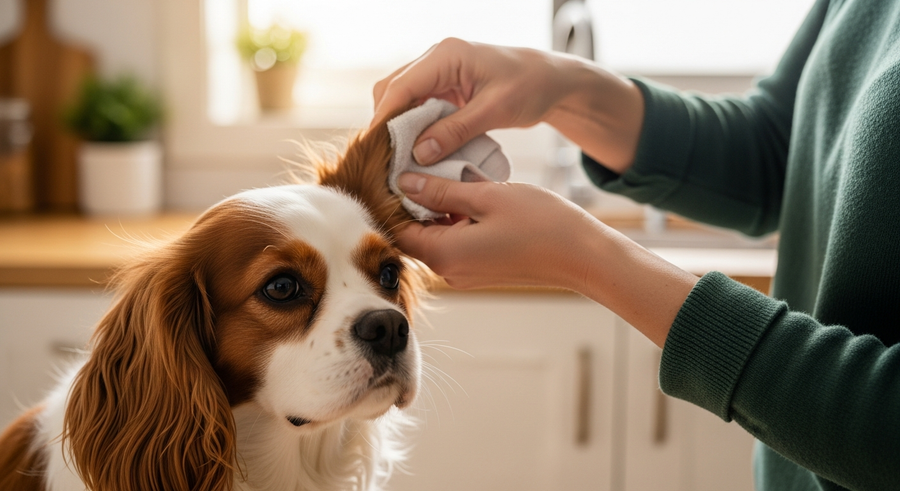
Prevention is straightforward but requires consistency. Check the ears weekly. Clean them monthly, or more frequently if your Cavalier swims or bathes often, using a vet-recommended ear cleaning solution. Gently dry the outer ear after water exposure. Have excess ear canal hair removed by a groomer or vet during regular grooming appointments.
Recurring ear infections may be a sign of underlying allergies. If your Cavalier keeps getting infections despite good ear hygiene, ask your vet to investigate whether a food allergy or environmental allergy is driving the pattern. Addressing the root cause often reduces the frequency of infections significantly.
Eye Conditions
Cavaliers can inherit several eye conditions, with progressive retinal atrophy (PRA) being the most serious. PRA causes the light-sensitive cells of the retina to degenerate over time, eventually leading to blindness. There is no treatment that halts PRA, though affected dogs often adapt well to vision loss, particularly in familiar environments. Ethical breeders test for PRA before breeding.
Keratoconjunctivitis sicca (dry eye) is also seen in Cavaliers. Reduced tear production leaves the eye surface dry, uncomfortable, and more susceptible to damage and infection. Signs include thick, sticky discharge and redness. Daily lubricating eye drops or prescription medication can manage this condition well.
Check your Cavalier's eyes regularly for redness, cloudiness, discharge, or squinting. Any of these signs warrant a vet appointment within 24 hours. Eye conditions tend to progress quickly if left unaddressed, and catching them early matters.
Dental Disease
Dental disease is the most common health condition in Australian dogs overall, and Cavaliers are no exception. Their smaller jaws and relatively crowded teeth create conditions where plaque and tartar build up quickly, leading to gingivitis, periodontal disease, and eventually tooth loss and infection.
Advanced dental disease is not just a mouth problem. Bacteria from infected gums can enter the bloodstream and affect the heart, kidneys, and liver. For a breed already managing cardiac risk, keeping dental disease under control is a genuine health priority, not just an aesthetic one.
Daily brushing with a dog-safe toothpaste is the gold standard. Annual professional dental cleans allow your vet to scale below the gumline, where brushing cannot reach. Starting a dental routine when your Cavalier is a puppy makes the habit much easier to maintain throughout their life.
Gut Health and Digestive Wellbeing
Cavaliers can be sensitive to dietary changes and stress-related digestive disruption. Loose stools, occasional vomiting, and intermittent digestive upsets are common enough complaints among Cavalier owners that gut health deserves deliberate attention rather than an afterthought approach.
The gut microbiome plays a significant role in immune function, inflammatory response, and overall resilience. For dogs with a history of antibiotic use (which many Cavaliers have, given the frequency of ear and dental infections), restoring and maintaining a healthy microbiome becomes even more important. Antibiotics affect bacterial populations throughout the body, and the gut is often where the effects are most visible.
Supporting good digestive health as part of a Cavalier's daily routine is worth discussing with your vet. For those investigating probiotic options for gut recovery after illness or antibiotic use, there are now well-studied approaches including yeast-based probiotics like Saccharomyces boulardii that survive concurrent antibiotic treatment, unlike bacterial probiotics that antibiotics eliminate alongside the target bacteria. Hero's Probiotic Daily Chews use S. boulardii at 10 billion CFU per chew, providing gut support that stays effective even during medical treatment.
For broader guidance on what makes an effective probiotic for dogs, the best dog probiotics Australia guide covers the key differences between bacterial and yeast-based strains.
Joint Health as Cavaliers Age
Between hip dysplasia, the secondary effects of MVD on activity levels, and normal age-related joint changes, Cavaliers frequently develop mobility issues as they move through middle age and into their senior years. A dog that was bouncing up the back steps at five may need some coaxing by nine or ten.
Maintaining a healthy body weight is the most powerful joint-protective measure available without a prescription. Every extra kilogram puts measurable additional load on joints that may already be structurally compromised. Low-impact exercise such as swimming and controlled walking on soft surfaces keeps muscles strong without stressing cartilage.
For Cavaliers already showing early signs of joint stiffness or reduced mobility, daily joint support is worth exploring with your vet. The best dog joint supplements in Australia vary considerably in formulation and quality. Look for evidence-based active ingredients and transparent labelling. If your Cavalier has cardiac medication requirements, always check with your vet before adding any supplement to their routine, as interactions need to be considered.
You can also find more detailed guidance in our guide to dog joint health signs and daily support, which covers early warning signs of joint deterioration and what daily care can look like at different life stages.
Not sure where to start with your Cavalier's health needs? The Hero Health Assessment takes 2 minutes and gives you a personalised supplement plan based on your dog's age, weight, and lifestyle.
Start the Free AssessmentWhat to Watch for at Each Life Stage
Cavaliers age differently than many breeds because their most serious health challenges often emerge in middle age rather than old age. A five-year-old Cavalier should be having annual cardiac checks, not just routine vaccinations. A seven-year-old with a detected murmur may already be on medication.
Puppy and young adult (0 to 3 years): Focus on choosing a well-bred puppy from health-tested parents. Establish dental care, ear care, and grooming routines early. First cardiac screening at two years is recommended by veterinary cardiologists for the breed.
Middle age (3 to 7 years): Annual cardiac checks become essential. Monitor for any changes in exercise tolerance, breathing after activity, or coughing. Begin thinking proactively about joint health and body weight. Have eyes checked at each annual appointment.
Senior years (7 years and beyond): Cardiac monitoring increases in frequency if a murmur is present. Joint support becomes more relevant. Dental cleans may be needed more frequently. Watch for changes in thirst, urination patterns, and overall energy, which can signal kidney or thyroid changes worth investigating.
The Bottom Line
Cavalier King Charles Spaniels are remarkable companions who deserve owners who understand what they are taking on. The breed's health challenges are real, but they are not reasons to avoid Cavaliers. They are reasons to choose a reputable breeder who health-tests, to keep up with regular vet checks, and to pay attention when something seems off.
Most Cavalier owners will face at least one of the conditions covered in this guide over their dog's lifetime. Those who are prepared, informed, and proactive give their dogs the best chance at a long, comfortable life. Annual cardiac checks, consistent dental and ear care, appropriate joint support as the dog ages, and a vet relationship built over time rather than only at crisis moments, these habits make an enormous difference.
Every Cavalier is different. If you want to know exactly what your dog needs based on their age, weight, and health history, the Hero Health Assessment gives you a personalised recommendation in under two minutes.