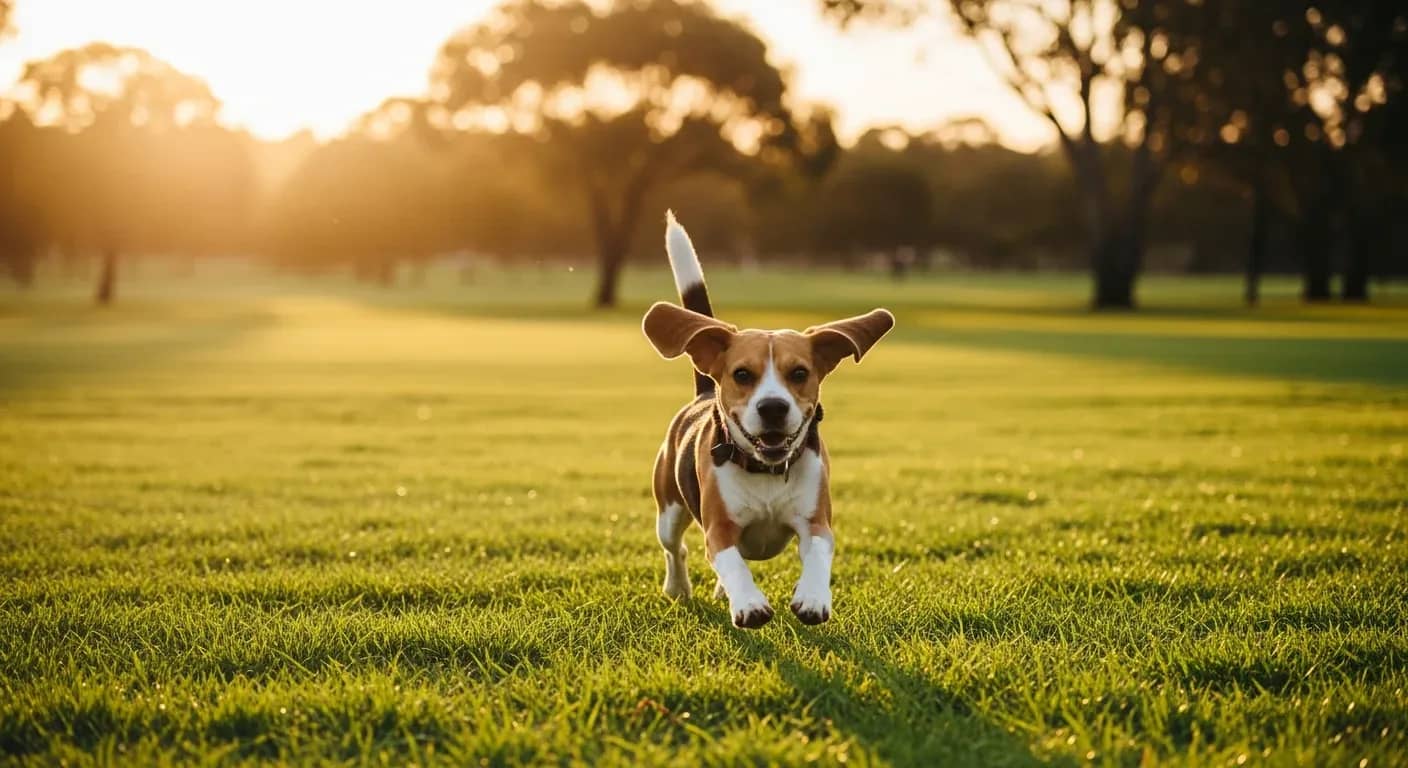

If your Cavalier has started taking a moment before climbing onto the couch, or settles into their bed a little slower than they used to, it tends to register quickly. Cavaliers are shadows by nature. They follow you from room to room, curl up in your lap the second you sit down, and watch you with those wide, soulful eyes. When something shifts in how they move, even subtly, you notice because they are always right there.
The breed's joints are genuinely worth thinking about early. Cavalier King Charles Spaniels are prone to a cluster of health conditions that go beyond what most people expect from a small companion dog, and their joints are part of that picture. This guide covers what puts Cavaliers at risk, what the research says about joint supplement ingredients, and how to choose something practical for an Australian household in 2026.
Why Cavaliers Are Prone to Joint Problems
Cavalier King Charles Spaniels are a small breed, but that does not mean their joints are low-maintenance. The breed has a well-documented predisposition to musculoskeletal conditions that show up at earlier ages than in many comparable companion breeds.
Hip dysplasia is the most commonly watched orthopaedic condition in Cavaliers. According to data from the Orthopedic Foundation for Animals, Cavaliers have a hip dysplasia rate that places them in the moderate-risk category for a small breed, driven by selective breeding over generations for the compact, round frame. The hips in affected dogs develop a poor fit between the ball and socket, which wears unevenly over time and leads to progressive stiffness.
Patella luxation is another common finding. The kneecap slips out of its groove, causing the classic skip or bunny-hop gait that owners often catch on walks. VCA Hospitals notes that small to medium companion breeds with a compact build are disproportionately affected, and Cavaliers sit squarely in that category.
Syringomyelia, the neurological condition involving fluid cavities near the spinal cord, is the most discussed Cavalier health concern overall. While it is primarily a neurological issue, it can cause the neck and shoulder sensitivity that owners sometimes initially read as joint pain or stiffness. Worth knowing about, and worth raising with your vet if your Cavalier shows head or neck sensitivity alongside mobility changes.
For the full picture of what this breed is prone to across all body systems, our complete guide to Cavalier King Charles Spaniel health problems covers it all, from heart to joints to neurology.
Signs Your Cavalier May Need Joint Support
Because Cavaliers are built to be calm and close, their signs of joint discomfort can be easy to miss or attribute to personality. These are the quiet tells worth paying attention to:
- A brief hesitation before jumping onto the sofa or into the car
- Slower to stand up after a long nap, especially on cooler mornings
- A subtle bunny-hop in the back legs mid-run
- Less willing to go up or down stairs without pausing
- Licking at a specific joint, especially the knee or hip, when resting
- Shorter self-imposed walks, stopping earlier than usual and wanting to head home
One sign on its own might just be a sore day. A pattern that holds steady across two to three weeks, or gets gradually worse, is worth discussing with your vet. They can assess whether it is a joint issue, patella grade, neurological sensitivity, or something else entirely. Our guide to the earliest signs a dog needs joint support goes deeper on what to track week to week across different ages and sizes.
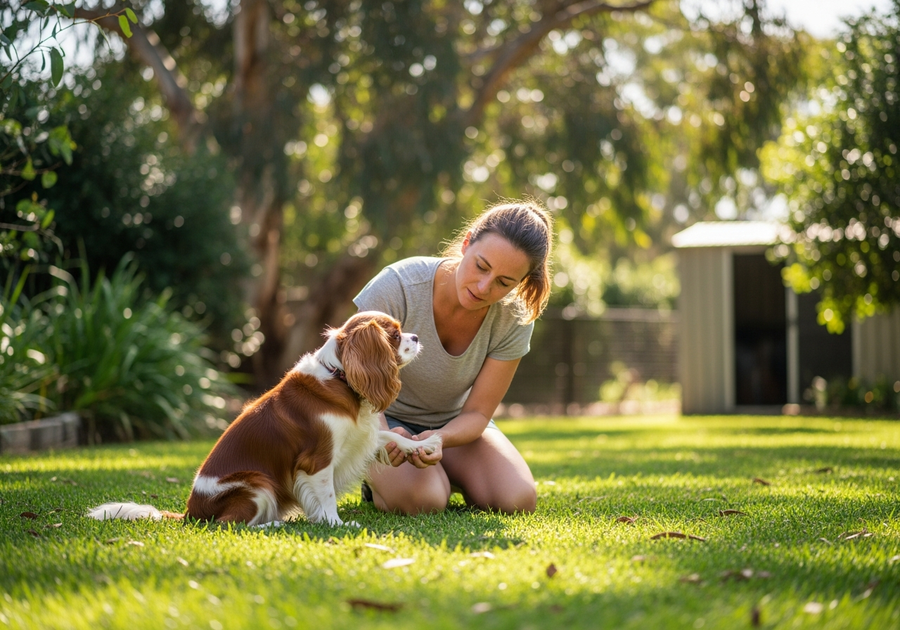
Joint Supplement Ingredients Worth Knowing About
Australian pet shelves carry a lot of joint products. Formulas vary significantly in what they target, and for a breed with gut and skin sensitivities like the Cavalier, the specific ingredient list matters as much as the brand name.
There are three ingredient categories worth understanding before choosing a daily supplement for a Cavalier:
- Collagen peptides to support the actual structural protein in cartilage. Low molecular weight peptides are absorbed efficiently and support ongoing cartilage maintenance. Our deep read on collagen for dogs covers the research in plain language.
- MSM (methylsulfonylmethane), a naturally occurring sulphur compound found in joints and connective tissue. A peer-reviewed clinical trial published in PubMed found MSM improved joint comfort scores over 12 weeks. Our MSM for dogs guide explains the mechanism and what the evidence supports.
- Vitamin C (ascorbic acid), a cofactor in collagen production. Without adequate vitamin C levels, the collagen in a supplement may not be used as efficiently as it should be. Dogs produce some on their own but not always in sufficient quantities during active tissue repair.
Turmeric (curcumin) is another commonly included ingredient, valued for its role in supporting a healthy inflammation response alongside structural support. It appears in several Australian-made joint formulas.
For Cavaliers who are gut-sensitive or skin-sensitive, a grain-free formula free from animal by-products is often the practical choice for daily use over months and years.
A Collagen-First Daily Supplement for Cavaliers
One Australian-made option worth knowing about is the Joint Daily Chews from Hero Pet Health. The formula is built around four active ingredients: collagen peptides, MSM, turmeric and vitamin C. It is vet reviewed, grain-free, and free from animal by-products, which suits Cavaliers who tend toward digestive and skin sensitivity.
For a typical adult Cavalier weighing between 5 and 8 kilograms, dosing sits at around one chew daily based on body weight. Each pack contains around 60 chews, roughly a month of daily use. A soft chew format means most Cavaliers take it willingly as part of a meal or treat routine.
The full ingredient list and dosing guide are on the Hero Joint Daily Chews product page, backed by a lifetime money-back guarantee if it does not suit your dog.
Not sure which supplements your Cavalier actually needs? The Hero Health Assessment takes two minutes and gives you a personalised plan based on your dog's age, weight, breed and lifestyle.
Start the Free AssessmentWhen to Start Joint Supplements for a Cavalier
The research is clear on one point: cartilage damage is very difficult to reverse once it progresses. VCA's clinical guide to arthritis in dogs makes the point that the goal is to support healthy tissue while it is still healthy, not to manage deterioration after the fact.
For Cavaliers specifically, three windows make practical sense:
- Around 12 months, when growth plates close and the dog is moving into adult activity levels. Starting here is genuinely preventative, especially in a breed with known hip susceptibility.
- From 5 to 6 years onwards, when even otherwise healthy Cavaliers start showing the early micro-signs of wear. This is the most common entry point for owners.
- After any orthopaedic diagnosis, such as confirmed hip dysplasia or patella luxation grade 2 or above. In this case, supplement timing should follow your vet's guidance alongside any other management plan.
If your Cavalier is already showing obvious stiffness, reluctance to weight-bear, or sudden changes in gait, that is a vet conversation, not a supplement decision alone. Supplements support a healthy joint system. They are not a substitute for a clinical assessment when something has shifted.
Lifestyle Habits That Protect Cavalier Joints
Daily joint support works hardest when the rest of the routine supports it. For Cavaliers, three lifestyle habits matter most:
Keep them at a lean, healthy weight. Cavaliers are prone to weight gain, partly because they are calm, indoor-oriented dogs who are not burning enormous amounts of energy, and partly because they are very good at looking hungry. Even half a kilogram of extra weight on a 6 kg dog increases joint load meaningfully. Ribs should be easy to feel under a thin fat layer. A clear waist is visible from above. If you are not sure, your vet can do a body condition score at any routine check.
Keep exercise regular but not intense. Cavaliers do not need long hikes. Thirty to forty minutes of walking daily, broken into two sessions, is enough for most adults. Avoid repetitive jumping on hard surfaces as a regular activity, and be thoughtful about stairs in puppyhood when growth plates are still developing. For Cavaliers with confirmed patella issues, your vet may recommend swimming or hydrotherapy as a low-impact alternative. The Cavalier lifespan guide covers age-appropriate activity shifts in more detail.
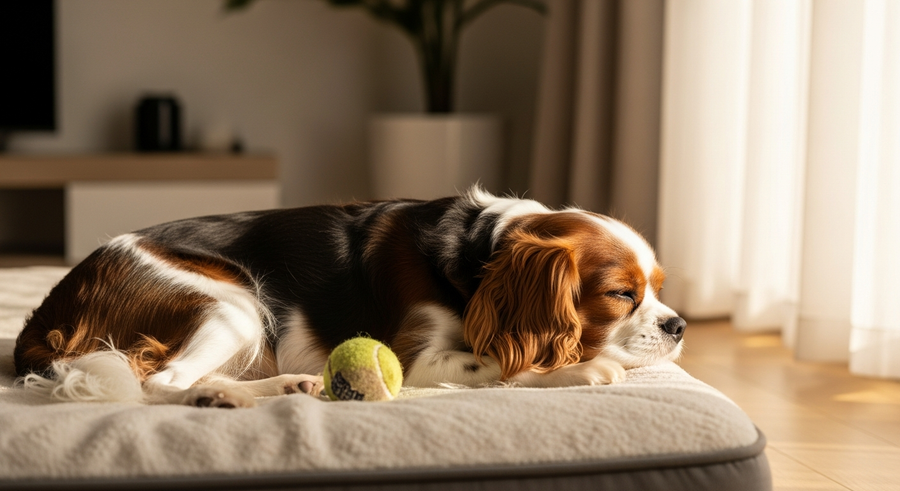
Provide a proper sleeping surface. Cavaliers are devoted bed companions and will sleep wherever they can get close to you. An orthopaedic memory foam bed placed on the floor, rather than relying on jumping onto a high surface, protects the hips and back joints over years. This is a small, cheap change that makes a material difference across a long life.
Choosing a Joint Supplement in Australia
A few things are worth checking before committing to a daily routine:
- Australian-made. Products made locally are bound by APVMA-aligned manufacturing standards and their supply chains are generally easier to verify. Daily supplements for small breeds need to be consistently formulated, because a small dog is more sensitive to variation in active ingredient levels than a larger one.
- Weight-based dosing. Cavaliers weigh significantly less than most medium and large breeds. A supplement that only offers a flat daily dose regardless of size is not designed for the 5 to 8 kg range. Look for dosing guidance that scales by kilogram.
- Chew or soft format. Cavaliers are not reliable pill-takers. A palatably formulated soft chew that the dog actively enjoys dramatically improves long-term adherence.
- Vet reviewed formula. For a daily health supplement, vet review provides a meaningful baseline of formulation credibility.
For a broader comparison of joint supplement options available in Australia this year, the best dog joint supplements Australia 2026 guide is the most current overview of what is on the market and what the evidence supports.
The Bottom Line
Cavalier King Charles Spaniels are small but their joints carry real risk, from hip dysplasia to patella luxation, and the most effective thing you can do is start thinking about daily support before stiffness becomes obvious. A clean, Australian-made joint chew with collagen peptides, MSM, turmeric and vitamin C, dosed by body weight, is a practical daily habit for any Cavalier from around 12 months and definitely from 5 to 6 years onwards.
Every Cavalier is a little different in how they age and what they need. If you want to know exactly what your dog's profile calls for, the Hero Health Assessment takes about two minutes and gives you a personalised recommendation based on age, weight, breed and daily lifestyle. Then talk it through with your vet and build the routine from there.