

Dachshunds are many things: fearless, tenacious, devoted beyond reason, and entirely convinced that the world revolves around their person. That devotion is what makes them so wonderful. It's also what makes separation so hard for them. If your dachshund is destroying the couch while you're at work, crying when you leave the room, or trembling at the sound of thunder, you're not dealing with a "naughty dog." You're dealing with a breed that is wired to be deeply attached, and that attachment has a shadow side.
The good news is that a thoughtful daily calming routine can make a real difference. Calming supplements are one piece of that puzzle. This guide covers what to look for, what the evidence says about key ingredients, and how to build a routine that actually helps your dachshund settle.
Why Dachshunds Are More Prone to Anxiety Than Most Breeds
Dachshunds were bred to hunt independently, deep in underground burrows, often separated from their handlers for extended periods. They had to be courageous, persistent, and single-minded. That same intensity, when turned toward their owners, shows up as profound attachment.
The breed is also compact and low to the ground, which means the world literally towers over them. Loud noises, unfamiliar environments, and sudden changes register differently for a small dog than they do for a larger one. The American Kennel Club notes that dachshunds can be prone to strong-willed independence and separation distress, traits that are two sides of the same coin: fierce loyalty.
Miniature dachshunds tend to show higher anxiety rates than their standard counterparts, likely because their smaller size makes them more reactive to perceived threats. If you have a miniature dachshund with health concerns, anxiety is often one of the first things worth addressing, because chronic stress affects everything from digestion to immunity.
Signs Your Dachshund May Be Anxious
Anxiety in dachshunds doesn't always look like the classic panicked dog. Sometimes it's subtle. Knowing what to watch for helps you intervene early, before patterns become entrenched.
Common signs include:
- Excessive barking or howling when alone
- Destructive chewing, especially near exits (doors, window sills)
- Following you from room to room and struggling to settle independently
- Trembling, panting, or yawning in situations that wouldn't distress a calmer dog
- Sudden toileting accidents despite being well trained
- Pacing or circling before you leave home
- Reduced appetite during stressful periods
Research compiled by VCA Animal Hospitals indicates that separation-related behaviours affect a significant proportion of the domestic dog population, with small companion breeds significantly overrepresented. Dachshunds fall squarely into that high-risk group.
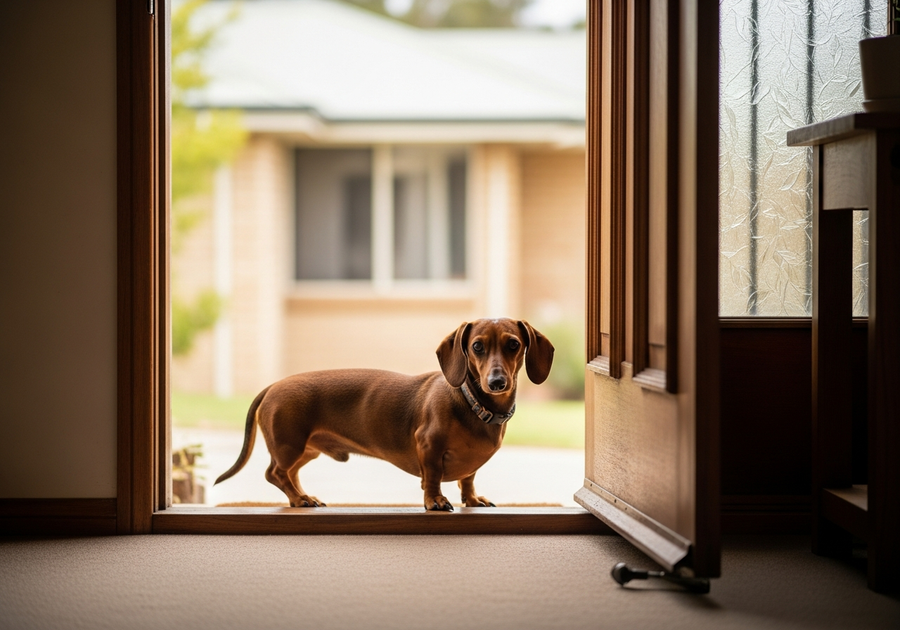
If you're seeing two or more of these signs consistently, it's worth talking to your vet. Supplements support a calm baseline, but they're not a substitute for professional guidance when anxiety is moderate to severe. Your vet may also recommend behavioural training alongside any supplement protocol.
What to Look for in a Calming Supplement
The calming supplement category is crowded. Some products rely on sedating ingredients that dull a dog rather than genuinely support calm behaviour. Others are under-dosed or use fillers that add nothing. Here's what the evidence actually supports.
Magnesium
Magnesium plays a key role in the nervous system, helping regulate neurotransmitter signalling and muscle relaxation. Dogs with higher stress levels often show depleted magnesium, which creates a feedback loop: stress depletes magnesium, low magnesium makes the nervous system more reactive. A consistent daily intake can help break that cycle.
L-Tryptophan
L-Tryptophan is an amino acid that serves as a precursor to serotonin, the neurotransmitter most associated with mood regulation and calm. Research published in the Journal of Veterinary Behavior found that dietary tryptophan supplementation was associated with reduced anxiety-related behaviour in dogs, particularly in situations involving noise and separation.
Ashwagandha
Ashwagandha is an adaptogenic herb with a long history of use in supporting the body's stress response. Adaptogens help regulate cortisol, the primary stress hormone, which is useful for dogs with chronic or generalised anxiety rather than situational fear. Early research in companion animals is promising, though most well-controlled trials remain in humans. At appropriate doses, ashwagandha is considered safe for dogs.
Chamomile
Chamomile has mild calming properties linked to apigenin, a compound that binds to benzodiazepine receptors in the brain. It's gentle and well-tolerated, making it a useful component in a daily calming formula rather than a standalone solution.
Vitamin B1 (Thiamine)
Vitamin B1 supports neurological function and is often depleted during periods of stress. Supplementing with B1 can help maintain healthy nerve signalling, which supports a more stable emotional baseline in anxious dogs.
Jerusalem Artichoke
Jerusalem artichoke is a prebiotic source that feeds beneficial gut bacteria. The gut-brain axis is increasingly recognised as a key pathway in mood regulation. A healthy gut microbiome produces precursors to calming neurotransmitters like serotonin and GABA, so prebiotic support makes sense in a calming formula.
Daily Routine vs Situational Use: What Works for Dachshunds
One of the most common mistakes with calming supplements is using them only when something stressful is happening, like a thunderstorm or a vet visit. For dachshunds with chronic background anxiety, this doesn't work particularly well. The underlying nervous system reactivity is still there between events.
Daily supplementation builds a calmer baseline over time. Ingredients like magnesium, tryptophan, and ashwagandha work cumulatively, not acutely. You're not reaching for a switch; you're gradually raising the floor. Most pet parents report seeing consistent improvement after 3-4 weeks of daily use, with the difference most noticeable in low-level daily behaviour (less velcro-dog behaviour, better settling) rather than in dramatic anxiety events.
For situational anxiety like fireworks or car travel, a daily supplement can still help by lowering baseline reactivity. But you may also need specific strategies for those events separately. The gut-calming link is also worth noting: dachshunds prone to anxiety often have sensitive digestion, and supporting both systems simultaneously makes sense.
Choosing the Right Format
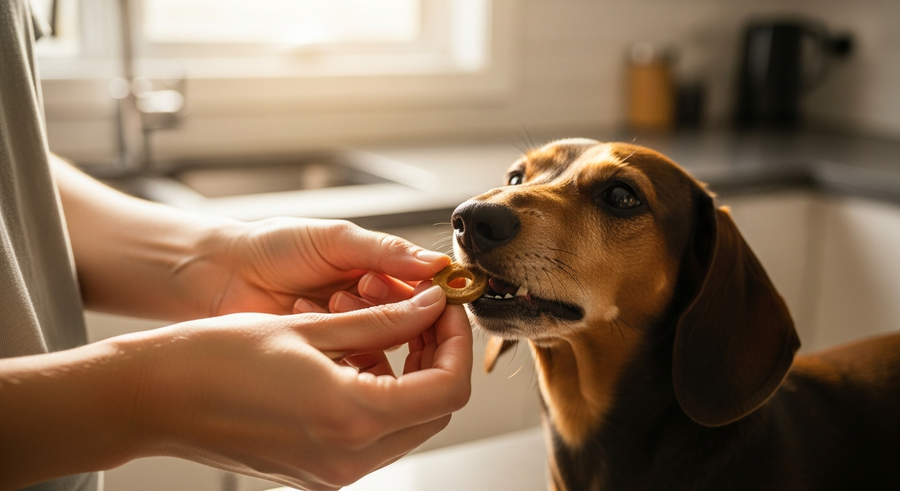
Dachshunds can be fussy eaters, but most take soft chews without drama because they read as treats. Pills and powders are harder to dose accurately and easier for a determined dachshund to reject. Soft chews that are grain-free and made without artificial ingredients are the safest choice for a breed with a history of food sensitivities.
Look for supplements that are vet-reviewed and made in Australia. Local manufacturing means fresher product and better regulatory oversight. A lifetime money-back guarantee is also a reasonable signal that the brand stands behind the formula. Our guide to the best calming treats in Australia reviews what's available and what the evidence says about different formulas.
Not sure where to start with your dachshund's health? The Hero Health Assessment takes 2 minutes and gives you a personalised supplement plan based on your dog's age, weight, and lifestyle.
Start the Free AssessmentHero Calming Daily Chews: What Dachshund Owners Should Know
Hero's Calming Daily Chews contain magnesium, L-tryptophan, Vitamin B1, Jerusalem artichoke, ashwagandha, and chamomile in a soft chew format. The formula is vet-reviewed, made in Australia, and free from grain and artificial fillers. There are around 60 chews per pack, and dosing is weight-based, which is straightforward for a breed that typically runs between 4 and 14 kg depending on whether you have a mini or standard.
The chew format means no hiding pills in peanut butter. Most dachshunds take them willingly as part of their morning routine. Many owners give the chew at the same time each day, which becomes its own calming ritual: your dachshund starts associating the chew with a predictable, positive interaction.
Supporting Your Dachshund's Calm Across the Day
Supplements work best as part of a broader approach. A few things that compound well with daily calming support:
- Predictable routine: Dachshunds thrive with consistent meal times, walk times, and departures. Variation is harder for anxious dogs.
- Safe space: A crate or dedicated corner that's always available, never used for punishment, and associated with rest.
- Calm departures and arrivals: Greeting your dachshund with high excitement when you return can reinforce the idea that your absence was a significant event. Calm, low-key arrivals help normalise it.
- Adequate exercise: A tired dachshund is a calmer dachshund. Even 20-30 minutes of purposeful activity makes a difference.
- Mental stimulation: Food puzzles, sniff walks, and training games help dachshunds channel their drive constructively.
If your dachshund has age-related changes contributing to increased anxiety (common in senior dogs), it's worth discussing with your vet whether additional support is warranted. Cognitive changes in older dogs can look similar to anxiety and sometimes overlap with it.
The Bottom Line
Understanding how dog anxiety works can help you approach your dachshund's behaviour with more clarity and less frustration. Dachshunds feel things deeply. That's both their gift and their challenge. Anxiety isn't a character flaw in this breed; it's a feature of their wiring that needs to be managed thoughtfully. A daily calming supplement with the right ingredients, combined with a consistent routine and appropriate exercise, gives your dachshund the best shot at a settled, happy life.
Every dachshund is different. If you want to know exactly what your dog needs based on their age, weight, and lifestyle, the Hero Health Assessment will give you a personalised recommendation in under two minutes.