

If your Labrador Retriever turns into a nervous wreck every time you grab your keys, or spends storms hiding behind the couch, you are not imagining it. Labs rank among the breeds most frequently reported by Australian vets for anxiety-related behaviour. The breed's deep social bonds are their greatest strength, but they're also what makes many Labs vulnerable to stress when that connection feels threatened.
Calming supplements have become one of the more popular tools pet parents reach for, and for good reason. The right formula, given daily consistent use, can genuinely take the edge off. This guide covers what actually matters when choosing one, which ingredients to look for, and how to make daily supplementation work alongside everything else you're doing for your Lab's wellbeing.
Why Labrador Retrievers Are Prone to Anxiety
Labs were bred to work closely alongside humans. Centuries of selection for biddable, people-focused temperaments produced a dog that thrives on company and falls apart without it. That same trait that makes them such reliable guides, assistance dogs, and family companions also makes them prime candidates for health challenges linked to stress, including separation anxiety, noise sensitivity, and generalised nervousness.
A 2020 study published in Scientific Reports analysed anxiety traits across 264 dog breeds and found that retriever-type breeds showed above-average prevalence of fear and noise sensitivity. Labrador Retrievers specifically ranked high on separation-related behaviours. This is not a character flaw. It's a predictable consequence of the breed's history.
Age matters too. Labs are known for being slow to mature mentally, often acting like puppies until they're three or four years old. This extended adolescence can mean prolonged anxiety during development. At the other end of life, senior Labs can become more anxious as their senses dull and their world becomes harder to navigate. Supporting calm behaviour across all life stages is worth building into your routine early.
What Triggers Anxiety in Labrador Retrievers
The most common triggers are fairly predictable, but the intensity varies hugely between individual dogs. Understanding what sets your specific Lab off is the first step toward managing it effectively.
Separation tops the list for most Lab owners. Labs form strong attachments to their people and can struggle with even short absences. Signs range from mild restlessness to destructive behaviour, vocalising, or house soiling. Australian households have seen a spike in separation anxiety cases since the pandemic-era remote work boom ended and many dogs lost their all-day company overnight.
Noise events are a close second. Thunderstorms, fireworks on Australia Day or New Year's Eve, and construction sounds can send sensitive Labs into a state of genuine distress. A dog experiencing noise phobia is not being dramatic. The stress response is physiologically real and deserves to be taken seriously.
Changes in routine affect many Labs more than owners realise. A new baby, a house move, even a shift in walking schedules can create low-grade background anxiety that shows up as restlessness, excessive licking, or clingy behaviour.
For a broader look at how these patterns develop and what else to watch for in your Labrador, the guide to common Labrador Retriever health problems covers the full picture across all life stages.
What to Look for in a Calming Supplement
Not all calming products are created equal. Some rely heavily on sedating herbs and produce a drowsy dog rather than a genuinely calm one. Others are amino acid and mineral-based, working with the nervous system's own chemistry to support ease without knocking the dog out. The latter approach is generally preferable for daily use, where the goal is a stable baseline rather than sedation.
The most well-supported calming ingredients for dogs include:
- Magnesium: A mineral involved in hundreds of biochemical reactions, including regulation of the nervous system. Magnesium deficiency may contribute to heightened stress responses, and daily supplementation can help maintain baseline calm in dogs prone to anxiety.
- L-Tryptophan: An essential amino acid that the body converts to serotonin, the neurotransmitter strongly associated with mood regulation. A 2017 study in the Journal of Veterinary Pharmacology and Therapeutics found that tryptophan supplementation reduced anxiety-related scores in dogs across separation and noise tests.
- Ashwagandha: An adaptogenic herb used for centuries in traditional medicine to support healthy stress responses. Growing evidence in companion animal nutrition points to its value for both situational and chronic anxiety in dogs.
- Chamomile: A gentle botanical with mild nervine properties. Works well as a daily support ingredient rather than a standalone acute treatment.
- Vitamin B1 (Thiamine): B vitamins support the nervous system. Thiamine is used in some veterinary protocols for anxiety and stress, particularly in dogs with food sensitivities that may affect nutrient absorption from diet alone.
- Jerusalem Artichoke: A prebiotic fibre source that supports gut health. Emerging research on the gut-brain axis in dogs suggests that gut microbiome composition genuinely influences mood and anxiety. Supporting the gut as part of a calming routine is a newer but well-founded approach.
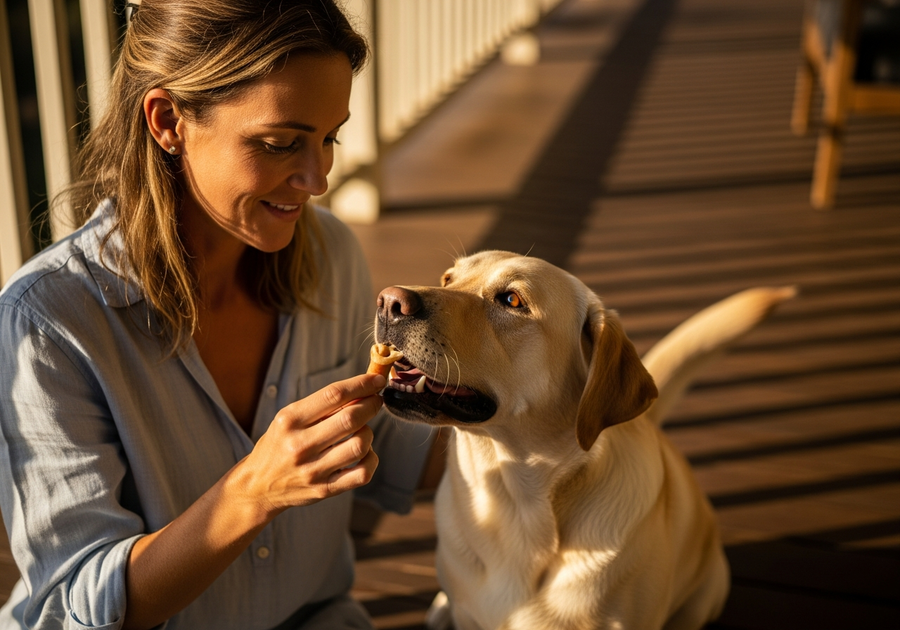
The format matters as much as the formula. For daily use, a soft chew is far easier to maintain as a routine than a powder or liquid. Most Labs will take one willingly as a treat, which removes the friction that causes owners to skip doses. Consistency is where the results come from.
One important note when evaluating products: confirm the formula lists actual active ingredient quantities. Vague "proprietary blend" labels make it impossible to assess whether effective amounts are present. Transparency is a reliable sign of product quality.
Hero Calming Daily Chews for Labrador Retrievers
Hero's Calming Daily Chews were designed specifically as a daily routine supplement, not a situational one. This matters for Labs. A dog that only receives something calming when a storm is already overhead hasn't built up any consistent support in their system. Daily use creates a more stable baseline over time, which is where meaningful behavioural change actually happens.
The formula contains Magnesium, L-Tryptophan, Vitamin B1, Jerusalem Artichoke, Ashwagandha, and Chamomile. These are the ingredients most consistently supported by veterinary nutrition research for calm behaviour. The formula is vet-reviewed and made in Australia. It's wheat-free and grain-free, which suits Labs that are prone to food sensitivities or skin reactions from grain-containing products.
Each pack contains approximately 60 chews. Dosing is weight-based, which matters for a breed that can range from 25kg up to 40kg depending on gender and build. At $59.95 for a one-time purchase, or $50.96 per month on subscription with the 15% discount, it sits in the mid-range for Australian supplement pricing. The lifetime money-back guarantee removes the risk from trying it.
For a broader comparison of how different calming supplement formulas stack up in Australia, the guide to the best calming treats for dogs in Australia covers the category in detail.
Not sure whether calming supplements are the right first step for your Labrador? The Hero Health Assessment takes 2 minutes and gives you a personalised supplement plan based on your dog's age, weight, and specific behaviours.
Start the Free AssessmentHow to Build a Calming Routine for Your Lab
A supplement works best as one part of a broader approach. Labs need predictability, exercise, and mental stimulation to feel settled. No chew will compensate for four hours of pent-up energy or a schedule that shifts without warning.
A few things that consistently help alongside supplementation:
- Consistent daily exercise: Labs are working dogs. A minimum of 45-60 minutes of actual physical activity per day is a baseline, not a luxury. Well-exercised Labs are genuinely calmer at home, and that calm is easier for supplements to maintain.
- Mental stimulation: Puzzle feeders, sniff walks, and short training sessions burn mental energy that physical exercise alone doesn't touch. A Lab that is mentally tired is far less reactive to everyday stressors.
- Predictable routines: Feed, walk, play, and settle at consistent times. Routine is a safety signal for anxious dogs. Unpredictability, even minor unpredictability, amplifies the background level of stress.
- Calm departures and arrivals: Making a big deal of coming and going adds emotional charge to those transitions. Low-key, matter-of-fact exits and entrances help Labs regulate their response to absences over time.
- Safe retreat spaces: A crate or dedicated corner where your Lab can rest undisturbed is worth setting up. Somewhere they associate with calm, not isolation, can anchor them during high-stress events like storms or fireworks.
Worth noting: stress and gut health are more connected than most owners realise. An unhealthy gut microbiome can amplify the anxiety response, and the gut-brain axis works in both directions. Supporting your Lab's digestive health alongside their nervous system is a genuinely useful dual approach. Our guide to the best probiotics for Labrador Retrievers covers the gut health side of the equation.
For a thorough look at the science behind dog anxiety and what's actually driving it, the dog anxiety guide covers mechanisms, common triggers, and what interventions have the strongest evidence base.
When to Talk to Your Vet
Daily supplements support calm behaviour and help take the edge off mild to moderate anxiety. They are not a substitute for veterinary assessment when anxiety is severe or sudden in onset.
Talk to your vet if your Lab is being destructive when left alone, including self-injury through excessive chewing of paws or scratching. Also seek advice if anxiety has appeared suddenly without an obvious trigger, which can sometimes indicate pain or an underlying health condition rather than a behavioural issue. And if noise phobia has reached a point where your dog is genuinely distressed, not just unsettled, during storms or fireworks, a vet can help you build a proper management plan.
Labs that haven't responded to supplements and management strategies after 6-8 weeks of consistent effort deserve a proper veterinary review. Good vets won't dismiss the concern or jump straight to medication. Most will want to work through a graduated approach, and supplements often fit naturally into that plan alongside behavioural work.
For context on your Lab's overall health picture across their lifespan, including what changes as they age, our guide to Labrador Retriever lifespan and healthy ageing is worth reading alongside this one.
The Bottom Line
Labrador Retrievers are emotionally intelligent, people-oriented dogs. Their tendency toward anxiety is a feature of the same temperament that makes them exceptional companions. It's manageable with the right approach, and daily calming supplementation is one of the more accessible and consistent things you can add to your routine.
Choose a formula with transparent, evidence-backed ingredients like Magnesium, L-Tryptophan, Ashwagandha, and Chamomile, and commit to daily use rather than reaching for it only during high-stress moments. The results come from consistency, not crisis dosing.
Every Labrador is different. If you want a recommendation based on your dog's specific age, weight, and behaviours, the Hero Health Assessment takes under two minutes and gives you a personalised starting point.