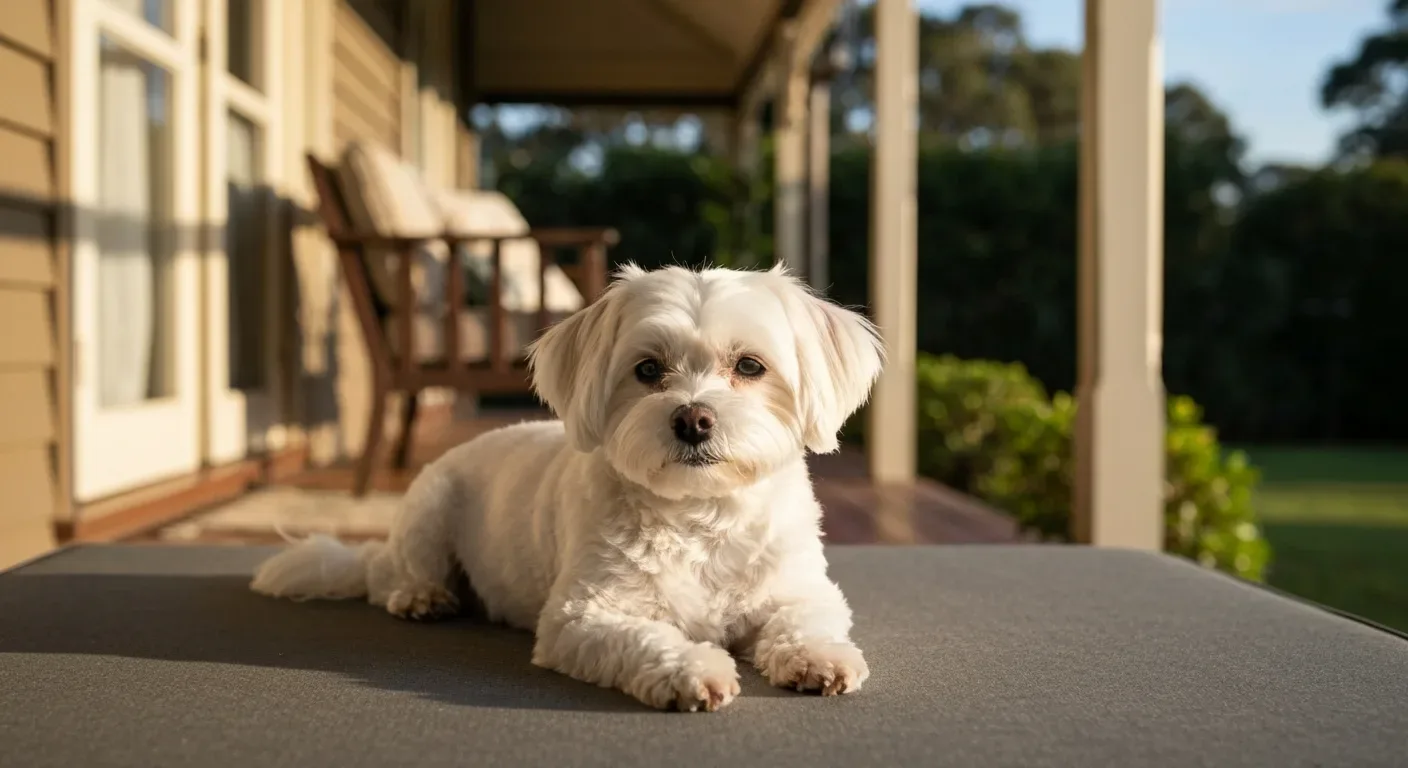
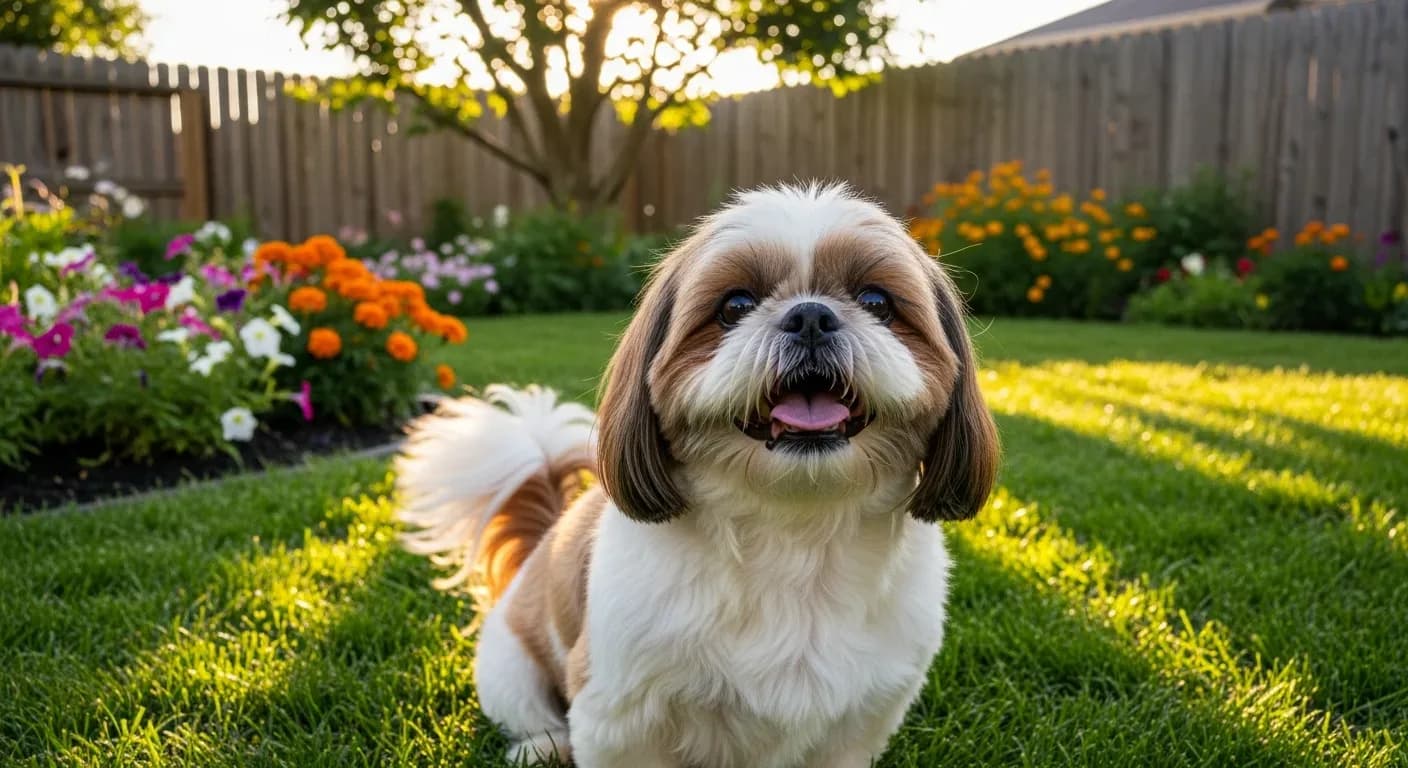
Shih Tzus were bred for thousands of years to do one thing: stay close to humans. That loyalty is one of the breed's most endearing qualities, but it also means many Shih Tzus struggle when their person isn't nearby. If your Shih Tzu follows you from room to room, cries when you leave, or becomes unsettled during loud events, you are not imagining things. This is a breed that feels things deeply.
The encouraging news is that daily calming support can make a genuine difference. This guide covers what to look for in a calming supplement for Shih Tzus, the ingredients with the strongest evidence, and how to fit it into your dog's daily routine.
Why Shih Tzus Are More Prone to Anxiety Than Many Other Breeds
The Shih Tzu's history explains a lot about their temperament today. According to the American Kennel Club, the breed was developed to live alongside royalty as palace companions in China, centuries before the idea of a working dog even entered the picture. That selective breeding toward deep human attachment shaped the Shih Tzu's nervous system in ways that still show up today.
Dogs bred for close companionship often develop what behaviourists describe as hyper-attachment: a state where a person's presence becomes so central to the dog's sense of security that their absence becomes genuinely distressing. This is not bad behaviour or wilfulness. It is the breed doing exactly what it was built to do, in a world where owners have to leave the house.
There is also a physical layer to consider. As a brachycephalic breed, Shih Tzus have compressed airways that make breathing slightly harder than it is for longer-nosed dogs. This ongoing physiological effort can raise a dog's baseline stress level, meaning they start from a higher point of arousal before any external trigger even comes into play.
For a fuller picture of what Shih Tzus are prone to, including how anxiety connects to their broader health profile, read our guide to common Shih Tzu health problems every owner should know.
Signs Your Shih Tzu May Need Calming Support
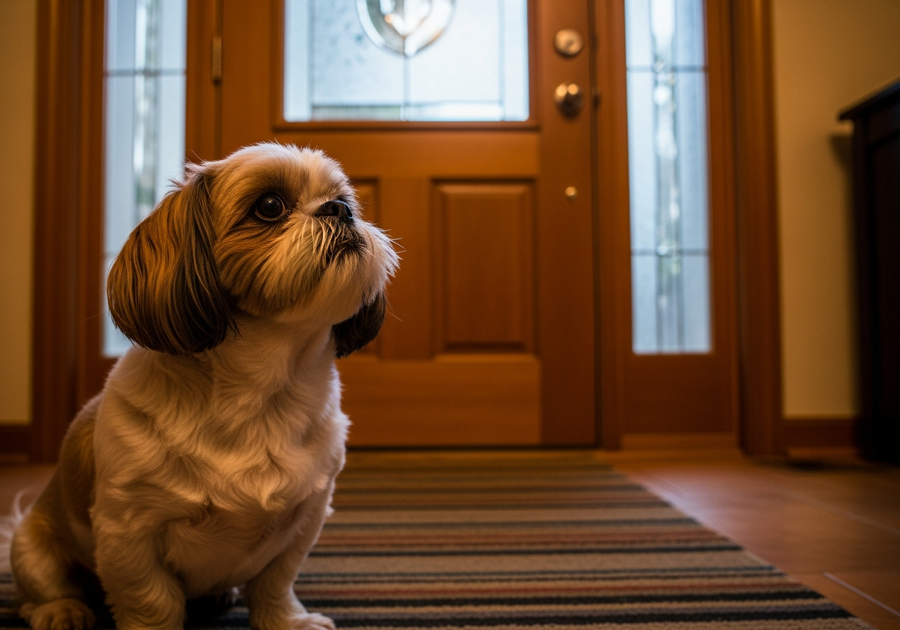
Anxiety in dogs shows up differently depending on the individual. Some Shih Tzus are very obvious about it: barking, whining, trembling before you even reach for your keys. Others express it in ways that are easy to misread as personality quirks or bad habits.
Signs worth paying attention to include:
- Shadowing behaviour, following you constantly between rooms
- Excessive barking or howling during your absence
- Destructive behaviour such as chewing furniture or scratching at doors, particularly when alone
- House training regressions during periods of change or stress
- Trembling or freezing in new environments or around unfamiliar people
- Yawning, lip licking, or panting without physical exertion (calming signals dogs use under pressure)
- Refusing food or high-value treats in triggering situations, which indicates high arousal
- Flattened ears, tucked tail, or whale eye in situations that would not bother most dogs
If several of these show up regularly, speak with your vet before starting any supplement. A vet can rule out medical causes, assess how severe the anxiety is, and advise whether a daily supplement is appropriate on its own or as part of a broader plan that might include behaviour training or other support.
What to Look for in a Calming Supplement for Shih Tzus
The calming supplement market is crowded, and not everything on the shelf is worth your money. The ingredients that have genuine evidence behind them, and that work well together in a daily formula, include a specific handful.
Magnesium is involved in hundreds of processes in the body, including nerve function and the regulation of the stress response. Dogs can have their stress response amplified when magnesium levels are insufficient, making it a foundational ingredient in any calming formula worth considering.
L-tryptophan is an amino acid that serves as a precursor to serotonin, the neurotransmitter most associated with mood regulation and calm. In a well-formulated supplement, tryptophan supports the production pathway that leads to better emotional balance over time. This is why it works better as a daily supplement than as a one-off treatment before a stressful event.
Ashwagandha is an adaptogen, meaning it helps the body respond to stress more effectively rather than simply dulling the dog's senses. It has a strong history in traditional medicine and growing research supporting its role in regulating cortisol, the body's primary stress hormone.
Chamomile has long been associated with calm, and there is good reason for that. It contains apigenin, a compound that binds to receptors in the brain and produces a mild, non-sedating calming effect. It is gentle enough for daily use and pairs well with the other ingredients listed here.
Vitamin B1 (thiamine) plays a direct role in nervous system function. Low B1 levels are linked to increased anxiety and irritability, so including it in a daily calming formula ensures the nervous system has what it needs to function smoothly under pressure.
Jerusalem Artichoke acts as a prebiotic, feeding beneficial bacteria in the gut. This matters more for anxiety than it might initially seem. Research published in the journal Nutrients has highlighted the link between gut microbiome health and mood regulation, a relationship often called the gut-brain axis. A healthier gut environment supports calmer, more balanced behaviour. This is also why supporting gut health with a probiotic supplement can have a calming effect, which you can explore in our guide to the best probiotics for Shih Tzus in Australia.
How to Introduce a Calming Supplement into Your Shih Tzu's Routine
The most important thing to understand about calming supplements is that they are not designed for acute situations. They are a daily support tool. A supplement given thirty minutes before fireworks is not going to perform the way you want it to. The ingredients that drive real results, like tryptophan and ashwagandha, need time to build in the system and create a consistent baseline of calm.
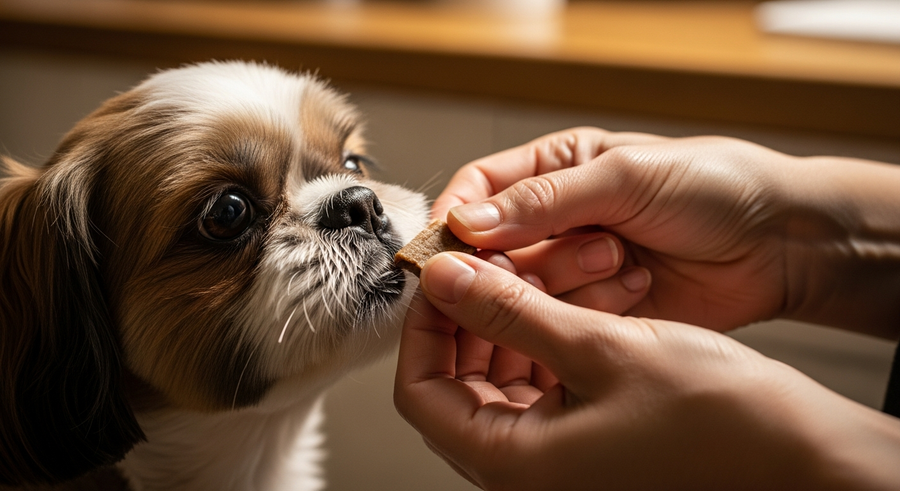
The approach that works is straightforward: give the supplement every day at the same time as part of your regular morning or evening routine. Consistency is the mechanism. Most owners start to notice a difference after two to four weeks of daily use.
Hero's Calming Daily Chews are formulated for this daily routine approach. They contain Magnesium, L-tryptophan, Vitamin B1, Jerusalem Artichoke, Ashwagandha, and Chamomile in a soft chew format that most dogs treat as a snack rather than a supplement. The formula is vet reviewed and made in Australia, and the grain-free recipe works well for Shih Tzus who have sensitive digestion.
Because Shih Tzus are a smaller breed, dosing accuracy matters. Check the weight-based dosing guide on the packaging and stick to it. More is not better with calming supplements, and the chew format makes portion control easy.
Not sure where to start with your Shih Tzu's health? The Hero Health Assessment takes two minutes and gives you a personalised supplement plan based on your dog's age, weight, and lifestyle.
Start the Free AssessmentLifestyle Habits That Complement Calming Supplements
A supplement works best alongside solid daily habits. On their own, these habits may not fully resolve anxiety in a Shih Tzu with a strong predisposition to it. But combined with consistent supplementation, they can genuinely change how your dog experiences stressful situations over time.
Consistent daily exercise is one of the most effective anxiety reducers for any dog. Shih Tzus do not need long runs, but regular walks and active play burn off nervous energy and help regulate the stress response. Because of their brachycephalic airways, Shih Tzus handle shorter, more frequent activity sessions better than long intense bursts, particularly in warm Australian weather. Keeping their joints healthy as they age also plays into their activity levels, which our guide to the best joint supplements for Shih Tzus covers in detail.
Predictable routine is calming in itself. Shih Tzus are sensitive to change, and an irregular schedule for meals, walks, and bedtime can quietly elevate background anxiety. Where possible, keep the core daily structure consistent, even when your own schedule gets busy.
Low-key departure and arrival rituals have a bigger impact than most owners expect. Extended, emotional goodbyes and excited hellos when you return teach your dog that your leaving and returning are dramatic events. The goal is the opposite: to make your comings and goings unremarkable and calm, so your Shih Tzu learns that being alone for periods is a normal part of life.
Mental enrichment addresses the portion of anxiety that comes from boredom and understimulation. Shih Tzus are more intelligent than their lapdog reputation suggests. Puzzle feeders, scent games, and short training sessions give their minds something to focus on and reduce the mental space available for anxious thoughts.
When to Talk to Your Vet About Your Shih Tzu's Anxiety
Daily supplements and good habits manage mild to moderate anxiety very effectively in most dogs. But there are situations where veterinary support is the right call, and it is worth knowing what those look like.
If your Shih Tzu is injuring themselves trying to escape (scratching through doors, breaking out of crates), if the anxiety is so severe that they cannot eat during your absence, or if their quality of life appears genuinely poor, a vet conversation is overdue. There are effective pharmacological options for dogs with severe anxiety, and a vet can help you weigh them up alongside behavioural and supplemental support.
Shih Tzus tend to be long-lived dogs, often reaching 12 to 16 years of age, which means anxiety left unaddressed can affect their wellbeing for a very long time. Taking it seriously early is always the better path.
The Bottom Line
Shih Tzus are bred to be companions, and that means anxiety is genuinely more common in this breed than in many others. A daily calming supplement containing Magnesium, L-tryptophan, Ashwagandha, and Chamomile, given consistently over weeks, can make a real and measurable difference to how your dog handles everyday stress.
Every Shih Tzu is different, and what works best depends on their age, weight, and specific stress triggers. If you want a personalised recommendation in under two minutes, the Hero Health Assessment is a good place to start.