

Shih Tzus are one of those breeds where the stomach seems to have its own opinion about food. Soft stools after a walk in the heat, gassy episodes after a meal, an unexpected bout of vomiting after eating too fast. If you have owned a Shih Tzu long enough, you have probably stopped being surprised by it.
The thing is, this is not random bad luck. There are a few breed-specific reasons why Shih Tzus tend to have more digestive sensitivity than your average dog, and most of them come down to anatomy and genetics. Understanding what is actually going on can help you choose the right daily support rather than rotating through different foods hoping something sticks.
Why Shih Tzus Have More Sensitive Digestive Systems Than Most Breeds
A big part of the Shih Tzu gut story starts with their face. Shih Tzus are a brachycephalic breed, meaning they have that characteristically flat face and shortened muzzle. It is also the reason many Shih Tzus eat faster than they should and swallow considerably more air with each mouthful. That extra swallowed air has to go somewhere, and it usually exits in ways that are not great for anyone sitting nearby.
This aerophagia (air swallowing) problem causes gas and bloating in a lot of Shih Tzus, but it also puts additional pressure on the lower digestive tract. When the stomach is working harder to process food and air simultaneously, it disrupts the gut environment more easily than it would in a dog with a longer muzzle. This is a detail most probiotic guides skip for Shih Tzus, but it is genuinely relevant to how you manage their gut health day to day.
Beyond the brachycephalic factor, Shih Tzus are also prone to food intolerances and sensitivities. Their immune systems can react to common proteins and grains in ways that show up as loose stools, skin irritation, or recurring ear issues. According to the American Kennel Club, maintaining a balanced gut microbiome can help reduce inflammatory responses connected to food sensitivities, which makes gut health particularly relevant for this breed.
Small breeds also have a smaller stomach relative to their total body mass, which makes them more reactive to sudden diet changes or stress. If your Shih Tzu tends to get loose stools when you have guests over or when the daily routine shifts, that is the gut microbiome responding to stress signals rather than anything you did wrong.
For a complete picture of what health conditions affect Shih Tzus most, the guide to common Shih Tzu health problems covers the full range, including how digestive issues often appear alongside other conditions in this breed.
What the Research Says About Probiotics for Dogs with Sensitive Stomachs
Probiotics work by introducing or replenishing beneficial microorganisms in the gut. In a healthy gut, these organisms help digest food, produce short-chain fatty acids that protect the gut lining, regulate immune responses, and keep harmful bacteria in check. When that microbial balance shifts, the effects are felt throughout the body.
The research on probiotics for dogs has grown substantially over the past decade. A 2020 review published in Frontiers in Veterinary Science found that dogs with allergic and inflammatory conditions showed measurable differences in gut microbiome composition compared to healthy dogs. Restoring microbial balance through supplementation showed genuine promise for reducing both digestive and immune-related symptoms.
One of the most clinically studied options for dogs with sensitive stomachs is Saccharomyces boulardii, a yeast-based probiotic strain. Unlike bacterial probiotics, S. boulardii survives antibiotic treatment because antibiotics target bacteria, not yeast. Research published in BMC Veterinary Research has shown that S. boulardii helps strengthen the intestinal barrier by reducing permeability. For Shih Tzus prone to food sensitivities, a stronger gut lining means less inflammatory reaction to the things they eat.
Daily probiotic use helps maintain stability rather than just responding to problems. For a breed as reactive as the Shih Tzu, consistent daily support tends to produce better outcomes than supplementing only during obvious gut upsets. The complete guide to probiotics for dogs in Australia breaks down what to look for across different formulation types if you want to compare options more broadly.
What to Look For in a Probiotic for Your Shih Tzu
The Australian pet supplement market has a wide range of options, and the quality gap between products is real. Here is what matters most for a breed like the Shih Tzu.
The strain
The most widely available probiotics use bacterial strains like Lactobacillus acidophilus or Bifidobacterium animalis. These have research supporting their use and work well for many dogs. But for Shih Tzus who might need antibiotic treatment for ear infections or skin conditions, a yeast-based formula has a meaningful practical advantage. Saccharomyces boulardii stays active during antibiotic courses because it is not affected by antibiotics. Gut support does not pause when the medication starts.
It is also worth knowing that if a probiotic label describes multiple bacterial strains, that is a different product to a specialist single-strain yeast formula. For Shih Tzus with food sensitivities, a simpler, targeted formula often produces fewer reactions than products containing many different bacterial strains.
CFU count
CFU stands for colony-forming units. It is the standard measure for how many viable organisms are in each dose. For a dog the size of a Shih Tzu (typically 4 to 8 kilograms), a minimum of 5 billion CFU per serve is needed to have any meaningful effect on gut microbiome balance. Products with lower counts rarely reach the intestine in sufficient numbers to make a difference.
Check that the CFU count is guaranteed at the time of use, not just at manufacture. Probiotic organisms degrade over time and in heat, so a product that starts high but has not been properly stored or packaged may deliver far less than the label claims by the time it reaches your dog.
Format and palatability
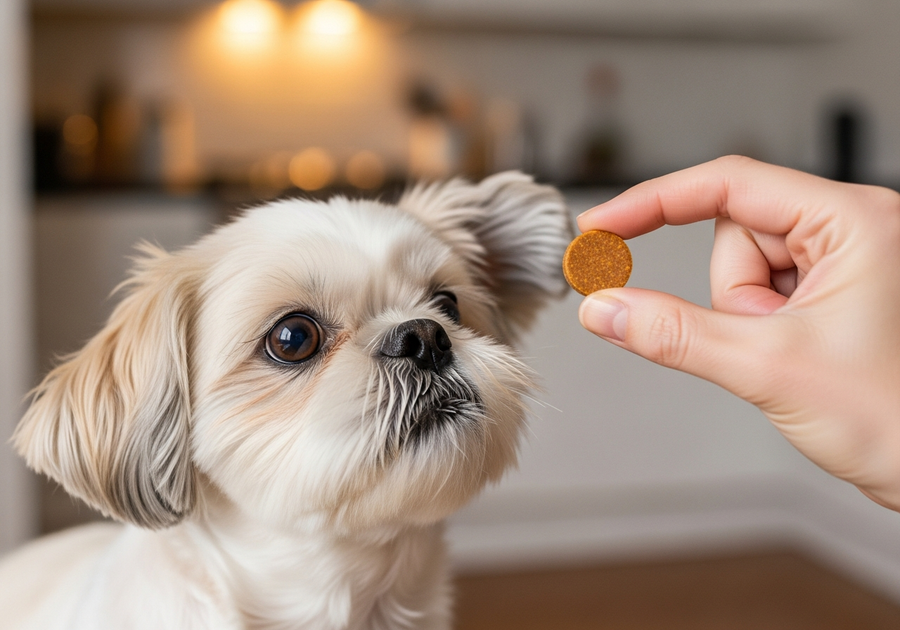
Shih Tzus can be fussy eaters, which means a supplement that does not taste appealing will be refused within days. Soft chew formats tend to have the best daily compliance because most dogs take them willingly without needing to be hidden in food. Powders are more awkward for small breeds because dosing becomes inconsistent when the dog eats around the supplement rather than consuming it with the food.
Grain-free and hypoallergenic ingredients
This matters a lot for Shih Tzus. If the probiotic itself contains wheat, gluten, or other common allergens, you may be triggering the very sensitivities you are trying to support. Look for products that are explicitly grain-free, wheat-free, and free from artificial colours, flavours, and fillers.
How Hero Probiotic Chews Support Shih Tzu Gut Health
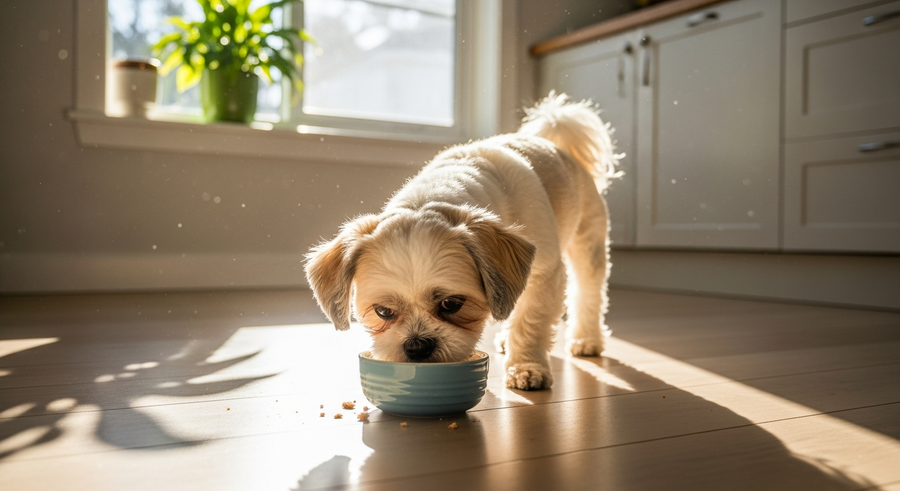
Hero's Probiotic Daily Chews use Saccharomyces boulardii as their single active probiotic strain, which makes them a practical fit for Shih Tzus. The yeast-based formula delivers 10 billion CFU per chew, well above the minimum threshold for a small breed. The chews are grain-free, wheat-free, and free from animal products, which reduces the risk of triggering food sensitivities in a breed that tends to react to common ingredients.
Because S. boulardii is a yeast rather than a bacterium, the formula remains active during antibiotic courses. For Shih Tzus who need antibiotics for recurring ear infections or skin conditions, that continuity means gut support does not stop when treatment starts. The chews are Australian-made and vet-reviewed, and most Shih Tzus take them willingly as part of their daily routine.
When and How to Give Your Shih Tzu Probiotics
Consistency matters more than perfect timing. Probiotics work by maintaining a stable population of beneficial organisms in the gut, and that stability comes from daily supplementation rather than occasional use.
For most Shih Tzus, giving a probiotic chew with the morning meal works well. The food provides a buffer that helps probiotic organisms survive the stomach acid environment on the way to the intestine. Evening meals work equally well. What matters is picking one time and sticking to it.
If your Shih Tzu is about to start a course of antibiotics, continue the probiotic throughout the treatment. The yeast-based strain survives the antibiotic, and continuing the dose helps maintain gut stability rather than trying to restore it after the course ends. Always talk to your vet before starting any supplement if your dog has a complex health history or is on multiple medications.
Most Shih Tzu owners see improvement in stool quality and consistency within 2 to 4 weeks of daily probiotic use. If you are not seeing any change after a month, it is worth reviewing the dose, the formula, or discussing with your vet whether there is an underlying condition contributing to the gut issues.
Not sure where to start with your Shih Tzu's gut health? The Hero Health Assessment takes 2 minutes and gives you a personalised supplement plan based on your dog's age, weight, and lifestyle.
Start the Free AssessmentOther Health Areas Worth Monitoring in Shih Tzus
Gut health is one piece of the picture for this breed. Shih Tzus are also prone to patellar luxation (loose kneecaps), which is one of the most common orthopaedic conditions in small breeds. If your Shih Tzu occasionally hops on three legs or takes a moment to warm up after resting, it is worth raising with your vet early. The guide to joint supplements for Shih Tzus in Australia covers what to look for and when to start joint support.
Dental health is another priority specific to Shih Tzus. Their flat face means teeth are crowded into a smaller jaw, which increases the risk of tartar build-up and periodontal disease. Chronic dental inflammation can affect overall systemic health, including digestion, so keeping on top of oral hygiene matters beyond just fresh breath.
Understanding your Shih Tzu's lifespan and what health challenges tend to emerge at different stages helps with proactive planning. The Shih Tzu lifespan guide outlines what conditions become more common as the breed ages, so you can stay ahead of them rather than reacting when problems appear.
The Bottom Line
Shih Tzus have a combination of traits that makes gut health worth managing daily: brachycephalic anatomy that causes air swallowing during meals, a genetic tendency toward food sensitivities, and a small stomach that reacts quickly to any disruption. A quality probiotic addresses the underlying microbial environment rather than just treating the symptoms when they appear.
For a breed prone to antibiotic treatment for ear and skin conditions, a yeast-based formula with Saccharomyces boulardii offers the most practical advantage. It works during antibiotic courses, supports the gut lining, and does not rely on bacterial strains that antibiotics wipe out. Look for grain-free options with at least 5 billion CFU per serve in a format your dog will take willingly every day.
Every Shih Tzu is a little different. If you want a recommendation tailored to your dog's specific age, weight, and current health, the Hero Health Assessment gives you a personalised plan in under two minutes.