

Shih Tzus look like they were built for a life of comfort: small, plush, and happiest curled on a lap. But under that silky coat is a compact little body carrying a surprising load. Their short legs, long spine, and broad chest put consistent strain on joints that simply weren't designed for rough terrain or years of stairs. By the time many owners notice something is wrong, joint stress has been building quietly for years.
The good news is that Shih Tzu owners in Australia have more options now than ever before. A daily joint supplement, started at the right time and using the right ingredients, can make a genuine difference in how your dog moves, recovers from exercise, and feels across their daily routine.
This guide covers what Shih Tzus are most vulnerable to, which supplement ingredients are backed by evidence, what to look for when choosing a product in Australia, and when to start. Your vet should always be your first call for any specific joint concern, but this will give you a solid foundation before that conversation.
Why Shih Tzus Are Prone to Joint Problems
Shih Tzus are a brachycephalic breed, which most people associate with their flat face and breathing quirks. What gets less attention is how their body structure affects their musculoskeletal system. Their short limbs relative to body length means uneven weight distribution through the hips, knees, and lower spine. Over time, this creates wear patterns that you wouldn't see in a leggier breed.
The three most common joint-related concerns in Shih Tzus are:
- Patellar luxation: The kneecap slipping out of its groove is one of the most frequently diagnosed orthopaedic conditions in small breeds. According to the Merck Veterinary Manual, toy and small breeds are disproportionately affected, and Shih Tzus show up in vet clinics with this regularly, often as early as 2 to 4 years of age.
- Hip dysplasia: Less common in Shih Tzus than in large breeds, but it does occur, particularly in dogs with poor breeding lines. Mild dysplasia often goes undiagnosed until the dog reaches middle age.
- Intervertebral disc disease (IVDD): Their long-backed, low-to-ground structure puts the spinal discs under real pressure. While this is primarily a back issue, the compensatory stiffness it causes ripples through their gait and joint function.
Research from a histological study in the Journal of Veterinary Science (2025) examined joint tissue changes in dogs with patellar luxation and found collagen composition disruption concentrated at the stifle joint. For Shih Tzu owners, this means the structural vulnerabilities are real and predictable, even in dogs that appear perfectly healthy.
If you want a broader picture of what Shih Tzus are prone to across their lifespan, the guide to common Shih Tzu health problems covers the full range of conditions to watch for.
What to Look for in a Joint Supplement

The Australian pet supplement market has expanded considerably. Walk into any pet store or scroll through an online retailer and you will find dozens of joint products, most making similar claims. What actually separates a useful supplement from a well-marketed one comes down to the active ingredients.
Here is what the research supports for joint health in dogs:
MSM (Methylsulfonylmethane)
MSM is an organic sulphur compound that occurs naturally in plants, animals, and humans. In joint supplements, it works primarily by supporting the body's connective tissue maintenance and reducing inflammatory signalling. Clinical reviews have associated MSM with reduced joint stiffness markers in both human and animal studies at standard doses. For small breeds like Shih Tzus, MSM is a well-tolerated daily option and a common base ingredient in higher-quality supplement formulations.
Collagen Peptides
Joint cartilage is made largely of collagen. As dogs age, natural collagen production slows, and the cartilage that cushions joints thins and becomes less resilient. Supplemental collagen peptides, which are broken-down forms the body can absorb and use as building blocks, have shown genuinely promising results. A review published in Frontiers in Veterinary Science (2024) specifically examining collagen hydrolysates in canine osteoarthritis found they supported cartilage matrix integrity and are well-tolerated for daily use in dogs. Collagen-first formulations are increasingly replacing older supplement approaches as the evidence base has grown.
Turmeric (Curcumin)
Turmeric has been used medicinally for centuries, and the active compound curcumin has a well-documented anti-inflammatory mechanism. For dogs with joint stress, it supports the body's normal inflammatory response, which is the process behind swelling and discomfort after exertion or during flare-ups. Curcumin works as a natural COX-2 pathway modulator, which is why it pairs well with structural ingredients like MSM and collagen: it targets a different biological mechanism and complements rather than duplicates them.
Vitamin C (Ascorbic Acid)
Dogs produce some Vitamin C naturally, but under physical stress or during periods of joint inflammation, their ability to synthesise it can be outpaced by demand. Vitamin C is an essential co-factor in collagen synthesis, meaning collagen supplementation works more effectively when Vitamin C is present. It also acts as an antioxidant in joint tissue, helping protect cartilage cells from oxidative damage. Including Vitamin C alongside collagen is not incidental, it is mechanistically important.
One thing worth knowing: many popular joint supplements rely heavily on glucosamine and chondroitin. These have a long history in canine joint care, but the evidence base for glucosamine is more mixed than its reputation suggests. A 2020 Cochrane-style review found the effects modest at best in humans, and the canine data largely mirrors this. If you are comparing products, the ingredient list tells the real story. Some formulations are moving toward collagen-centred approaches precisely because the evidence has shifted.
When evaluating any supplement, check whether the key active ingredients are listed with their individual quantities, not hidden inside a proprietary blend. For a breed as small as a Shih Tzu, knowing the exact dose per chew matters.
When Should You Start Joint Supplements for a Shih Tzu?
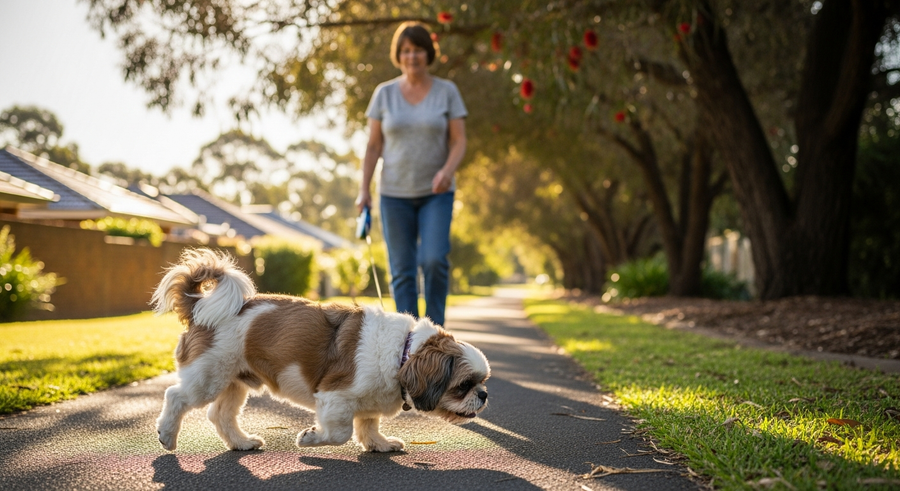
Most owners start thinking about joint supplements when they notice a problem: a slight limp, hesitation on the stairs, or a dog that's slower to get up in the morning. That instinct is right, but starting at the first sign of stiffness means the process has already been underway for some time.
There is a growing consensus among vets that proactive supplementation, starting before symptoms appear, is a more effective strategy than reactive supplementation after joint degradation has begun. The reasoning is straightforward: collagen and connective tissue maintenance are ongoing processes, and keeping them supported daily is easier than trying to rebuild depleted structures.
A practical timeline for Shih Tzus:
- From 4 to 5 years old: Consider starting a daily joint supplement as part of routine preventive care. This is particularly relevant if your Shih Tzu has been diagnosed with early-grade patellar luxation (Grade 1 or 2), has a stocky build, or is moderately active.
- From 7 years old onwards: At this age, Shih Tzus are considered senior. Daily joint support is worth discussing with your vet as standard maintenance, even in dogs that appear comfortable and mobile.
- Any age with a diagnosis: If your vet has identified patellar luxation, hip dysplasia, or early signs of IVDD, joint supplements can be part of a broader management plan. Always follow your vet's guidance on what is appropriate alongside any prescription treatment.
Your vet can assess your dog's joint health directly through examination and, if needed, X-rays. That assessment should always inform the decision. A supplement is a support tool, not a substitute for professional diagnosis.
Not sure where to start with your Shih Tzu's health? The Hero Health Assessment takes 2 minutes and gives you a personalised supplement plan based on your dog's age, weight, and lifestyle.
Start the Free AssessmentChoosing the Right Supplement for Your Shih Tzu
Once you have decided to try a joint supplement, the practical question is which product is actually worth buying. Here are the criteria that matter most for Australian Shih Tzu owners.
Format: Chews vs Powders vs Liquids
Shih Tzus can be particular eaters. Their small mouths and occasionally fussy opinions on new foods mean a supplement they will actually consume consistently matters more than one they reject after three days. Soft chew formats tend to work well for small breeds because they sit between a treat and a supplement in the dog's perception. Powders mixed into food are reliable for dogs with less discerning palates. Liquids are effective but can be tricky to dose accurately for very small dogs.
Australian-Made vs Imported
Australia has stricter manufacturing standards for companion animal supplements than many countries. Products made under Australian Good Manufacturing Practice (GMP) conditions have been subject to quality controls that imported products may not match. Look for "Made in Australia" on the label and check whether the product has been reviewed by a vet or registered with a veterinary authority.
Ingredient Transparency
A product that lists active ingredient amounts is more trustworthy than one that uses proprietary blends without disclosed quantities. For small dogs like Shih Tzus, dosing accuracy matters. Know what you are giving and how much per serve.
No Unnecessary Fillers
Shih Tzus can be sensitive to dietary changes, and some are prone to skin reactions. A supplement free from wheat, grain, and artificial additives reduces the risk of an adverse response. Check the inactive ingredients as carefully as the active ones.
Hero's Joint Daily Chews are Australian-made and vet-reviewed. They use MSM, Collagen Peptides, Turmeric, and Vitamin C, are free from animal products and grain, and are formulated for daily use in a chew form dogs take willingly. If you want to see whether they suit your Shih Tzu, you can find them at Hero Joint Supplement.
Supporting Joint Health Beyond Supplements
A supplement is one part of the picture. These practical habits make a real difference alongside daily joint support.
Weight Management
Shih Tzus are prone to weight gain. Even a modest amount of extra weight creates a measurable increase in joint load, particularly on the knees. Keeping your Shih Tzu at a healthy weight is arguably the most impactful thing you can do for their long-term joint health. Your vet can give you a target range based on your dog's frame.
Low-Impact Exercise
Shih Tzus do not need intense exercise, but they do need daily movement to keep joints lubricated and muscles supporting the joint structures. Short, consistent walks on flat ground are better than occasional longer sessions. Avoid repetitive stair climbing where possible, and provide ramps or steps to elevated furniture if your dog sleeps on your bed.
Warm-Up and Cool-Down
Let your Shih Tzu move gently for a few minutes before a walk rather than going straight from a nap to a brisk pace. Short warm-ups reduce the load on cold, stiff joints. This matters more for older dogs and in cooler Australian mornings.
Regular Vet Check-ins
Patellar luxation grades can progress. What is Grade 1 at age three can become Grade 2 or 3 by age seven, and the management changes at each stage. Catching progression early means more options for keeping your dog comfortable. Annual orthopaedic checks are reasonable for Shih Tzus from middle age onwards.
For more on your Shih Tzu's full health picture as they age, our article on Shih Tzu lifespan and what affects it covers what changes to expect across their life stages.
The Bottom Line
Shih Tzus are more joint-vulnerable than their small size might suggest. Their build predisposes them to patellar luxation and spinal stress, and the signs often develop slowly over years before owners notice anything obvious. Starting a quality joint supplement around age 4 to 5, before symptoms appear, gives the body something to work with rather than trying to repair what has already worn down.
Look for ingredients with a real evidence base: MSM, Collagen Peptides, Turmeric, and Vitamin C. Choose an Australian-made, grain-free, vet-reviewed product in a format your dog will actually take. And keep your vet in the loop, especially if your Shih Tzu has an existing diagnosis or you are noticing early signs of stiffness.
Every Shih Tzu is different. If you want to know exactly what your dog needs based on their age, weight, and lifestyle, the Hero Health Assessment will give you a personalised recommendation in under two minutes.