

French Bulldogs are one of Australia's most popular dog breeds, and it's easy to see why. They're funny, loyal, endlessly affectionate, and perfectly sized for apartment living. But under all that charm, Frenchies carry a genetic load that makes joint and spinal health a real concern from a young age.
If you share your home with a French Bulldog, understanding joint supplements is not just smart planning; it's part of being a great owner. This guide covers why Frenchies are prone to joint issues, what ingredients actually help, and what to look for when choosing a supplement in Australia in 2026.
Why French Bulldogs Need Joint Support More Than Most Breeds
French Bulldogs are a brachycephalic and chondrodystrophic breed, meaning their skeletal structure is fundamentally different from longer-limbed dogs. This compact, low-to-the-ground build gives them their distinctive look but also puts specific stress on their spine and hips.
There are three main joint-related concerns Frenchie owners should know about:
Hemivertebrae
Frenchies commonly have vertebrae that did not develop into a normal wedge shape. The French Bulldog Club of NSW notes that the average French Bulldog has at least three hemivertebrae, typically in the thoracic region where the rib cage provides extra stability. When hemivertebrae occur in the lumbar region or thoracolumbar junction, they can cause spinal instability and disc problems.
Hip Dysplasia
The breed median hip score in Australia sits at 15, with the average around 17.77 (ANKC data, February 2022). Shallow sockets and loose ligaments are the most common findings. While not every Frenchie develops clinical hip dysplasia, the structural risk is present in most of the breed.
Intervertebral Disc Disease (IVDD)
IVDD occurs when the cushioning discs between vertebrae bulge or rupture into the spinal cord space. French Bulldogs are at elevated risk due to their spinal conformation. Signs include reluctance to exercise, difficulty climbing stairs, neck stiffness, and changes in gait. Early weight management, controlled exercise, and targeted nutrition can all reduce the risk.
 Regular gentle joint checks help you spot early stiffness in your Frenchie before it becomes a bigger problem.
When to Start Thinking About Joint Supplements
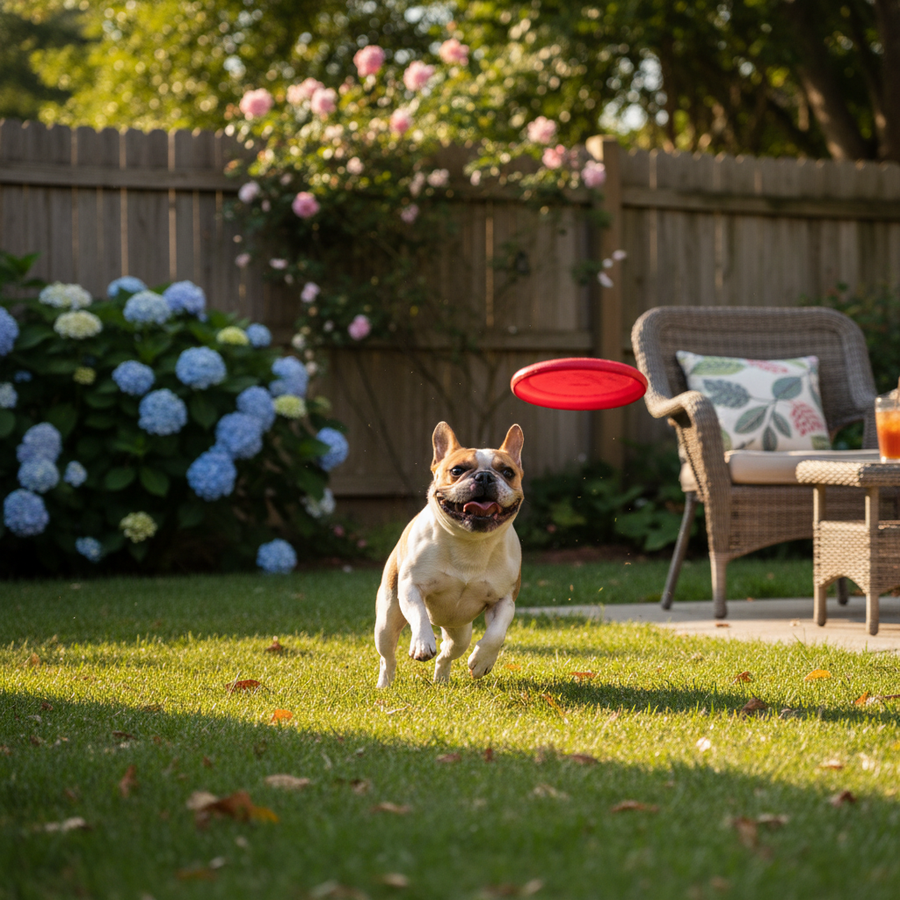
This is one of the most common questions Frenchie owners ask, and the answer might surprise you. Most vets and canine rehabilitation specialists recommend starting joint support early, before symptoms appear, rather than waiting for a problem to develop.
For French Bulldogs, earlier support makes more sense than for most breeds because the structural risk is baked into the genetics. You're not trying to fix a problem that happened to your dog; you're managing a known vulnerability from the start.
A good time to begin is around 12 to 18 months, once your Frenchie has finished growing. Some owners start sooner under vet guidance, particularly if the dog has a confirmed diagnosis of hemivertebrae or hip dysplasia. Read our guide on early signs your dog needs joint support to know what to watch for.
Key Ingredients in Joint Supplements for French Bulldogs
Not all joint supplements are made equal. Here's a breakdown of the ingredients with the most evidence behind them, and how they apply to the specific needs of French Bulldogs.
MSM (Methylsulfonylmethane)
MSM is an organic sulfur compound found naturally in many foods. Sulfur is essential for forming collagen and keratin, the structural proteins that make up cartilage, tendons, and ligaments. In joint supplements, MSM is valued for its role in supporting the production of these structural proteins and for its anti-inflammatory properties. For a breed like the French Bulldog, where structural joint integrity matters so much, MSM is a logical foundational ingredient.
Collagen Peptides
Collagen is the most abundant protein in joint cartilage. As dogs age, natural collagen production slows. Supplementing with collagen peptides provides the amino acid building blocks the body uses to maintain and repair joint tissue. A 2024 PLOS One study found that oral bioactive collagen peptides improved gait and quality of life in dogs with osteoarthritis, with results visible within 12 weeks. For Frenchies, whose spinal discs and hip cartilage are under constant load, supporting collagen turnover is a high-value strategy.
Turmeric (Curcumin)
Turmeric contains curcumin, a polyphenol with well-documented anti-inflammatory properties. Chronic low-grade joint inflammation is common in breeds with structural issues, and turmeric offers a natural approach to managing it. A randomised double-blind study in dogs with osteoarthritis found that a supplement combining curcuminoids with hydrolysed collagen and green tea extract significantly improved mobility scores. For Frenchies, turmeric can be particularly useful during periods of increased activity or warmer weather when inflammation tends to flare.
Vitamin C (Ascorbic Acid)
Vitamin C plays a direct role in collagen synthesis. Without adequate ascorbic acid, the body cannot form the collagen chains needed to build and repair cartilage. It also acts as an antioxidant, helping to neutralise free radicals that contribute to joint tissue breakdown. Including Vitamin C alongside collagen peptides creates a synergistic effect: you're providing both the building blocks and the catalyst needed for collagen production.
What Hero Pet Health's Joint Supplement Contains
Hero's Joint Daily Chews are built around a four-ingredient active formula: MSM, Collagen Peptides, Turmeric, and Ascorbic Acid (Vitamin C). Each of these addresses a specific aspect of joint health rather than loading the formula with a long list of compounds at sub-effective doses.
A few things worth knowing before you buy:
- The formula is grain-free and free from animal products, making it suitable for Frenchies with food sensitivities
- It's vet reviewed and made in Australia
- It comes in a soft chew format, approximately 60 per pack, which makes daily dosing easy for dogs
- One-time price is $59.95 AUD; subscription price is $50.96 (20% off)
- Backed by a lifetime money-back guarantee
One important clarification: the formula does not contain glucosamine, chondroitin, or green-lipped mussel. These are common ingredients in many popular joint supplements, and you may see them recommended elsewhere. This is a collagen-first approach combined with MSM and anti-inflammatory turmeric. If you're comparing options, see our full guide to the best dog joint supplements in Australia for 2026 for a detailed comparison across different formulation approaches.
Glucosamine and Chondroitin: Popular Ingredients With a Different Approach
Glucosamine and chondroitin are among the most widely used joint supplement ingredients globally. They work by supporting the production of glycosaminoglycans, the structural molecules in cartilage, and helping inhibit cartilage-degrading enzymes. They're worth understanding, even if some formulas take a different path.
For French Bulldogs, the evidence on glucosamine and chondroitin is mixed. They're generally considered safe and are widely recommended by vets for larger breeds with hip dysplasia. Whether they're the optimal choice for the specific joint profile of a Frenchie, with its combination of spinal, disc, and hip vulnerabilities, is less clear. That's part of why collagen-forward approaches have attracted more research attention in recent years.
Green-Lipped Mussel: Another Popular Option Not in Hero's Formula
Green-lipped mussel (GLM) from New Zealand is a popular joint supplement ingredient in Australia, valued for its omega-3 fatty acids and unique eicosatetraenoic acid content, which contribute to anti-inflammatory pathways. Several Australian vets recommend GLM products for dogs with arthritis or joint pain.
GLM is not part of Hero's formulation. If you're interested in comparing GLM-based products against collagen-forward approaches, our 2026 supplement comparison guide covers the main options available in Australia and the evidence behind each.
Supporting Joint Health Beyond Supplements
Joint supplements work best as part of a broader approach. For French Bulldogs specifically, a few lifestyle factors make a measurable difference:
Weight Management
Even a small amount of extra weight puts disproportionate load on a Frenchie's already-stressed spine and hips. Keeping your dog lean is arguably the single most impactful thing you can do for long-term joint health. French Bulldogs are prone to weight gain, especially if they're not getting enough controlled exercise, so monitoring body condition score regularly is important.
Low-Impact Exercise
Frenchies need regular movement to maintain muscle support around their joints, but high-impact activities like rough play, jumping, and ball-chasing on hard surfaces can accelerate disc and cartilage wear. Controlled walks, swimming, and hydrotherapy are ideal. Avoid letting your Frenchie jump on and off furniture; use ramps or steps where possible.
Ergonomic Living Space
Slip-resistant floor surfaces reduce the risk of sudden twisting injuries that can aggravate spinal issues. Orthopaedic bedding that supports the spine and reduces pressure points makes a real difference for Frenchies who spend a lot of time resting, which is most of them.
Regular Vet Check-Ups
Annual or bi-annual assessments, particularly checking spinal mobility and hip range of motion, allow you to track changes over time and intervene early if needed. If your Frenchie has confirmed hemivertebrae or a hip score above the breed median, more frequent monitoring is warranted.
How to Choose a Joint Supplement for Your French Bulldog in Australia
With dozens of products available at pet stores and online, it can be hard to know where to start. Here's a practical checklist:
- Check the active ingredients list. Look for ingredients with research behind them: collagen peptides, MSM, turmeric, omega-3s, or glucosamine/chondroitin depending on your vet's recommendation.
- Match the formulation to your dog's needs. A Frenchie with confirmed IVDD or spinal concerns may benefit from an anti-inflammatory-forward approach. One with hip dysplasia may do well on a cartilage-support formula.
- Choose Australian-made or Australian-standard products. Manufacturing and labelling standards matter. Australian-made products are subject to TGA and APVMA oversight.
- Look for vet-reviewed formulas. This doesn't mean a product cures anything, but it does mean a qualified vet has reviewed the ingredient rationale and dosing.
- Consider format. Frenchies can be picky eaters. Soft chews tend to have higher acceptance rates than powders or tablets.
- Start with a money-back guarantee. Not every product suits every dog. A satisfaction guarantee lets you trial without risk.
Not sure which product is right for your Frenchie? Take our free dog health assessment for a personalised recommendation based on your dog's age, weight, and health history.
The Bottom Line
French Bulldogs are extraordinary companions, but their structural genetics mean joint and spinal health needs more attention than in other breeds. The good news is that with the right support, most Frenchies enjoy excellent mobility and comfort well into their senior years.
A quality joint supplement, one with evidence-based ingredients, made to Australian standards, and matched to your dog's specific needs, is one of the most practical investments you can make in your Frenchie's long-term wellbeing. Pair it with weight management, appropriate exercise, and regular vet check-ups, and you're giving your dog the best possible foundation.
For a broader look at joint health options across all breeds, visit our dog joint health hub or read our full 2026 joint supplement comparison for Australian dogs.