

French Bulldogs have become one of the most beloved dog breeds in Australia, and it's easy to see why. Their playful personalities, compact size, and affectionate nature make them perfect for apartment living and busy families alike. But behind those iconic bat ears and squishy faces lies a breed with a genuinely complex set of health needs that every owner should understand before bringing one home.
French Bulldogs are a brachycephalic breed, which means their skull shape and compressed facial structure create a cascade of health vulnerabilities that no amount of love alone can prevent. Understanding these issues isn't about fear -- it's about preparation. The owners who know what to watch for are the ones whose Frenchies live longer, more comfortable lives.
This guide covers the most common French Bulldog health problems in Australia, what causes them, the warning signs to watch, and what you can do to support your dog's wellbeing at every life stage.
Brachycephalic Obstructive Airway Syndrome (BOAS)
BOAS is the defining health challenge of the French Bulldog breed. It refers to a group of upper airway abnormalities that stem directly from the breed's flat facial structure. A 2025 study published in Companion Animal Health and Genetics found that 64% of French Bulldogs showed signs consistent with BOAS -- making it the most prevalent health condition in the breed.
The core problem is that selective breeding for a flat face has left Frenchies with the same amount of soft tissue as a longer-snouted dog, compressed into a much smaller space. This creates stenotic nares (narrow nostrils), an elongated soft palate that partially blocks the airway, and often a narrowed trachea. The result is a dog that has to work much harder to breathe than a dog with a normal snout.
Signs your Frenchie may have BOAS
- Loud snoring, snorting, or gurgling sounds at rest
- Noisy or laboured breathing during minimal activity
- Blue-tinged gums during or after exercise (emergency sign)
- Gagging, regurgitating, or vomiting, especially after eating quickly
- Reluctance to exercise or tiring very quickly on walks
- Open-mouth breathing at rest
Mild BOAS can often be managed with lifestyle adjustments: keeping your Frenchie at a healthy weight (even a small amount of extra weight worsens the airway restriction), avoiding exercise in heat or humidity, and using a harness instead of a collar. For more moderate to severe cases, surgical correction -- widening the nostrils and trimming the soft palate -- can make a significant and lasting difference in quality of life. Many Australian vets recommend this surgery while dogs are young, often around the same time as desexing.
If you've ever wondered why your French Bulldog snores so loudly, the answer almost always traces back to BOAS anatomy.
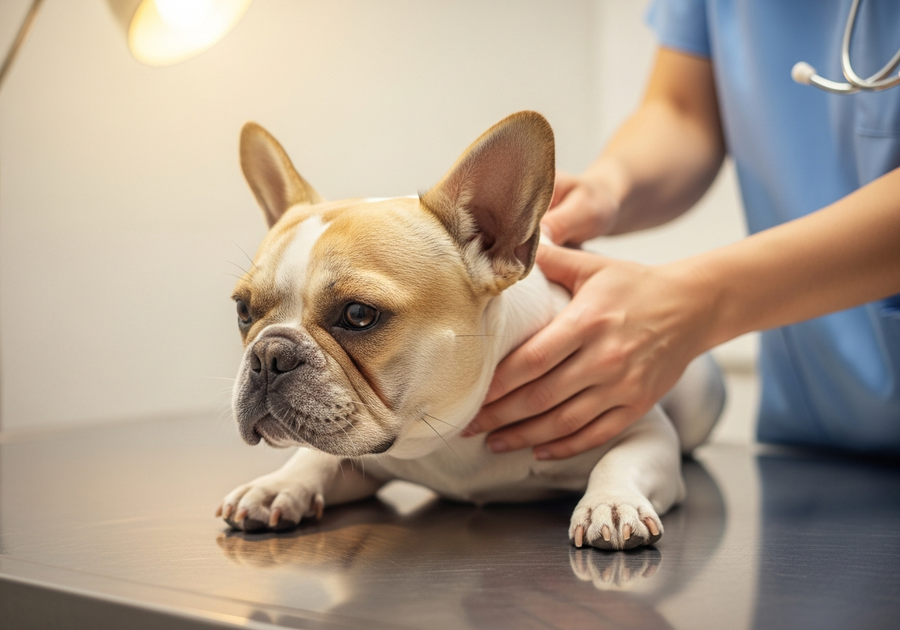
Skin Fold Dermatitis and Skin Conditions
Those deep facial wrinkles are part of what makes Frenchies so endearing, but they require active maintenance. Skin fold dermatitis develops when moisture, food debris, and bacteria accumulate in the folds around the face, tail, and vulva. Without regular cleaning, the trapped warmth creates ideal conditions for yeast and bacterial infections that cause redness, odour, and real discomfort for your dog.
French Bulldogs are also one of the breeds most commonly affected by environmental and food allergies. Their skin barrier function tends to be compromised, which means allergens penetrate more easily and inflammatory responses are more pronounced. This often shows up as:
- Chronic paw-licking or chewing
- Red, inflamed skin around the face, ears, paws, or belly
- Hot spots that recur in the same locations
- Secondary bacterial infections (pyoderma) on the skin
Daily fold cleaning with a damp cloth or vet-approved wipe, followed by thorough drying, is the single most effective prevention for fold dermatitis. For allergies, identifying the trigger through an elimination diet or allergy testing gives you a real path forward rather than just managing flare-ups. Our guide to French Bulldog allergies and how to support them goes deeper on this topic.
Skin health in French Bulldogs is also closely connected to gut health. Disrupted gut microbiomes are increasingly linked to skin inflammation and allergic responses in dogs. Supporting digestive health with a consistent diet and gut-friendly supplementation may help reduce the frequency and intensity of skin flare-ups.
Ear Infections (Otitis Externa)
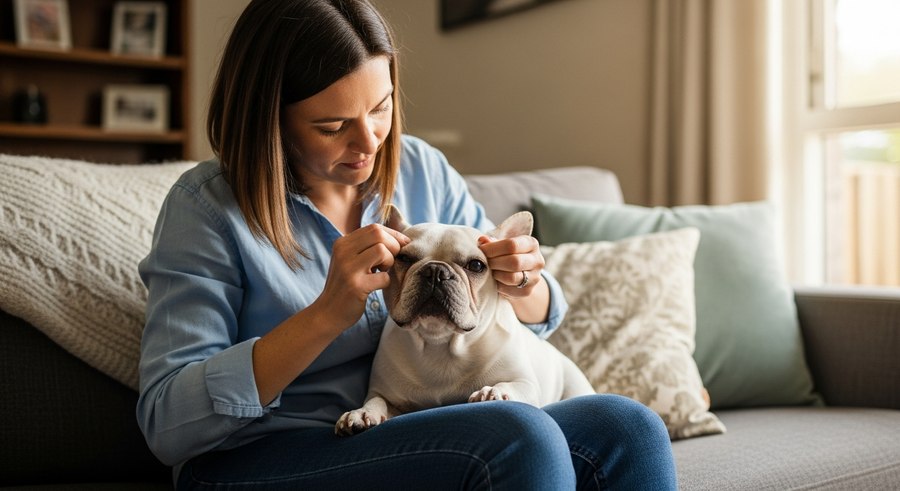
French Bulldogs are prone to ear infections, and the anatomy is the core reason. Their flat facial structure often results in narrower ear canals, which trap moisture, dead skin cells, and earwax more readily than most breeds. Add in the skin allergy tendency noted above, and you have a breed where ear infections can become a frustratingly recurring issue if not actively prevented.
Common signs of an ear infection in Frenchies include head shaking, scratching at the ears, dark or waxy discharge, and a noticeable odour from the ear canal. If your dog seems unusually uncomfortable or the ear looks inflamed and red, a vet examination is the right first step -- catching infections early prevents them from becoming chronic.
Regular ear cleaning at home, using a vet-recommended solution (not cotton swabs, which push debris deeper), goes a long way toward prevention. Ask your vet to demonstrate the correct technique. Our step-by-step guide to keeping your French Bulldog's ears clean covers everything you need to build this into a routine.
Spinal Problems and IVDD
Intervertebral disc disease (IVDD) is a serious spinal condition that affects French Bulldogs at a higher rate than most breeds. The chondrodystrophic (short-limbed) body type of Frenchies means their spinal discs age and degenerate faster than those of longer-bodied dogs. Hemivertebrae -- malformed wedge-shaped vertebrae that can compress the spinal cord -- are also relatively common in the breed and may be present from birth.
IVDD occurs when a spinal disc ruptures or bulges, pressing on the spinal cord or nerve roots. The severity ranges from mild back pain to partial or complete paralysis of the hindlimbs. Hemivertebrae may cause no symptoms at all, or may progressively compress the spinal cord as the dog grows, causing hind leg weakness and loss of bladder or bowel control.
Warning signs of spinal problems in French Bulldogs
- Crying out or yelping when picked up
- Reluctance to jump, climb stairs, or move normally
- A hunched back or tucked-under posture
- Wobbling or weakness in the hind legs
- Loss of coordination or dragging the back feet
- Accidents indoors in a house-trained dog (loss of bladder or bowel control)
Any sign of hind leg weakness or sudden pain warrants urgent veterinary attention. IVDD can progress quickly, and prompt treatment -- whether medical management with strict rest, or surgical decompression in severe cases -- significantly improves outcomes. Keeping your Frenchie at a healthy weight and using ramps instead of stairs for couch access reduces stress on the spinal discs over time.
Eye Problems
French Bulldogs' large, prominent eyes are part of the breed's charm, but the anatomy that creates that appealing look also leaves their eyes more exposed and vulnerable. The shallow eye sockets of brachycephalic breeds mean less natural protection from the eyelids and surrounding bone structure.
The most common eye issues in Frenchies include:
- Cherry eye: Prolapse of the third eyelid gland, appearing as a red bulge in the inner corner of the eye. Requires surgical correction.
- Corneal ulcers: Scratches or abrasions on the cornea from dust, grass seeds, or rough play. These can worsen quickly and need prompt vet attention.
- Entropion: Inward rolling of the eyelid, causing the lashes to rub against the cornea. Causes chronic irritation and may need surgery.
- Conjunctivitis: Inflammation or infection of the eye, often linked to the same allergies that affect the skin.
Routine checks of your Frenchie's eyes -- looking for redness, discharge, cloudiness, or signs that the dog is pawing at their face -- make it much easier to catch problems early. Rinse eyes with sterile saline if you notice debris or mild irritation, and book a vet visit promptly if symptoms persist or worsen.
Digestive Issues and Sensitive Stomachs
French Bulldogs are famous for their gas, and while that gets plenty of laughs, chronic digestive problems are no joke for the dog experiencing them. Frenchies have notoriously sensitive digestive systems, and the combination of their shortened snout (which causes them to swallow more air while eating), food allergies, and a tendency toward gut microbiome imbalances makes digestive discomfort genuinely common in the breed.
Signs of ongoing digestive issues include frequent loose stools or diarrhoea, excessive flatulence, bloating, vomiting after meals, or loss of appetite. Food intolerances are a common underlying cause -- particularly to common protein sources like chicken or beef, and to certain grains.
A few practical steps that help many Frenchie owners:
- Slow feeder bowls to reduce air ingestion while eating
- Smaller, more frequent meals rather than one large serving
- Consistent, high-quality diet without frequent changes
- Adding gut-supporting supplementation where appropriate
The connection between gut health and French Bulldog wellbeing runs deeper than most owners realise. Gut health affects immune function, skin condition, energy levels, and even mood. If your dog struggles with recurring digestive symptoms, our guide to understanding your French Bulldog's digestive health and our deeper look at probiotics for French Bulldogs are worth reading.
Joint Health and Hip Dysplasia
While French Bulldogs are a small breed, they are not exempt from joint problems. Hip dysplasia -- a malformation of the hip joint that leads to instability and progressive arthritis -- affects Frenchies at a meaningful rate, particularly given their compact, heavy-boned build relative to their size. Patellar luxation (kneecap dislocation) is another joint condition commonly seen in the breed.
Joint problems in Frenchies can be subtle in the early stages. Watch for stiffness after rest, reluctance to jump or play with the same enthusiasm as before, a bunny-hop gait when running, or sensitivity around the hips when being handled. Weight management is one of the most impactful things you can do for joint health, since extra weight accelerates cartilage breakdown and makes existing joint conditions more painful.
For Frenchie owners thinking proactively about joint support, our guide to the best joint supplements for French Bulldogs in Australia covers what to look for and what the evidence actually supports.
How Long Do French Bulldogs Live, and How Do Health Problems Affect Lifespan?
French Bulldogs typically live between 10 and 14 years in Australia, with the average sitting around 11 to 12 years. Their health challenges do have a real impact on longevity -- Frenchies with unmanaged BOAS, obesity, or recurring infections tend to have shorter, less comfortable lives than those whose owners stay on top of preventive care.
The good news is that proactive management of the conditions above genuinely extends and improves the quality of life for most Frenchies. Regular vet check-ups (at least annually, twice yearly once they're over 7), maintaining a healthy weight, staying current with dental care, and addressing problems early rather than waiting are the highest-leverage things you can do.
For a full picture of what to expect at each life stage, our guide to French Bulldog lifespan in Australia covers breed-specific longevity factors in detail.
Building a Preventive Care Routine for Your French Bulldog
Given the breadth of health vulnerabilities Frenchies carry, building a consistent care routine is more important for this breed than almost any other. This doesn't need to be complicated -- a few minutes of daily attention catches most problems before they become serious.
A practical daily and weekly routine for Australian Frenchie owners:
- Daily: Clean facial folds with a damp cloth and dry thoroughly. Check ears briefly for odour or discharge. Observe breathing quality and energy levels.
- Weekly: Check eyes for redness or discharge. Brush teeth (daily is ideal; weekly is the minimum for dental health). Run hands along the spine and hips to check for any sensitivity.
- Monthly: Trim nails. Do a thorough skin check, including tail pocket and any skin folds around the vulva or armpits.
- Annually (minimum): Full vet examination including weight check, dental assessment, eye exam, and spinal evaluation.
Nutrition plays a foundational role in all of the above. A diet appropriate for your Frenchie's life stage, with clear protein sources and no common allergens if your dog has sensitivities, reduces the risk of allergy flare-ups, digestive issues, and weight gain simultaneously. If you're uncertain about the best diet for your dog, our complete guide to French Bulldog diet and nutrition is a good starting point.
Not sure which health issues your Frenchie is most at risk for? The Hero Health Assessment takes 2 minutes and gives you a personalised supplement and care plan based on your dog's age, weight, and lifestyle.
Start the Free AssessmentWhen to See a Vet
French Bulldogs can mask discomfort surprisingly well. By the time many owners notice a problem, it has often been developing for a while. As a general rule, any change in breathing pattern, energy level, eating behaviour, movement, or toileting that lasts more than 24 to 48 hours is worth a vet call.
Urgent veterinary attention (same day) is warranted for:
- Blue or grey gums (oxygen deprivation)
- Collapse or inability to stand
- Sudden hind leg weakness or paralysis
- Laboured breathing at rest
- Eye injury, cloudiness, or sudden eye pain
- Vomiting or diarrhoea that continues for more than a few hours, especially with blood present
French Bulldogs are worth the extra care they require. The owners who understand this breed's health profile tend to form the deepest bonds with their dogs, because that understanding translates into attention, routine, and early action when something isn't right.
The Bottom Line
French Bulldogs come with a specific set of health challenges -- primarily breathing difficulties from BOAS, skin and ear issues from their anatomy, spinal vulnerabilities from their body structure, and digestive sensitivities. None of these conditions are inevitable crises. Most can be managed well with awareness, routine preventive care, and a vet relationship built around this breed's needs.
If you're looking at the full picture of what it takes to keep a Frenchie healthy and happy in Australia, start with the big three: airway health, weight management, and regular vet check-ups. Everything else flows from getting those foundations right.
Every Frenchie is different. For a personalised picture of what your dog needs at their current age and health stage, the Hero Health Assessment will give you a specific recommendation in under two minutes.