

French Bulldogs have a reputation that precedes them: the wheezing, the farting, the sensitive stomachs that seem to react to absolutely everything. If you own a Frenchie, you already know that their digestive systems can be genuinely unpredictable. One week they are fine, the next week you are Googling "why is my French Bulldog's stomach making noises" at 11pm.
Probiotics have become one of the most talked-about daily supplements for dogs with sensitive guts, and French Bulldogs are consistently at the top of the conversation. But the probiotic market is crowded, and not all products are created equal. This guide covers what to look for, why Frenchies specifically benefit from gut support, and how to choose something that will actually make a difference.
Why French Bulldogs Struggle With Gut Health
French Bulldogs are brachycephalic, meaning they have shortened skulls and flat faces. Most people know this causes breathing challenges, but fewer people realise it also affects digestion. Frenchies tend to swallow a lot of air when they eat and drink because of how their airways are structured. That extra air has to go somewhere, which explains the legendary Frenchie flatulence.
Beyond that, French Bulldogs are genetically predisposed to food sensitivities. A significant proportion of Frenchies have reactions to common protein sources and grains, which can cause everything from loose stools to skin flare-ups. Their gut lining is often more reactive than average, and the microbiome (the community of bacteria and other microorganisms living in the digestive tract) can become imbalanced more easily.
There is also an antibiotic factor. French Bulldogs are prone to skin fold infections, ear infections, and respiratory issues that often require antibiotic treatment. Antibiotics do not discriminate between harmful and beneficial bacteria, so courses of treatment frequently disrupt the gut flora that keeps digestion running smoothly. Understanding your Frenchie's full health picture helps here. For a comprehensive overview of what Frenchies are predisposed to, the French Bulldog health problems guide covers the most common conditions owners should know about.
The result is that many Frenchies spend a fair amount of their lives with guts that are not quite right. Not severely unwell, just unsettled. That is exactly where daily probiotic support tends to help most.
What Probiotics Actually Do in the Gut
A probiotic is a live microorganism that, when given in adequate amounts, provides a health benefit. In the context of a dog's digestive tract, probiotics work by supporting the balance of the gut microbiome, competing with less beneficial microorganisms for space and resources, and helping strengthen the gut lining.
Research has increasingly shown the connection between gut health and immune function. A 2020 review published in Frontiers in Veterinary Science noted that roughly 70% of the immune system is located in the gastrointestinal tract, making gut health directly relevant to how well a dog's immune system responds to challenges. For Frenchies, who are already prone to immune-mediated skin conditions and allergies, this connection matters.
Probiotics can also help with stool consistency, nutrient absorption, and reducing gas. They are not a cure for structural issues (a Frenchie with a severely narrowed airway still needs a vet), but for the everyday gut instability many Frenchies experience, they address the root cause rather than just managing symptoms.
Not All Probiotics Are the Same: Why Species Matters
Most dog probiotics on the market use bacterial strains: Lactobacillus acidophilus, Bifidobacterium animalis, Enterococcus faecium, and similar. These can work well for general microbiome support, but they have one significant limitation: they are wiped out by antibiotics. If your Frenchie is on a course of antibiotics for a skin fold infection, a bacterial probiotic taken at the same time will simply be killed before it can do anything useful.
That is why some vets and pet owners choose a yeast-based probiotic instead. Saccharomyces boulardii is a probiotic yeast that behaves quite differently from bacterial strains. Because antibiotics target bacteria and not yeast, S. boulardii survives concurrent antibiotic treatment. This makes it particularly relevant for Frenchies, who are more likely than average to need antibiotics at some point in their lives.
S. boulardii has also been shown to help restore gut flora after antibiotic courses are finished, making it useful both during and after treatment. Research published in the World Journal of Gastroenterology has documented its effectiveness in reducing antibiotic-associated gut disruption across multiple species.
Hero takes a different approach to most probiotic products on the market. Instead of multiple bacterial strains, the formula centres on S. boulardii (a yeast, not a bacterium) at 10 billion CFU per chew. This single-species specialist approach makes it particularly suitable for Frenchies who cycle through antibiotics or whose gut sensitivity stems from ongoing microbiome imbalance rather than a single specific pathogen.
What to Look for When Choosing a French Bulldog Probiotic
With dozens of products available, the key is knowing what separates a genuinely useful probiotic from a mediocre one.
CFU count: CFU stands for colony-forming units, the measure of how many live microorganisms are in each dose. A dose under 1 billion CFU is unlikely to have a meaningful effect. Products in the range of 5 to 10 billion CFU per dose tend to deliver more reliable results for dogs.
Strain transparency: A label that says "probiotic blend" without naming the specific strains is a red flag. You should be able to see exactly what species or strains are in the product. This matters both for effectiveness and for understanding what you are giving your dog.
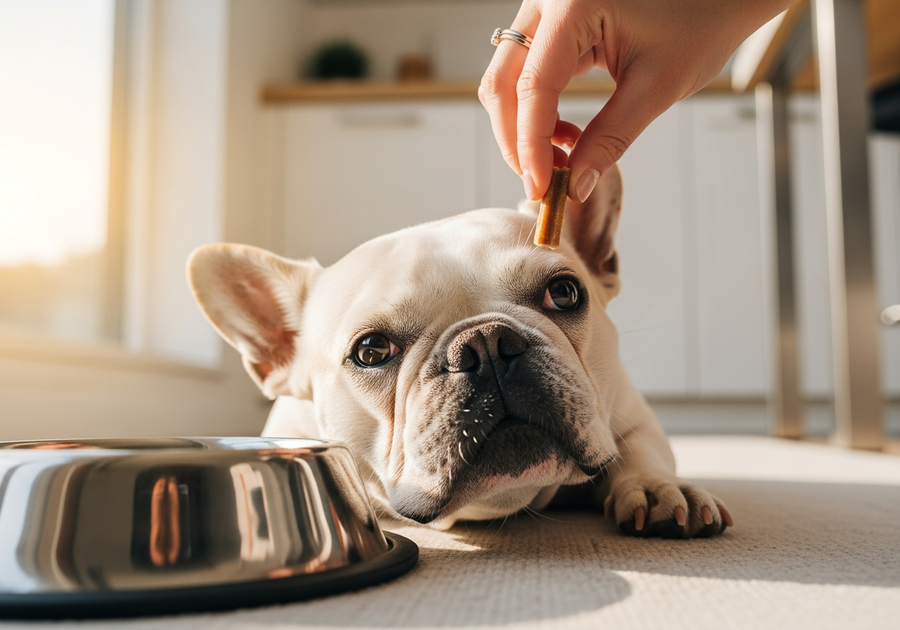
Format: Powder probiotics lose potency quickly once opened and can be tricky to get a dog to eat. Soft chews are generally more palatable and easier to give as part of a daily routine. French Bulldogs, with their particular opinions about food, tend to do better with something that tastes like a treat.
Supporting ingredients: The best probiotic products for dogs with sensitive stomachs often include prebiotics (fibre that feeds the probiotic organisms), digestive enzymes, and ingredients like green banana powder that support the gut lining. These create an environment where the probiotic can actually establish and function.
Grain-free formulation: Given how many Frenchies react to grains and wheat, a grain-free probiotic is worth prioritising. The last thing you want is to trigger a sensitivity through the very product meant to help their gut.
Hero Probiotic Chews: What Makes Them Worth Considering
Hero Probiotic Daily Chews are built around Saccharomyces boulardii at 10 billion CFU per chew. As a yeast-based probiotic, S. boulardii is antibiotic-safe, which is a genuine differentiator for a breed like the French Bulldog. The chews also contain prebiotics, digestive enzymes, green banana powder, bentonite, agave, and pectin, creating a full gut support stack rather than just the probiotic alone.
They are grain-free and wheat-free, which matters for Frenchies with food sensitivities. The soft chew format means most dogs treat them like a snack rather than medicine, making the daily routine easy to maintain. The formula is vet reviewed and made in Australia, with a lifetime money-back guarantee if they do not work for your dog. Each pack contains around 60 chews, priced at $59.95. See the Hero Probiotic Chews for full ingredient details and dosing by weight.
If you want a personalised recommendation based on your Frenchie's age, weight, and specific health concerns, the Hero Health Assessment takes under two minutes and gives you a supplement plan tailored to your dog.
Not sure what your French Bulldog actually needs? The Hero Health Assessment takes 2 minutes and gives you a personalised supplement plan based on your dog's age, weight, and lifestyle.
Start the Free AssessmentSigns Your French Bulldog's Gut Needs Support
Some gut issues in Frenchies are obvious. Others are easy to miss or attribute to something else. Common signs that your French Bulldog's digestive system could benefit from probiotic support include:
Persistent soft or loose stools that are not caused by a specific illness. Many Frenchies have stools that are never quite firm, and this often reflects ongoing microbiome imbalance rather than any single cause.
Excessive gas. Some flatulence is normal for the breed, but gas that is particularly frequent or foul-smelling often indicates fermentation issues in the gut.
Bloating or a visibly swollen belly after meals. This can have multiple causes, so it is worth a vet check, but gut imbalance is often a contributing factor.
Occasional vomiting without a clear cause. One-off incidents happen, but repeated episodes suggest the digestive system is struggling.
Loss of appetite or picking at food. A dog that is off their food often has an unsettled gut as part of the picture.
Skin flare-ups and itching. The gut-skin connection is well-documented. Many Frenchies with chronic skin sensitivities see improvement when their gut health is addressed, because inflammatory responses in the skin are often linked to gut permeability and immune activation.
If your Frenchie has recently finished a course of antibiotics, starting a probiotic immediately after treatment is particularly worthwhile. The microbiome can take weeks to recover on its own, and supporting it actively tends to produce faster results. For more on the broader health concerns Frenchies face, the complete guide to dog probiotics in Australia covers general probiotic benefits across all breeds in more depth.
How to Give Your Frenchie a Probiotic
Consistency matters more than timing. Whether you give the chew with breakfast, with dinner, or as an afternoon snack, the key is that it happens every day. The gut microbiome responds to sustained daily input, not occasional supplementation.
When starting a probiotic for the first time, some dogs experience a brief adjustment period in the first week or two. You might notice a temporary change in stool consistency or slightly more gas before things settle. This is normal and usually resolves within a couple of weeks as the gut flora adjusts. If it persists beyond two weeks or your dog seems unwell, check with your vet.
The easiest approach for most owners is to give the chew at the same time as the main meal. French Bulldogs tend to be food-motivated, so pairing it with feeding time makes it easy to build the habit. If your Frenchie is a picky eater (they can be), try offering the chew as a standalone treat before the meal rather than mixing it into food.
French Bulldogs are prone to a range of health concerns beyond gut issues, and staying across these helps you be proactive rather than reactive. The French Bulldog lifespan guide covers what to expect across different life stages and which health factors most influence longevity.
What the Research Shows
The science on probiotics for dogs has grown considerably in the past decade. A clinical study in Veterinary Medicine International found that probiotic supplementation improved stool quality and reduced gastrointestinal episodes in dogs with sensitive digestive systems. Research specifically on S. boulardii in dogs and other companion animals has shown consistent benefits for antibiotic-associated diarrhoea and microbiome restoration following disruption.
The American Kennel Club's guidance on dog probiotics notes that while the field continues to develop, probiotics are considered safe for dogs and have shown genuine benefit in cases of diarrhoea, stress-related digestive issues, and microbiome disruption following antibiotic treatment.
For a breed as predisposed to gut sensitivity as the French Bulldog, the benefit-to-risk ratio clearly favours supplementing. There is meaningful upside and minimal downside when using a quality product with a well-researched strain and an appropriate CFU count.
The Bottom Line
French Bulldogs have genuinely sensitive guts, and that is not going to change with breed alone. But the right daily probiotic support can make a real difference: firmer stools, less gas, better resilience through antibiotic courses, and a gut-skin connection that often helps with the skin sensitivities many Frenchies carry.
Look for a yeast-based option if your Frenchie cycles through antibiotics regularly, prioritise grain-free formulations, and check the CFU count before buying. A product that works is one your dog will actually eat every day, so format and palatability matter too.
Every French Bulldog is different. If you want to know exactly what your dog needs based on their specific age, weight, and health history, the Hero Health Assessment will give you a personalised recommendation in under two minutes.