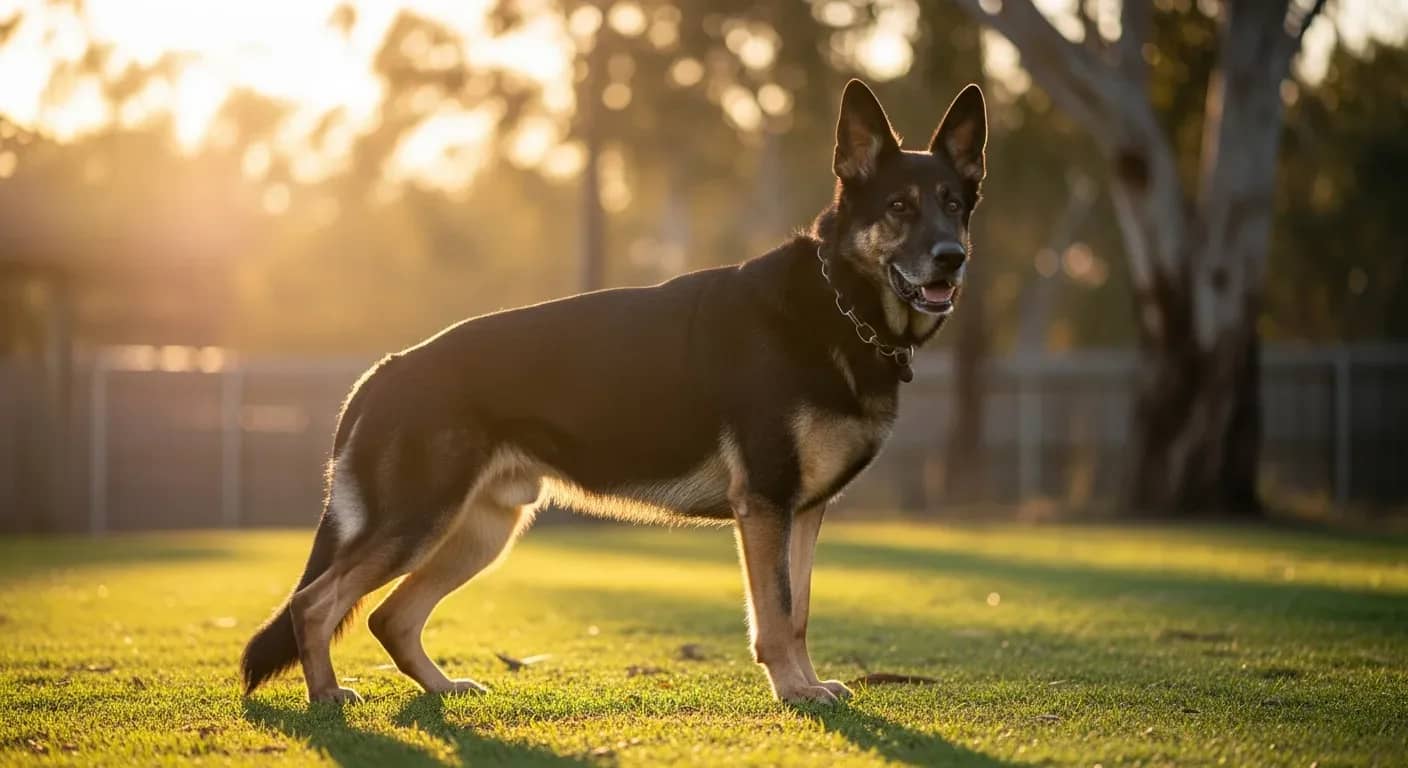

Border Collies are wired differently. The same trait that makes them brilliant on a farm or at agility, that quiet, watchful intensity, also means their gut takes a hit when life gets noisy. Stress, antibiotics, sudden food changes, a long drive in the car: each one nudges the microbiome out of balance, and you see it in the bowl, the backyard, and the body language. If your Border Collie has been having soft stools, gassy afternoons, or a sensitive stomach since starting a course of antibiotics, a daily probiotic is one of the simplest tools you can add to their routine.
This guide walks through why Border Collies in Australia tend to need a little extra gut support, what to look for in a probiotic that actually works for the breed, and how to fold it into a daily routine without making mealtimes a chore. We will also cover the difference between yeast and bacterial probiotics, because most products on the shelf at Petbarn are bacterial, and Border Collies on antibiotics often need the yeast kind.
Why Border Collies Are Prone to Gut Issues
Border Collies are working dogs by design. High drive, high energy, and high cognitive load. Research published in npj Biofilms and Microbiomes (2022) looked at the microbiome of working dogs and found measurable differences in gut bacteria between high-performing and lower-performing dogs, and a documented shift in microbiome composition after stressful events like air travel. For a breed that runs on stimulation, the gut and the nervous system are in constant conversation.
The Vet Shed and Lyka have both flagged sensitive stomachs as one of the most common owner concerns for Border Collies in Australia. In real terms, that looks like:
- Loose stools or full-blown diarrhoea after switching kibble brands
- Excess gas, especially in the late afternoon
- Occasional vomiting (yellow bile) on an empty stomach
- Itchy skin or hot spots that flare alongside digestive upsets
- Reluctance to eat the morning meal after a stressful day
None of these are things you have to live with. Most resolve once the gut microbiome is back in balance, and that is exactly what a good probiotic is designed to do. For a fuller picture of what to watch for across the breed, our guide to common Border Collie health problems is a good starting point.
What to Look for in a Probiotic for Border Collies
Walk into any Australian pet shop and you will find a wall of probiotics, most of them bacterial blends marketed with vague claims like "supports digestion." For an active, sensitive breed like a Border Collie, the details matter a lot more than the label suggests. Here is what actually moves the needle.
1. Strain matters more than the number on the front of the pack
A 2018 study published in the Veterinary Record found that dogs with chronic enteropathies showed significant improvements in stool quality, frequency, and clinical activity index when supplemented with Saccharomyces boulardii, a probiotic yeast, compared with placebo. That is a different organism to the bacterial strains in most over-the-counter dog probiotics, and the strain you pick should match the problem you are solving.
2. Antibiotic-safe is non-negotiable for working breeds
Border Collies tend to be active outdoors. Tick borne illness, ear infections, post-surgery recovery, and skin flare-ups all mean antibiotics come up more often than owners expect. Bacterial probiotics get killed off by the same antibiotic your vet prescribed. Yeast probiotics like S. boulardii do not, because antibiotics target bacteria, not yeast. A peer-reviewed veterinary trial cited by FullBucket Health's S. boulardii white paper found that healthy dogs on lincomycin who also received S. boulardii at 20 billion CFU per day had zero antibiotic-associated diarrhoea, while 75% of the control group developed it for an average of 6.5 days.
3. CFU count needs to be high enough to survive the stomach
Look for at least 5 to 10 billion CFU per dose. Anything under that often will not survive stomach acid in meaningful numbers. Hero's Probiotic Daily Chews deliver 10 Billion CFU of S. boulardii per chew, which sits at the upper end of the studied therapeutic range for dogs.
4. Prebiotic support helps the probiotic do its job
A probiotic on its own is the seed. Prebiotics are the soil. Look for a chew that includes prebiotics like green banana powder or pectin alongside the active organism, plus digestive enzymes to help break down food while the gut rebalances.
5. Format your dog will actually eat
Border Collies are smart enough to spit a pill out three days running. A soft chew that tastes like a treat sidesteps the whole battle. The format matters because consistency matters: a probiotic skipped is a probiotic that does not work.
If you want a longer breakdown of how to evaluate options on the Australian market, the probiotics for Border Collies guide covers the broader product category and the gut-brain link in depth.
Hero Probiotic Daily Chews vs Other Australian Options
Most probiotics sold in Australia are bacterial blends. They have a place, particularly for general gut maintenance in a dog with no specific issue. But for a Border Collie dealing with antibiotic recovery, a sensitive stomach, or stress-driven digestive flares, a yeast probiotic is the more targeted choice.
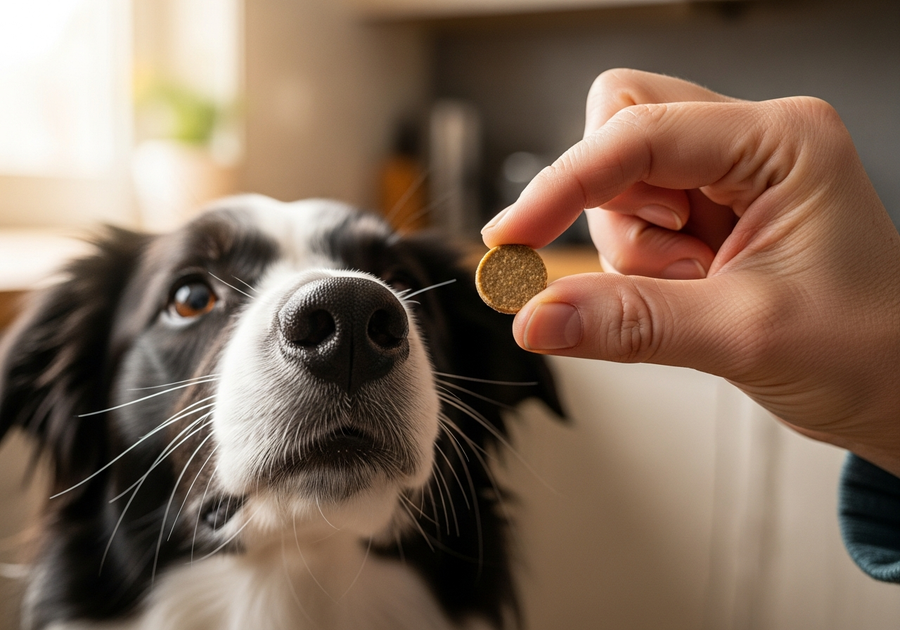
Hero's Probiotic Daily Chews take a deliberately specialist approach: a single species, S. boulardii at 10 Billion CFU per chew, paired with prebiotics, bentonite, digestive enzymes, green banana powder, agave, and pectin. Grain free, wheat free, hypoallergenic, made in Australia and vet reviewed. The single-species formulation is the point, not a gap, because it is the strain backed by the strongest research for the issues most Border Collie owners are trying to solve.
If your dog is on antibiotics right now, this is the most important detail in the article: standard bacterial probiotics will be undone by the antibiotic. Hero Probiotic Daily Chews use S. boulardii specifically because it survives concurrent antibiotic treatment.
How to Introduce a Probiotic to a Border Collie
Border Collies notice everything. New chew, new bowl, new collar, they clock it. Probiotics are no exception. Here is the routine that works for most owners.
Week 1: Start at half a dose
Even though the chew is gentle, a sudden flood of S. boulardii into a dog who has never had a probiotic can occasionally cause a one-day loose stool as the microbiome shifts. Halve the chew for the first three to five days, then move to the full daily dose. Give it with food, ideally with the morning meal so it is in the system before any afternoon stress.
Week 2 to 4: Hit the full daily dose
Most owners see a meaningful change in stool quality within 7 to 14 days. Gas usually settles first, followed by stool firmness, then coat and skin. If your Border Collie is recovering from antibiotics, plan to continue the probiotic for at least the same number of weeks the antibiotic was prescribed for, plus two weeks beyond that to fully restore the microbiome.
Week 4 onwards: Keep going daily
Gut health is not a course you finish. The microbiome is constantly being shaped by food, stress, exercise, and environment. A daily chew gives the gut a steady baseline of support. Think of it like brushing teeth: the value is in the repetition.
Dosing by weight
Hero uses a single weight-based chart across all three products. As a general rule for a Border Collie (typical adult weight 14 to 20 kg), one chew per day is the standard daily dose. Always check the pack label for the exact range, and talk to your vet if your dog is under 6 months, pregnant, or on multiple medications.
When to See the Vet, Not Just Reach for a Chew
Probiotics support a healthy gut. They are not a treatment for serious disease, and they should never replace a vet visit when something is genuinely wrong. Book a vet appointment if your Border Collie has:
- Bloody stool or black tarry stool
- Diarrhoea lasting more than 48 hours
- Vomiting more than twice in a day or any vomiting accompanied by lethargy
- A swollen or painful belly
- Sudden refusal to eat for more than 24 hours
- Suspected ingestion of a foreign object, toxin, or human medication
Border Collies can also carry the MDR1 gene mutation, which affects how they metabolise certain medications. If your vet has not already tested for it, it is worth asking, especially if antibiotics or anti-parasitics are on the cards. Our guide to common Border Collie health problems covers MDR1 in more detail.
The Gut-Brain Connection in Border Collies
Worth a moment on its own, because Border Collie owners feel this one in real life. A 2025 paper in Scientific Reports found that gut microbiota composition was meaningfully linked to anxiety and aggression scores in companion dogs, with specific bacterial groups (notably Blautia) showing consistent associations with anxiety. Earlier research has also shown that in stressed dogs, supplementing with certain probiotic strains reduced cortisol, heart rate, and anxious behaviours.
The takeaway for a Border Collie owner is not that a probiotic will fix anxiety, because it will not on its own. The takeaway is that gut health and behaviour are connected, and a stable gut is one supporting piece of a calmer dog. Pair daily probiotic support with the routine, exercise, and mental stimulation Border Collies need, and you give the whole system a better baseline. If anxiety is a bigger piece of your dog's picture, our guide to separation anxiety in Border Collies goes deeper.
The Bottom Line
Border Collies do well on a daily probiotic, particularly one built around Saccharomyces boulardii. It is the strain with the strongest veterinary evidence for antibiotic-associated diarrhoea, chronic enteropathies, and stress-driven gut upset, and it is antibiotic-safe in a way bacterial probiotics are not. Pair it with steady routine, the right diet, and plenty of mental work, and you give your Border Collie's gut the same kind of structure they thrive on everywhere else.
Every Border Collie is different. If you are not sure exactly what your dog needs, the Hero Health Assessment takes about two minutes and gives you a personalised supplement recommendation based on your dog's age, weight, and lifestyle.