

Your Border Collie bolts across the backyard, herds the kids, and still has energy left to stare at you from across the room. These dogs are built for work. But that same intensity that makes them extraordinary companions also puts certain parts of their body under real pressure.
Border Collie health problems in Australia follow recognisable patterns. Some are inherited, passed down through bloodlines. Others stem from the sheer physical demands this breed places on itself every single day. Knowing what to watch for gives you a genuine head start when it comes to early detection and treatment.
Hip Dysplasia
Hip dysplasia is one of the most common structural problems seen in Border Collies. It occurs when the ball and socket of the hip joint develop abnormally, causing the joint to grind rather than glide smoothly. Over time, this leads to cartilage breakdown, chronic pain, and reduced mobility.
The condition has a strong genetic component, which is why responsible breeders in Australia test breeding stock through OFA or PennHIP evaluations before mating. But genetics alone don't tell the whole story. Overfeeding puppies, pushing them through high-impact exercise too early, or allowing excess weight gain can all accelerate the onset of symptoms in dogs that might otherwise have remained comfortable into older age.
Watch for a swaying gait, reluctance to jump or climb stairs, or stiffness after rest. Some dogs show obvious lameness; others compensate so well that owners miss the signs until the condition is quite advanced. If you have concerns, read our full guide to Border Collie hip dysplasia symptoms and management for a detailed breakdown of diagnosis and treatment options.
Epilepsy
Border Collies are one of the breeds most commonly diagnosed with idiopathic epilepsy, meaning seizures with no identifiable underlying cause beyond genetic predisposition. The breed can experience seizures more severe than many other dogs, and some individuals do not respond well to first-line anticonvulsant medications like phenobarbital.
Seizures typically appear between the ages of one and five years. They can range from brief focal episodes where the dog seems dazed or shows facial twitching, through to generalised tonic-clonic seizures involving full body muscle contractions, loss of consciousness, and involuntary urination or defecation.
If your dog has a seizure lasting more than five minutes, or clusters of seizures within a 24-hour window, this is a veterinary emergency. In stable cases, your vet will work with you to find the right medication and dosing regimen. Many Border Collies with managed epilepsy go on to live full, active lives.
Collie Eye Anomaly (CEA)
Collie Eye Anomaly is a genetic condition that affects the development of several eye structures, including the retina, choroid, and sclera. It occurs in Border Collies across Australia and around the world, and can range from mild chorioretinal hypoplasia with no noticeable vision impact through to coloboma and retinal detachment that causes significant visual impairment.
The tricky part is that mild cases often show no outward symptoms. Your dog navigates familiar spaces without any apparent difficulty, while the underlying structural changes are invisible without a thorough veterinary eye examination. Severe cases may present as bumping into things in unfamiliar environments, reluctance to enter dark areas, or visible abnormalities in eye shape or size.
DNA testing is available for CEA and allows breeders to screen parents before producing a litter. If you're buying a puppy from a responsible breeder, ask to see CEA test results for both parents. If you already have an adult dog, a veterinary ophthalmologist can assess their eye health and provide a baseline for monitoring any changes.
MDR1 Gene Mutation and Drug Sensitivity
The MDR1 (ABCB1) gene mutation is a serious but often overlooked health consideration in Border Collies. Dogs carrying this mutation produce an abnormal version of a protein called P-glycoprotein, which normally acts as a barrier protecting the brain from certain drugs. When this protein doesn't work properly, medications that are safe in most breeds can build up in a Border Collie's brain to toxic levels.
Drugs most commonly implicated include ivermectin (used in some heartworm and parasite treatments), loperamide (anti-diarrhoeal), and certain chemotherapy agents. Reactions can be severe, including neurological symptoms, coma, and death.
Border Collies are significantly less likely than Rough Collies to carry the mutation, but the risk still exists in the population. Genetic testing is straightforward and can be done via a simple cheek swab. The result gives your vet critical information for every medical decision made throughout your dog's life. Always inform your veterinarian, emergency clinic, and any specialist that your dog is a herding breed, even before test results are available.
Progressive Retinal Atrophy (PRA)
Progressive Retinal Atrophy is a group of inherited diseases that cause the light-sensitive cells in the retina to degenerate over time. The result is gradual vision loss that typically begins with difficulty seeing in low light and progresses to complete blindness over months to years.
In Border Collies, the most relevant form is PRA-rcd3, caused by a mutation in the PDE6A gene. Unlike some eye conditions, PRA has no treatment. However, dogs that lose their vision gradually tend to adapt well, particularly when their home environment remains consistent and they have strong owner support.
Early signs include reluctance to move around in the dark, bumping into objects in unfamiliar places, and dilated pupils in dim lighting. DNA testing for PRA is available and is an important part of responsible breeding practices. If you're working with a reputable breeder, ask whether both parents have been tested.
Trapped Neutrophil Syndrome (TNS)
Trapped Neutrophil Syndrome is a recessive genetic condition unique to Border Collies. It affects the bone marrow's ability to release neutrophils (a type of white blood cell) into the bloodstream, which means affected puppies have a severely compromised immune system from birth.
Puppies with TNS typically appear smaller and weaker than their littermates and struggle to fight off even minor infections. They may have persistent fevers, failure to thrive, and recurrent illness that doesn't respond to standard treatment. Unfortunately, there is currently no cure, and affected puppies rarely survive beyond a few months.
TNS is entirely preventable through genetic testing. A DNA test can identify whether a dog is clear, a carrier, or affected before breeding occurs. Responsible Border Collie breeders in Australia include TNS screening as standard.
Neuronal Ceroid Lipofuscinosis (NCL)
NCL is a progressive neurological disorder caused by the accumulation of fatty proteins in the neurons of the brain and retina. In Border Collies, clinical signs typically appear between the ages of 18 months and two years and include personality changes, loss of coordination, visual impairment, seizures, and progressive cognitive decline.
The condition is ultimately fatal, and there is no treatment. NCL is caused by a recessive mutation, meaning both parents must carry a copy of the gene for offspring to be affected. Genetic testing identifies carriers and helps breeders avoid producing affected puppies. Again, testing both parents before breeding is the only way to prevent this condition.
Osteochondritis Dissecans (OCD)
OCD is a developmental condition where a flap of cartilage separates from the underlying bone, typically affecting the shoulder joint, though the elbow, stifle, and hock can also be involved. It's more common in young, rapidly growing dogs and in breeds that grow quickly or are intensely active.
Signs include persistent lameness in the affected limb, reduced range of motion in the joint, and pain on palpation or flexion. X-rays and occasionally MRI or CT scans are used to confirm the diagnosis. Treatment ranges from strict rest and anti-inflammatory medication in mild cases through to surgical intervention in more severe presentations.
Border Collies are at higher risk than many breeds due to their activity levels. Managing the growth phase carefully, including avoiding excessive high-impact exercise in puppies under 12 months, can reduce the likelihood of OCD developing.
Dental Disease
Dental disease doesn't generate the same urgency as epilepsy or hip dysplasia, but it deserves a place on any Border Collie health list. Periodontal disease is the most common disease in dogs overall, and Border Collies are no exception. Left untreated, dental disease can cause significant pain, tooth loss, and may contribute to systemic issues including kidney and heart disease.
Daily brushing remains the most effective preventive measure, though many owners find it challenging to establish this habit with an adult dog who wasn't accustomed to it as a puppy. Starting early matters. Veterinary-approved dental chews, water additives, and annual professional cleans under anaesthesia are all valid parts of a dental health programme.
Managing Weight to Protect Your Border Collie's Health
Many of the conditions above, from hip dysplasia to joint injuries, are worsened significantly by excess weight. A Border Collie carrying even one or two kilograms more than their ideal weight places measurably more stress on their joints and cardiovascular system.
The challenge is that Border Collies are highly motivated and often beg convincingly. Establishing portion discipline early, using their daily kibble allowance as training rewards, and scheduling regular weigh-ins at the vet all help keep their weight in check over the long term. For guidance on what and how much to feed, the Border Collie diet guide covers nutritional needs across different life stages.
Exercise and Injury Prevention
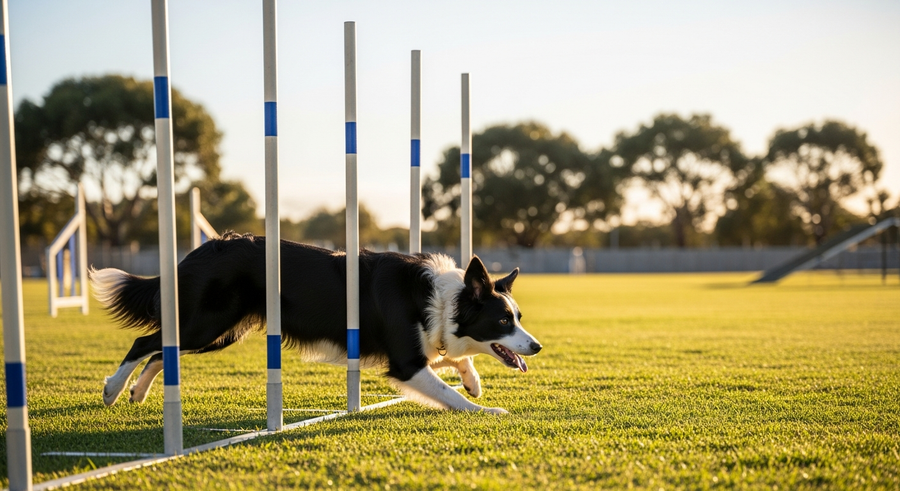
Research into canine agility competitors, a sport Border Collies dominate, has found that 52.3% of dogs experienced at least one injury serious enough to interrupt training for a week or more. Shoulder injuries, iliopsoas strains, and digit problems were among the most commonly reported issues.
This doesn't mean you should dial back your Border Collie's activity. What it does suggest is that structured training, proper warm-ups, and gradual progression of intensity are genuinely important. Dogs that perform repetitive high-impact activities benefit from rest days and regular physiotherapy checks in the same way human athletes do.
Border Collies also need mental engagement alongside physical exercise. A dog that is physically tired but mentally bored can become destructive or anxious. The guide to mental stimulation for Border Collies covers activities and puzzles that engage their herding instincts productively.
The Role of Genetics and Buying From Responsible Breeders
Many of the most serious Border Collie health conditions are preventable through responsible breeding practices. Ethical breeders in Australia test for hip dysplasia, CEA, MDR1, TNS, NCL, and PRA before mating dogs. They use the results to make breeding decisions that reduce the likelihood of producing affected offspring.
When buying a puppy, ask to see health certificates for both parents. A breeder who can't or won't provide this documentation is a red flag. Dogs Australia maintains registers of breeders who meet ethical standards, and the Border Collie Club of South Australia publishes breed health information that outlines what responsible health testing looks like.
If you already own a Border Collie and don't know their genetic status, it's not too late. Genetic testing panels that screen for multiple conditions simultaneously are available through your vet and are a worthwhile investment, particularly before starting any medication that might be affected by MDR1 status.
When to See Your Vet
Some signs warrant a vet visit within 24 hours rather than a "wait and see" approach. These include:
- Seizures (any first-time episode, or any episode lasting more than two minutes)
- Sudden or progressive lameness
- Rapid or laboured breathing at rest
- Sudden changes in vision or eye appearance
- A puppy that is significantly smaller or sicker than its littermates
- Unexplained weight loss paired with increased thirst or urination
For less urgent concerns, keeping a symptom diary between appointments gives your vet useful context. Border Collies are stoic dogs. They often mask pain and discomfort until a condition is quite advanced, so anything that seems "a bit off" is worth monitoring closely and discussing with your vet sooner rather than later.
The Bottom Line
Border Collies are hardy, intelligent dogs that typically live well into their mid-teens with good care. But they do carry specific health risks, and knowing what those risks are puts you in a far better position to catch problems early and manage them effectively. Hip dysplasia, epilepsy, CEA, MDR1, and the rarer genetic conditions like TNS and NCL can all be screened for or managed with the right veterinary support.
If you want to understand your own dog's specific health picture, regular vet checks, appropriate genetic testing, and attention to weight and exercise are the foundations. For more on keeping your Border Collie in peak shape across their whole life, explore our Border Collie lifespan guide and the joint supplement guide for Australians looking to support their dog's mobility long-term.
Not sure where your Border Collie's health stands right now? Take our free dog health assessment to get a personalised overview of your dog's health priorities based on their age, breed, and lifestyle.