
Miniature Schnauzers look tough, with wiry coats and matching eyebrows that give the impression of permanent scepticism. But their digestive systems can be surprisingly delicate. The breed carries a genuine predisposition to pancreatitis and lipid absorption issues that make gut health one of the most important things a Schnauzer owner can focus on. If your dog has ever had a bout of vomiting, greasy stools, or just seemed off after a rich meal, gut support is worth understanding.
Probiotics are one of the most practical tools available for Schnauzer owners. Not all probiotics work the same way, and not all are a good fit for this breed's particular digestive quirks. This guide covers what the research says, what to look for in a probiotic for Miniature Schnauzers, and how to get started.
Why Miniature Schnauzers Often Need Gut Support
The Miniature Schnauzer carries a genetic tendency toward hyperlipidaemia, meaning abnormally high fat levels in the blood. This makes them more sensitive to dietary fat than most breeds, and more prone to pancreatitis when their fat intake spikes. A pancreatitis episode is painful and disruptive, and repeated episodes can affect long-term digestive health significantly.
Alongside lipid sensitivity, many Schnauzers have sensitive digestive tracts more generally. Some are prone to colitis, soft stools, or gut upset after stress, travel, or diet changes. These aren't necessarily serious conditions, but they're uncomfortable for the dog and worrying for their owner.
There's also an antibiotic consideration. Schnauzers are prone to urinary tract infections and bladder stones, which often require antibiotic treatment. Antibiotics do their job well, but they also disrupt the gut microbiome by clearing out beneficial bacteria alongside the harmful ones. This is where targeted probiotic support becomes particularly relevant for this breed.
For a full picture of what Miniature Schnauzers are prone to across their lifespan, the guide on common Miniature Schnauzer health problems is worth reading before making any supplementation decisions.
What the Research Says About Probiotics for Dogs
Probiotics introduce beneficial microorganisms into the gut to support a healthy microbial balance. In dogs, research shows they can help reduce the duration of diarrhoea, improve stool consistency, support nutrient absorption, and play a role in immune function.
A 2020 review published in Frontiers in Veterinary Science found that dogs receiving daily probiotic supplementation showed measurable improvements in microbiome diversity over 8 weeks compared to control groups. Research specifically on Saccharomyces boulardii, a yeast-based probiotic, has shown particular promise for managing antibiotic-associated diarrhoea and gut disruption.
A review in the Journal of Clinical Gastroenterology found S. boulardii effective at restoring gut barrier function and reducing inflammation after antibiotic courses. For Schnauzers, whose digestive systems can be thrown off by antibiotics and dietary stress alike, this kind of targeted gut support makes practical sense.
Understanding how gut health functions more broadly is worth the time. The dog gut health guide covers the basics of the canine microbiome and how disruption happens, which helps put probiotic supplementation in context.
What to Look for in a Probiotic for Miniature Schnauzers
Not every probiotic is equally suitable for Schnauzers. Given the breed's fat sensitivity and tendency toward digestive upset, there are a few things worth checking before you buy.
Antibiotic-safe formula
Standard bacterial probiotics such as Lactobacillus and Bifidobacterium strains are killed during antibiotic treatment because antibiotics don't discriminate between good and bad bacteria. If your Schnauzer is on antibiotics for a UTI or another infection, a bacterial probiotic taken at the same time offers little benefit.
Yeast-based probiotics, particularly Saccharomyces boulardii, survive antibiotic treatment because antibiotics target bacteria rather than yeasts. This makes S. boulardii the more practical choice for any dog regularly needing antibiotic courses, and Schnauzers fit that profile well.
Grain-free and low-fat formula
Schnauzers' fat sensitivity means the supplement itself shouldn't add unnecessary fat to their diet. A grain-free, wheat-free probiotic avoids triggering the kind of digestive irritation that defeats the purpose of taking a probiotic in the first place. Check the ingredient list for fillers, animal fats, or grain-derived binders.
Prebiotics in the formula
Prebiotics feed the beneficial bacteria in the gut, helping probiotics take hold and maintain a stable microbial population. A formula that combines both prebiotics and probiotics is more likely to produce lasting results than one with a probiotic strain alone.
Soft chew format
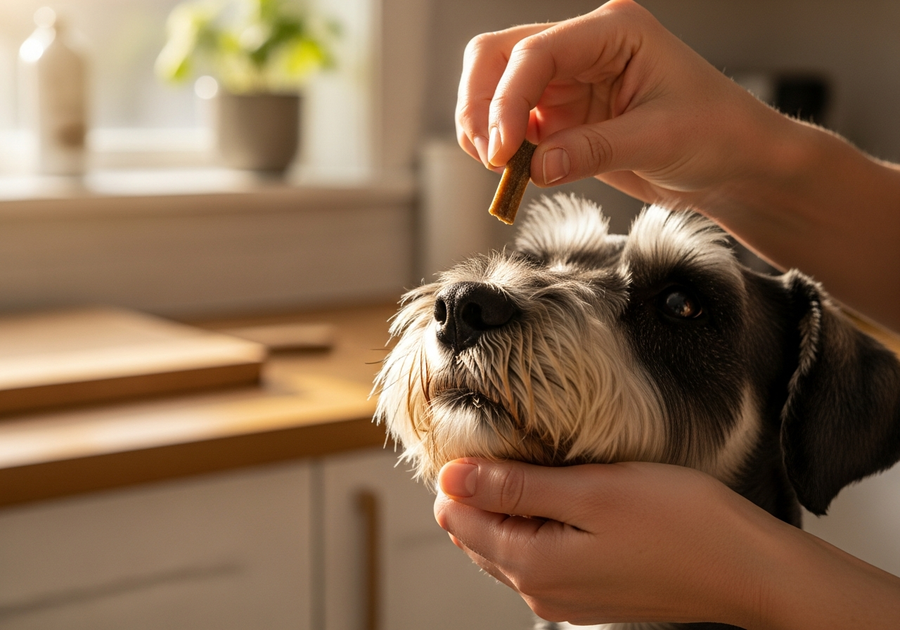
Compliance matters with any supplement. A soft chew format is generally well accepted by Schnauzers, and many dogs treat them as part of their normal food routine rather than something to avoid.

Hero Probiotic Chews: What Miniature Schnauzer Owners Should Know
Hero's Probiotic Daily Chews use Saccharomyces boulardii as the active ingredient, delivering 10 billion CFU per chew. S. boulardii is a yeast, not a bacterial strain, which is the key distinction for dogs who cycle through antibiotic courses. When your Schnauzer needs antibiotics for a UTI or bladder stone treatment, the probiotic continues working rather than being wiped out by the medication.
The formula is grain-free and wheat-free, which matters for Schnauzers given their digestive sensitivities. Beyond S. boulardii, each chew contains prebiotics, digestive enzymes, and green banana powder to support the prebiotic function and help establish a more balanced gut environment. The formula is vet reviewed and made in Australia.
Most Miniature Schnauzers fall in the 5 to 9 kg range. At that weight, the standard adult dosing applies: one chew per day. If your dog has existing health conditions, including a history of pancreatitis or kidney issues, check with your vet before starting any new supplement.
If you're ready to try probiotic support for your Schnauzer, Hero Probiotic Chews are vet reviewed, grain-free, and made in Australia.
Not sure whether gut support is the right starting point for your Miniature Schnauzer? The Hero Health Assessment takes under 2 minutes and gives you a personalised supplement recommendation based on your dog's age, weight, and lifestyle.
Start the Free AssessmentYeast vs Bacterial Probiotics: Understanding the Difference
Most commercial dog probiotics use bacterial strains such as Lactobacillus acidophilus, Bifidobacterium longum, or Enterococcus faecium. These beneficial organisms normally live in the gut, working by competing with harmful bacteria and producing compounds that support gut lining health.
S. boulardii is fundamentally different. It's a yeast, which means antibiotics don't affect it. It also works by producing specific proteins that strengthen the gut lining and modulate immune responses in ways bacterial strains don't replicate. Hero's formula uses S. boulardii as the sole active strain, reflecting a specialist single-species approach rather than a blended formula where individual strain doses can become quite small.
For general daily gut support, either approach can be effective. For Schnauzers who regularly need antibiotics, or who have a history of antibiotic-associated gut disruption, the yeast-based approach has a clear practical advantage. The best dog probiotics guide covers the full range of probiotic options if you want to compare approaches before deciding.
When to Start Probiotic Support for Your Schnauzer
There are a few specific situations where starting a probiotic makes particular sense for this breed.
During or after antibiotic courses. This is the most straightforward application for Schnauzers. If your dog is being treated for a UTI, bladder stones, or another infection requiring antibiotics, a yeast-based probiotic like S. boulardii can be taken simultaneously without losing efficacy.
After dietary changes. Schnauzers can be sensitive to food transitions. Introducing a probiotic when you're switching foods gives the gut microbiome extra support during the adjustment period, reducing the risk of soft stools or upset that often accompanies diet changes in this breed.
Before and after stressful events. Travel, boarding, a move, or a new family member can all trigger gut disruption in sensitive dogs. A probiotic taken around these events is a simple way to reduce the risk of stress-related digestive upset.
As a daily routine. Daily supplementation maintains gut microbiome stability over time rather than just addressing flare-ups reactively. For a breed with Schnauzer's digestive tendencies, consistent daily support tends to be more useful than an as-needed approach.
Schnauzers, Senior Care, and Gut Health Over Time
Like most dogs, Schnauzers' gut microbiomes change as they age. Senior Schnauzers often see a reduction in microbiome diversity, which can contribute to looser stools, reduced nutrient absorption, and lower energy. Daily probiotic support becomes more relevant as dogs age, not less, and can form part of a broader senior care approach.
Senior Schnauzers may also face more health challenges requiring medication, which affects the gut more frequently. A consistent probiotic routine helps buffer those impacts without requiring you to stop and restart supplementation around every antibiotic course.
For a broader look at what to expect as your Schnauzer gets older, the Miniature Schnauzer lifespan guide covers age-related health changes clearly. Schnauzers also develop joint stiffness as they age, and the Miniature Schnauzer joint supplement guide is a useful read for owners thinking about broader daily care.
Always consult your vet if your Schnauzer has existing conditions like pancreatitis, kidney disease, or ongoing medication that might interact with new supplements.
The Bottom Line
Miniature Schnauzers are a breed where gut support genuinely earns its place in the daily routine. Their predisposition to pancreatitis, fat sensitivity, and frequent antibiotic courses means their digestive systems face more disruption than most breeds. A daily probiotic using S. boulardii rather than a bacterial strain addresses that disruption directly, and keeps working even when antibiotics are in the picture.
Start with a grain-free, antibiotic-safe formula, give it 3 to 4 weeks at consistent daily dosing, and check in with your vet if you have any questions about fit with your dog's existing health situation.
Every Miniature Schnauzer is different. If you want to know exactly what your dog needs, the Hero Health Assessment will give you a personalised recommendation in under two minutes.