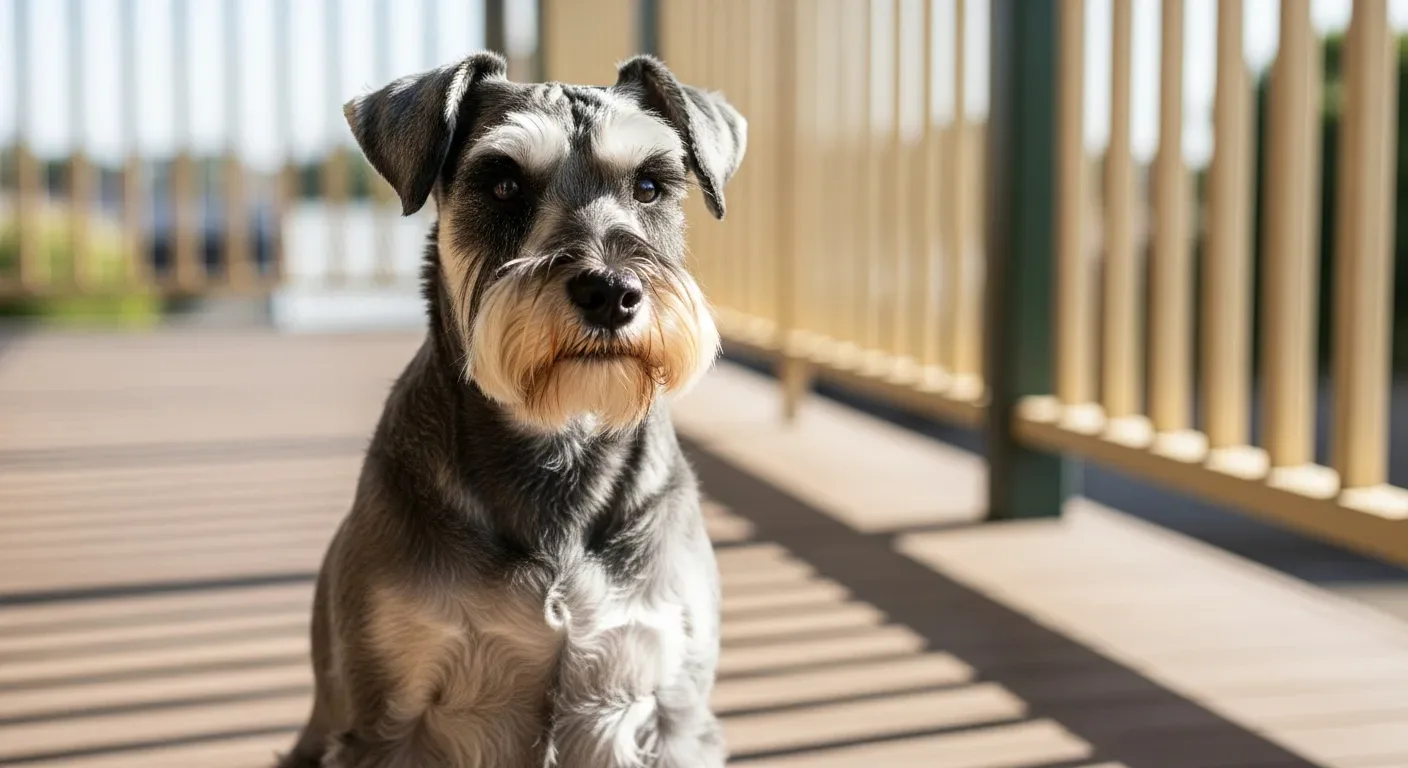
If your Miniature Schnauzer has started skipping the leap onto your bed, pausing at the bottom of the steps, or warming up slowly on the morning walk, you are spotting something most owners of this breed eventually notice. Schnauzers are a sturdy, athletic terrier in a small package, but their compact frame still carries the wear of a lifetime of bouncing, digging and patrolling the backyard.
The good news: subtle stiffness in a Mini Schnauzer is rarely a crisis. It is a signal. Acted on early, with the right daily support and a quick chat to your vet, most schnauzers stay springy well into their senior years. This guide walks through what joint health looks like for the breed, what to look for in a daily supplement, and how Hero's Australian-made joint chews fit into a schnauzer's routine.
Why Miniature Schnauzers Need Joint Support Earlier Than You Think
Miniature Schnauzers are built for endurance. Bred originally as ratters on German farms, they are wired to run, dig and patrol all day. Most weigh 6 to 9 kilograms (Royal Canin AU breed profile), which sounds easy on the joints, but every jump off the couch lands the same impact through small wrists, hocks and a long-ish back.
Three factors stack up over the years:
- Repetitive impact from couch jumps, kerb hops, ute tailgates and stair runs.
- Back length relative to leg length, which puts extra load on the lumbar spine and hips.
- Pancreatitis-prone metabolism, meaning many schnauzers spend periods on lean diets that can leave gaps in joint nutrition if not planned.
Common joint issues seen in the breed include patellar luxation (slipping kneecaps), hip dysplasia in a smaller portion of the breed, and age-related cartilage wear. The Australian Veterinary Association notes that small breeds often show signs of joint discomfort well before owners expect it because the symptoms are subtle. For a fuller picture of breed-specific risks, the Miniature Schnauzer health problems guide is the natural starting point.

Early Signs Your Mini Schnauzer Could Use Daily Joint Support
Schnauzers are stoic. They will play through a bit of soreness rather than show you something is off, which is why owners often miss the first months of a slow change. Watch for the small stuff before it becomes obvious limping.
Subtle early signs:
- A short pause before jumping off the bed or couch, when six months ago there was no hesitation.
- Stiffness in the first ten minutes of a morning walk that loosens up as they warm.
- Sitting "sideways" or shifting weight off one back leg when standing still.
- Reluctance to do the full lap of the dog park, or an earlier ask to be picked up.
- A bit more time on their bed and a bit less on the kitchen patrol.
None of these on their own mean a vet visit tomorrow. Two or three together, especially if they last more than a week, are a fair reason to act. Our broader guide to the early signs a dog needs joint support walks through the same checklist for any breed.
If you see acute lameness, refusal to bear weight, swelling, or yelping, skip the supplement aisle and book a vet appointment. Daily nutrients support healthy joints; they do not diagnose or treat injuries.
What to Look For in a Joint Supplement for a Miniature Schnauzer
The supplement aisle for dogs is busy, and most products on Australian shelves are built around glucosamine and chondroitin (often with green-lipped mussel from New Zealand). Those ingredients have a long track record. They are not the only path though, and for many small breeds a different combination works just as well.
Hero's Joint Daily Chews take a collagen-first approach with four active ingredients: MSM, Collagen Peptides, Turmeric, and Ascorbic Acid (Vitamin C). Here is what each one does and why it suits a schnauzer:
- Collagen Peptides are the structural protein that builds cartilage, tendons and ligaments. A 2022 review in Frontiers in Veterinary Science found that hydrolysed collagen supplementation supported joint comfort and mobility in dogs over an eight to twelve week window. More on collagen for dog joints.
- MSM (methylsulfonylmethane) is a naturally occurring sulphur compound that supports cartilage repair and is widely studied for its role in easing exercise-related joint discomfort. Our deeper read on MSM for dogs covers the research.
- Turmeric contributes curcuminoids, plant compounds known for supporting a balanced inflammatory response. Turmeric for dogs goes into safe daily use in Australia.
- Vitamin C is a co-factor in collagen synthesis. It helps the body actually use the collagen you are supplementing. The Vitamin C and joint health guide explains the link.
Notice what is not on that list. Hero's joint chews do not contain glucosamine, chondroitin or green-lipped mussel. That is not an oversight; it is a different formulation philosophy that focuses on supporting the body's own collagen-building machinery rather than supplying cartilage building blocks directly. Both approaches have research behind them. The right choice for your dog often comes down to format, palatability and what your vet has seen work in your area.
Beyond the ingredient list, look for these practical markers when comparing any Australian joint supplement:
- Vet-reviewed formula with clear dosage by weight.
- Made in Australia to local TGA-aligned manufacturing standards.
- Soft chew format rather than tablets or powders. Schnauzers with their bushy beards do not love anything they have to chase around a bowl.
- Grain-free and free from animal proteins if your dog has a sensitive stomach (a real consideration in this breed).
- A money-back guarantee, because joint support is a 6 to 8 week commitment before you fairly judge it.
How to Build Joint Support Into a Mini Schnauzer's Daily Routine
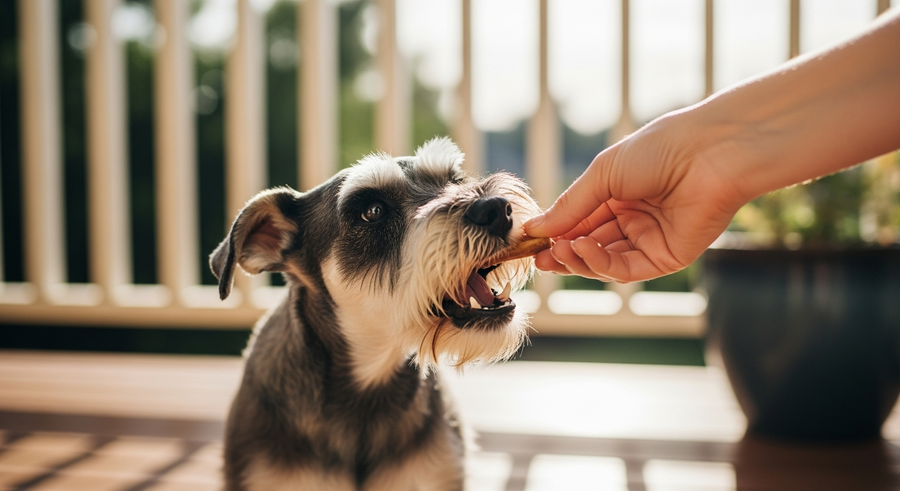
The best supplement in the world only works if it goes in every day. Schnauzers thrive on routine, so use that to your advantage. Tie the chew to an existing daily anchor: morning breakfast, the post-walk water bowl, or the after-dinner brush.
A practical weekly rhythm for a 7 kg adult schnauzer:
- One Hero Joint Daily Chew with breakfast (dosed by weight per pack instructions).
- Two 20 to 30 minute walks with sniff time, not just brisk pace. Sniffing is mental exercise that lets joints move at low impact.
- One play session focused on tug or scent games rather than fetch. Repeated high-speed stops are the hardest thing a small dog can do to a knee.
- One rest day per week with gentle movement only, especially if you have done a longer hike or beach run.
Body weight is the most underrated joint supplement of all. Even half a kilogram extra on a 7 kg schnauzer is the human equivalent of carrying around an extra 5 to 7 kg every day. The RSPCA Australia body condition guide is a quick way to check your dog at home: a schnauzer should have a visible waist when viewed from above and ribs you can feel without pressing. A 2017 study in the Journal of Veterinary Internal Medicine tracking 50 lean and overweight Labradors over their lifetime found that maintaining a lean body condition added almost two years of healthy life and delayed the onset of joint disease.
Stairs and high jumps are worth a second look too. A short ramp to the couch, slip mats on tile floors, and a lift up to the ute tray all reduce the daily impact load. None of this is babying your dog. It is the same logic as a runner choosing softer trails over concrete.
When to Loop in Your Vet
Daily supplements are a long game. They support healthy joints over weeks and months, not hours. If your schnauzer shows any of the following, that is a vet conversation, not a supplement question:
- Sudden lameness or refusal to put weight on a leg.
- Yelping, snapping when touched, or hiding away.
- Swelling, heat or visible deformity around a joint.
- Stiffness that is getting worse week to week despite rest and routine.
- Any limp lasting more than 48 hours in a young dog or 24 hours in a senior.
Your vet may recommend imaging, anti-inflammatory medication, physiotherapy, or in some cases referral to a specialist. A daily joint chew sits alongside that plan, not in place of it. Tell your vet what you are giving so they can factor it in.
For senior schnauzers (typically 8 years and up), a yearly joint and weight check is a sensible baseline even when nothing seems wrong. The Miniature Schnauzer lifespan guide covers the broader senior care framework.
Hero's Australian-Made Joint Chews for Mini Schnauzers
Hero Pet Health is an Australian brand making three daily chews for dogs: Probiotic, Joint, and Calming. The Joint Daily Chews are vet-reviewed, soft-format, and dosed by weight, which is the practical fit for a 6 to 9 kg schnauzer. Each pack contains roughly 60 chews, lasting most owners a full month.
The four-ingredient formula (MSM, Collagen Peptides, Turmeric, Vitamin C) is grain-free, free from animal proteins, and made in Australia. Pricing is $59.95 one-off or $50.96 on subscription, with free shipping over $69 and a lifetime money-back guarantee, so trying it for the standard 6 to 8 week assessment window is a low-stakes call.
If you want to see how Hero's chews compare to the broader market, the Best dog joint supplements in Australia 2026 guide is the place to start.
The Bottom Line
Miniature Schnauzers are a breed that wears its life with quiet style. The first joint stiffness is usually subtle, easy to miss, and very responsive to early daily support. A vet-reviewed Australian-made chew, sensible weight, low-impact movement, and a yearly check-in with your vet covers most of what a healthy schnauzer needs to keep doing the things they love.
Every dog is different. If you want a tailored recommendation based on your schnauzer's age, weight and lifestyle, the Hero Health Assessment takes about two minutes and gives you a personalised plan to talk through with your vet.