

Pembroke Welsh Corgis are a lot of dog in a compact frame. They're athletic, intelligent, and emotionally attuned to their owners in a way that makes them genuinely easy to fall for. But behind all that personality, Corgis carry a few quirks that can show up in their digestive system, and gut issues in this breed are more common than most owners expect.
If your Corgi is dealing with loose stools, unexplained gas, or digestive upsets that don't seem to have a clear cause, their gut microbiome is worth looking at. A quality probiotic can make a real difference, but not all probiotics are the same, and what works for a Labrador may not be the right choice for a Corgi's specific needs.
Why Corgis Are Prone to Digestive Sensitivities
Corgis were bred as working herding dogs, covering significant distances daily on a diet that would have been high in protein and relatively straightforward. Modern Corgis often live a more sedentary lifestyle compared to their ancestors, which creates a mismatch that can affect digestion.
Their body type also plays a role. Corgis have a long torso relative to their leg length, and this affects how food moves through their digestive tract. They are known to be prone to obesity, which compounds gut issues further since excess weight reduces gut motility and increases the risk of inflammation.
According to VCA Hospitals, stress is one of the most common triggers of digestive upset in dogs. Corgis are a sensitive breed emotionally. Changes to routine, travel, or even a shift in the household dynamic can cause their gut bacteria to fall out of balance, a condition sometimes called dysbiosis.
Food sensitivities are another consideration. Corgis can develop reactions to common grains and proteins over time. If you've already switched foods and your Corgi still has inconsistent stools, the issue is often less about what they're eating and more about the environment in their gut.
What Probiotics Actually Do for a Corgi's Gut
The gut microbiome is a community of billions of microorganisms that live in your dog's digestive tract. When this community is balanced, it helps your dog absorb nutrients, regulate immune function, and produce essential compounds that affect mood and behaviour. When it's out of balance, the effects ripple through the whole body.
Probiotics introduce beneficial microorganisms that help restore and maintain that balance. A 2022 review published in Frontiers in Veterinary Science found that probiotic supplementation in dogs consistently improved stool consistency and reduced gastrointestinal disturbance, with effects often visible within two to four weeks of daily use.
For Corgis specifically, consistent probiotic support helps buffer against the gut disruptions this breed is prone to: stress-related loose stools, sensitivity flares, and the microbiome shifts that happen during and after antibiotic treatment. The dietary sensitivity common in Corgis means their gut often needs more ongoing support than other breeds.
Immune function is another piece worth understanding. Around 70% of a dog's immune system is housed in the gut lining. A well-supported gut microbiome helps your Corgi mount better immune responses, which matters for a breed that can be sensitive to environmental allergens.
The Yeast Probiotic Difference: Why It Matters for Corgis on Antibiotics
Most probiotics on the market use bacterial strains, typically Lactobacillus or Bifidobacterium species. These work well under normal circumstances, but they have one significant limitation: they're destroyed by antibiotics. If your Corgi is on a course of antibiotics, bacterial probiotics taken at the same time are mostly wasted.
This is where yeast-based probiotics are different. Saccharomyces boulardii is a beneficial yeast, not a bacterium, which means antibiotics don't affect it. You can give it alongside antibiotic treatment and it will still do its job, maintaining gut stability during a period when the microbiome is being heavily disrupted.
Corgis are a breed that does get prescribed antibiotics with some frequency, particularly for skin infections and dental issues. Having a probiotic that works through antibiotic treatment means you're protecting your Corgi's gut at the exact moment it most needs support.
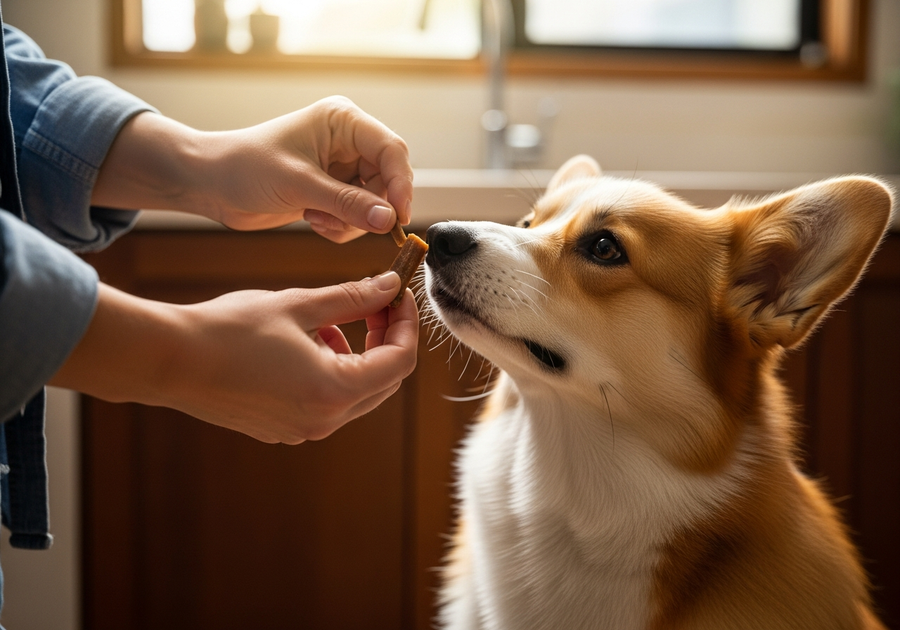
Hero's Probiotic Daily Chews use Saccharomyces boulardii as the active probiotic, delivering 10 billion CFU per chew. Because it's a yeast-based approach rather than bacterial, it survives concurrent antibiotic treatment. The formula is also grain-free and hypoallergenic, which suits Corgis well given their tendency toward food sensitivities. Most dogs treat the chews like a snack rather than a supplement.
Signs Your Corgi's Gut Needs Support
Gut imbalance doesn't always show up as dramatic digestive upset. Corgis are stoic dogs and will often push through discomfort without obvious distress signals. These are the signs worth paying attention to:
- Inconsistent stool quality: Loose stools on some days and normal stools on others, without an obvious dietary cause, often points to microbiome instability.
- Excessive gas: Some gas is normal but frequent, significant flatulence in Corgis can indicate fermentation issues in the gut.
- Coat and skin changes: A dull coat or increased skin irritation can be linked to poor nutrient absorption, which follows from poor gut health.
- Low energy after meals: If your Corgi seems lethargic after eating rather than energised, their body may be struggling with digestion.
- Increased grass eating: Dogs often eat grass when their gut is unsettled. Occasional grass eating is normal, but if it's happening daily, it's worth investigating.
The signs that a dog needs probiotic support can be easy to miss, especially in an active breed like the Corgi that tends to keep moving regardless of how they feel.
Not sure which supplements are right for your Corgi? The Hero Health Assessment takes 2 minutes and gives you a personalised supplement plan based on your dog's age, weight, and lifestyle.
Start the Free Assessment
Choosing the Right Probiotic for Your Corgi
When evaluating a probiotic for your Corgi, a few things are worth looking at closely.
CFU count matters, but more isn't always better. A CFU (colony-forming unit) count in the range of 5 to 15 billion per serving is appropriate for a dog of Corgi size. Very high counts, in the hundreds of billions, are often unnecessary and can sometimes cause initial digestive adjustment symptoms. 10 billion CFU per chew sits in the effective range for medium-small dogs.
Stability and delivery format. Probiotics need to survive storage and the acidic environment of the stomach to be effective. The chew format, particularly soft chews with built-in protectants like prebiotics, tends to offer better stability than loose powders that degrade quickly after opening. Prebiotics in the formula feed beneficial bacteria once they reach the gut, which improves the overall effect.
Grain-free and hypoallergenic. Given Corgis' tendency toward food sensitivities, a grain-free formula reduces the risk of the supplement itself triggering a reaction. If your Corgi is already on a limited-ingredient diet, this matters.
Australian-made. Manufacturing standards in Australia are subject to APVMA oversight, which provides a level of quality assurance that imported supplements don't always match. Given how significant the supplement market has become, provenance is worth verifying.
Your vet is the right person to consult if your Corgi has an existing health condition or is on any medications. A probiotic is a daily wellness supplement rather than a treatment, but it's always worth checking in with your vet when adding anything new to a dog's routine, particularly if your Corgi has an existing GI diagnosis.
How to Introduce a Probiotic into Your Corgi's Routine
Corgis are food-motivated dogs, which makes supplement introduction relatively straightforward. Most Corgis will take a soft chew without any resistance, but a few points make the transition easier.
Start daily. Probiotics work through consistency. An occasional chew won't have the same effect as daily supplementation because the beneficial microorganisms need sustained presence to colonise and maintain balance in the gut. Think of it like their daily joint supplement routine if your Corgi is already on one, just another part of the morning or evening ritual.
Expect an adjustment period. Some dogs go through a brief period of increased gas or slightly looser stools in the first one to two weeks as their gut microbiome adjusts. This is normal and typically resolves as the gut settles into the new balance. If symptoms worsen significantly or persist beyond two weeks, check with your vet.
Give it time to show results. The long-term health of your Corgi is built through daily habits. A probiotic isn't a quick fix for an acute gut problem; it's a daily foundation that reduces the frequency and severity of gut disruptions over time. Most owners start noticing improvements in stool consistency and coat quality within three to six weeks.
If your Corgi is going through a course of antibiotics, continue the probiotic throughout. With a yeast-based probiotic like S. boulardii, there's no need to time around the medication. This is one of the key reasons a yeast probiotic is worth considering over a bacterial one for dogs who need antibiotics regularly. The American Kennel Club recommends discussing the timing of probiotic use with your vet during antibiotic courses, and with S. boulardii specifically, simultaneous use is generally considered appropriate.
The Bottom Line
Pembroke Welsh Corgis are a breed with a specific set of digestive tendencies: food sensitivity, stress-related gut disruption, and a lifestyle that often doesn't match their active working heritage. A daily probiotic addresses these tendencies at the source, supporting gut microbiome balance, nutrient absorption, and immune function.
The type of probiotic matters. A yeast-based probiotic like Saccharomyces boulardii survives antibiotic treatment and suits the grain-free diet many Corgis do best on. The chew format means most Corgis will take it willingly as part of their daily routine.
Every Corgi is different. If you want to know exactly what your dog needs, the Hero Health Assessment will give you a personalised recommendation in under two minutes.