

You love your Rottweiler. You know they're tougher than they look, loyal to the bone, and built for hard work. But underneath that confident, powerful exterior is a breed with some real health vulnerabilities that every owner in Australia should understand early, not after something goes wrong.
Rottweilers are one of the most popular breeds nationally, and with good reason. They're protective, trainable, and deeply attached to their families. They're also a large-breed dog with a genetic profile that makes certain conditions more likely than in many other breeds. Knowing what to watch for, and when to act, is one of the most practical things you can do for your dog.
For context on how long Rottweilers typically live and what changes to expect at different stages, the Rottweiler lifespan guide is worth reading alongside this one.
Hip and Elbow Dysplasia in Rottweilers
If there's one health issue synonymous with the Rottweiler, it's joint dysplasia. Both hip dysplasia and elbow dysplasia are common in large breeds, but Rottweilers are particularly prone due to their muscular build and the way weight is distributed across their joints during growth.
Hip dysplasia happens when the ball of the femur doesn't sit properly in the hip socket. Over time, the irregular fit causes wear, inflammation, and eventually arthritis. Elbow dysplasia is a similar developmental problem affecting the elbow joint, and it often shows up earlier, sometimes in dogs under 12 months old.
Signs of joint dysplasia in Rottweilers
- Reluctance to rise after resting, especially in the morning
- Stiffness or lameness in the rear legs
- A bunny-hop gait when running
- Swollen or puffy-looking elbows
- Avoiding stairs or jumping onto furniture
The National Rottweiler Council (Australia) runs an official hip and elbow dysplasia screening scheme specifically for the breed. Reputable breeders test breeding dogs, and you can request results before buying a puppy. For dogs already showing signs, your vet can confirm the diagnosis with X-rays and discuss management options ranging from physiotherapy to surgical intervention in severe cases.
Daily joint support is worth considering once your Rottweiler hits 12 months. Joint chews designed for large breeds can help maintain cartilage and mobility, particularly in dogs with a genetic predisposition. Talk to your vet about what's right for your dog's age and current condition.
Osteosarcoma: The Bone Cancer Risk Rottweilers Carry
This is one of the harder things to read about, but it's important. Rottweilers have one of the highest rates of osteosarcoma (bone cancer) of any breed. Research published by the Royal Veterinary College found Rottweilers have an annual osteosarcoma incidence of around 0.84%, placing them among the most affected breeds globally.
The Universities Federation for Animal Welfare estimates between 5 and 12% of Rottweilers develop osteosarcoma during their lifetime. That's a significant number. The average age at diagnosis is around 8 years, which aligns with the breed's typical life expectancy of 8 to 10 years.
Osteosarcoma most commonly affects the long bones, particularly around the knee and shoulder. Because it progresses quickly, early detection genuinely matters.
Warning signs to take seriously
- Sudden, unexplained lameness in a limb
- Swelling or a visible lump near a joint or bone
- Pain response when touching a specific area of the leg
- Fracture with minimal trauma (sometimes called a pathological fracture)
If your Rottweiler develops sudden lameness that doesn't resolve within a day or two, get them seen. This is not a "wait and see" situation. Early diagnosis can change the treatment options available to you and your dog.

Sub-Aortic Stenosis and Heart Health
Sub-aortic stenosis (SAS) is a congenital heart condition that affects Rottweilers more than most breeds. It involves a narrowing just below the aortic valve, which forces the heart to work harder to pump blood. In mild cases, dogs live normal lives with minimal impact. In severe cases, it can cause sudden cardiac death, even in young dogs.
The tricky part is that many dogs with SAS show no obvious symptoms, or the only sign is a heart murmur detected during a routine vet check. That's why regular cardiac auscultation at each annual check-up is worth prioritising for this breed.
If your vet detects a murmur, they'll likely refer you to a veterinary cardiologist for an echocardiogram (cardiac ultrasound) to grade the severity. Mild SAS often requires nothing more than regular monitoring. More significant cases may involve medication to reduce the heart's workload.
Von Willebrand's Disease and Bleeding Disorders
Von Willebrand's Disease (vWD) is an inherited bleeding disorder seen in Rottweilers. The condition involves a deficiency in von Willebrand factor, a protein that helps platelets stick together to form clots. Dogs with vWD can bleed excessively after injury, surgery, or even after losing a tooth.
The condition varies in severity. Some dogs bleed only under significant surgical stress; others bruise easily and show signs of spontaneous bleeding. It's diagnosed with a blood test, and a DNA test can also identify carriers.
If your Rottweiler is scheduled for any surgery, including desexing, it's worth discussing vWD screening beforehand. A vet who knows about the risk can take precautions that significantly reduce surgical complications.
Progressive Retinal Atrophy and Eye Health
Progressive Retinal Atrophy (PRA) is a group of inherited eye diseases that cause the retina to degenerate over time. For Rottweilers, this is a known genetic risk, and it results in gradual vision loss that typically starts with reduced night vision before progressing to full blindness.
There's currently no treatment that reverses PRA. The condition is managed by helping your dog adapt to their changing vision and keeping their environment consistent and safe as their sight declines. Dogs adapt remarkably well when owners make small adjustments to their routine and home layout.
Reputable breeders screen for PRA through the Canine Eye Registration Foundation (CERF), and responsible breeding practices are reducing the prevalence of this condition. If you're buying a Rottweiler puppy, ask for eye clearances from both parents.
Lymphoma and Cancer Awareness in Rottweilers
Beyond osteosarcoma, Rottweilers have a higher-than-average risk for lymphoma, a cancer that affects the lymphatic system. Lymphoma can develop almost anywhere in the body and is one of the most commonly diagnosed cancers in dogs overall, but Rottweilers are overrepresented in the statistics.
The encouraging news is that canine lymphoma responds well to chemotherapy in many cases. Remission rates in dogs given multi-drug chemotherapy protocols are meaningful, and many dogs maintain a good quality of life during treatment.
Signs that may indicate lymphoma
- Enlarged lymph nodes, particularly under the jaw, in front of the shoulders, or behind the knees
- Unexplained weight loss
- Reduced appetite or energy
- Swelling of the legs or face
If you notice swollen glands that persist for more than a week or two, don't wait. A fine-needle aspirate (a quick, minimally invasive procedure) can tell your vet a great deal about what's happening in those nodes.
Gastric Dilatation-Volvulus (Bloat)
Bloat, or Gastric Dilatation-Volvulus (GDV), is a life-threatening emergency that affects large, deep-chested breeds like Rottweilers. The stomach fills with gas and can twist on itself, cutting off blood supply. It can kill within hours if untreated.
Every Rottweiler owner should know the early signs, because the window for successful treatment is narrow.
Signs of GDV
- A visibly distended or tight abdomen
- Repeated, unsuccessful attempts to vomit
- Extreme restlessness and discomfort
- Salivation and pale gums
- Collapse or weakness
If you see these signs, go to your nearest emergency vet immediately. Don't wait to see if it resolves. A gastropexy (a surgical procedure where the stomach is tacked to the abdominal wall) can be performed electively to prevent the twisting, and many owners of deep-chested breeds choose to do this at the same time as desexing. Talk to your vet about whether this makes sense for your dog.
Hypothyroidism
An underactive thyroid is more common in Rottweilers than in many other breeds. Hypothyroidism occurs when the thyroid gland doesn't produce enough thyroid hormone, leading to a slowdown in metabolism. It typically appears in middle-aged dogs and develops gradually, which means owners often attribute early signs to normal ageing.
Signs of hypothyroidism
- Unexplained weight gain despite normal eating
- Low energy or lethargy
- Skin problems including dry coat, hair loss, or recurring infections
- Intolerance to cold
A simple blood test measuring thyroid hormone levels confirms the diagnosis. The treatment is daily thyroid medication (thyroxine), which is generally inexpensive and well-tolerated. Most dogs show a noticeable improvement in energy and condition within a few weeks of starting treatment. If your Rottweiler has a history of skin or coat issues alongside the signs above, the guide to Rottweiler skin problems covers the overlap worth discussing with your vet.
Gut Health and Digestive Sensitivity
Rottweilers can be prone to digestive upset, particularly during stress, dietary changes, or after antibiotic treatment. A healthy gut microbiome plays a bigger role in overall wellbeing than many people realise, including how well a dog absorbs nutrients and how effectively their immune system functions.
Supporting your Rottweiler's digestive health through their diet and, where appropriate, a daily probiotic can make a real difference in day-to-day comfort. Look for a probiotic designed for dogs and talk to your vet if your dog has recurring gut issues. Persistent loose stools, gassiness, or irregular digestion isn't just an inconvenience. It can signal an underlying condition worth investigating.
The dog gut health guide covers the key indicators of good and poor gut health in dogs, and what a daily support routine might look like.
Keeping Your Rottweiler Healthy: What You Can Control
Not every health problem in Rottweilers is preventable, but a lot comes down to how you manage their daily life. These are the factors that genuinely move the needle.
Weight management
Rottweilers love to eat, and they can put on weight quickly. Carrying extra weight puts direct pressure on already-vulnerable joints and increases the strain on the heart. Keep your Rottweiler in lean condition throughout their life, not just when they're older. You should be able to feel their ribs without pressing hard, and see a slight waist when looking from above.
Regular vet checks
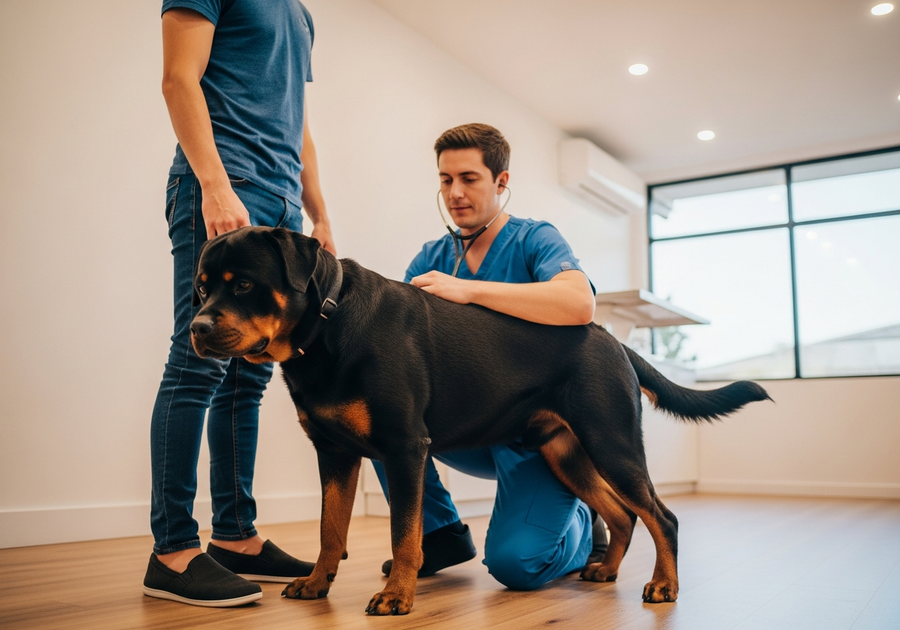
Annual check-ups are important for this breed. Given their predisposition to cancer, heart issues, and joint problems, a vet who sees your dog every year has a baseline to compare against. Some issues, like a subtle heart murmur or early joint changes, are found this way before they become symptomatic.
Exercise that protects joints
Your Rottweiler needs regular exercise, but how you exercise them matters. High-impact, repetitive exercise on hard surfaces can accelerate joint wear. Mix in low-impact activities like swimming, walking on grass, or mental enrichment. Read the full guide to Rottweiler exercise needs to understand the right balance for each life stage.
Diet and nutrition
Large breed dogs have specific nutritional requirements, and getting this right from puppyhood can reduce the risk of developmental joint problems. For a detailed look at what to feed, the Rottweiler diet guide covers age-appropriate nutrition and the common feeding mistakes to avoid.
Selective breeding awareness
If you're buying a puppy, choose a breeder who health tests. The National Rottweiler Council (Australia) recommends screening for hip and elbow dysplasia, cardiac conditions, and eye problems. A responsible breeder will share results openly. Ask for paperwork.
Gut and joint support
Daily supplements designed to support joint mobility and digestive health can be part of a proactive approach, particularly for a breed with Rottweilers' risk profile. They won't prevent genetic conditions, but they can support long-term comfort and resilience. The dog joint health guide outlines what to look for and when to start.
Not sure which health supports are right for your Rottweiler's age and lifestyle? The Hero Health Assessment takes two minutes and gives you a personalised recommendation based on your dog's specific profile.
Start the Free AssessmentThe Bottom Line
Rottweilers are extraordinary dogs. They're also a breed that benefits enormously from owners who go in with clear eyes about what they're signing up for health-wise. Hip and elbow dysplasia, osteosarcoma, cardiac conditions, and bloat are real risks for this breed, but they're manageable when you know what to watch for and build a good relationship with your vet.
The Rottweilers who live the longest and happiest lives tend to belong to owners who take preventive health seriously from day one, not after a diagnosis. That means regular vet checks, lean body condition, appropriate exercise, and staying alert to changes. Your Rottweiler shows up for you every day. Knowing their health risks is one of the most practical ways to return the favour.