

The first time you notice your Rottweiler hesitating at the back step, or taking that extra beat before getting up off the kitchen floor, it lands a bit harder than you expected. Rotties are built like tanks, and most of them act like nothing fazes them, so even a small change in how they move tends to register as a quiet little gut punch for the people who love them.
The reality is that joint problems hit Rottweilers more than most breeds in Australia. They are heavy, deep-chested, and they grow fast as puppies, which puts a lot of mechanical and developmental stress on hips, elbows, and knees. The good news is there is plenty you can do, starting with how you feed, exercise, and supplement them through every life stage. This guide covers what actually matters for a Rottweiler's joints, what to look for in a daily supplement in Australia, and how the Hero Joint Daily Chews fit in.
Why Rottweilers Need Joint Support More Than Most Breeds
Rottweilers carry around 40 to 60 kilograms of muscle on a frame that finishes growing later than smaller breeds. Every kilogram of body weight adds load to four joints that already have a genetic predisposition to problems. Hip dysplasia in particular is one of the most documented breed-specific concerns. The American Kennel Club's hip dysplasia overview identifies Rottweilers among the breeds most predisposed to hip dysplasia, alongside other large and giant breeds. The Orthopedic Foundation for Animals screening data shows Rottweilers consistently rank above the all-breed average for radiographic dysplasia, even after accounting for screening bias.
Elbow dysplasia and cranial cruciate ligament injuries are also more common in Rotties than in the average pet dog. Add the breed's tendency to put on a few extra kilos in middle age, and you have a textbook recipe for early-onset osteoarthritis. If you want a deeper look at the full picture, our guide to common Rottweiler health problems every owner should know walks through the genetic and lifestyle factors in more detail.
None of this means your Rottweiler is destined for mobility issues. It does mean that proactive joint care, starting earlier than you might expect, gives your dog a real edge. Most Rottweiler vets in Australia agree that joint support is a long game, not a rescue mission you start once the limp shows up.
When to Start Joint Support for a Rottweiler
The honest answer is earlier than the average dog. Many integrative and orthopaedic vets in Australia suggest starting joint nutrition between 12 and 18 months for large and giant breeds, once the growth plates have closed. Some owners begin even sooner with collagen-based formulas if there is a strong family history of dysplasia or if the puppy is already showing early signs.
By age five, joint support should be part of the daily routine for most Rotties, even if your dog seems perfectly fine. The reason is simple: cartilage damage is largely silent until it isn't. By the time you notice stiffness, hesitation, or shortened walks, the underlying changes have usually been progressing for months. Reading the early signs matters here, and our breakdown of the signs your dog needs joint support covers what to watch for.
Early Signs of Joint Stiffness in Rottweilers
- A slower start in the morning or after long naps
- Hesitation on stairs, hardwood floors, or at the back step
- Reluctance to jump into the car or onto the couch
- A wider stance in the back legs when standing still
- Less enthusiasm for the second half of a walk
- Bunny-hopping in the back end on a fast turn or short sprint
Any combination of these is worth a vet conversation, especially if you have a Rottweiler over the age of four. Joint pain in a stoic breed often hides in plain sight, and your vet can help rule out other causes such as a soft tissue injury or early arthritis.
What to Look For in a Rottweiler Joint Supplement (Australia)
Walk into any pet shop on the Gold Coast or scroll the supplement shelf at Petbarn and you will see a wall of formulas, all promising mobility, comfort, and youthful joints. Rottweilers don't need a magical formula. They need a sensibly dosed daily routine built around ingredients with credible research behind them.
Here is what genuinely matters for a Rottie joint supplement in Australia:
- MSM (methylsulfonylmethane) for soft tissue support and to help manage normal exercise-related inflammation. See our guide to MSM for dogs for the full picture.
- Collagen peptides as the building block for cartilage, tendons, and the connective tissue around the hip and elbow joints. Our collagen for dogs joint health guide explains why type II collagen matters.
- Turmeric (curcumin) for whole-body antioxidant and inflammation support, which is especially relevant for a breed that runs hot and works hard.
- Vitamin C (ascorbic acid) as a co-factor in collagen synthesis. Without it, the body cannot build new cartilage properly. Read more in our vitamin C for dogs guide.
- Australian-made and vet reviewed so you know exactly where the ingredients come from and that someone qualified has signed off on the dosing.
- A format your dog will actually take every day, because the best supplement is the one that ends up inside your Rottie, not the one rolling around the back of the pantry.
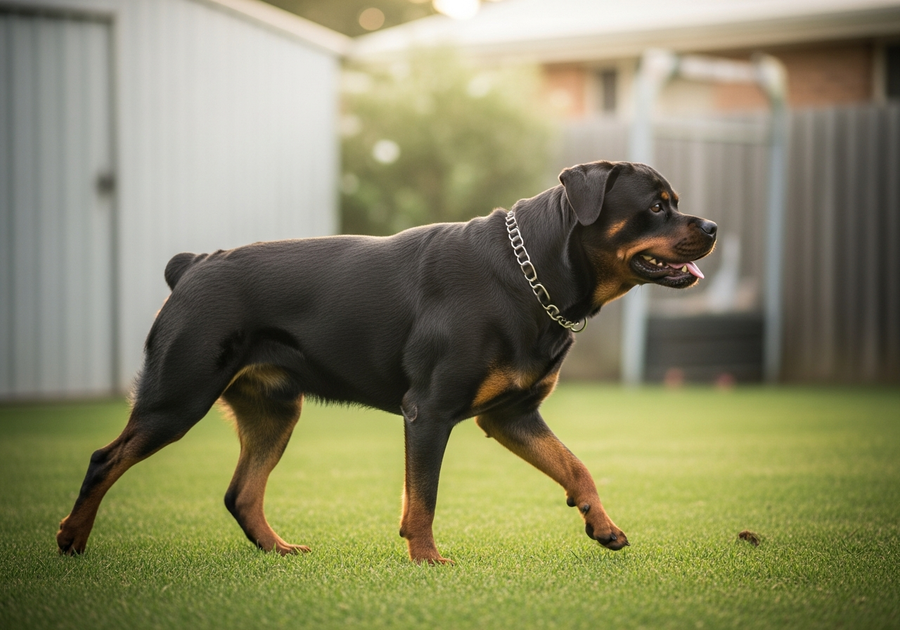
A Note on Glucosamine and Chondroitin
Two ingredients almost every Australian Rottweiler owner asks about are glucosamine and chondroitin. Both have a long history in joint formulas worldwide, and you will see them in many supermarket and vet brands. They work in their own right and are a perfectly reasonable choice if your vet has specifically asked you to use them. Some daily chews leave them out entirely and lead with collagen peptides instead, which is a different but equally valid path for ongoing mobility support.
The Hero Joint Daily Chew Approach for Rottweilers
Hero Joint Daily Chews are an Australian-made, vet reviewed soft chew built around four active ingredients: MSM, collagen peptides, turmeric, and vitamin C. There are around 60 chews per pack, and the dosing scales by body weight, which matters when you are working with a 50-kilogram dog rather than a 10-kilogram one.
For a Rottweiler, the daily chew approach solves a few real problems. Tablets and powders are easy to forget, easy to spit out, and easy to under-dose when you are eyeballing a scoop. A weight-appropriate number of chews delivered alongside breakfast turns joint support into the kind of habit you actually keep. Most Rotties treat the chew like a treat, which is exactly what you want for a daily routine that has to last for years.
The formula is grain-free, wheat-free, and free from animal proteins, which is useful for the Rotties who run on the sensitive side of the gut spectrum. It is not designed to treat a diagnosed condition, and it does not replace vet care if your dog is showing significant pain or mobility loss. It is a daily mobility support routine, and that is genuinely what most Rottweilers in Australia need.
Not sure where your Rottweiler should start? The Hero Health Assessment takes about two minutes and gives you a personalised supplement plan based on age, weight, breed, and lifestyle.
Start the Free AssessmentWeight, Exercise, and Diet: The Rottweiler Joint Foundations
Supplements work best on top of solid daily habits. For a Rottweiler, three habits do most of the heavy lifting for joint health.
Lean body weight is non-negotiable. Every extra kilo on a Rottie's frame compounds wear on hips and elbows. If you can feel ribs under a thin layer of fat without pressing hard, and you can see a clear waist from above, you are roughly on track. If you are not sure, ask your vet for a body condition score at the next visit.
Exercise should be smart. Long sprints on hard concrete, repetitive ball-throwing, and uncontrolled wrestling with bigger dogs are the joint-killers most owners overlook. Steady walks, off-lead time on grass, controlled swimming where it is safe, and good sleep do far more for adult joint health than another hour of high-impact play. Our guide to Rottweiler exercise needs has practical age-by-age advice.
Diet feeds the joint. Rottweilers do well on a quality diet with appropriate protein, moderate fat, and the right calcium-to-phosphorus ratio, especially as puppies. Overfeeding a Rottie pup is one of the easier ways to set up future joint trouble because rapid growth puts soft cartilage under load before it is ready. Our best diet for Rottweilers guide covers what to look for at every life stage.
Senior Rottweilers: Stacking the Daily Routine
By age seven or eight, most Rotties are firmly in senior territory, and joint care becomes a daily conversation rather than a once-a-year thought. The aim shifts from prevention to ongoing comfort, mobility, and quality of life. Our guide to Rottweiler lifespan covers the realities of the breed's later years and where supplements fit.
For a senior Rottweiler, a sensible daily stack often looks like this: a weight-appropriate joint chew like Hero, regular controlled exercise to maintain muscle around the joints, a heated or orthopaedic bed, and frequent vet check-ins to catch new issues early. If your senior Rottie is on prescription pain medication, talk to your vet before adding any supplement, including this one. Supplements complement vet care, they do not replace it.

What Australian Rottweiler Owners Often Get Wrong
A few patterns come up again and again in vet visits and online groups, and they are worth flagging. Starting joint support too late, after the limp has set in, is the most common one. Joint changes are often well underway before behaviour shifts, so waiting for a clear sign means you are catching up rather than getting ahead.
Switching brands every few weeks is another. Joint nutrition works on a slow timeline. Most owners who say "the supplement didn't work" stopped before the eight to twelve week window where benefits typically become visible. Pick a credible formula, dose it correctly for your dog's weight, and give it a fair run.
And finally, treating supplements as a stand-in for vet care. If your Rottweiler is in real pain, suddenly lame, or losing mobility week by week, that is a vet conversation, not a supplement question. A daily chew is part of the routine, not the rescue plan.
The Bottom Line
Rottweilers carry a heavy frame on joints that genetically lean toward trouble, so daily joint support is one of the most useful long-term habits you can build into their routine. Look for an Australian-made, vet reviewed formula with collagen, MSM, turmeric, and vitamin C, in a chew format your dog will actually take. Start earlier than you think, stay consistent, and pair the supplement with lean weight, smart exercise, and a quality diet.
If you want a personalised plan rather than a guess, the Hero Health Assessment takes about two minutes and recommends the right daily routine for your Rottweiler. For most adult Rotties, that means the Hero Joint Daily Chews, paired with the lifestyle habits above. Always check in with your vet if you are noticing new mobility changes, pain, or limping.