
Dalmatians are big personalities in a spotty coat. That same intensity that makes them magnetic companions is the thing that, without enough outlet, tips into anxious behaviour, restlessness, or reactivity that frustrates everyone in the household.
Anxiety in Dalmatians is surprisingly common and largely misunderstood. Many owners chalk it up to the breed being spirited or a lot to handle when in reality the dog is telling you something is off. The good news: with a consistent daily approach and the right nutritional support, most Dalmatians settle considerably. This guide covers why the breed is prone to anxiety, what to look for in a calming supplement, and how to build a routine that actually makes a difference.
Why Dalmatians Are Prone to Anxiety
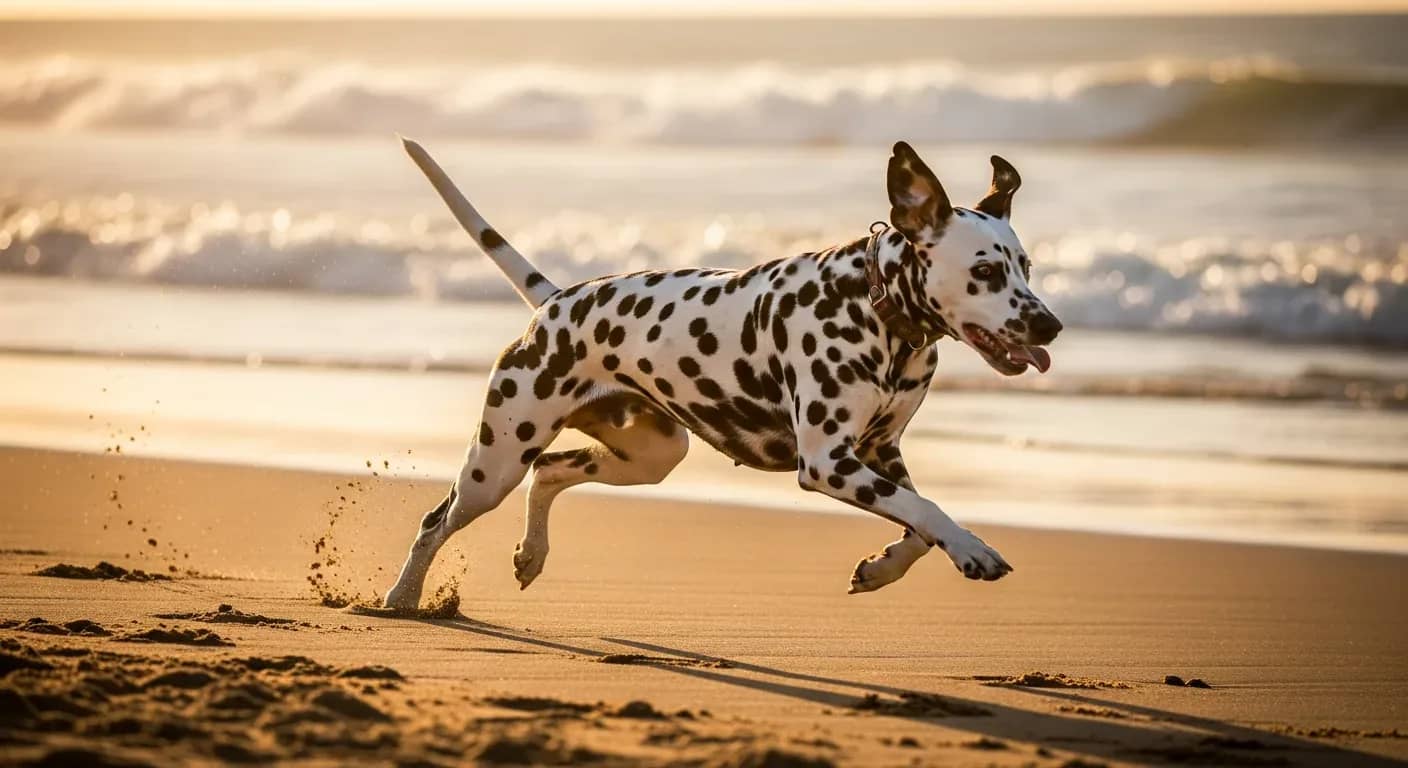
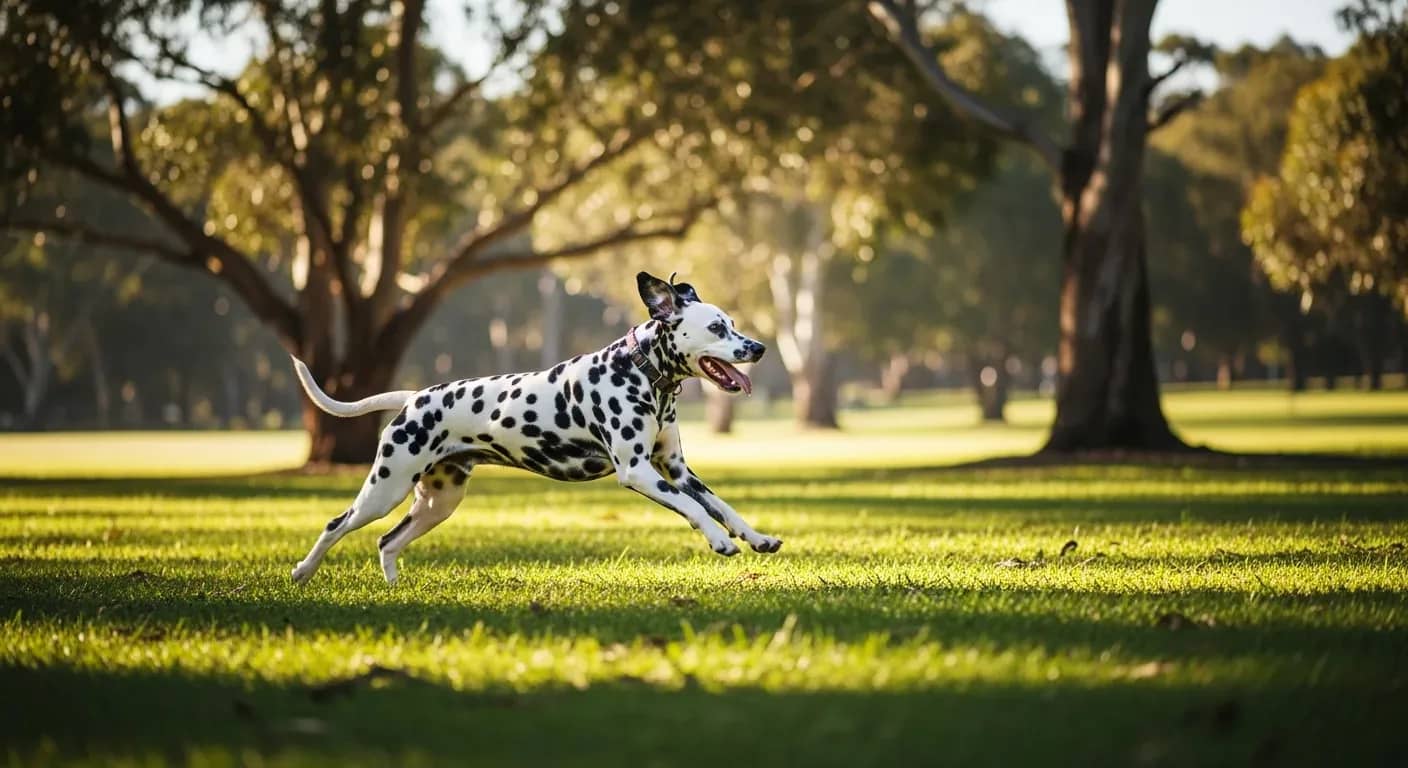
Dalmatians were bred for endurance. Their historical role was running alongside horse-drawn carriages across miles of rough terrain, a job that demanded both extraordinary physical stamina and mental fortitude. That working heritage is still very much present in the breed today, which creates a specific challenge in modern homes.
When a breed designed for sustained high-intensity work spends most of its day in a backyard or apartment, that energy has to go somewhere. In Dalmatians, excess mental and physical energy frequently shows up as anxiety. Restlessness, hypervigilance, and reactive behaviour to passing dogs, strangers, or sudden sounds are all common expressions of a breed that is not getting sufficient outlet.
Dalmatians are also sensitive. They pick up on household tension, changes in routine, and emotional cues from their owners more acutely than many breeds. This emotional attunement makes them deeply bonded companions but also means they are more easily destabilised by change. For a broader picture of how this sensitivity interacts with other aspects of the breed's health, our guide to common Dalmatian health problems every owner should know covers what to watch for across the breed's lifespan.
Noise sensitivity is another common trait. Fireworks, thunderstorms, traffic, and construction all create outsized stress responses in some Dalmatians, and this sensitivity can persist throughout the dog's life rather than fading with age. Understanding this temperament is the starting point for managing it.
Recognising Anxiety in Your Dalmatian
Because so many of the signs of Dalmatian anxiety look like typical Dalmatian behaviour, they are easy to miss or misattribute. Most owners recognise the obvious: barking at strangers, lunging at dogs on walks, or bolting around the house in frantic bursts. The subtler signs are easier to overlook.
Watch for these patterns, particularly if they have intensified or become more frequent over time:
- Pacing or circling when left home alone or before you leave
- Destructive behaviour focused on exits (doors, windows, fences)
- Excessive barking that does not self-resolve within a few minutes
- Trembling or hiding during thunderstorms or loud events
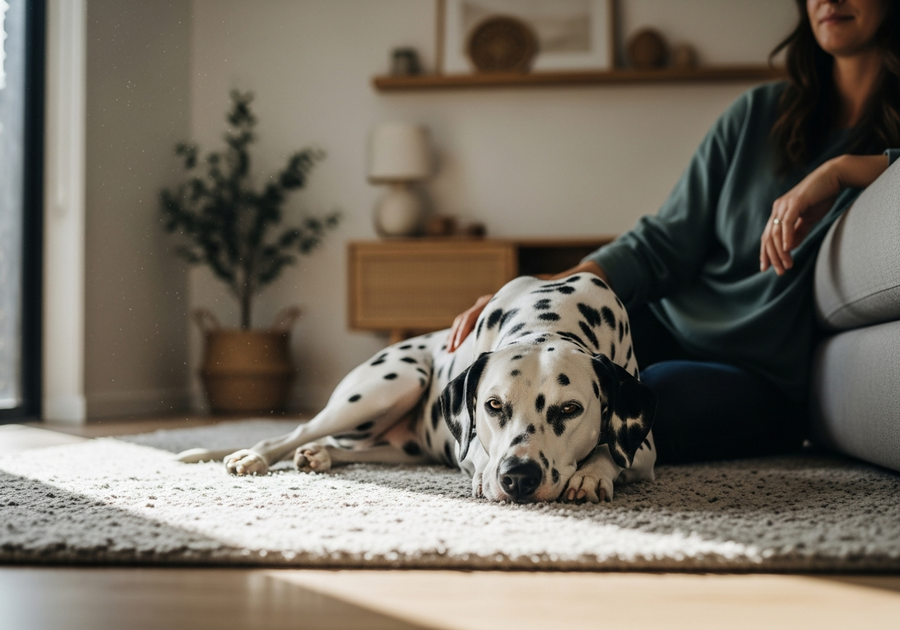
- Shadowing behaviour: following you from room to room without settling
- Refusing food or becoming picky when their routine changes
- Yawning, lip licking, or looking away in low-threat situations (displacement signals)
VCA Animal Hospitals notes that anxiety is among the most common behavioural concerns presenting to vets, and that high-energy working breeds show particular sensitivity to environmental change and owner stress levels. If several of the above are familiar, a daily calming supplement is worth adding to your approach alongside any training adjustments you are making.
Key Ingredients to Look for in a Calming Supplement
Not all calming supplements work the same way. The most effective formulas support the nervous system at multiple points rather than relying on a single ingredient. Here is what the research supports for dogs, and why each earns its place in a quality formula.
L-Tryptophan
L-tryptophan is an essential amino acid and the primary building block for serotonin, the neurotransmitter most associated with mood regulation and sustained calm. Dogs cannot produce it themselves, so dietary intake determines how much is available. The MSD Veterinary Manual highlights tryptophan as a core ingredient recommended by veterinary nutritionists for reactive breeds with heightened stress sensitivity.
Magnesium
Magnesium is directly involved in nervous system regulation. Low magnesium is associated with elevated cortisol output in mammals, and dogs running at a high baseline stress level tend to deplete it faster. Supplementing magnesium helps buffer the stress response, particularly for Dalmatians that may spend most of their waking hours in a low-level alert state.
Ashwagandha
Ashwagandha is an adaptogenic herb that helps the body regulate its own stress response rather than suppressing it outright. This distinction matters: an adaptogen lowers baseline stress without causing sedation. Research published in Frontiers in Veterinary Science has examined adaptogenic compounds for canine stress management with encouraging results, supporting their inclusion in daily calming formulas for anxious breeds.
Chamomile
Chamomile works gently on the central nervous system and also supports digestive comfort. This dual action is relevant because many anxious Dalmatians show gut symptoms, loose stools or reduced appetite, when under sustained stress. If your dog's anxiety and digestive sensitivity seem connected, supporting gut health alongside calming supplementation is worth considering. Our guide to probiotics for Dalmatians covers what to look for.
Vitamin B1 (Thiamine)
Thiamine supports healthy nerve function at a cellular level. B vitamin deficiency is linked to heightened anxiety responses, and supplementing helps maintain normal neurological signalling. This is particularly relevant for dogs on highly processed diets where B vitamin bioavailability may be lower than ideal.
Jerusalem Artichoke
Jerusalem artichoke is a prebiotic fibre source that feeds beneficial gut bacteria. A well-balanced gut microbiome regulates stress hormones and produces calming neurotransmitters via the gut-brain axis, meaning gut health directly influences how calm your dog feels day to day. Supporting the gut is one of the more underrated tools for managing anxious dogs, and it complements the direct nervous system support from tryptophan and magnesium rather than competing with it.
Daily Supplements vs As-Needed Products
There are two distinct categories of calming support for dogs. Daily supplements build over weeks and lower the dog's baseline stress level. As-needed interventions, including veterinary-prescribed medications, pheromone diffusers, or compression wraps, address acute situations. They serve different purposes and work well alongside each other.
Daily calming supplements need consistent intake for 4 to 6 weeks before the full effect becomes apparent. The ingredients that drive lasting change, tryptophan and ashwagandha in particular, require steady levels to meaningfully shift baseline neurotransmitter production. This is the most common point of failure: owners try a supplement for 10 days, see no dramatic change, and stop. The product did not fail. It simply needed more time.
The goal of daily supplementation is to lower your Dalmatian's ambient stress level so that when a trigger occurs, whether that is the postman, a distant thunderclap, or you leaving for work, your dog is starting from a calmer place. Their reaction may still happen, but it settles faster and the recovery is quicker.
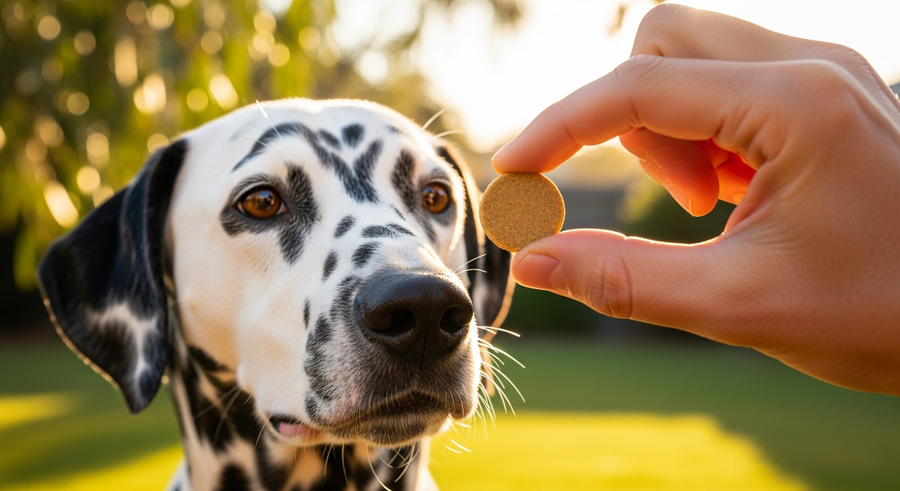
Hero's Calming Daily Chews combine all six of the ingredients above (Magnesium, L-Tryptophan, Vitamin B1, Jerusalem Artichoke, Ashwagandha, and Chamomile) in a soft chew format that most dogs take willingly as part of their daily routine. They are Australian-made, vet-reviewed, and designed for consistent daily use. Hero's Calming Daily Chews come with a lifetime money-back guarantee.
Not sure where to start with your Dalmatian's daily support? The Hero Health Assessment takes 2 minutes and gives you a personalised supplement recommendation based on your dog's age, weight, and specific anxiety patterns.
Start the Free AssessmentSupporting Calm Beyond the Supplement
Daily calming supplements work best as part of a broader approach to your Dalmatian's wellbeing. For this breed specifically, a few things make a real and measurable difference.
Exercise that matches the breed
Dalmatians need more physical exercise than most owners initially expect. A 30-minute lead walk is rarely enough for an adult Dalmatian. Off-lead runs in a secured area, cycling alongside a bike, or extended hiking sessions give the breed the outlet it needs to come home genuinely physically tired rather than surface-level exercised. An exercised Dalmatian settles. An under-exercised one generally does not, regardless of what supplements you add.
Mental stimulation
Physical exercise is only half the picture. Dalmatians are intelligent dogs that need their brains engaged to stay balanced. Puzzle feeders, sniff walks where your dog sets the pace by nose rather than speed, and short training sessions all deplete the mental energy that would otherwise fuel anxious behaviour. A mentally tired Dalmatian is considerably easier to settle than one that has been physically exercised but mentally under-challenged.
Predictable daily routines
Anxious dogs do better with routine. Meals, walks, and sleep at consistent times reduce the cognitive load of uncertainty. Even small inconsistencies can trigger vigilance spikes in sensitive dogs, and for Dalmatians already running at a high baseline stress level, routine is one of the more underrated tools in the toolkit.
Joint comfort as they age
One overlooked driver of anxiety in older dogs is physical discomfort. A dog that is uncomfortable will be harder to settle regardless of what you give them. Dalmatians can develop mobility issues as they mature, and supporting joint health becomes increasingly important as the breed ages. Our guide to joint supplements for Dalmatians covers what to watch for and when to start.
When to Talk to Your Vet
Daily calming supplements are appropriate for Dalmatians with mild to moderate generalised anxiety, situational stress from storms or travel, or separation distress that is manageable. They are not a substitute for veterinary support when anxiety becomes more serious.
Contact your vet if:
- Your Dalmatian is injuring themselves through anxious behaviour (escape wounds, excessive self-licking creating sores)
- Anxiety has appeared suddenly in an otherwise calm dog, since sudden behavioural changes often indicate an underlying physical cause
- They are refusing food or losing condition because of chronic stress
- Daily function is significantly affected and your dog cannot relax, eat, or interact normally
Your vet may recommend prescription medication alongside supplements and behaviour work, and that is entirely appropriate for dogs that need more support. Supplements and veterinary medication are not mutually exclusive. For a broader look at the breed across its lifetime, our guide to how long Dalmatians live and what to expect as they age is worth reading alongside this one.
The Bottom Line
Dalmatians are sensitive, high-energy dogs and anxiety is a natural consequence of a breed wired for sustained activity being placed in modern domestic life without enough outlet. The right daily calming supplement addresses the neurological side of that, lowering baseline stress so the day-to-day is more manageable. It works best when paired with sufficient exercise, consistent routine, and regular mental engagement.
Give any supplement at least four to six weeks of consistent use before drawing conclusions. Consistency is what drives the change.
Every Dalmatian is different in how their anxiety presents and what triggers it most. If you want a personalised supplement recommendation based on your dog's age, weight, and specific patterns, the Hero Health Assessment gives you a clear answer in under two minutes.