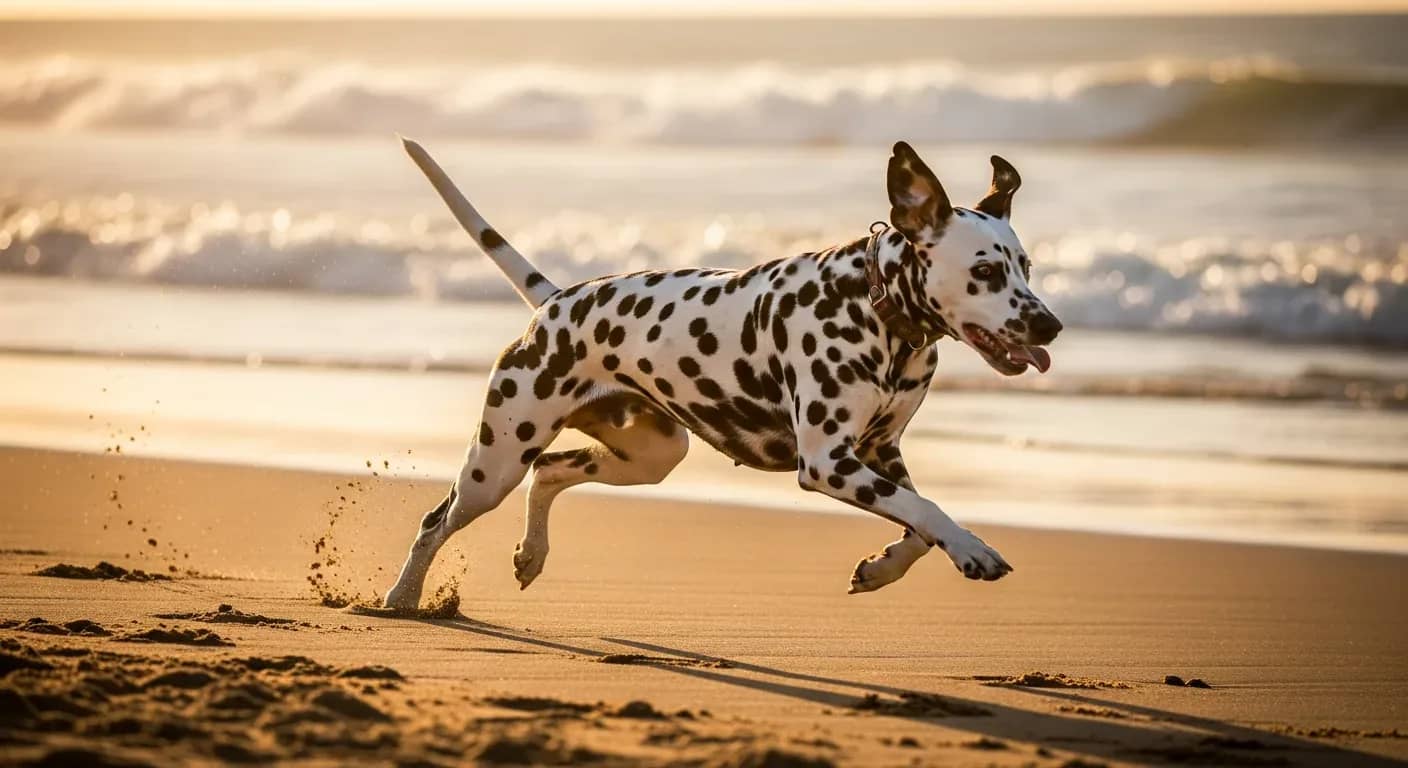

Your Dalmatian zips through the backyard like they were built for it, because they were. These dogs are athletes with centuries of endurance work in their DNA. But that same distinctive biology that makes them so remarkable also leaves them vulnerable to a handful of health conditions that other breeds simply don't face.
If you're a Dalmatian owner in Australia, knowing what to watch for can genuinely make a difference. Some of these conditions are manageable with diet and lifestyle changes. Others need vet intervention early to avoid serious consequences. This guide covers the most common Dalmatian health problems, what causes them, and what you can do to keep your spotted companion in good shape for years to come.
Why Dalmatians Have Breed-Specific Health Risks
Dalmatians are one of the most genetically distinct dog breeds. Their history as carriage dogs required physical toughness and stamina, but selective breeding over centuries also created some unusual metabolic traits that are unique to the breed.
The most significant of these is a quirk in how Dalmatians process purines, compounds found in many foods. Every Dalmatian on the planet carries a genetic variant that affects uric acid transport in the liver and kidneys. This isn't a defect in sick Dalmatians or poorly bred ones. It's a trait shared by the entire breed.
Understanding this biology goes a long way toward understanding why the health conditions below show up in Dalmatians at rates far higher than in other breeds. For context on how these conditions affect how long Dalmatians live, they're worth knowing about before you bring a puppy home.
Urate Bladder Stones: The Most Distinctive Dalmatian Health Problem
Of all dalmatian health problems in Australia and worldwide, urate bladder stones are the most breed-defining. Dalmatians develop these stones at a rate far higher than any other breed, and the reason is written into their DNA.
Unlike most dogs, Dalmatians cannot fully convert uric acid into allantoin (a more soluble compound that's easily excreted). Research published in PLOS Genetics identified mutations in the SLC2A9 gene as the cause of this transport defect. The result is that uric acid accumulates in the blood and passes into urine in high concentrations, where it can crystallise into stones.
These are specifically urate (or uric acid) stones, which are different from the calcium oxalate or struvite stones more commonly seen in other breeds. That distinction matters for treatment and dietary management. You can read more about what this means practically in our guide to urinary stones in Dalmatians.
Signs Your Dalmatian May Have Bladder Stones
Bladder stones don't always cause obvious symptoms until they become a problem. Watch for these signs:
- Straining to urinate or urinating in small amounts frequently
- Blood in the urine (pink or red tinge)
- Crying or whining during urination
- Licking at the genital area more than usual
- Loss of appetite or lethargy (if stones are causing a blockage)
A urinary blockage is a veterinary emergency. If your Dalmatian is trying to urinate but nothing is coming out, get to a vet immediately.
Managing the Risk Through Diet
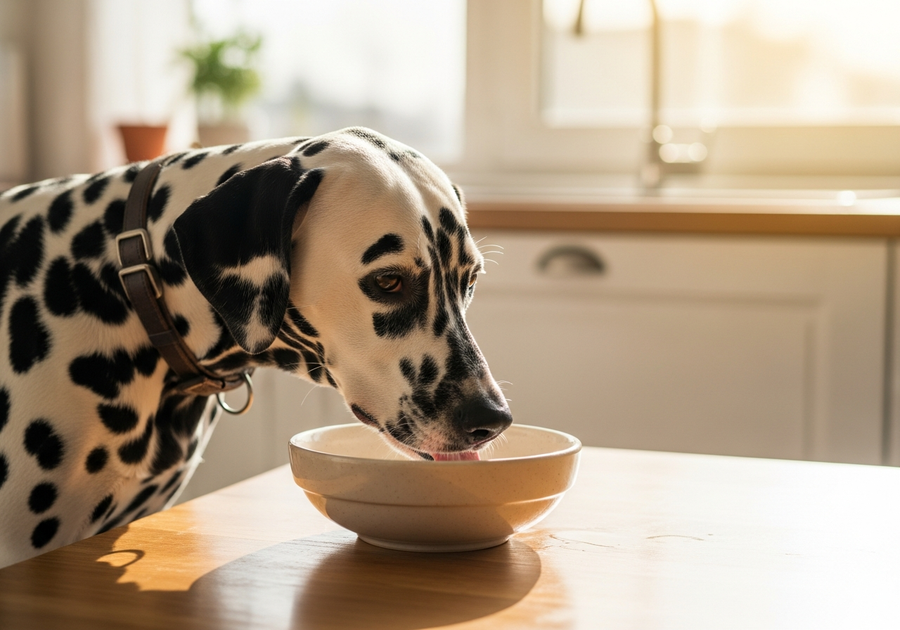
Because urate stones are driven by how Dalmatians metabolise purines, diet is one of the most powerful tools owners have. A low-purine diet reduces the uric acid load going through the kidneys. This means limiting high-purine foods like organ meats, red meat, sardines, and anchovies.
Hydration is equally important. Well-hydrated dogs produce more dilute urine, which reduces the concentration of uric acid and makes crystal formation less likely. Wet food, water fountains, and adding water to dry kibble all help.
Your vet may also recommend urine pH monitoring. Slightly alkaline urine makes urate crystals less likely to form. Regular urine testing, either at the clinic or with home dipstrips, can catch early signs of crystal formation before they become stones.
Congenital Deafness in Dalmatians
Deafness is the second most well-known health condition in Dalmatians, and it's more common than many owners realise. According to research published by the Universities Federation for Animal Welfare (UFAW), approximately 5% of Dalmatians are born completely deaf in both ears, and 15 to 30% are deaf in one ear.
The deafness is linked to the same piebald gene responsible for Dalmatians' white coat and spots. The lack of pigment-producing cells in the inner ear during development leads to degeneration of the structures needed for hearing. Dogs with more white pigmentation (including blue-eyed Dalmatians) tend to have higher rates of deafness.
How to Tell If Your Puppy Can Hear
Puppies with hearing loss in one ear often go unnoticed for months because they compensate remarkably well using the functioning ear. The BAER test (Brainstem Auditory Evoked Response) is the only reliable way to diagnose unilateral deafness. Reputable breeders should BAER test every puppy before they go to their new homes.
If you're bringing home a Dalmatian puppy and aren't sure whether BAER testing was done, ask the breeder directly. If the answer is no, arrange testing with your vet. Knowing early means you can train appropriately from the start.
Deaf and partially hearing Dalmatians can live full, happy lives. They respond well to hand signals and vibration cues. The main adjustment is safety: keeping them on lead in open spaces and making sure they can see you before you approach from behind.
Dilated Cardiomyopathy (DCM)
Dilated cardiomyopathy is a condition where the heart muscle weakens and the chambers of the heart expand, reducing its ability to pump blood efficiently. While DCM affects several large breeds, Dalmatians have a documented predisposition to an idiopathic (unknown cause) form of the condition.
The heart changes associated with DCM often develop slowly over months or years before clinical signs appear. By the time obvious symptoms show up, the disease may be well advanced. This is why cardiological screening matters for Dalmatians, particularly as they age.
Signs to Watch For
Early DCM can be completely silent. More advanced disease often shows as:
- Exercise intolerance (tiring quickly on walks they used to handle easily)
- Coughing, particularly at night or after lying down
- Laboured or rapid breathing
- A distended abdomen
- Weakness or fainting episodes
Annual vet checkups should include cardiac auscultation (listening to the heart). If your vet detects a murmur or arrhythmia, an echocardiogram is the next step to assess heart function properly.
Dalmatian Bronzing Syndrome
Dalmatian bronzing syndrome (also called Dal Crud by owners who've dealt with it) is a skin condition unique to the breed. It appears as a yellowish-brown or rust-coloured staining of the coat, typically around the muzzle, chin, and paws, accompanied by an unpleasant odour and sometimes crusty or greasy skin.
The condition is believed to be linked to the same uric acid metabolism quirk that causes bladder stones. Elevated urinary uric acid may contribute to bacterial overgrowth on the skin, particularly around areas the dog licks or where urine contacts the skin.
Treatment usually involves a combination of antifungal or antibacterial shampoos, dietary management (the same low-purine diet that helps prevent stones), and sometimes antibiotics if secondary infection has taken hold. It's rarely dangerous but can be persistent and recurrent. Your vet can recommend a management plan suited to your dog's specific situation.
Skin Allergies and Sensitivities
Dalmatians have a higher rate of environmental and food allergies than many other breeds. This isn't surprising given that their coat (short, fine, white) offers less skin protection than denser breeds, and their immune systems can be reactive.
Common signs of skin allergies include itching, chewing at the feet, recurring ear infections, and hot spots. Food sensitivities often show as digestive upset alongside skin changes.
If your Dalmatian is scratching constantly or developing recurring skin or ear issues, a systematic elimination diet can help identify food triggers. Your vet can also test for environmental allergens if dietary changes don't resolve the issue.
Gut health plays a role here too. A well-functioning digestive system supports immune regulation, which can reduce how strongly the body reacts to allergens. Knowing the signs that your dog's gut needs support is useful for any Dalmatian owner, particularly those dealing with recurring skin or digestive issues.
Hip Dysplasia and Joint Problems
Hip dysplasia is less common in Dalmatians than in many large breeds, partly because Dalmatians were historically bred for endurance rather than the exaggerated conformation seen in some other dogs. That said, it does occur, and active, athletic Dalmatians can develop joint wear over time particularly as they age.
Joint stiffness in older Dalmatians often shows first as reluctance to jump, hesitation on stairs, or a slower warm-up at the start of a walk. These can be easy to miss because Dalmatians tend to push through discomfort when they're motivated by exercise.
Knowing the early signs that a dog needs joint support means you can act before the problem becomes significant. Weight management, low-impact exercise like swimming, and appropriate supplementation all support joint longevity in active breeds.
If you're looking at joint supplements for your Dalmatian, Hero's Joint Daily Chews are vet reviewed, grain-free, and made in Australia. The formula takes a collagen-first approach using MSM, collagen peptides, turmeric, and vitamin C to support joint mobility and comfort. You can learn more at Hero Joint Daily Chews.
Anxiety and Separation Sensitivity
Dalmatians are high-drive dogs that bond intensely with their families. That loyalty is part of what makes them wonderful, but it also makes them prone to separation anxiety when left alone for long periods.
An under-exercised or under-stimulated Dalmatian is almost guaranteed to show some form of anxious behaviour, whether that's barking, destructive chewing, or toileting inside. This isn't disobedience. It's a dog with too much nervous energy and no outlet for it.
Regular exercise (ideally 1.5 to 2 hours daily for an adult Dalmatian), mental stimulation through training or puzzle toys, and a consistent daily routine all reduce anxiety. For dogs with more significant anxiety responses, a daily calming supplement as part of their routine may help. Talk to your vet about what's appropriate for your specific dog.
What Every Dalmatian Owner Should Do
The good news is that most of these conditions are manageable when caught early. Here's what proactive care looks like for a Dalmatian in Australia:
- Get a BAER test if your puppy hasn't had one. Know what you're working with from the start.
- Feed a low-purine diet and prioritise hydration. This is the single most impactful thing you can do for stone prevention.
- Annual vet checkups that include urine testing, cardiac auscultation, and a weight assessment.
- Watch for early signs of skin changes, joint stiffness, or changes in urination patterns. Report anything unusual promptly.
- Maintain a healthy weight. A lean Dalmatian has lower joint stress and generally better metabolic health.
- Exercise daily, but also make sure your Dalmatian has downtime and social connection. These dogs don't thrive when left to their own devices for hours.
Dalmatian health problems in Australia are well-documented, which means your vet should be familiar with what to test for and when. If you're ever in doubt about what's normal for the breed, the Dalmatian Club of Australia is a reliable resource, and a vet with breed-specific experience is worth seeking out.
The Bottom Line
Dalmatians are healthy, energetic dogs that can live well into their teens with the right care. The conditions above are real risks, but they're not inevitable. Urate stones, deafness, and DCM are all conditions where early knowledge leads to better outcomes. An owner who knows what to watch for is far better positioned than one who discovers a problem after it's advanced.
Every Dalmatian is different. If you want to know exactly what your dog needs based on their age, weight, and health profile, the Hero Health Assessment gives you a personalised recommendation in under two minutes.