If you share your home with a greyhound, you already know they wear their feelings on their sleeve. One loud noise, one change in routine, and that long elegant frame tenses up. Greyhounds are gentle and deeply sensitive dogs, and for many, especially those making the transition from a racing life to a couch, anxiety is a real and daily challenge.
The good news is that daily nutritional support can make a genuine difference. This guide covers what to look for in a calming supplement for greyhounds, which ingredients are backed by evidence, and how to build a routine that actually sticks.
Why Greyhounds Tend to Struggle With Anxiety
Greyhounds are built for speed, but their temperament is the opposite of what you might expect. Most are quiet, gentle, and surprisingly timid. That sensitivity, which makes them such wonderful companions, also means they pick up on stress more readily than many other breeds.
Ex-racing greyhounds face a particularly steep adjustment. Life on the track is structured, noisy, and social. Retirement into a quiet suburban home brings unfamiliar sounds, new smells, empty days, and sometimes complete solitude for the first time. The Greyhound Adoption Program NSW notes that anxiety-related challenges are among the most common experiences for new adopters, particularly in the first few weeks at home.
Even greyhounds who have never raced can be prone to nervousness. The breed has a low pain threshold, a sensitive nervous system, and a strong instinct to bolt when startled. Understanding that baseline sensitivity is the first step. Supporting it daily is the second. Our greyhound health guide covers the full picture of what to watch for across their lifespan.
Signs Your Greyhound Is Feeling Anxious
Greyhounds don't always show anxiety the way you might expect. They rarely bark. What you're more likely to notice is subtler.
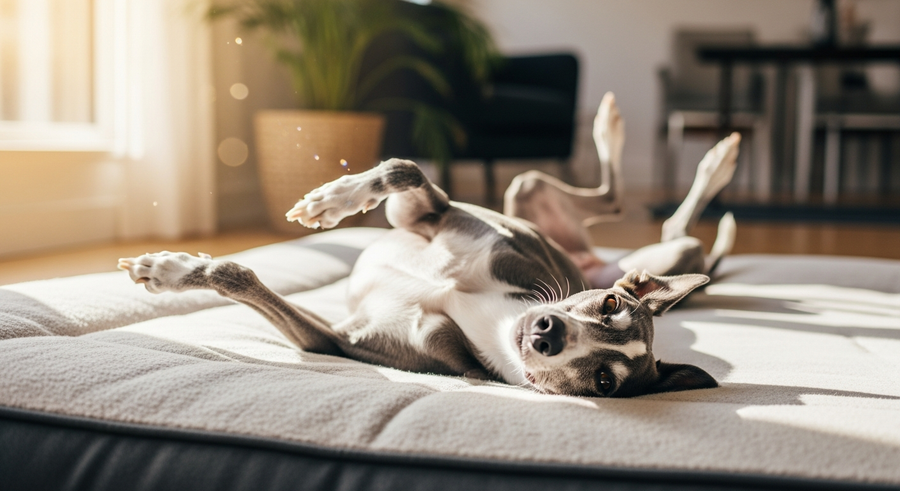
Common signs include pacing or circling, particularly near doors or windows. Some greyhounds tremble when anxious, even in warm weather. Others become clingy, following you from room to room. Roaching (that distinctive upside-down splayed pose) is a sign of complete relaxation, so if your greyhound rarely does it, that's worth noting.
A 2021 paper published in the Frontiers in Veterinary Science found that former racing greyhounds showed higher rates of anxiety behaviours in the first three months of adoption compared to pet-bred dogs of similar age, with the transition period being the most challenging window. The patterns most commonly reported were noise sensitivity and separation-related distress.
If your greyhound shows any of these behaviours consistently, it's worth talking to your vet to rule out underlying medical causes before assuming it's purely anxiety. Thyroid issues, pain, and nutritional deficiencies can all mimic anxious behaviour.
What to Look for in a Calming Supplement
The calming supplement market for dogs is crowded, and not all products are equal. A few things separate a supplement worth trying from one that's mostly filler.
Look for products that use specific, research-supported ingredients rather than vague proprietary blends. You want to know exactly what's in it. For greyhounds specifically, given their sensitivity to medications and their lean body composition, clean formulas with minimal additives matter more than they might for a sturdier breed.
Also look for a chew format. Greyhounds can be picky eaters, and convincing a reluctant dog to take a supplement is a battle you don't want every day. Most dogs treat a soft chew like a snack, which makes daily consistency far easier to achieve.
Australian-made products formulated under veterinary guidance are worth prioritising. Local manufacturing standards for pet supplements are more tightly regulated than some imported alternatives, and vet-reviewed formulas give you an additional layer of confidence.
Key Ingredients That Support Calm Behaviour in Dogs
Understanding what's actually doing the work in a calming supplement helps you make a better choice. These are the ingredients with the strongest evidence base for supporting calm behaviour in dogs.
Magnesium
Magnesium plays a role in regulating the nervous system and supporting normal muscle relaxation. Dogs who are chronically stressed may have higher magnesium demands. A review in Journal of Veterinary Behavior noted that magnesium supplementation in anxious animals may support a more regulated stress response, particularly in environments with frequent sensory triggers.
L-Tryptophan
L-tryptophan is an amino acid the body uses to produce serotonin, the neurotransmitter most closely associated with mood regulation and feelings of calm. Dogs cannot produce tryptophan on their own; it has to come from diet. Supplementing directly can help support serotonin production, particularly in dogs who are chronically stressed and may have depleted levels.
Ashwagandha
Ashwagandha is an adaptogenic herb with a strong history of use in both human and veterinary contexts. Adaptogens work by helping the body regulate its own stress response rather than simply sedating the nervous system. Research suggests ashwagandha may support a more balanced cortisol response, which is particularly relevant for greyhounds who are easily startled or who become hypervigilant in new environments.
Chamomile
Chamomile has mild calming properties and is well-tolerated by most dogs. It's been used in complementary veterinary medicine for decades. While it's not a heavy-hitter on its own, in combination with other calming ingredients it contributes to an overall settled feeling without dulling alertness or normal behaviour.
Vitamin B1 (Thiamine)
Thiamine is essential for normal nervous system function. Deficiency, even mild deficiency, can manifest as increased nervousness or irritability in dogs. Supplementing thiamine supports the neural pathways involved in stress regulation and mood stability.
Jerusalem Artichoke
A prebiotic ingredient that supports the gut microbiome. The gut-brain axis is increasingly recognised as a key player in mood and anxiety regulation. Research in humans and animals suggests that a healthy, diverse gut microbiome correlates with lower anxiety indicators. Jerusalem artichoke supports the gut environment that allows beneficial bacteria to thrive.
Hero's Calming Daily Chews contain all six of these ingredients in a vet-reviewed, Australian-made formula designed for daily use. If you want to see whether a calming supplement is the right fit for your greyhound's specific needs, the Hero Health Assessment gives you a personalised recommendation based on your dog's age, weight, and lifestyle.
Not sure if a calming supplement is what your greyhound actually needs? The Hero Health Assessment takes two minutes and gives you a personalised plan based on your dog's age, breed, and what you're seeing at home.
Start the Free AssessmentHow to Use Calming Supplements Effectively
The most common mistake people make with calming supplements is treating them like a rescue remedy. A single chew before a thunderstorm isn't how these ingredients work. The active compounds in magnesium, tryptophan, and adaptogenic herbs need to accumulate to effective levels in the body, which takes consistent daily use over two to four weeks.
Think of it like a daily vitamin. The benefit builds over time, and you'll likely notice the most significant changes after the first month of consistent use. Many greyhound owners report that the most visible improvement is in baseline settleability: the dog holds a roach more often, startles less severely, and recovers faster after a stressful event.
Pair supplementation with a predictable daily routine. Greyhounds thrive on structure. Feeding, walking, and rest times at the same times each day give the nervous system cues it can rely on, which compounds the effect of any calming supplement. Supporting joint comfort alongside calm behaviour is worth considering too, since discomfort can amplify anxiety. Our guide to joint supplements for greyhounds covers that side of daily care in detail.
A note on dosing: always follow the manufacturer's guidelines based on your dog's weight. Greyhounds are lean with a different body composition to most breeds of similar height and length, so their actual weight is often lower than people expect. Use the correct dose for their actual measured weight, not an estimate.
Supporting Your Greyhound Beyond Supplements
Supplements work best as part of a broader approach. On their own, they address the physiological side of anxiety. But greyhounds also benefit from environmental and behavioural support.
Safe spaces matter. Greyhounds are instinctively den animals despite their size. A dedicated bed in a quiet corner, ideally with high sides, gives them somewhere to retreat that feels genuinely safe. Many greyhounds wear pyjamas or body wraps, not just for warmth (they do feel the cold), but because the gentle pressure has a self-soothing effect similar to a weighted blanket.
Exercise helps, but the timing matters. A good run or a long walk in the morning does more for a greyhound's anxiety than one in the evening. Morning physical release sets a calmer tone for the day. Evening walks closer to bedtime can leave some greyhounds too stimulated to settle.
Gut health also feeds into overall calm. There's growing evidence that the gut microbiome directly influences anxiety-related behaviours, with researchers suggesting that dogs with diverse, healthy gut bacteria tend to show fewer stress indicators. Supporting digestive health through daily supplementation is a complementary strategy many owners use alongside calming support. Our greyhound probiotic guide covers the specifics of what to look for.
If anxiety is severe or significantly affecting your greyhound's quality of life, talk to your vet. Nutritional supplements support normal physiological function, but they aren't a substitute for veterinary assessment when a dog is genuinely distressed. Some greyhounds benefit from a combination of supplements, behavioural modification, and short-term medication to get over the initial adjustment hump.
A Note on Ex-Racing Greyhounds Specifically
If you've adopted a retired racer, the first three months are the most important window for establishing calm routines. The 3-3-3 framework is widely used in the greyhound adoption community: three days to decompress, three weeks to settle into a new routine, three months to genuinely feel at home.
During that initial period, limit overwhelming stimuli where possible. Busy parks, loud gatherings, and unfamiliar dogs can all set back progress. Keep introductions gradual and always give your greyhound the choice to disengage. They'll tell you clearly, by leaning in or turning away, whether something feels safe.
Starting a daily calming supplement during the transition period (rather than waiting until anxiety becomes a problem) gives the active ingredients time to build to effective levels before the biggest adjustment challenges arrive. For more context on what to expect as your greyhound settles and ages, our guide to greyhound lifespan and life stages is a helpful companion read.
The Bottom Line
Greyhounds are sensitive, loving, and sometimes anxious dogs. That anxiety is manageable, with the right daily support and a consistent routine that helps their nervous system find its footing.
A quality calming supplement, one with magnesium, L-tryptophan, ashwagandha, chamomile, vitamin B1, and gut-supporting prebiotics, used every day rather than as a crisis response, can make a real difference in how settled and confident your greyhound feels. Pair it with structure, safe spaces, and appropriate exercise, and most greyhounds settle into a noticeably calmer baseline over time.
Every greyhound is different. If you want to know exactly which supplements are the right fit for your dog's individual profile, the Hero Health Assessment will give you a personalised recommendation in under two minutes.