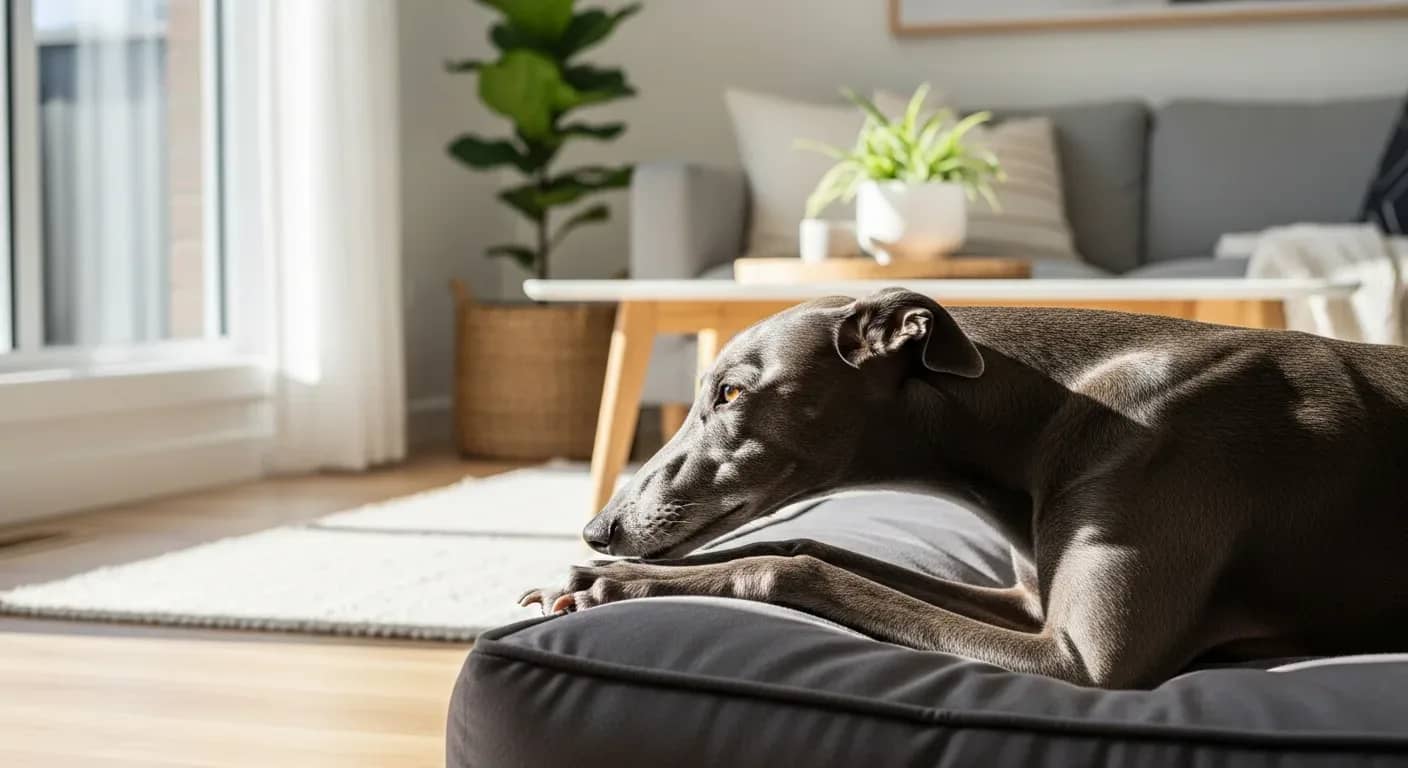

Most people picture greyhounds as race dogs. Fast, fierce, all legs and adrenaline. But the greyhound that ends up curled on your couch is one of the gentlest breeds you'll ever meet, a dog with a surprisingly placid temperament and a deep need for warmth and quiet.
What surprises new owners is how specific their health needs are. Greyhounds aren't sickly dogs by any means. In fact, compared to many modern purebreds, they're remarkably hardy. But their physiology is genuinely different from most breeds you've owned before, and that difference matters when it comes to their care. Understanding common greyhound health problems in Australia is one of the most important things you can do for your dog right from day one.
This guide covers what to watch for, why these issues occur in greyhounds specifically, and what you can do to stay ahead of them. If you're also curious about how long greyhounds typically live, our greyhound lifespan guide covers the key factors that influence longevity.
Why Greyhounds Have Unique Health Considerations
Greyhounds were bred for one thing: speed. Centuries of selective breeding produced a dog with an unusually lean body, a deep chest, long legs, and a metabolism that functions differently from the average dog. That athletic build comes with some trade-offs.
Their low body fat percentage, typically 16% compared to 35% in most breeds, affects how they metabolise drugs, tolerate cold temperatures, and respond to surgery. Their deep chest makes them prone to a life-threatening condition called bloat. Their racing history means many ex-racing greyhounds arrive in homes with dental neglect, minor injuries, and sometimes exposure to medications or parasites that domestic dogs rarely encounter.
Understanding this context helps you ask better questions at the vet, recognise warning signs earlier, and build daily habits that genuinely reduce risk. Supporting your greyhound's joint health from an early age is a good place to start, given the physical demands their structure places on their musculoskeletal system.
Dental Disease: The Number One Health Issue
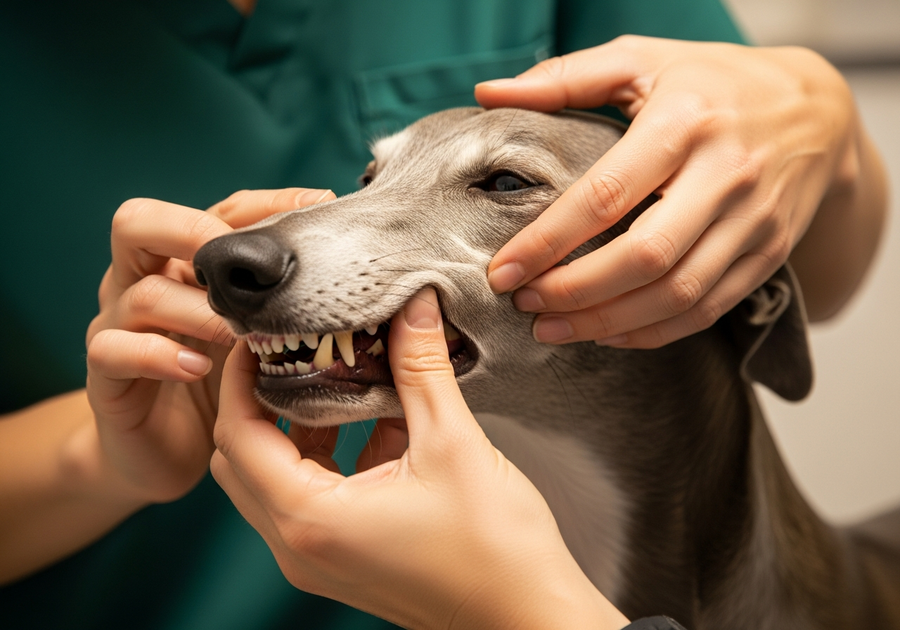
If there's one health problem that affects greyhounds more than any other breed, it's dental disease. Studies suggest that up to 39% of greyhounds experience significant periodontal problems, a rate far higher than most other breeds.
The reasons aren't fully understood, but it likely comes down to a combination of genetics, diet during racing years, and the fact that dental care was historically not prioritised for working greyhounds. Many adopted ex-racers arrive with significant tartar buildup, gingivitis, and sometimes teeth that need extraction before they can comfortably eat.
What dental disease looks like:
- Bad breath, often quite pronounced
- Yellow or brown buildup on teeth, especially the back molars
- Red, swollen, or bleeding gums
- Loss of appetite or reluctance to chew hard food
- Pawing at the mouth or face
Left untreated, periodontal disease doesn't just cause pain and tooth loss. The bacteria from infected gums can enter the bloodstream and affect the heart, kidneys, and liver. Your vet will likely recommend a professional dental scale and polish once or twice a year, which requires a short anaesthetic.
Daily home brushing is the single most effective preventive step you can take. Use dog-specific toothpaste (never human toothpaste) and a soft-bristled brush. If your greyhound resists brushing, dental chews and water additives offer some benefit, though they don't replace brushing. Talk to your vet about the right dental care routine for your dog's age and current dental health.
Bloat (Gastric Dilatation-Volvulus): A Medical Emergency
Bloat is one of the most serious conditions deep-chested breeds face, and greyhounds sit firmly in that risk category. The technical term is gastric dilatation-volvulus (GDV): the stomach fills with gas and then twists on itself, cutting off blood supply. Without emergency treatment, it's fatal within hours.
The early signs can be deceptively mild:
- A visibly swollen or hard belly
- Unproductive retching, trying to vomit but nothing coming up
- Restlessness, pacing, or obvious distress
- Excessive drooling
- Pale gums
If you see any combination of these signs, don't wait. Get to an emergency vet immediately. Every minute counts with GDV.
Some steps that may reduce risk include feeding smaller meals twice a day rather than one large meal, avoiding vigorous exercise for an hour before and after eating, and using a slow-feeder bowl to prevent gulping. There's ongoing debate in the veterinary community about raised food bowls. Some older research suggested they might increase bloat risk, though more recent evidence is mixed. Your vet can advise based on your individual dog.
Osteosarcoma: The Bone Cancer Concern
Greyhounds have a statistically higher risk of osteosarcoma (bone cancer) than most breeds. Research from Walkerville Vet and other sources suggests greyhounds may be five times more likely to develop bone cancer than the average dog. One Australian study found that 25% of greyhound deaths in older dogs were related to osteosarcoma, which is a sobering number.
The most common first sign is limping, usually in a front leg. Here's the important nuance: greyhounds limp frequently. Their legs take a beating during their racing careers, and minor muscle strains, corns, and joint soreness are common. Most limps in a retired greyhound have an entirely benign explanation.
That said, any persistent limpiness, especially one that doesn't improve within a day or two or comes with localised swelling, deserves a vet visit. Your vet can assess whether X-rays are warranted to rule out osteosarcoma. Catching it early gives you more options and more time.
There's no reliable way to prevent osteosarcoma, but maintaining a healthy weight and supporting joint health may reduce the general strain on bones and connective tissue. The joint health hub has more detail on how to support an older dog's musculoskeletal system. Ongoing joint support is particularly relevant for greyhounds given the physical demands their career places on their legs and hips.
Anaesthesia Sensitivity: What Your Vet Needs to Know
This is one of the most important things to communicate to any vet treating your greyhound, particularly if they're not familiar with sighthounds. Greyhounds metabolise barbiturate anaesthetics very differently from other breeds, due to their low body fat and specific liver enzyme activity.
Standard drug doses calculated by body weight can easily result in dangerously deep sedation or prolonged recovery in greyhounds. An experienced vet will already know this, but if you're ever in an emergency or visiting a new clinic, mention it explicitly. Greyhound Adoption Program (GAP) vets in Australia are well-versed in sighthound anaesthesia protocols.
This applies to any procedure requiring sedation: dental cleans, minor surgeries, X-rays under anaesthetic. Always confirm your vet is aware of your dog's breed before any procedure.
Pannus (Chronic Superficial Keratitis)
Pannus is an eye condition that affects the cornea, the clear front surface of the eye. It causes a dark, pigmented film to spread across the cornea, and in severe cases can significantly impair vision. It's more common in large breeds including greyhounds, and tends to appear in dogs aged six and older.
The condition is related to UV light exposure and immune system activity. Australian greyhounds that spend time outdoors in high-UV conditions may be at somewhat higher risk. Symptoms include:
- A greyish or pinkish film appearing on one or both eyes
- Cloudy-looking corneas
- Increased eye gunk or discharge
- Occasional squinting or eye rubbing
Pannus is manageable, not curable. Treated early with topical corticosteroid eye drops, progression can be slowed significantly. Dogs diagnosed and treated promptly often maintain good vision for many years. If you notice any changes to your greyhound's eyes, get them checked promptly. Regular annual eye exams with your vet are a sensible routine once your greyhound passes the age of five.
Skin Sensitivity and Pressure Sores
Greyhounds have unusually thin skin with very little subcutaneous fat. This makes them prone to two related problems: skin lacerations from minor impacts, and pressure sores from lying on hard surfaces.
A greyhound that sleeps on a hard floor or a thin mat will often develop calluses or open sores on their elbows, hocks, and the bony prominences along their sides. These can become infected if not managed. The solution is simple: provide a thick, padded bed. Orthopaedic foam beds work well. Many greyhound owners use raised dog cots, which allow airflow while eliminating pressure points.
Skin lacerations also happen more easily than you'd expect. A knock against a sharp edge, a rough play session, or a bramble in the bush can split a greyhound's skin. Keep a pet first aid kit at home and know when a cut needs vet attention (deep, gaping wounds or any injury that won't stop bleeding).
Hypothyroidism: Often Misdiagnosed
Greyhounds have naturally lower thyroid hormone levels than most breeds. This is a normal physiological trait, not a disease. Unfortunately, this means that standard blood reference ranges used for other dogs can make a healthy greyhound appear to have hypothyroidism.
True hypothyroidism does occur in greyhounds, but it should only be diagnosed using breed-specific reference ranges and a full thyroid panel, not a single total T4 result. Signs of genuine hypothyroidism include unexplained weight gain, lethargy, hair thinning, and cold intolerance.
If your vet suggests hypothyroidism based on routine bloodwork alone, it's worth asking whether they're using greyhound-specific reference ranges. Over-treatment with thyroid supplements when a dog doesn't need them can cause its own health problems.
Corns: A Greyhound-Specific Foot Problem
Corns are hard, painful growths that develop on the digital pads (the toe pads) of greyhounds, almost exclusively. They rarely occur in other breeds. The cause isn't fully understood, but one leading theory involves a papillomavirus-like infection that triggers abnormal keratin growth within the pad.
Corns are painful. A greyhound with a corn will often limp on hard surfaces but seem fine on grass. You might feel a firm, smooth lump within the pad when you run your thumb over it.
Treatment options include regular hulling (removing the top layer), full excision, or in some cases, a procedure called P3 removal (a more radical but potentially more permanent fix). Recurrence is common. Many greyhound owners become expert corn managers over their dog's lifetime. A vet or specialist greyhound podiatrist can advise on the best approach for your dog. Keeping nails trimmed to a short length reduces the mechanical pressure on pads that may trigger corn formation.
Daily Health Support for Greyhounds in Australia
Many of the greyhound health problems outlined here aren't preventable in a straightforward sense. Genetics, breed history, and physiology all play a role. But there's a lot you can do to support your dog's overall health and catch issues early.
A few practical habits worth building:
- Regular vet check-ups twice a year for greyhounds over six, or annually for younger dogs
- Daily dental brushing, or at minimum a consistent dental care routine
- A thick, padded sleeping surface to prevent pressure sores
- Consistent weight monitoring, since obesity significantly increases joint, cardiac, and bone cancer risk
- Controlled feeding to reduce bloat risk, including no exercise for an hour after meals
- Eye checks from age five to catch pannus early
For older greyhounds, watching for early signs of joint trouble becomes increasingly important. Their lean frames and long limbs create specific mechanical stress on joints over time, and early intervention tends to produce better long-term outcomes than waiting until a dog is visibly struggling.
If your greyhound is starting to show subtle signs of stiffness or slowing down on walks, it's worth discussing daily joint support with your vet. Supporting joint mobility with vet-reviewed supplements is one option some greyhound owners choose as a proactive measure. If you're looking at daily supplement options, the best dog joint supplements guide for Australia covers what to look for and how the different formulas compare.
Good gut health also matters for greyhounds, particularly ex-racers transitioning from a racing diet to a standard home diet. Digestive upset during this transition is common. Our dog gut health guide covers the signs of a gut that needs support and what you can do about it.
When to Call Your Vet Urgently
Some symptoms in greyhounds need same-day or emergency vet attention, no waiting to see if it improves:
- Unproductive retching with a swollen belly (suspect bloat)
- Collapse or sudden weakness
- A limb that's swollen, hot, and painful, especially in an older dog
- Pale or white gums
- Inability to stand after a fall
For everything else, use your judgement. A good rule of thumb: if you'd call a doctor for yourself with the same symptom, call the vet. Greyhounds are stoic dogs. They often don't show pain overtly until it's quite severe.
The Bottom Line on Greyhound Health in Australia
Greyhounds are hardy dogs with some very specific vulnerabilities. Dental disease, bloat risk, anaesthesia sensitivity, and bone cancer are the conditions that deserve the most attention. Understanding them before they become urgent puts you in a much stronger position as an owner.
Regular vet care, good daily habits, and knowing your dog's individual baseline, what's normal for them on a good day, are the best tools you have. Every greyhound is different. If you want personalised guidance on what your specific dog might need based on age, weight, and lifestyle, the Hero Health Assessment takes about two minutes and gives you a tailored recommendation.