

When you bring a greyhound home, you quickly realise there is something different about this breed. They are calm in a way that surprises people who expected a racing dog to be wired and restless. Lean, gentle, and remarkably easy to live with, they become deeply embedded in family life. Naturally, you want to know how long that chapter lasts.
The honest answer is 10 to 14 years for most greyhounds, with the majority landing somewhere in the 12 to 13 year range. That puts them comfortably above many large breeds and roughly in line with other medium-to-large dogs. But the range matters more than the average, and understanding what pulls a greyhound toward 10 years versus 14 is where the useful information lives. For a full picture of the health conditions that shape this breed's life, our guide to common greyhound health issues covers everything owners should know.
What Is the Average Greyhound Lifespan in Australia?
Multiple Australian adoption organisations cite 12 to 14 years as the typical greyhound lifespan. Greyhounds as Pets, the national rehoming body, puts it at 12 to 14 years. The Greyhound Adoption Program SA lists 12 to 15 years. Purina Australia notes a range of 10 to 14 years for the breed. The consensus sits firmly in the 12 to 14 year zone for a greyhound receiving good care.
Compare that to other popular Australian breeds:
- Labrador Retriever: 10 to 12 years
- German Shepherd: 9 to 13 years
- Golden Retriever: 10 to 12 years
- Border Collie: 12 to 15 years
- Staffordshire Bull Terrier: 12 to 14 years
A greyhound's lifespan sits well above the large-breed average. Part of that comes from their lean, low-body-fat physique, which reduces the cardiovascular and joint strain that cuts years off bigger, heavier dogs. Part of it is the breed's fundamentally sound genetics outside of a few specific vulnerabilities.
Racing History and Its Effect on Lifespan
Most greyhounds rehomed in Australia are ex-racing dogs, typically retired between two and five years old. That background shapes their health in specific ways, though not always in the direction owners expect.
Racing greyhounds live under enormous physical demands for the first years of their lives, and some arrive in adoption with old injuries, dental disease from a racing diet, or musculoskeletal wear from track work. A thorough vet check at adoption is essential to establish a baseline and catch anything that was missed or left untreated.
That said, the racing career itself does not meaningfully shorten life expectancy once a dog is in a stable, caring home. Greyhounds adapt remarkably well to domestic life. The Greyhounds as Pets program notes that their calm, adaptable temperament means even older retired dogs transition successfully into companion roles. What matters from that point is the quality of ongoing care.
Key Health Issues That Affect Greyhound Lifespan
Greyhounds are generally a hardy breed, but several conditions appear with enough frequency to warrant specific attention. Being aware of them is not cause for alarm. It is cause for preparation.
Osteosarcoma (Bone Cancer)
This is the most significant health risk specific to greyhounds. Research published in PubMed found that up to 45% of greyhounds diagnosed with cancer had osteosarcoma, and that greyhounds are approximately five times more likely to develop the condition than average dogs. One study estimated that as many as 25% of greyhound deaths may be linked to bone cancer.
Osteosarcoma typically affects the long bones of the limbs and usually appears in middle-aged to older dogs. The first sign is often a limp that does not resolve, sometimes with visible swelling. It is an aggressive cancer, and early detection gives owners the most options. Any persistent lameness in a greyhound warrants prompt veterinary investigation rather than a wait-and-see approach.
That said, most greyhound limps are not bone cancer. Greyhounds experience plenty of musculoskeletal issues from their racing years, and a vet will be able to distinguish these quickly with X-rays.
Bloat (Gastric Dilatation-Volvulus)
Deep-chested breeds face a higher risk of bloat, a condition where the stomach fills with gas and sometimes twists on itself. Greyhounds fit that profile. Bloat is a life-threatening emergency that can kill within hours if not treated surgically.
Signs include a visibly distended abdomen, unproductive retching, excessive drooling, restlessness, and a dog who seems distressed but cannot vomit. If you see these signs, treat it as an emergency and call your vet immediately. Preventive measures include feeding two smaller meals daily rather than one large one, and avoiding vigorous exercise within an hour of eating.
Heart Disease
Greyhounds can develop cardiac conditions, particularly as they age. Their physiology is unusual in that resting greyhounds often show enlarged hearts and heart murmurs that would be concerning in other breeds but are actually normal athletic adaptations in this one. This makes cardiac assessment more complex and underscores the value of finding a vet familiar with the breed.
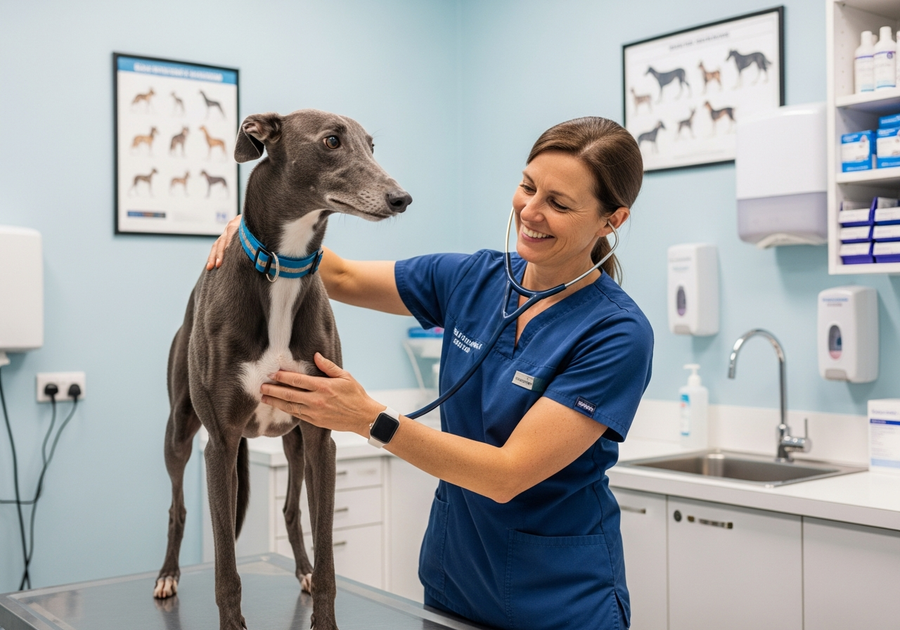
True cardiac disease does occur, and regular vet check-ups that include listening to the heart are the best early-detection tool available.
Joint and Musculoskeletal Problems
Years of high-speed racing leave physical marks on a greyhound's joints, tendons, and muscles. Arthritis, old fractures, and tendon damage are common findings in rehomed ex-racers. These conditions are manageable rather than life-shortening in most cases, but they require consistent attention to keep dogs comfortable and mobile in their senior years.
Maintaining a healthy weight is the single most impactful thing you can do for a greyhound's joints. Every extra kilogram adds meaningful load to already-stressed structures. Our guide to healthy greyhound weight covers what a fit greyhound should look like and how to keep them there.
Dental Disease
Racing greyhounds are often fed high-protein raw diets that can contribute to dental tartar buildup. Many adopted greyhounds arrive with significant dental disease that needs addressing before it causes systemic issues. Regular tooth brushing and dental check-ups matter more for this breed than many owners initially realise.
Sensitivity to Anaesthesia
Greyhounds metabolise certain anaesthetic drugs differently to other dogs due to their low body fat percentage and unique liver enzyme profile. This is not a health condition as such, but it is essential that your vet is aware of it before any procedure. Thiopentone, in particular, is poorly tolerated. Most vets experienced with greyhounds know this, but it is worth confirming.
What Actually Shapes How Long a Greyhound Lives
Genetics set the possible range. Daily decisions determine where your dog lands within it. These are the factors that move the needle most.
Veterinary Care Quality and Frequency
Annual vet check-ups catch the conditions that shorten greyhound lives before they become crises. Blood panels can reveal early kidney changes, liver function issues, and anaemia. Physical exams pick up lymph node changes, joint stiffness, and early cardiac murmurs. For dogs over eight, moving to six-monthly check-ups makes a real difference.
Finding a vet experienced with greyhounds specifically matters. The breed's unusual physiology, including its low body fat, anaesthesia sensitivity, and tendency toward normal-for-greyhound cardiac readings, means breed knowledge at the vet clinic genuinely affects care quality.
Diet and Nutrition
A high-quality diet appropriate to the dog's life stage supports everything from immune function to joint health to gut health. Greyhounds in retirement no longer need the high-calorie, high-protein diets that fuelled their racing lives. A balanced adult or senior diet suited to a lower-energy lifestyle helps maintain healthy weight and reduces metabolic strain.
Fresh water always available matters more than people think. Good hydration supports kidney function and helps flush metabolic waste, both important for longevity.
Weight Management
A greyhound at healthy weight should show visible ribs with light pressure and a clear waist tuck. Obesity in this breed is particularly damaging because it stresses joints already compromised by racing careers, and excess body fat has been linked to increased cancer risk across dog breeds generally. Keeping your greyhound lean is one of the highest-return investments in their longevity.
Exercise
Greyhounds need regular but moderate exercise. They are sprinters, not endurance athletes, which surprises many new owners. A couple of 20 to 30 minute walks daily plus occasional off-lead zoomies in a securely fenced area is typically sufficient. They should never be over-exercised to the point of exhaustion, and they need a soft, warm place to rest and recover. Our greyhound exercise guide covers appropriate activity levels across their life stages.
Mental Wellbeing
Greyhounds can be prone to anxiety, particularly separation anxiety, given the transition from a kennel environment with constant canine company to a home where they may be alone for hours. Chronic stress and anxiety have documented effects on immune function and long-term health. Addressing behavioural needs proactively is not a luxury. Our separation anxiety guide for greyhounds walks through what helps.
Environment
Greyhounds have almost no subcutaneous fat and a very thin coat. They feel the cold acutely. In Australian winters, particularly in southern states, a greyhound sleeping on a cold floor or without a coat outside is genuinely uncomfortable and potentially at risk. A warm, padded bed and an appropriate dog coat for cold weather are not indulgences. They are part of basic care for this breed.
Want to know exactly what your greyhound needs at their age and weight? The Hero Health Assessment takes 2 minutes and gives you a personalised plan built around your dog's specific profile.
Start the Free AssessmentWhat the Senior Years Look Like for a Greyhound
Greyhounds are typically considered senior from around seven to eight years old. This does not mean decline is imminent. Many greyhounds hit their senior years in excellent health and sail through to 12 or 13 with minimal intervention. But the biology does shift.
Common changes in senior greyhounds include:
- Increased joint stiffness, especially after rest
- Slower recovery from exercise
- Reduced appetite or changes in digestion
- Greying around the muzzle and eyes
- More time sleeping
- Possible cognitive changes (confusion, altered sleep patterns)
None of these are automatic. Well-managed senior greyhounds often remain bright, active, and engaged well into their final years. The changes worth acting on are loss of appetite that persists beyond a day or two, new lameness or lumps, difficulty breathing, or significant personality changes. These warrant a vet visit rather than watchful waiting.
How Greyhound Lifespan Compares to Similar Breeds
Among sighthounds, the greyhound's lifespan is competitive. Whippets, which share many genetic characteristics, typically live 12 to 15 years. Italian Greyhounds, the miniature version, often reach 14 to 15 years. Scottish Deerhounds and Irish Wolfhounds, the giant sighthounds, have significantly shorter lives, typically 6 to 8 years and 8 to 10 years respectively.
Size remains the most reliable predictor of lifespan across dog breeds. Greyhounds occupy a fortunate middle ground, large enough to be substantial companions but not so large that their bodies wear out quickly.
The Bottom Line
The average greyhound lifespan in Australia sits at 12 to 14 years, with many healthy, well-cared-for dogs reaching the upper end of that range. The breed carries some specific health risks, most notably a significantly elevated risk of osteosarcoma and vulnerability to bloat, but neither of these is inevitable, and both can be managed with knowledge and preparation.
What makes the biggest practical difference is straightforward: regular vet check-ups with a greyhound-experienced practice, a balanced diet that keeps your dog lean, appropriate daily exercise, and genuine attention to their comfort and mental wellbeing. These are not complicated actions, but they compound over years into a meaningfully longer, healthier life. For a broader look at everything that affects this breed's health and wellbeing, our complete guide to greyhound health issues covers the conditions every owner should understand. And for Australian dog owners looking for evidence-based advice on nutrition, supplements, and preventive care, the Hero Pet Health resource library is the place to start.