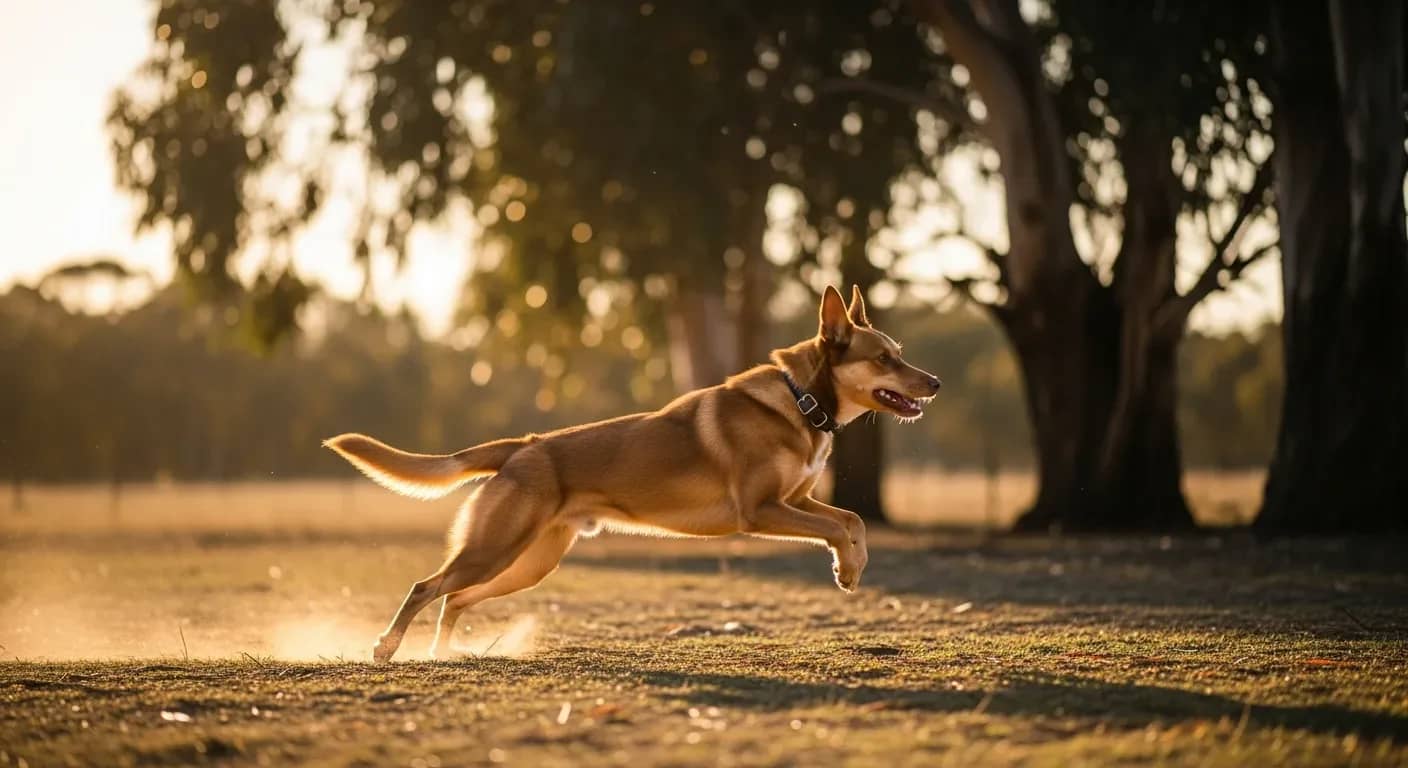
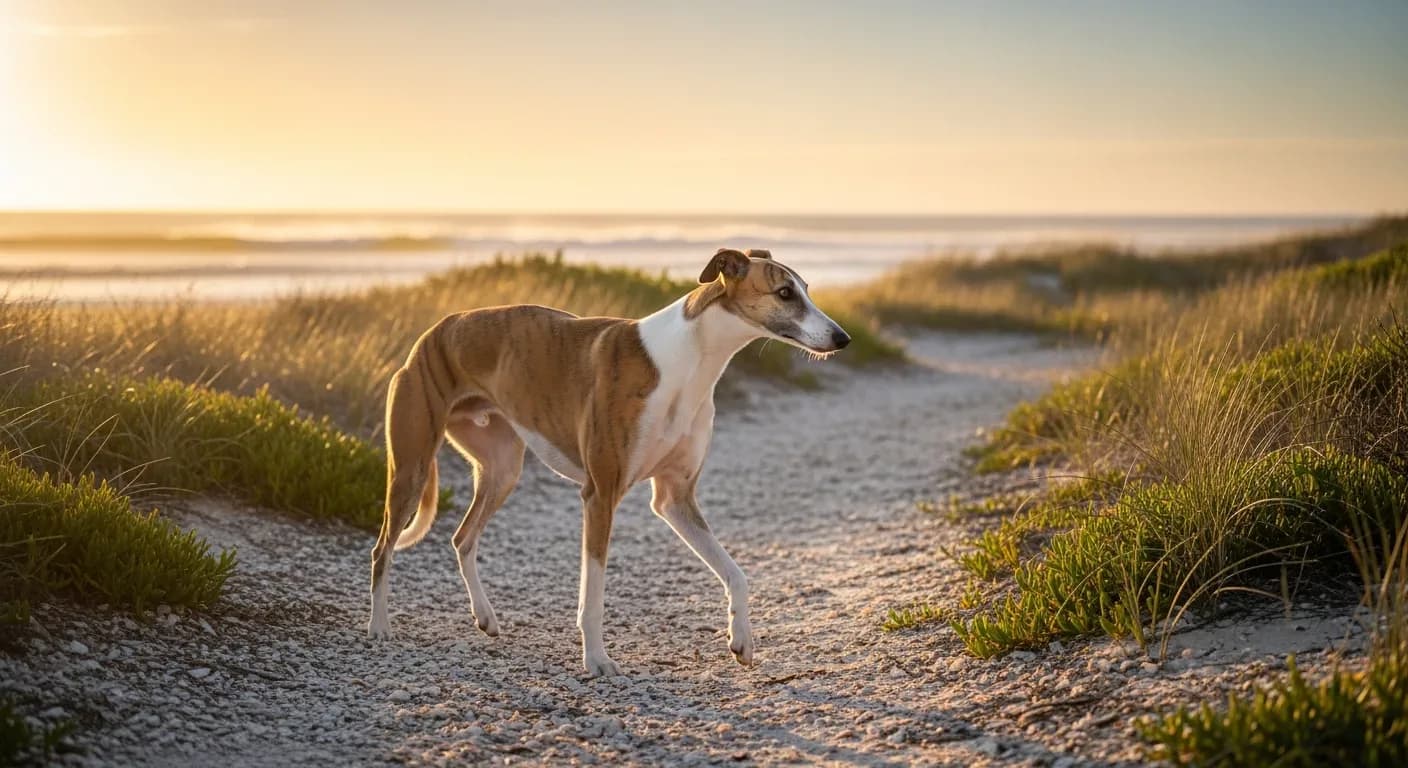
The first time you watch your Greyhound take that extra second to push off the lounge, or hesitate at the back step they used to fly down, it lands a bit harder than you expected. Greyhounds are quiet, careful athletes, and most of them carry their aches like they are nothing, so even a small change in how they move tends to register as a quiet little gut punch for the people who love them.
The reality is that joint health hits Greyhounds in a different way to most breeds. They are tall, narrow, and built from almost nothing but muscle, bone, and skin, with very little of the cushioning fat layer that softens the load on other dogs. Add in retired racing careers, slippery floors at home, and the long lever arms of those legs, and you have a body that benefits from steady joint support over a lifetime. This guide covers what actually matters for a Greyhound's joints, what to look for in a daily supplement in Australia, and how the Hero Joint Daily Chews fit in.
Why Greyhounds Need Joint Support More Than Most Breeds
Greyhounds usually weigh 25 to 35 kilograms, but they carry that weight on long, light limbs with proportionally less muscle padding around the joints than a Labrador or a Staffy. The mechanics are different. Every change of direction at speed, every twist on a slippery floor, every leap onto the couch puts focused load through the wrists, hocks, knees, and shoulders. Pet Greyhounds in Australia tend to live longer than their working ancestors, which means joints that started life on a track now have ten or twelve more years to put kilometres through.
Retired racing Greyhounds also carry a quiet history of repeated micro-impacts. Even dogs who never broke down on the track have done thousands of hard turns at full speed. The American Kennel Club's Greyhound breed profile describes them as a sighthound built for sprinting, with structural traits that match high-speed running rather than long-term cushioning. Pet Insurance Australia's claims data routinely lists soft tissue and joint issues as common reasons for Greyhound vet visits, especially as dogs move past age six.
Common joint-related concerns reported in Greyhounds include corns on the foot pads, wrist (carpal) strain from running on hard ground, lower back stiffness in older dogs, and general age-related cartilage wear in the hips and knees. None of these are unique to Greyhounds, but the combination of bony build, athletic history, and longer pet lifespan means joint support tends to pay off across a longer window than for many breeds. For more on breed-specific concerns, our guide to common Greyhound health problems walks through what to watch for at each life stage, and our overview of Greyhound lifespan sets useful context for when to start daily routines.
When to Start Joint Support for a Greyhound
For most pet Greyhounds, the right time to start a daily joint chew is earlier than owners expect. Once growth plates have closed, usually around 14 to 18 months, the body is ready for ongoing joint nutrition. For ex-racers adopted as adults, the answer is simpler: start as soon as they settle into your home. There is rarely a reason to wait until you see a problem.
By age 5, every Greyhound benefits from a clear daily routine that supports cartilage, soft tissue, and inflammation balance. By age 7, that routine should be locked in. Senior Greyhounds, often defined as 8 years and up, are the ones where the gap between "doing fine" and "obviously stiff" can change month to month, so consistency matters more than intensity. A 2019 review in JAVMA on canine osteoarthritis describes joint disease as a slow, progressive process where early management produces better long-term mobility outcomes than reactive care.
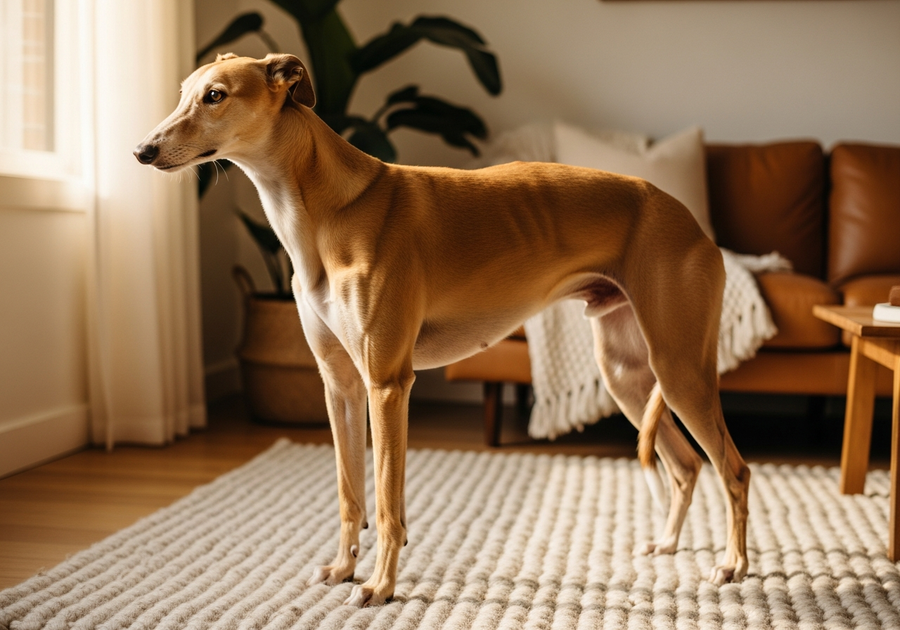
Two practical triggers to act on now: a noticeable change in how your Greyhound rises from rest, or a reluctance to do something they used to do, like jumping into the car or onto the bed. Neither is a diagnosis on its own. Both are good prompts to lock in a daily supplement and book a vet check if the change is sudden or worsening.
What to Look For in a Greyhound Joint Supplement (Australia)
The Australian supplement market has a lot of options, and quality varies. For a Greyhound specifically, the brief is simple: ingredients with evidence behind them, a format your dog will actually take, and a brand that tells you exactly what is in the chew.
Here is what matters when you compare products on the shelf or online:
- Australian made and TGA-aware manufacturing. Australian-made products are subject to local food and veterinary supplement standards, and reputable brands work with veterinarians on formulation.
- Vet reviewed formulation. A vet should have signed off on the ingredient list and dosing approach. Look for this clearly stated, not implied.
- Body-weight dosing. A 30 kg adult Greyhound needs more active ingredient than a small breed, so dosing should scale by weight. One-size-fits-all chews are a red flag.
- A chew format your Greyhound will eat. Powders dusted over food work for some dogs, but Greyhounds are famously picky about texture. A soft, palatable chew gets taken every day, which is what daily joint support actually needs.
- Evidence-backed actives. Ingredients like collagen peptides, MSM, turmeric, and vitamin C all have published research in dog or comparative joint health.
- Clean ingredient list. Grain-free, free from animal protein fillers, and low in sugars matters for Greyhounds prone to sensitive stomachs or skin reactions.
The "what to look for" list should always match the formula being recommended at the bottom. If a guide spends 500 words on one school of ingredients and then promotes a supplement that uses a completely different approach, the guide is selling, not informing.
Why Collagen-Led Formulations Matter for Greyhounds
Joint supplements come in different schools of thought. Some lean on cartilage-building precursors, some lean on shellfish-derived omegas, and some lean on the structural proteins that make up tendons, ligaments, and the cartilage matrix itself. Each has a body of evidence, and the picture across canine joint research is mixed enough that no single approach has emerged as the clear winner.
For a Greyhound specifically, the structural argument is strong. These are dogs with long tendons, narrow joints, and high mechanical demand on connective tissue. Supporting the actual building blocks of that tissue, rather than relying on cartilage precursors alone, lines up neatly with the breed's anatomy. A 2017 study in the Veterinary Journal on canine joint disease management highlights the value of multi-pathway approaches that include connective tissue support, anti-inflammatory ingredients, and antioxidant cofactors working together.
The Hero Joint Daily Chew Approach for Greyhounds
The Hero Joint Daily Chews are an Australian-made, vet reviewed daily chew built around four active ingredients:
- Collagen peptides for the structural protein in cartilage, tendons, and ligaments
- MSM (methylsulfonylmethane) for connective tissue and inflammation balance
- Turmeric for everyday inflammation support
- Vitamin C (ascorbic acid) as a cofactor in collagen synthesis
The chews are grain-free, free from animal protein fillers, and dosed by body weight, so a 30 kg Greyhound gets the right amount and a 7 kg Italian Greyhound gets a smaller dose. Most Greyhounds we hear from take the chew like a treat, which solves the biggest problem with daily joint nutrition: actually giving it every day. There are about 60 chews per pack, priced at $59.95 AUD, with free shipping over $69 and a lifetime money-back guarantee.
For a Greyhound specifically, the collagen-led approach lines up neatly with the breed's anatomy. These are dogs with long tendons, narrow joints, and high mechanical demand on connective tissue, so structural protein support is a sensible foundation. Pair the chew with sensible weight management, smart exercise, and good flooring at home, and you have a routine that pays off over the long Greyhound retirement.
Weight, Exercise, and Diet: The Greyhound Joint Foundations
A supplement only works inside a sensible foundation. Three things matter most for Greyhound joints across a lifetime, and none of them come in a chew.
Lean body weight. Greyhounds are meant to be lean. You should be able to see the last two ribs and the outline of the hip bones in good light. Carrying even an extra two or three kilograms compounds the load on every joint with every step. Many adopters put weight on a retired racer in the first year of pet life, often well-meaning, and the joints quietly pay for it later. Our guide on helping your Greyhound maintain a healthy weight covers what a healthy Greyhound shape actually looks like.
Smart exercise. Two short walks a day plus a sprint at the dog park is closer to the ideal than long endurance walks. Greyhounds are sprinters, not marathoners, and overdoing distance on hard surfaces can be harder on the joints than people assume. A few short sessions of running on grass, with rest in between, beats a 90 minute pavement walk. Our overview of Greyhound exercise needs goes deeper on the right balance.
Quality diet. A complete and balanced diet supports joint nutrition from the inside. Look for adequate protein, omega-3 fatty acids, and consistent feeding rather than fad diets that swing weight up and down. The WSAVA Global Nutrition Guidelines give a useful framework for evaluating any commercial dog food.
Senior Greyhounds: Stacking the Daily Routine
Senior Greyhounds, especially those past age 8, benefit most from a steady, layered routine rather than a single big intervention. The pattern that works in our experience and across the broader literature looks like this: a daily joint chew, lean weight, two short low-impact walks, soft bedding, and rugs or runners on slippery floors at home.
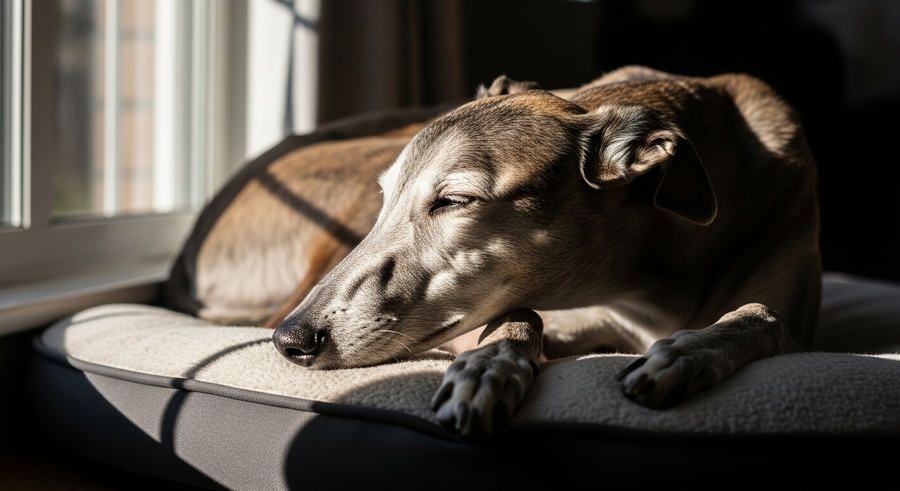
Slippery floors deserve a sentence of their own. Greyhounds on hardwood, polished concrete, or tile lose grip in a way that puts a lot of strain on knees, wrists, and lower backs as they brace and slip. A few cheap runners or non-slip mats along the most-used routes inside the house do real work for joint health. So does a thick, supportive bed that does not bottom out under bony elbows and hips.
If your senior Greyhound has shifted from "a bit slow off the bed" to clearly limping, lame, or in pain, please see your vet. A daily chew is part of the routine, not the treatment plan for active joint disease. Our guide on Greyhound separation anxiety also covers how chronic discomfort can show up as restlessness or stress, which is worth ruling in or out at the same vet visit.
Not sure where to start with your Greyhound's daily routine? The Hero Health Assessment takes about two minutes and gives you a personalised supplement plan based on your dog's age, weight, and lifestyle.
Start the Free AssessmentWhat Australian Greyhound Owners Often Get Wrong
The most common mistake is starting too late. Many adopters wait until their Greyhound is visibly stiff before adding a daily joint supplement. By that point, the body has already done a lot of unsupported work, and you are playing catch-up. Joint nutrition is preventive maintenance, not a recovery tool, and the dogs that do best are the ones whose owners locked it in years before the first visible sign.
The second mistake is impatience. Switching brands every few weeks because nothing seems to be happening is a common pattern. Joint nutrition works on a slow timeline. Most owners who say "the supplement didn't work" stopped before the eight to twelve week window where benefits typically become noticeable. Pick a credible formula, dose it correctly for your dog's weight, and give it a fair run.
The third mistake is treating supplements as a stand-in for vet care. If your Greyhound is in real pain, suddenly lame, or losing mobility week by week, that is a vet conversation, not a supplement question. A daily chew is part of the routine, not the rescue plan.
The Bottom Line
Greyhounds carry a long, athletic frame on lean joints with very little natural cushioning, so daily joint support is one of the most useful long-term habits you can build into their routine. Look for an Australian-made, vet reviewed formula with collagen, MSM, turmeric, and vitamin C, in a chew format your dog will actually take. Start earlier than you think, stay consistent, and pair the supplement with lean weight, smart exercise, soft flooring at home, and a quality diet.
If you want a personalised plan rather than a guess, the Hero Health Assessment takes about two minutes and recommends the right daily routine for your Greyhound. For most adult Greyhounds, that means the Hero Joint Daily Chews, paired with the lifestyle habits above. Always check in with your vet if you are noticing new mobility changes, pain, or limping.