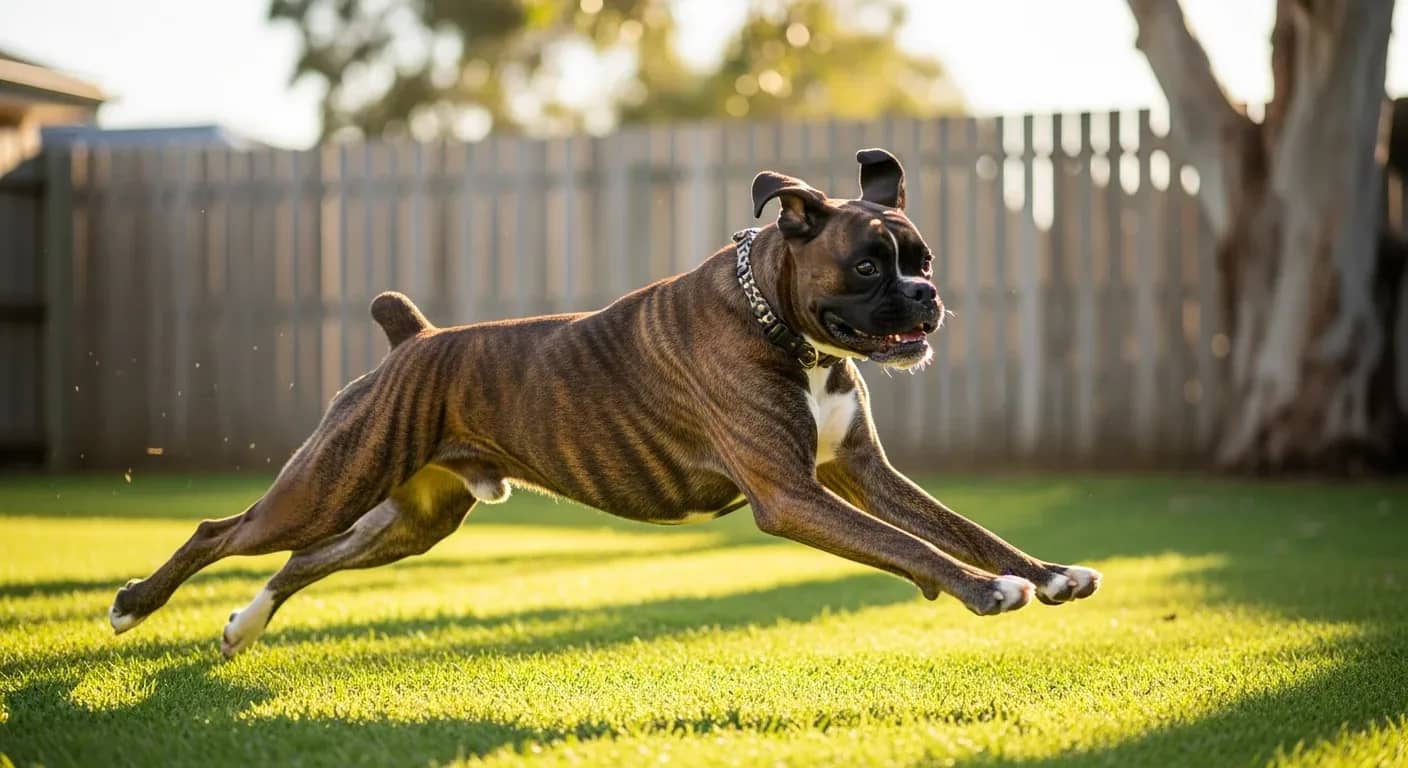

Boxers throw themselves into everything they do. Playtime, zoomies in the backyard, following you from room to room. This breed holds nothing back. But that same all-in temperament means when something tips them off balance, you notice quickly.
Anxiety in Boxers looks different to what you might expect. It is not always trembling or hiding. Sometimes it is restlessness you cannot explain, a dog that will not settle, one that gets louder or more clingy as the day goes on. If any of that sounds familiar, you are in the right place.
This guide covers what actually works in a calming supplement for Boxers in Australia: the ingredients to look for, what the research says, and how to build daily support your dog can rely on.
Why Boxers Struggle With Anxiety More Than Most Breeds
Boxers were bred as working dogs. Protective, alert, and deeply responsive to cues from their humans. That bond runs deep. The same traits that make them such loyal companions, their attentiveness and sensitivity to mood and routine, also mean they pick up on disruption fast.
Separation is one of the most common triggers. Boxers are not built to be alone for long stretches. They are pack-orientated dogs that find their rhythm in your company, and when that changes (a new work schedule, a move, changes to the household), their stress response can kick in hard.
Environmental triggers add to this. Loud noises from thunderstorms, fireworks, or construction can send an anxious Boxer into a spin. Even routine changes, like a different walking time or guests at home, can be enough to disrupt their sense of safety.
According to the American Kennel Club's Boxer breed profile, the Boxer's intensity and fierce loyalty are defining traits of the breed. Those same qualities make separation and environmental unpredictability genuinely difficult for many Boxers to manage. For a broader picture of how anxiety fits into overall Boxer health, the complete guide to Boxer health problems is worth reading first.
What to Look for in a Calming Supplement
Not all calming products on Australian shelves are equal. Some are built around a single ingredient. Some rely on suppressive compounds that dull a dog's experience rather than supporting genuine calm. Others use ingredients with almost no supporting research for dogs specifically.
What you want is a supplement that works with your dog's nervous system rather than against it. One that supports their natural stress-response pathways through daily use, rather than simply suppressing them when things get bad.
The distinction matters practically. Calming supplements work best as part of a consistent daily routine. The ingredients research consistently points to, including L-tryptophan, magnesium, and adaptogenic herbs, build up their effect over time. They are not designed as a one-off dose before a fireworks show, though they can help in those moments too once baseline levels are established.
If you are seeing significant anxiety signs in your Boxer, it is worth understanding the full range of dog anxiety signs and what to do about them before committing to a supplement approach. Some cases benefit from behavioural support alongside supplementation, and knowing what you are dealing with helps you choose the right path.
The Ingredients That Actually Support Calm Behaviour in Dogs
Here is what the evidence supports for canine calming, and how each ingredient contributes to a formula worth taking daily.
L-Tryptophan
L-tryptophan is an essential amino acid the body uses to produce serotonin, the neurotransmitter most closely tied to mood regulation in dogs and humans alike. Dogs cannot manufacture tryptophan themselves, so dietary intake is the only way to maintain adequate levels. For a high-energy, emotionally sensitive breed like a Boxer, keeping serotonin pathways well-supported matters. Research exploring tryptophan in dogs with heightened reactivity and baseline stress has shown encouraging results when given consistently over several weeks.
Magnesium
Magnesium supports the nervous system directly. A deficiency in this mineral is associated with heightened stress reactivity across mammalian species. For Boxers that startle easily, struggle to settle, or seem to run at a permanently elevated alert level, adequate magnesium intake is a reasonable starting point. It helps buffer the physiological stress response rather than suppressing awareness altogether.
Ashwagandha
An adaptogenic herb with a long history in Ayurvedic medicine, ashwagandha works by helping the body regulate its own stress response rather than shutting it down externally. The result is calmer baseline behaviour without dulling the dog's awareness. Adaptogens build resilience over time, which is the key distinction from products that work by blunting reactivity chemically.
Chamomile
Chamomile has mild calming properties supported by a long tradition of use in both human and veterinary herbal contexts. In dogs, it supports the central nervous system gently and also helps settle the digestive system. Many anxious Boxers carry stress in their gut as well as in their behaviour, making chamomile's dual action genuinely useful.
Vitamin B1 (Thiamine)
Thiamine is essential for healthy neurological function. Deficiency in B vitamins is linked to heightened anxiety responses and impaired stress tolerance in dogs, particularly those on highly processed diets where bioavailability of B vitamins can be limited. Adequate thiamine supports normal nerve signalling and helps the nervous system respond proportionally to triggers.
Jerusalem Artichoke
A prebiotic fibre source, Jerusalem artichoke feeds beneficial gut bacteria. There is a growing body of research on the gut-brain connection in dogs: a well-balanced microbiome helps produce calming neurotransmitters and supports cortisol regulation. Including prebiotic support in a calming formula recognises that gut health and mood are not separate systems.

Boxers and Separation Anxiety: What Owners Need to Know
Of all the anxiety triggers Boxers face, separation is the one that comes up most consistently. This is a breed that forms genuinely intense bonds. Left alone, even for a few hours, some Boxers will vocalise loudly, pace, chew destructively, or refuse food. These behaviours are not defiance or bad manners. They are signs of real distress.
According to VCA Animal Hospitals, separation anxiety is one of the most commonly reported behavioural concerns in dogs, and breeds with strong human-attachment tendencies are particularly susceptible. If this describes your Boxer, the guide to natural supplements for separation anxiety in dogs covers the broader landscape well, including what works and what does not.
Thunderstorms and fireworks also deserve a mention. Australian summers tend to coincide with both, and Boxers can be particularly reactive to sudden loud sounds. Understanding what actually helps dogs during thunderstorm and fireworks anxiety gives you practical options beyond just waiting it out.
Not sure where to start with your Boxer's health? The Hero Health Assessment takes 2 minutes and gives you a personalised supplement plan based on your dog's age, weight, and lifestyle.
Start the Free AssessmentHow to Build Calming Supplements Into Your Boxer's Daily Routine
Consistency is the single most important factor in getting results from calming supplements. The ingredients that work, L-tryptophan, magnesium, ashwagandha, need to be present in the system daily to shift neurotransmitter levels and cortisol patterns meaningfully. Owners who give supplements for one week, see no dramatic change, and stop are working against the mechanism entirely. These compounds take four to six weeks of consistent daily use to show their full benefit.
For most Boxers, fitting a supplement into the morning feeding routine is the easiest approach. Tie the habit to an existing anchor, whether that is breakfast or the morning walk preparation. Most Boxers take soft chew supplements as willingly as treats, so compliance is rarely the challenge. The challenge is staying consistent for long enough to see results.
Hero's Calming Daily Chews contain all six of the evidence-supported ingredients covered above: Magnesium, L-Tryptophan, Vitamin B1, Jerusalem Artichoke, Ashwagandha, and Chamomile. The formula is vet-reviewed and made in Australia, designed for consistent daily use rather than situational dosing. Most Boxer owners find the chews easy to incorporate into a morning routine, and most Boxers take them without hesitation. Learn more about Hero's Calming Chews, backed by a lifetime money-back guarantee.
If your Boxer also shows gut sensitivity or stiffness after long play sessions, many owners find it helpful to combine calming support with joint and probiotic supplements. The joint supplement guide for Boxers and the probiotic guide for Boxers give breed-specific context for both concerns.
When to Talk to Your Vet
Calming supplements are one piece of the puzzle. For many dogs, a meaningful one. But they work best alongside environmental management and, where needed, professional behavioural support.
Signs that your Boxer's anxiety warrants a vet conversation sooner rather than later:
- Anxiety that is worsening over time despite consistent daily supplementation
- Self-harming behaviour, such as excessive licking, chewing at skin, or fur loss from scratching
- An inability to settle or sleep, even in familiar and safe surroundings
- Aggression linked to fear or anxiety
- Significant appetite changes or weight loss tied to stress
A good vet will look at the full picture: your Boxer's history, specific triggers, physical health, and temperament. Supplements support the nervous system, but they do not replace behavioural therapy or, in more severe cases, veterinary-prescribed treatment. The Australian Veterinary Association recommends that persistent behavioural concerns be assessed by a vet, particularly for dogs showing moderate to severe anxiety signs.
The Bottom Line
Boxers are big personalities, and when they are anxious, you feel it. The good news is that with the right daily support, most Boxers respond well. Look for a formula with L-Tryptophan, Magnesium, Ashwagandha, and Chamomile as core ingredients. Give it daily, not just on difficult days. Allow six weeks before assessing results. And if the anxiety is significant, get your vet involved early.
Every Boxer is different. If you want to know exactly what your dog needs, the Hero Health Assessment will give you a personalised recommendation in under two minutes.