
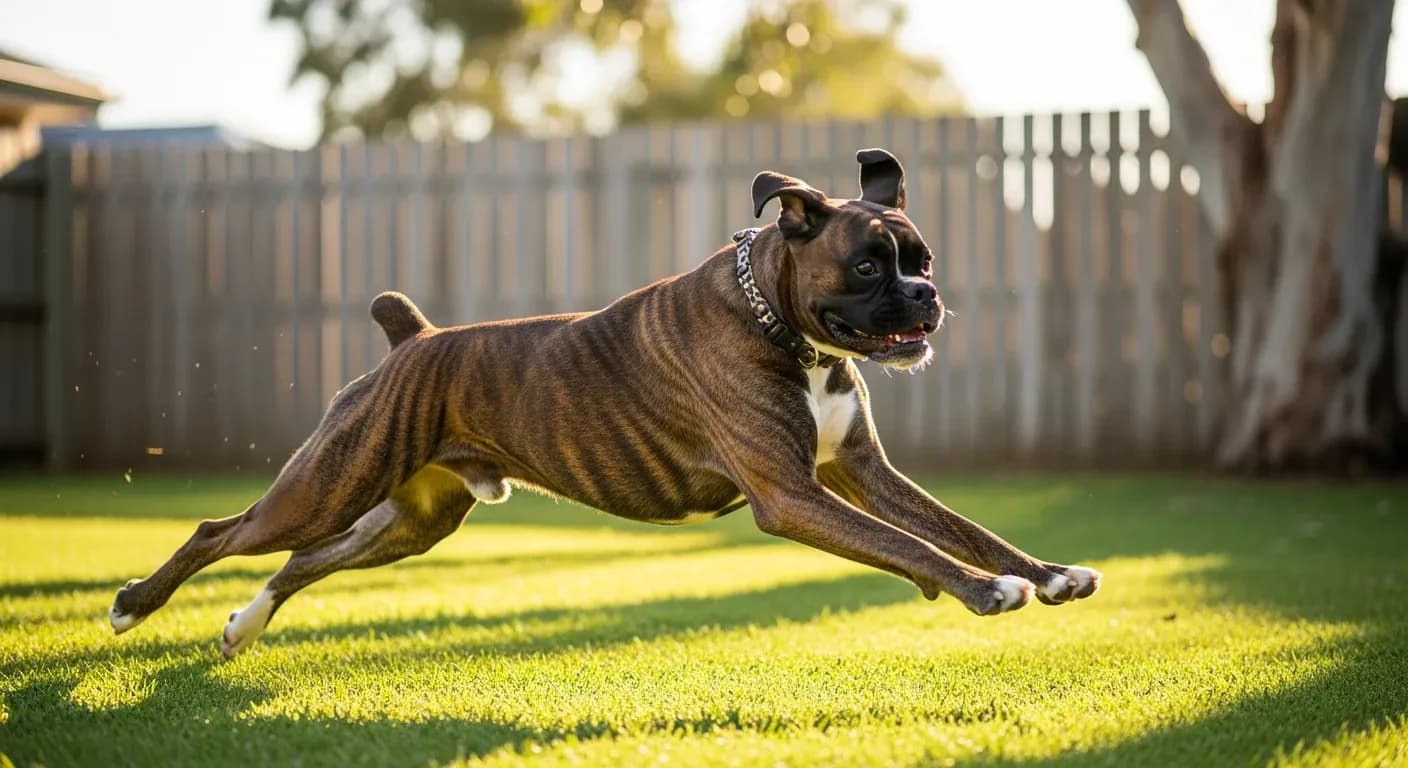
Boxers have a reputation for three things: a face only a mother could love, boundless energy, and a digestive system that can stop a room. Ask anyone who owns a Boxer about the gas situation, and you'll get knowing looks and tired laughs. But while the flatulence is easy to joke about, the gut issues that cause it are worth taking seriously.
The Boxer's digestive tract is genuinely different from many other breeds. Between their brachycephalic anatomy and a breed-specific predisposition to certain intestinal conditions, Boxers tend to struggle more with gut sensitivity than most dogs their size. A daily probiotic can help, but choosing the right one for your Boxer matters more than most owners realise.
Why Boxers Are More Prone to Digestive Problems
A Boxer's flat face is more than a cosmetic quirk. That shortened skull and compressed airway means they physically gulp more air when they eat and drink. That swallowed air has to go somewhere, which is why Boxers are disproportionately gassy compared to dogs with longer snouts. It also puts them at higher risk of bloat (gastric dilatation-volvulus), one of the most dangerous emergencies in larger breeds.
Beyond the anatomy, Boxers carry a well-documented genetic predisposition to several health conditions, including a condition known as histiocytic ulcerative colitis, sometimes called Boxer colitis. It is a form of inflammatory bowel disease that affects the large intestine and produces symptoms including chronic diarrhoea, mucus in the stool, and weight loss. While not every Boxer develops it, it is prevalent enough in the breed that it was once called "Boxer colitis" by veterinary researchers.
Food sensitivities add another layer. Boxers are commonly reactive to grains, certain proteins, and artificial additives. These sensitivities often show up as loose stools, excessive gas, intermittent vomiting, or itchy skin. What looks like a skin problem is frequently a gut problem in disguise.
Signs Your Boxer's Gut Is Struggling
Some digestive symptoms are hard to miss. Others are easy to attribute to something else.

Watch for:
- Frequent loose stools or diarrhoea, especially after meals
- Excessive flatulence (beyond the normal Boxer level)
- Gurgling stomach sounds
- Grass-eating, which is often a sign of nausea
- Bloated appearance after meals
- Occasional vomiting of undigested food
- Weight loss without a change in appetite
- Mucus or blood in the stool (this warrants immediate vet attention)
Chronic loose stools in a Boxer should never be written off as "just how they are." Per PetMD's breed guide, Boxers are among the breeds that benefit significantly from proactive gut support built into their daily routine, rather than only when problems flare up.
If your Boxer has been on antibiotics recently, gut disruption is almost guaranteed. Antibiotics kill the bacteria that keep digestion running smoothly, and Boxers are already prone to gut sensitivity before you factor in medication. This is exactly where a quality probiotic becomes useful.
What to Look for in a Probiotic for Boxers
Probiotics are not all the same, and this matters particularly for Boxers. The label might list impressive-sounding bacterial strain names, but the product that actually works for your dog depends on the strain type, the dose, and the format.

Here is what to consider before buying:
Yeast-based versus bacterial probiotics
Most dog probiotics on the market use common bacterial strains. These can be helpful for general gut support, but they come with one significant limitation: they are wiped out by antibiotics. If your Boxer is on or has recently been on antibiotic treatment, a bacterial probiotic will be largely ineffective because the medication cannot distinguish between harmful bacteria and beneficial probiotic strains.
Yeast-based probiotics, particularly those using Saccharomyces boulardii, work differently. S. boulardii is a probiotic yeast, not a bacterium, so it survives antibiotic treatment. Antibiotics cannot kill it. For a breed that often ends up on antibiotics for ear infections, skin conditions, or intestinal issues, this is a meaningful distinction.
Hero's Probiotic Daily Chews use S. boulardii as their active strain at 10 billion CFU per chew. It is a focused single-species formula, which suits Boxers who can be reactive to complex ingredient lists.
CFU count
Colony-forming units (CFU) is the measure of how many live organisms are in each dose. Higher is not always better, but you want enough to actually make a difference in the gut environment. A good quality dog probiotic should deliver at least 5 billion CFU per serving. Anything lower is unlikely to have a meaningful effect.
Grain-free and hypoallergenic formulas
For a breed prone to food sensitivities, the probiotic itself should not be a trigger. Look for grain-free, wheat-free options that avoid artificial colours, flavours, and preservatives. A probiotic packed with fillers your Boxer is already reactive to is counterproductive.
Soft chew format
Boxers are food-motivated, and getting a daily supplement into them is rarely difficult if it tastes good. Soft chews beat powder on food (which picky eaters ignore) and capsules (which most dogs spit out). A chew they think is a treat means consistent daily use, which is where the benefit actually comes from.
Not sure where to start with your Boxer's health? The Hero Health Assessment takes 2 minutes and gives you a personalised supplement plan based on your dog's age, weight, and activity level.
Start the Free AssessmentSupporting Your Boxer Through Antibiotic Courses
Boxers end up on antibiotics more often than average. Chronic ear infections, skin fold irritations, and intestinal bacterial infections all require antibiotic treatment, and every course disrupts the gut microbiome. The diarrhoea and loose stools that follow a round of antibiotics are not a coincidence.
The challenge with supporting gut health during antibiotic treatment is that most bacterial probiotics get caught in the crossfire. They are living bacteria, and the antibiotic cannot distinguish between the harmful bacteria it is targeting and the beneficial strains in a probiotic supplement.
S. boulardii does not have this problem. Because it is a yeast, antibiotics leave it completely unaffected. It can be given alongside antibiotic treatment, throughout the course, and continued afterward to help the gut microbiome restore itself. For Boxer owners managing recurring infections, this is worth knowing.
The gut-immune connection also matters here. A 2023 review published in veterinary literature on Boxer breed health notes that gut health is increasingly recognised as a central factor in immune regulation, particularly for breeds with known inflammatory tendencies. Supporting the gut is, in a real sense, supporting the whole dog.
Building a Daily Probiotic Routine for Your Boxer
Probiotics work through consistency, not occasional use. The gut microbiome is a living ecosystem that responds to what you give it day after day. One probiotic chew after a bad bout of diarrhoea will do very little. A daily chew every morning for six to eight weeks starts to make a measurable difference.
Boxers are actually one of the easier breeds to get supplements into. Their food enthusiasm and biddable nature means most will take a soft chew straight from your hand. Give it as part of the morning routine: same time, same place, before the walk or breakfast.
A few practical notes:
- Start with the recommended dose on the label and do not increase it based on size alone
- Introduce slowly if your Boxer has a particularly sensitive stomach (start with half a chew for the first week)
- Store probiotics in a cool, dry place (not a hot car or humid laundry)
- Do not skip days and expect quick results; the benefit builds over weeks, not days
If you have a Boxer who has been flagged with colitis or IBD by your vet, speak with them before starting any supplement. Probiotics are generally safe and supportive, but your vet may have specific guidance about timing or dosage based on your dog's history. Many vets now actively recommend daily probiotic support for Boxers given the breed's known gut vulnerabilities.
For more on what can go wrong with Boxer health and how to stay ahead of it, the guide to common Boxer health problems is a useful starting point.
Gut Health and the Bigger Picture
A healthy gut does more than prevent loose stools. The gut microbiome plays a role in nutrient absorption, immune function, and even mood regulation. For an active breed like the Boxer, who demands a lot from their body every day, strong digestive function underpins almost everything else.
Boxers who absorb nutrients efficiently from their food tend to maintain better muscle mass, coat condition, and energy levels. Dogs with chronically inflamed or dysbiotic guts often look and feel below par, even when nothing obvious is wrong. It is one of those things that only becomes obvious in retrospect, when you look back and realise how much better your dog is doing after six months of consistent gut support.
If your Boxer also struggles with joint discomfort (a common issue in larger breeds), it is worth reading the guide to joint supplements for Boxers alongside this one. Joint and gut health are often managed in parallel for senior Boxers.
The Boxer lifespan and longevity guide also covers how proactive health management, including digestive support, factors into the quality and length of a Boxer's life.
When to Talk to Your Vet
A daily probiotic is a sensible preventive measure for most Boxers, but it is not a substitute for veterinary care when something is genuinely wrong. Get your Boxer seen promptly if you notice:
- Blood or significant mucus in the stool
- Diarrhoea lasting more than 48 hours
- Vomiting combined with a distended or tight abdomen (this can signal bloat, which is a life-threatening emergency)
- Rapid weight loss
- Complete loss of appetite
- Lethargy combined with digestive symptoms
Bloat in particular is something every Boxer owner should know about. The combination of brachycephalic anatomy, a large chest, and the tendency to eat quickly makes Boxers higher risk for gastric dilatation-volvulus than many breeds. If your Boxer's belly looks distended after eating and they seem distressed, do not wait.
For everything else, speak with your vet before adding any supplement to your Boxer's routine, particularly if they are already on medication or have been diagnosed with a specific condition. Most vets are familiar with S. boulardii and supportive of its use for dogs with sensitive guts or those on antibiotic courses.
The Bottom Line
Boxers are wonderful dogs with a digestive system that needs a bit of extra attention. Their brachycephalic anatomy makes them gulpers, their genetics make them susceptible to intestinal inflammation, and their tendency toward food sensitivities means the wrong diet or supplement can make things worse rather than better.
A yeast-based probiotic using S. boulardii is worth considering for most Boxers, particularly those on antibiotics, those with recurring loose stools, or those who are just generally gassy beyond what your household can comfortably live with. The Hero Probiotic Daily Chews are grain-free, made in Australia, and vet reviewed, with 10 billion CFU of S. boulardii per chew in a soft chew format Boxers tend to take happily.
Every Boxer is different. If you want a personalised starting point, the Hero Health Assessment will give you a tailored recommendation in under two minutes.