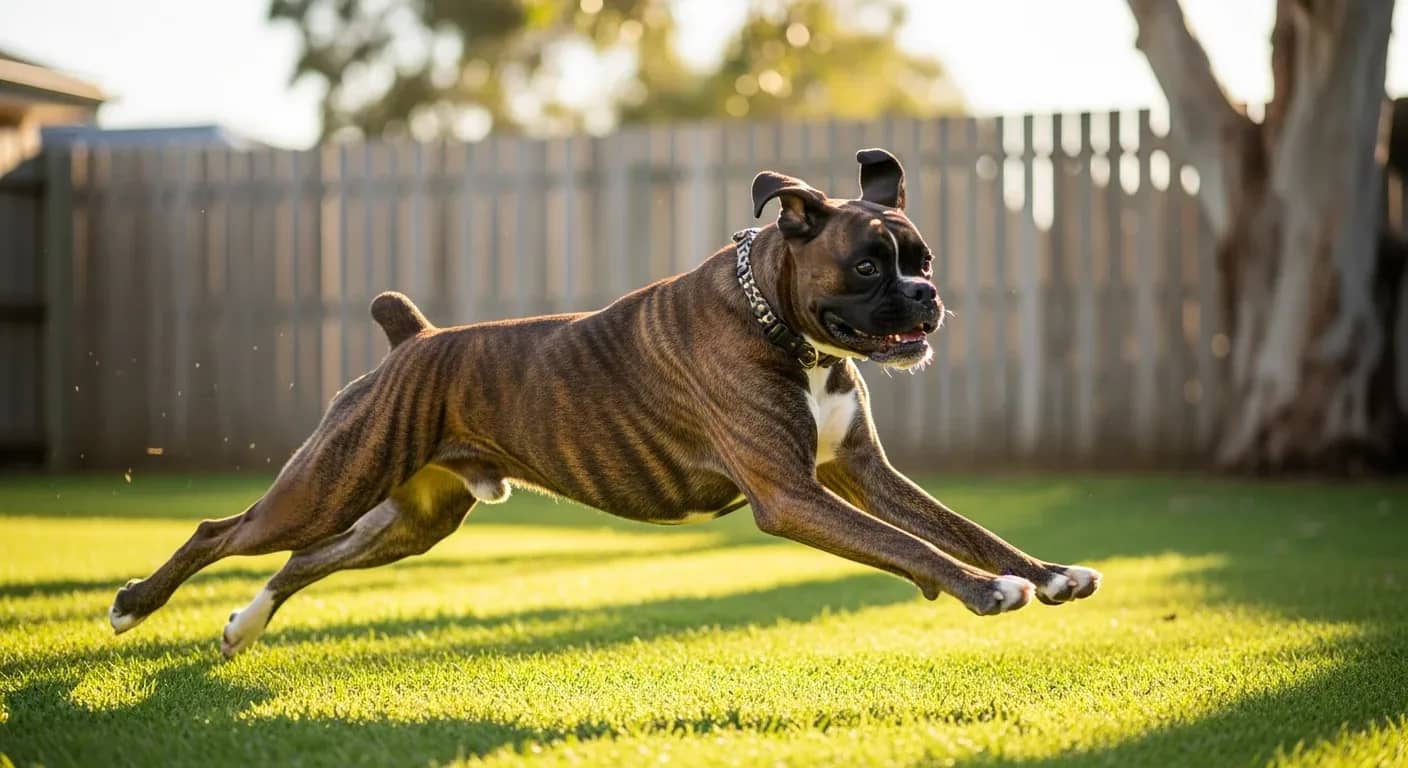

Boxers are built for action. They sprint, wrestle, jump, and generally throw themselves into life with everything they have. It's one of the things you love most about them. So when your Boxer starts pulling up stiff after a morning run, or hesitates at the bottom of the stairs they used to fly up, it catches you off guard. Something feels different.
Joint stiffness is common in Boxers, and catching it early gives you the best chance to keep your dog moving comfortably for years to come. A good daily joint supplement is one of the most practical things you can do, but with so many options on the market it can be hard to know what's worth buying.
This guide covers why Boxers are particularly prone to joint problems, what to look for in a joint supplement, and how to choose the right one for your dog.
Why Boxers Are Prone to Joint Problems
Boxers are a medium-to-large breed, typically weighing between 25 and 35 kilograms when fully grown. That combination of size and high energy creates significant daily wear on joints, particularly hips, elbows, and knees.
Hip dysplasia is one of the most documented conditions in Boxers. According to data from the Orthopedic Foundation for Animals (OFA), Boxers have a notable rate of hip dysplasia compared to many other breeds, driven largely by the way they carry their muscle mass and the mechanics of their gait. The condition involves abnormal development of the hip joint, which over time leads to cartilage breakdown and the pain that comes with it.
Elbow dysplasia is another concern, and ligament injuries are fairly common in active Boxers who spend a lot of time running on hard surfaces. As Boxers age past five or six, cumulative joint wear starts to show, especially in dogs who have had a lot of physical activity through their earlier years. For more background on the health conditions Boxers commonly face, the guide to common Boxer health problems covers the full picture.
Early Signs of Joint Trouble in Boxers
Joint problems in Boxers rarely appear overnight. They tend to creep in gradually, which makes them easy to miss until the signs are obvious. Catching them early matters because the earlier you act, the more you can slow the progression.
Watch for these signs in your Boxer:
- Stiffness after rest, particularly in the morning or after a long nap
- Reluctance to jump into the car or onto furniture they previously loved
- A slight limp that comes and goes, especially after exercise
- Sitting in an unusual position, favouring one side
- Less enthusiasm for walks or play sessions than usual
- Licking or chewing at a specific joint area
If you notice any of these consistently, it's worth having your vet check your dog's joint health. Some of these signs overlap with other conditions, so a physical examination is always the right starting point. Boxers are also known to mask discomfort, so if you notice any behavioural change, don't wait to see if it passes.
It's also worth knowing your Boxer's age in context. The guide to Boxer lifespan and what to expect as they age outlines how different life stages bring different health priorities, which helps you time preventive care appropriately.

What to Look for in a Joint Supplement for Boxers
The joint supplement market is crowded and the quality varies enormously. Understanding the key ingredients helps you filter out the marketing noise and focus on products that have a genuine evidence base.
MSM (Methylsulfonylmethane)
MSM is an organic sulphur compound that supports the structural integrity of cartilage and connective tissue. It has well-documented anti-inflammatory properties and has been studied for its role in reducing joint pain and improving flexibility in dogs. According to VCA Hospitals, degenerative joint disease in dogs involves progressive cartilage breakdown and inflammation, areas where MSM supplementation offers targeted support. For a large, active breed like Boxers, MSM is one of the most important ingredients to look for.
Collagen Peptides
Collagen is the structural protein that makes up cartilage, tendons, and ligaments. As dogs age, collagen production slows, which contributes directly to joint deterioration. Supplementing with hydrolysed collagen peptides gives the body the building blocks to maintain and repair joint tissue. This is a collagen-first approach, focused on the foundational structure of joints rather than managing symptoms alone.
Turmeric (Curcumin)
Turmeric has been used for centuries for its anti-inflammatory properties, and the active compound curcumin has been studied extensively in both humans and animals. For dogs with ongoing joint inflammation, turmeric helps manage the inflammatory cycle that causes much of the discomfort associated with joint conditions.
Vitamin C (Ascorbic Acid)
Vitamin C plays a direct role in collagen synthesis. Without adequate Vitamin C, the body cannot produce collagen effectively, which makes it an essential partner to collagen peptide supplementation. It also acts as an antioxidant, helping protect joint tissue from oxidative damage.
You'll also see glucosamine and chondroitin in many joint supplements. These are widely marketed and have some research support, though findings on their effectiveness are more mixed than their prevalence suggests. Some supplements take a different approach, using MSM and collagen as the primary active ingredients rather than glucosamine-based formulas. The right choice depends on what your vet recommends for your specific dog's situation.

The Best Joint Supplements for Boxers in Australia
When choosing a supplement for your Boxer, formulation and format both matter. A supplement your dog won't eat is no supplement at all, and many Boxers are surprisingly picky despite their energetic personalities.
Soft chew formats tend to work well for Boxers because they're easy to give as a treat, which means daily dosing becomes part of the routine rather than a battle. Look for Australian-made products where possible. Local manufacturing means tighter oversight under Australian regulatory standards, and shorter supply chains generally mean fresher product.
Key things to check on any label:
- Active ingredient list (what's in it and at what dose)
- Whether it's grain-free (important for Boxers with sensitive stomachs)
- Made in Australia vs imported
- Vet reviewed formulation
- Money-back guarantee (a sign the brand stands behind the product)
Hero's Joint Daily Chews are Australian-made and vet-reviewed, combining MSM, Collagen Peptides, Turmeric, and Vitamin C in a soft chew format that most Boxers take happily. The formula is free from grain and animal products, which suits Boxers who tend toward food sensitivities. At $59.95 for around 60 chews, a pack typically covers a month of supplementation at standard dosing. The lifetime money-back guarantee means there's no risk in trying them.
If you want to understand exactly what your Boxer needs before choosing a supplement, the Hero Health Assessment takes two minutes and gives you a personalised recommendation based on your dog's age, weight, breed, and activity level.
Not sure which supplement is right for your Boxer? The Hero Health Assessment takes 2 minutes and gives you a personalised supplement plan based on your dog's age, weight, and lifestyle.
Start the Free AssessmentHow to Give Your Boxer a Joint Supplement
Consistency is the key factor with joint supplementation. Unlike pain relief medication, joint supplements work by supporting the underlying tissue over time. Most pet parents start seeing changes in their dog's comfort and movement between four and eight weeks of daily use, though some dogs respond faster and some take a little longer.
A few practical tips for Boxer owners:
Start at the right dose for your dog's weight. Boxers vary a lot in size, and most supplements are dosed by body weight. A 25kg female needs a different dose than a 35kg male. Always check the label and adjust as your dog grows or changes weight.
Give the supplement with food. Most joint supplements are well-tolerated, but giving them with a meal reduces the small chance of digestive upset and tends to help with absorption.
Don't skip days. The benefit of joint supplements comes from sustained, daily supplementation. Skipping regularly undermines the effect. If you keep the chews somewhere visible as part of your dog's meal prep routine, it's easy to build the habit.
Track changes. It's easy to miss gradual improvement. Keep a simple note of how your Boxer moves each week so you can see the trend. Many pet parents find their dog's morning stiffness is the first thing to improve.
Boxers who also struggle with digestive issues may benefit from additional gut support. Healthy digestion supports nutrient absorption, which helps the body make the most of any supplementation. The article on probiotics for Boxers covers the gut health angle if that's relevant to your dog.
Supporting Your Boxer's Joints Beyond Supplementation
Supplements are one piece of the puzzle. A few other factors have a meaningful impact on how well a Boxer's joints hold up over time.
Weight management matters more than most owners realise. Every extra kilogram your Boxer carries increases the load on already-stressed joints. A dog who is even 10% overweight can have significantly worse joint outcomes than one kept at a lean, healthy weight. If your Boxer is on the heavier side, talking to your vet about a nutrition plan is one of the highest-impact things you can do for their joint health.
Exercise type matters as much as exercise amount. Boxers need to move, but high-impact activities like hard surface running and repetitive jumping can accelerate joint wear. Low-impact activities like swimming and controlled on-lead walking on soft surfaces are much gentler on joints. A mix of exercise that keeps your Boxer fit without hammering their joints is the goal.
Orthopaedic bedding makes a real difference for older Boxers. Hard floors are tough on arthritic joints. A good memory foam or orthopaedic dog bed gives your Boxer's joints a break during the hours they spend resting, which adds up over time.
Regular vet check-ins. If your Boxer has been diagnosed with hip dysplasia or another joint condition, regular vet monitoring helps you adjust the management plan as the condition changes. Supplements, pain management, physiotherapy, and hydrotherapy can all be combined depending on what your dog needs. Your vet is the right person to guide that plan.
For joint-specific conditions like hip dysplasia, the article on preventing and managing hip dysplasia in Boxers has more detailed guidance on what interventions work at different stages of the condition.
The Bottom Line
Boxers are physical dogs who tend to push through discomfort, which means joint problems can progress further than they should before owners notice. Getting ahead of joint health with a daily supplement is a practical way to support your dog's comfort and mobility, especially as they move past middle age.
Look for a supplement with MSM, collagen peptides, turmeric, and Vitamin C in a grain-free, Australian-made format your Boxer will actually eat. Consistency matters more than anything else, so making it part of the daily routine is key.
Every Boxer is different. If you want a personalised recommendation based on your dog's specific situation, the Hero Health Assessment will give you a clear starting point in under two minutes.