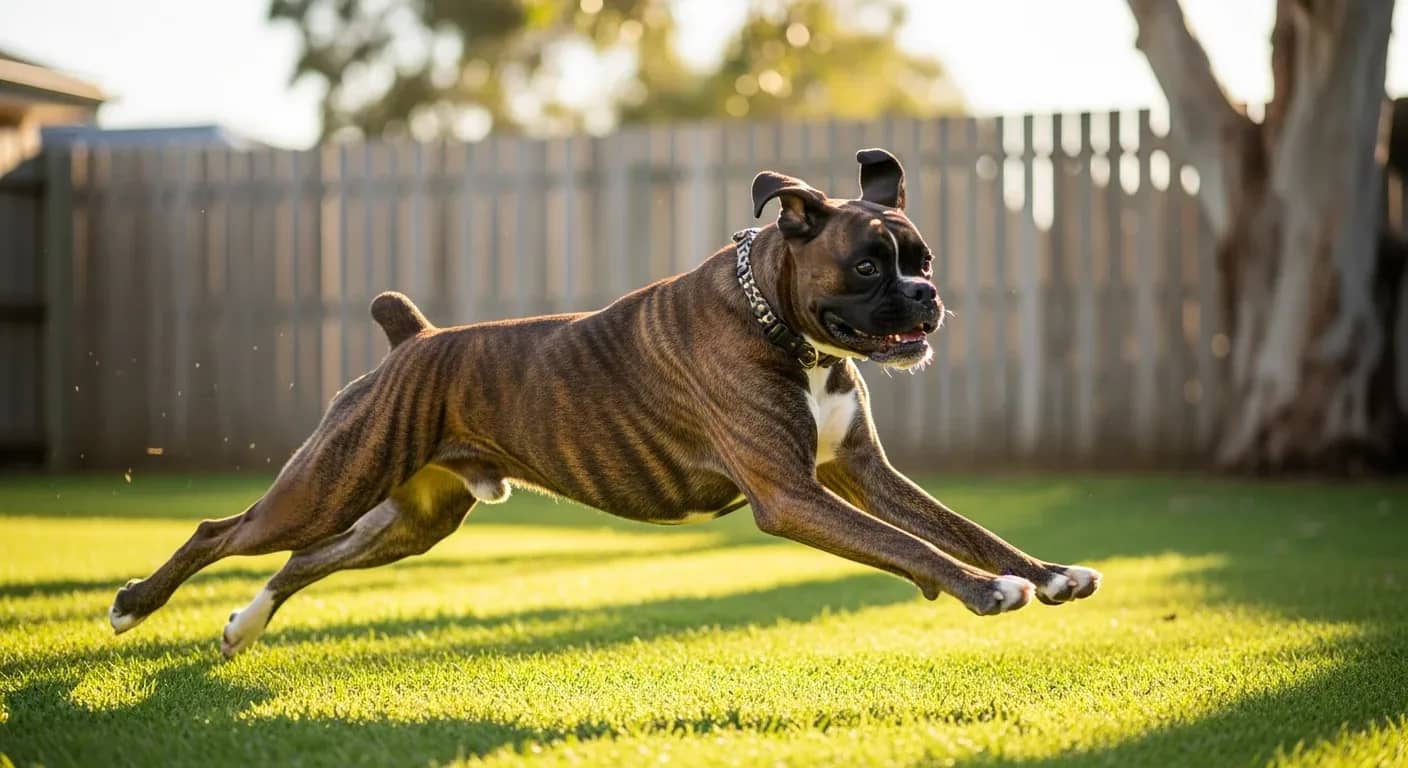

Boxers are one of those breeds that get under your skin. They're goofy, loyal, endlessly entertaining, and they come with a level of personality that makes other dogs seem a little underdone by comparison. But if you've recently welcomed a Boxer into your home, or you're considering it, there's a set of health realities about this breed you really should understand before you need to.
Boxers have a shorter lifespan than many medium-sized breeds, and they carry a higher-than-average risk of certain serious conditions, particularly heart disease and cancer. That's not a reason to avoid the breed. It is a reason to go in with eyes open. Knowing what to watch for, when to act, and how to support your dog's health from the start genuinely changes outcomes.
This guide covers the most common boxer health problems in Australia, what causes them, how to spot early signs, and what your vet is likely to recommend. If you're also curious about how long Boxers typically live, our Boxer lifespan guide covers the factors that most influence longevity.
Boxer Cardiomyopathy: The Heart Condition Unique to the Breed
Arrhythmogenic Right Ventricular Cardiomyopathy, almost always shortened to Boxer cardiomyopathy or ARVC, is the single most breed-specific heart condition in dogs. It affects Boxers at a rate far higher than any other breed, and it's one of the most serious health risks owners need to understand.
ARVC causes the normal heart muscle tissue to be progressively replaced by fatty and fibrous tissue, particularly in the right ventricle. This disrupts the heart's electrical system, leading to abnormal rhythms (arrhythmias). In many cases, the first visible sign is a sudden unexplained fainting episode, or in the worst cases, sudden cardiac death.
What makes ARVC particularly difficult is that many affected Boxers appear completely healthy for years. Symptoms, if they occur, can include:
- Episodes of sudden collapse or fainting, sometimes during or after exercise
- Weakness or exercise intolerance
- Occasional coughing
- Rapid or irregular heartbeat (which you might notice as an unusual feeling in the chest when you hold your dog)
Most Boxer vets in Australia recommend annual cardiac screening from around 12 months of age, using a combination of a Holter monitor (a 24-hour ECG worn at home) and a cardiac ultrasound. A genetic test for ARVC is available and reputable breeders should be testing their breeding dogs.
There's no cure for ARVC, but medication can manage arrhythmias and improve quality of life in affected dogs. Regular cardiac monitoring is the main tool available to catch it early and adapt management accordingly.
Cancer: The Hardest Conversation in Boxer Ownership
Boxers have one of the highest cancer rates of any dog breed. Multiple studies and veterinary oncology data consistently show that cancer is the leading cause of death in Boxers over the age of five. That's a confronting fact, but understanding it helps you prioritise preventive care and act quickly when something seems off.

The cancers most commonly seen in Boxers include:
Mast Cell Tumours
Mast cell tumours (MCTs) are the most frequently diagnosed cancer in Boxers. They typically appear as skin lumps that can look almost identical to harmless fatty deposits (lipomas). Any new lump on a Boxer, however innocent it looks, should be checked by a vet. Fine needle aspiration is a quick, low-cost procedure that can usually determine whether a lump is a mast cell tumour within a day or two. Early detection significantly improves treatment outcomes.
Brain Tumours
Gliomas and meningiomas occur in Boxers at a higher rate than most other breeds, typically appearing in older dogs. Signs can include personality changes, seizures, unusual movements, or coordination problems. If your Boxer has a seizure, particularly for the first time after age four, brain imaging is usually recommended to rule out a tumour as the cause.
Lymphoma
Lymphoma is a cancer of the lymphatic system. You might notice swollen lymph nodes (under the jaw, behind the knees, in the armpits), along with weight loss, lethargy, and sometimes gastrointestinal changes. Boxer lymphoma often responds reasonably well to chemotherapy, and early diagnosis gives more options.
Osteosarcoma
Bone cancer primarily affects larger Boxers, typically presenting as limb pain and swelling. Persistent limping that doesn't improve within a couple of days, especially if accompanied by localised heat or swelling in the limb, warrants an urgent vet visit. Supporting your Boxer's joint health through their life can help distinguish routine joint discomfort from something requiring investigation. Our guide to dog joint health covers what to look for as dogs age.
Monthly skin checks are a genuinely useful habit with Boxers. Run your hands over your dog's body weekly, feeling for any new lumps, and make a vet appointment for anything that appears or changes. It's easy to do, takes less than five minutes, and it's one of the most practical early detection tools available to you as an owner.
Bloat (Gastric Dilatation-Volvulus): A Breed Emergency
Bloat, technically called gastric dilatation-volvulus or GDV, is a life-threatening emergency that deep-chested breeds like Boxers face at elevated risk. The stomach fills rapidly with gas, and in GDV, it then twists on itself, cutting off blood supply. Without emergency surgery, it's fatal within hours.
The early signs are worth memorising:
- A visibly distended or hard abdomen
- Unproductive retching, attempting to vomit with nothing coming up
- Restlessness, pacing, or obvious distress
- Excessive drooling or lip-licking
- Pale or white gums
If you see unproductive retching alongside a swollen belly, go to an emergency vet immediately. Do not wait to see if it resolves. Every minute from onset to treatment matters.
Steps that may reduce bloat risk include feeding two or three smaller meals rather than one large daily meal, using a slow-feeder bowl, and avoiding vigorous exercise for at least an hour before and after eating. Some Boxer owners elect to have a prophylactic stomach-tacking procedure (gastropexy) done at the time of desexing, which significantly reduces the risk of the stomach twisting. It's worth discussing with your vet when your Boxer is young.
Degenerative Myelopathy: A Progressive Neurological Condition
Degenerative myelopathy (DM) is a progressive disease of the spinal cord that causes gradual weakness and paralysis, starting in the hind legs. Boxers are among the breeds with an elevated genetic risk. A genetic test is available to identify dogs that carry two copies of the associated gene mutation (homozygous affected), which is the group at highest risk.
Early signs are often subtle and easy to miss or attribute to joint issues:
- Wobbliness or weakness in the hind legs, particularly after exercise
- Scuffing of the back feet when walking
- Difficulty getting up from lying down
- General exercise intolerance
There's no cure for DM, but active management, including regular physiotherapy, controlled exercise to maintain muscle mass, and in later stages, mobility aids like carts, can meaningfully extend comfortable quality of life. It's also worth noting that joint pain and DM can look similar in early stages. If your Boxer is showing hind-leg weakness, a vet assessment should differentiate between the two. Our guide to signs your dog needs joint support can help you understand what standard joint stiffness looks like versus neurological changes.
Brachycephalic Airway Syndrome: Breathing and Heat Risks
Boxers are a brachycephalic breed, meaning their skull shape gives them a flattened face and a shorter than usual airway. This contributes to several related breathing issues, collectively called brachycephalic airway syndrome (BAS). The specific components include narrowed nostrils (stenotic nares), an elongated soft palate, and sometimes tracheal abnormalities.
For mildly affected Boxers, this might mean little more than some snoring and heavy breathing after exercise. For more severely affected dogs, it can mean significant breathing difficulty, reduced exercise tolerance, and serious overheating risk, particularly in Australian summers.
Key things to manage for a brachycephalic Boxer in Australia:
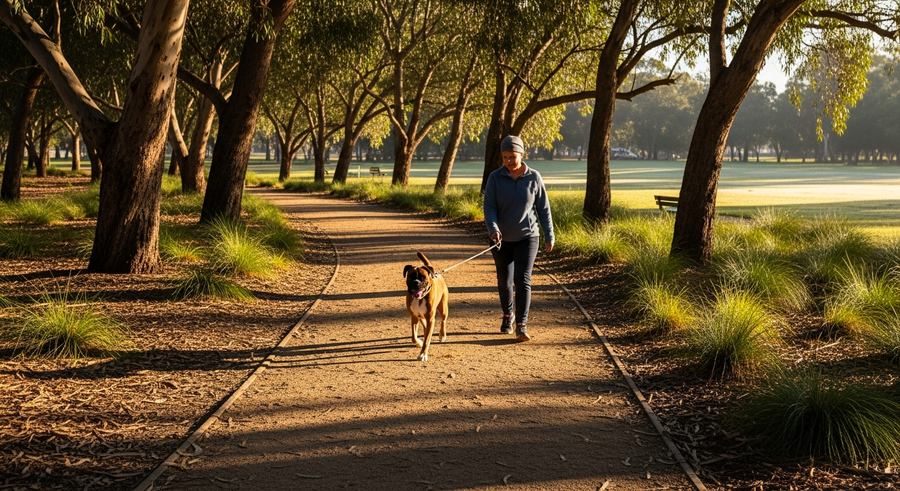
- Walk during cooler parts of the day, early morning or late evening, avoiding midday heat
- Always provide access to shade and fresh water
- Never leave a Boxer in a parked car, even briefly
- Learn to recognise signs of overheating: excessive panting, drooling, wobbling, collapse
- Ask your vet about surgical correction if your dog struggles with normal exercise or regularly makes loud respiratory noise at rest
Surgical correction of the narrowed nostrils and elongated palate is commonly performed in affected Boxers, often at a young age, and can substantially improve quality of life. If your Boxer's breathing sounds laboured or they can't complete a normal walk without stopping, a veterinary assessment of their airway is warranted.
Hip Dysplasia and Joint Health
Hip dysplasia occurs when the hip joint doesn't develop properly, resulting in a poorly fitting ball and socket joint that wears over time. Boxers have a moderate genetic risk for hip dysplasia, and the condition tends to become noticeable as stiffness and reluctance to exercise, particularly as dogs age.
We have a full guide dedicated to preventing hip dysplasia in Boxers covering genetics, screening, and management options. The short version: maintaining a healthy weight throughout your Boxer's life is the single most impactful thing you can do to reduce joint strain and slow the progression of any dysplasia. Joint support becomes increasingly relevant for Boxers from around age five. The best dog joint supplements guide covers what to look for if you're considering daily joint support as your dog ages.
Thyroid Disease: Hypothyroidism in Boxers
Hypothyroidism, an underactive thyroid gland, is more common in Boxers than in many other breeds. The thyroid gland produces hormones that regulate metabolism, and when it's not producing enough, the effects are wide-ranging.
Common signs of hypothyroidism in Boxers include:
- Unexplained weight gain despite a consistent diet
- Lethargy or reduced enthusiasm for activity
- Coat changes, thinning hair, or a dull, coarse coat
- Cold intolerance
- Skin thickening or darkening in some cases
Hypothyroidism is diagnosed via a blood test measuring thyroid hormone levels, and it's very manageable. Daily oral thyroid supplementation is straightforward, affordable, and usually produces noticeable improvement within weeks. Dogs on thyroid medication need monitoring blood tests every six to twelve months to ensure dosage remains appropriate.
Skin Conditions: Allergies and Boxer-Specific Issues
Boxers are prone to skin problems of several types. Environmental and food allergies are common, often presenting as itching, redness, recurring ear infections, and paw-chewing. Boxers also develop a condition called acne-like muzzle folliculitis, particularly in younger dogs, and some are prone to benign skin growths and cysts.
Managing skin issues in Boxers often starts with identifying and eliminating triggers. For food allergies, an elimination diet trial (typically 8 to 12 weeks on a novel protein or hydrolysed protein diet) is usually necessary to confirm a food allergy and identify the culprit. Environmental allergies are harder to eliminate but can often be managed with medication, regular bathing, and sometimes immunotherapy.
For a full breakdown of Boxer skin problems and treatment options, including what's specific to the breed versus general canine skin conditions, our guide to Boxer skin issues covers it in detail.
Gut health also plays a role in how Boxers manage allergies and skin conditions. A disrupted gut microbiome can influence immune function and systemic inflammation. Our guide to gut support for Boxers explores how daily digestive support fits into an overall health routine.
Epilepsy and Seizures
Epilepsy, characterised by recurring seizures without an identifiable structural cause, occurs in Boxers at a higher rate than many other breeds. Seizures can range from brief absence episodes (staring, subtle body tremors) to full tonic-clonic events involving loss of consciousness and uncontrolled muscle spasms.
A single brief seizure in a young to middle-aged Boxer may be investigated but isn't always treated immediately. However, any seizure in a Boxer over five, any seizure lasting longer than two to three minutes, or multiple seizures within 24 hours should prompt an urgent vet visit. In older Boxers, seizures warrant a brain tumour workup given the breed's elevated risk of glioma.
Epilepsy is managed with daily anticonvulsant medication in dogs with frequent or severe seizures. With good management, many epileptic Boxers maintain an excellent quality of life.
Proactive Health Habits for Boxers in Australia
A lot of the most serious boxer health problems, including ARVC and cancer, can't be prevented outright. But you can significantly improve your dog's chances through consistent preventive care and early detection habits.
A practical routine for Boxer owners:
- Annual cardiac screening from 12 months, including a Holter monitor if your vet recommends it
- Monthly skin checks for new lumps, bumps, or changes in existing ones
- Six-monthly vet check-ups from age five, moving to annual from the start of life
- Weight management throughout life, particularly important for joint and cardiac health
- Heat management in Australian summers, given the brachycephalic airway risk
- Genetic testing before breeding, or asking breeders for ARVC and DM test results before acquiring a puppy
- Bloat prevention habits from day one: smaller meals, slow feeding, restricted post-meal exercise
Good gut health supports immune function, and for a breed with high cancer rates, anything that keeps your Boxer's immune system working well matters. Our dog gut health hub explains the connection between digestive health and overall wellbeing in practical terms.
When to Call Your Vet Urgently
Some symptoms in Boxers warrant emergency attention, not a wait-and-see approach:
- Sudden collapse or fainting, even if your dog recovers quickly (suspect ARVC)
- Unproductive retching with a distended abdomen (suspect GDV/bloat)
- Seizure lasting more than two minutes
- Pale or white gums
- Breathing difficulty at rest
- Sudden hind-leg weakness or paralysis
For everything else, use your judgement. Boxers tend to mask discomfort better than you'd expect. If something's off, that feeling in your gut as an owner is usually worth a vet call.
The Bottom Line on Boxer Health in Australia
Boxers are a breed that rewards informed ownership. Their predisposition to heart disease and cancer is real, but it's not a death sentence. Owners who build proactive health habits, know their dog's normal, and act early on concerns consistently see better outcomes.
The most useful things to take from this guide: get cardiac screening on the calendar from year one, make monthly skin checks a routine, and don't ignore sudden collapses or distended bellies. Everything else follows from knowing your dog well.
Every Boxer is different. If you want personalised guidance on what your specific dog may need based on their age, weight, and health history, the Hero Health Assessment takes about two minutes and gives you a tailored recommendation.