

If you share your home with a Cavoodle, you already know they come with a big personality packed into a small, curly frame. What you might not realise is that their sensitive digestive system often needs a little extra support to keep up with all that energy and enthusiasm.
Cavoodles inherit traits from both Cavalier King Charles Spaniels and Poodles. That combination brings wonderful qualities like intelligence and affection, but it also means many Cavoodles carry a predisposition to gut sensitivities and stress-related digestive flare-ups. Loose stools after a big play session, gassy evenings, or a tummy that seems to react to any change in routine are all common complaints from Cavoodle owners across Australia.
Probiotics have become one of the most talked-about tools for supporting dog gut health, and for good reason. But not all probiotics work the same way, and picking the right one for your Cavoodle matters. Here is what the research says, what to look for on the label, and why the type of probiotic makes a bigger difference than most people expect.
Why Cavoodles Are Prone to Digestive Issues
Both parent breeds bring some digestive sensitivity to the mix. Cavalier King Charles Spaniels are known for protein-sensitive stomachs, while Poodles can be prone to food intolerances and stress-triggered gut reactions. When you combine the two, you often get a dog that needs a more careful approach to diet and gut support.
The gut-brain connection plays a particularly strong role in Cavoodles. These dogs are social, emotionally attuned animals. Any change in their environment, a new baby, a house move, a shift in your work schedule, can show up as digestive upset before you even notice they are anxious. Research published in Frontiers in Veterinary Science has highlighted the bidirectional relationship between gut microbiota and emotional wellbeing in dogs, suggesting that a healthy gut may help buffer the effects of everyday stress on digestion.
Common signs that a Cavoodle's gut needs support include:
- Loose stools or occasional diarrhoea, particularly after changes in food or routine
- Excessive gas, especially in the evenings
- Gurgling stomach sounds
- Reduced appetite around times of stress
- Soft or inconsistent stool texture
If you are seeing signs that your dog needs a probiotic, it is worth acting sooner rather than later. An unsettled gut tends to compound over time.
What Probiotics Actually Do
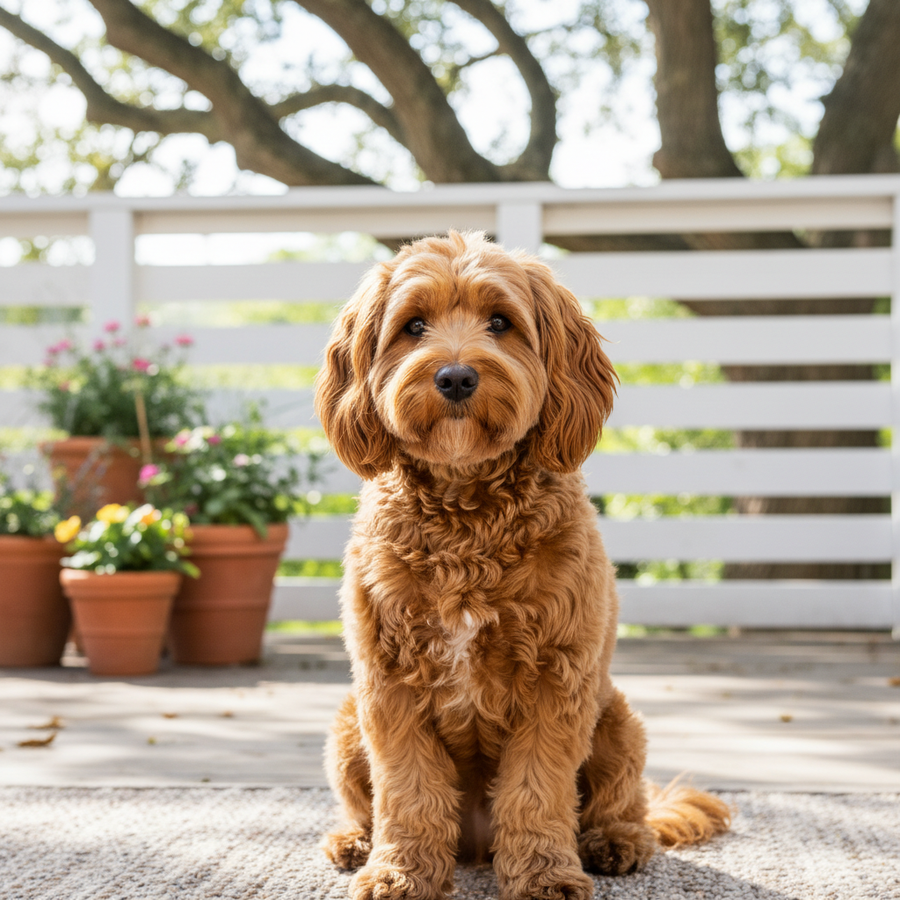
Probiotics are live microorganisms that, when given in adequate amounts, support the health of the host. In dogs, a well-functioning gut microbiome helps with nutrient absorption, immune regulation, and the production of certain hormones including serotonin, much of which is produced in the gut rather than the brain.
For Cavoodles specifically, the goal of probiotic supplementation is not to cure or treat any condition. It is to support a balanced gut environment so your dog's digestive system can handle the normal demands of daily life, including dietary variation, physical activity, and emotional fluctuation.
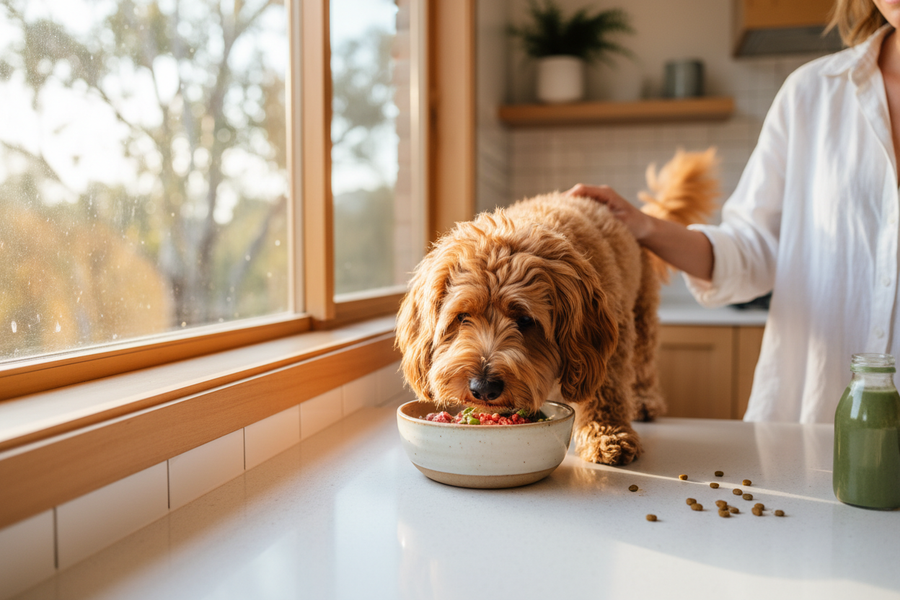
A double-blinded, placebo-controlled study published in the Journal of Veterinary Internal Medicine found that Saccharomyces boulardii supplementation helped improve clinical scores in dogs with chronic enteropathies. This is significant because S. boulardii is a yeast-based probiotic that behaves differently from bacterial strains, and the evidence for its use in dogs with ongoing digestive sensitivity is growing.
The Difference Between Bacterial and Yeast Probiotics
Most people associate probiotics with bacteria. Strains like Lactobacillus and Bifidobacterium are the ones you see in yoghurt and many human supplements. These can be helpful, but they come with a practical limitation: they are destroyed by antibiotics.
Yeast-based probiotics, specifically Saccharomyces boulardii, work differently. Because antibiotics target bacteria rather than yeast, S. boulardii survives and remains active even during a course of antibiotics. For a Cavoodle who has needed antibiotic treatment for a skin or ear infection (a common occurrence given the breed's floppy ears), this makes a meaningful difference to gut recovery.
S. boulardii also supports the gut by producing enzymes that aid in digestion, reinforcing the gut wall lining, and modulating the immune response in the intestinal tract. A 2022 study published in PMC found that S. boulardii supplementation in healthy adult dogs improved faecal consistency and supported a healthier gut microbiota profile over the study period.
For Cavoodles who receive probiotics after antibiotics, a yeast-based option provides continuity of gut support without the need to pause and restart.
What to Look For in a Probiotic for Your Cavoodle
With so many products on the market, it helps to know what actually matters on the label:
CFU Count
CFU stands for colony-forming units, which measures the number of live organisms per dose. For daily maintenance, a count of 10 billion CFU per dose is considered effective for dogs in the scientific literature. Products with very low CFU counts (under 1 billion) may not deliver enough active organisms to make a meaningful difference.
Probiotic Type
As discussed above, the probiotic strain matters. A yeast-based probiotic like S. boulardii offers advantages for dogs prone to frequent vet visits or antibiotic courses. If your Cavoodle has needed antibiotics for ear or skin issues in the past, a yeast-based probiotic is worth considering.
Companion Ingredients
The best probiotic products pair the active culture with ingredients that support its action. Prebiotics feed beneficial gut bacteria, helping the probiotic to establish and thrive. Digestive enzymes assist with breaking down nutrients, which is especially useful for dogs with absorption issues. Look for products that include these alongside the probiotic itself.
Grain-Free and Hypoallergenic Formula
Given the Cavoodle's tendency toward food sensitivities, a probiotic that is grain-free, wheat-free, and made without common allergens is a safer choice for everyday use.
Australian Manufacturing
Australian-made products are subject to stricter manufacturing standards than many imported alternatives. For a supplement you plan to give your dog every day, this matters.
Hero's Approach: S. boulardii with Digestive Support
Hero Probiotic Daily Chews use Saccharomyces boulardii as the sole active probiotic at 10 billion CFU per chew. The formula pairs S. boulardii with prebiotics, digestive enzymes, green banana powder, bentonite, agave, and pectin to support a complete daily gut routine.
One thing that sets Hero apart is the single-species approach. Rather than blending six or more bacterial strains (which can sometimes compete with each other for adhesion sites), the formula concentrates on one well-researched yeast probiotic at a therapeutic dose. It is grain-free, wheat-free, and hypoallergenic, which suits Cavoodles with sensitive systems.
Because S. boulardii is a yeast rather than a bacterium, the chews remain effective even if your dog is partway through an antibiotic course. This is genuinely useful for a breed that can be prone to ear infections and skin conditions requiring antibiotic treatment.
If you are looking for a daily probiotic that fits a Cavoodle's specific needs, Hero's Probiotic Daily Chews are vet-reviewed, made in Australia, and come with a lifetime money-back guarantee.
How to Introduce Probiotics to a Cavoodle
Most Cavoodles take well to soft chews. Start with a half dose for the first few days, particularly if your dog has a more reactive gut. This gives the digestive system time to adjust without triggering an initial flare-up of loose stools.
Introduce the supplement at the same time each day, ideally with or just after a meal. Consistency matters more than timing in terms of the supplement's effectiveness, but pairing it with a meal tends to reduce the chance of any initial digestive reaction.
Give it at least three to four weeks before assessing whether it is working. Gut changes happen gradually. You are looking for improvements in stool consistency, less gas, and a dog that seems more settled in their digestion overall. Not every dog responds the same way, and some Cavoodles may take six weeks to show noticeable change.
Supporting Gut Health Beyond Probiotics
Probiotics work best as part of a broader approach to gut health. A few additional strategies that help Cavoodles maintain a stable digestive system:
Consistent feeding schedule: Cavoodles thrive on routine. Feeding at the same times each day reduces stress-related digestive variability.
Gradual diet transitions: Switching food over seven to ten days rather than abruptly reduces the risk of an upset stomach. Even moving between flavours of the same brand can trigger loose stools in sensitive dogs.
Managing stress triggers: Because of the gut-brain connection, reducing your Cavoodle's overall anxiety load can directly improve their digestion. Understanding how to manage separation anxiety in Cavoodles is often a meaningful piece of the gut health puzzle.
Fresh water access: Adequate hydration keeps digestive transit moving properly and helps the gut environment stay balanced.
For a broader picture of gut health support across all dogs, the Hero Gut Health hub covers the key strategies in detail.


