

If you share your home with a Cavoodle, you already know how deeply they attach to you. That velcro-dog quality is part of what makes them such wonderful companions. But it also means many Cavoodles carry a low hum of anxiety through daily life, especially when you leave the room, when visitors arrive, or when thunder rolls in from the coast.
This guide covers the calming supplements that genuinely help Cavoodles in Australia, what the research says about each key ingredient, and how to build a daily routine that supports your dog's nervous system without sedating them or masking the signals they're trying to give you.
Why Cavoodles Are Prone to Anxiety
Cavoodles inherit their temperament from two deeply people-focused parent breeds. Cavalier King Charles Spaniels were bred as lap dogs for centuries, wired to be near their humans constantly. Poodles, for all their intelligence and athleticism, are also sensitive dogs that pick up on emotional cues with remarkable accuracy. When you combine those two lineages, you get a breed that is affectionate, responsive, and often emotionally dependent on routine and human presence.
Research published in Veterinary Evidence confirms that anxiety-prone dogs often have a nervous system that stays in a heightened state even during low-threat situations. For Cavoodles, this can look like pacing before you leave, restlessness during thunderstorms, or destructive chewing when left alone. It is not disobedience. It is a nervous system that has not learned to settle.
The socialisation window between 8 and 16 weeks plays a huge role. Cavoodles that had stressful early experiences, limited exposure to different people or environments, or were separated from littermates too soon tend to carry more anxiety into adulthood. Genetics sets the sensitivity level. Early life shapes how that sensitivity plays out.
Understanding this helps you approach the problem of dog anxiety with the right expectations. Supplements support the nervous system, but they work best alongside consistent training, routine, and environmental management, not instead of them.
Signs Your Cavoodle May Need Calming Support
Some anxiety is obvious. Other signs are subtle enough that owners often attribute them to personality rather than stress. Watch for:
- Excessive barking or whining when you leave, or when guests arrive
- Pacing in a repeated pattern, particularly near doors
- Destructive chewing focused on items that smell like you (shoes, remotes, cushions)
- Accidents inside despite being fully toilet trained
- Trembling or panting without physical exertion
- Clingy behaviour such as following you from room to room and pressing against your legs
- Excessive grooming, particularly licking paws
- Difficulty settling at night or broken sleep patterns
If you notice three or more of these regularly, it is worth speaking to your vet to rule out any underlying medical cause. Thyroid issues, pain, and medication side effects can all increase anxiety-like behaviour. Once those are cleared, a calming supplement as part of a daily routine is a sensible next step.
What to Look For in Calming Supplements for Cavoodles
The supplement market is crowded. Many products lean heavily on marketing language without much ingredient transparency. When evaluating a calming supplement for your Cavoodle, focus on the active ingredients and what the evidence actually says about each one.
Magnesium
Magnesium plays a role in regulating nerve signal transmission and supporting GABA, the inhibitory neurotransmitter that helps the nervous system calm down. A pilot study published on PubMed found that dogs under external stress showed changes in serum magnesium levels, pointing to a relationship between magnesium status and stress response in dogs. Many anxious dogs run low in magnesium because stress depletes it faster than the body can replenish it through diet alone.
L-tryptophan
L-tryptophan is an amino acid that the body uses to produce serotonin, the neurotransmitter associated with mood stability. Studies on tryptophan in anxious dogs show mixed but promising results. A review in Veterinary Evidence found that while tryptophan alone may not resolve severe anxiety, it showed reduced anxiety-related behaviours in owner assessments when used consistently. The key word is consistently. Tryptophan supplementation works through cumulative effect, not as a once-off intervention.
Ashwagandha
Ashwagandha is an adaptogenic herb with a long history of use in human wellness for stress support. Adaptogenic herbs help the body regulate cortisol, the primary stress hormone. For dogs, the research base is smaller than for humans, but practitioner experience and some early studies suggest it may support a more balanced stress response in sensitive animals. It pairs well with tryptophan because they work on different pathways.
Chamomile
Chamomile is one of the most established calming botanicals in both human and veterinary use. Its active compounds bind to the same receptors as some anti-anxiety medications, but at a much gentler level. It supports relaxation without sedation, which matters for Cavoodles who need to remain alert and engaged during the day.
Vitamin B1 (Thiamine)
Thiamine supports healthy nervous system function. Deficiency has been linked to neurological and behavioural changes in dogs, and supplementation helps maintain the nerve pathways involved in mood regulation. It is a supporting ingredient rather than the star of the show, but its absence in a formula is a gap worth noting.
Jerusalem Artichoke
Jerusalem artichoke serves as a prebiotic, feeding the beneficial bacteria in your dog's gut. This connects to an increasingly well-supported area of veterinary research: the gut-brain axis. A healthy gut microbiome appears to influence serotonin production and stress regulation. Around 90% of the body's serotonin is produced in the gut, not the brain. Supporting gut health is therefore directly relevant to supporting mood and anxiety response.
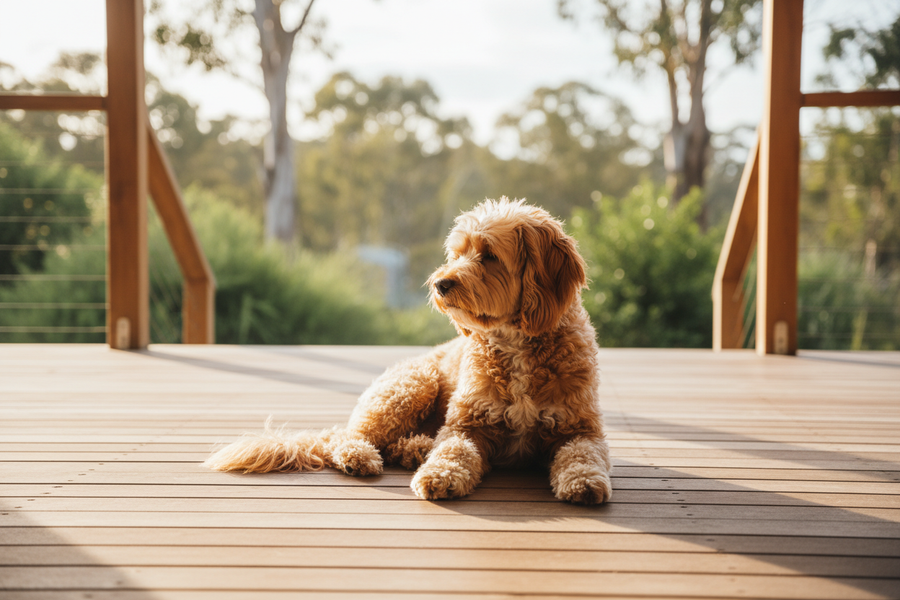
Hero Calming Daily Chews: Built for Daily Use
Hero's Calming Daily Chews contain all six of the ingredients discussed above: Magnesium, L-tryptophan, Vitamin B1, Jerusalem Artichoke, Ashwagandha, and Chamomile. The formula is vet reviewed and made in Australia, in a soft chew format that most Cavoodles take as a treat rather than a supplement.
The daily approach is intentional. Unlike as-needed calming products that aim to blunt an acute stress response, Hero's chews are designed to support your Cavoodle's nervous system from the baseline up. The goal is a dog that is better equipped to handle life's stressors, not one that is sedated through them. That distinction matters a lot for a breed as engaged and emotionally intelligent as the Cavoodle.
Each pack contains around 60 chews. At one per day, that is two months of consistent support. Many owners notice a difference within two to four weeks, though individual responses vary, and the cumulative benefit builds over time. If you are comparing calming treats for dogs in Australia, it is worth looking at the full ingredient list of each option rather than going by marketing claims alone.
Pricing is $59.95 for a single purchase or $50.96 per pouch on subscription (20% off). Free shipping applies on orders over $69, and every order comes with a lifetime money-back guarantee if your Cavoodle does not respond as expected.
How to Build a Calming Routine That Actually Works
Supplements work better inside a structured routine. For Cavoodles specifically, consistency is calming in itself. A predictable day means fewer opportunities for anxiety to spike.
Give the supplement at the same time each day
Morning is a good default. If your Cavoodle struggles most with you leaving for work, giving the chew as part of your morning routine means the ingredients are in their system during the highest-stress part of the day. Some owners give it as a training treat during a short morning session, which adds a positive association to the supplement itself.
Pair with physical and mental exercise
A Cavoodle that has burned off energy and engaged their brain is a Cavoodle that is better placed to settle. Aim for at least 30 minutes of physical activity daily, plus a puzzle feeder, sniff work, or short training session. Calming supplements reduce the background noise of anxiety. Exercise addresses the accumulated energy that anxiety thrives on.
Maintain departure and arrival routines
Low-key goodbyes and hellos reduce the emotional intensity of comings and goings. Long, fussed farewells inadvertently signal to your Cavoodle that departure is a big event worth worrying about. A calm, brief farewell followed by a chew or stuffed Kong to occupy them makes the transition easier. The same principle applies on return: wait until your Cavoodle is calm before giving them big attention.
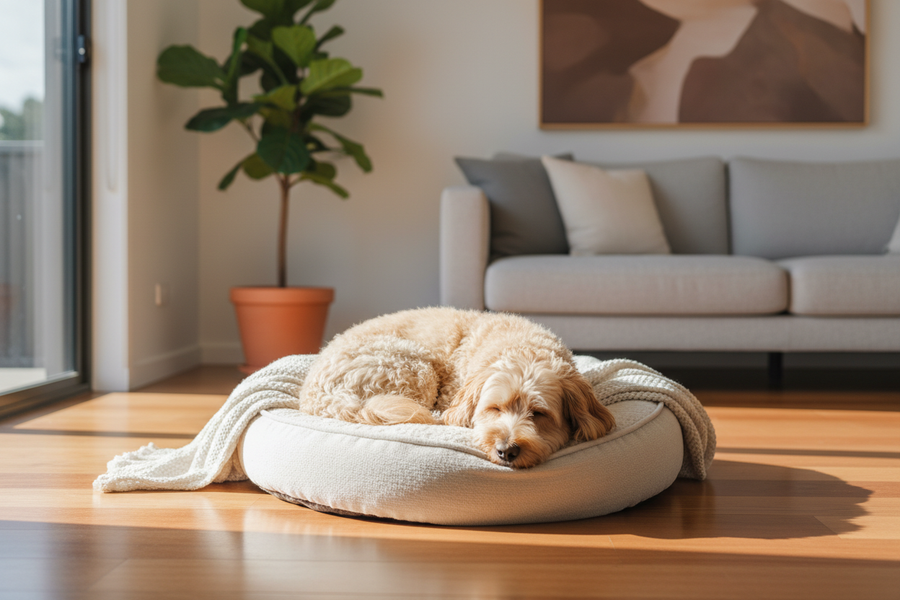
Separation Anxiety Specifically: When to Get Professional Help
Mild to moderate anxiety typically responds well to a combination of supplement support, routine, and environmental enrichment. But separation anxiety in Cavoodles can sometimes be more severe. If your dog is injuring themselves trying to escape, vomiting before you leave, or showing distress within seconds of being alone, a veterinary behaviourist is the right next step alongside any supplement regime.
For dogs with moderate anxiety, natural supplements that support separation anxiety can be a meaningful part of the solution. Most owners find they work best when combined with gradual desensitisation training, where you practice very short absences and build up over weeks.
It is also worth knowing that Cavoodles tend to respond well to having another dog in the home. If your circumstances allow, companionship from another dog can reduce the intensity of alone-time distress significantly. That is not a solution for every household, but it is worth noting for those weighing options.
Daily vs As-Needed: Understanding the Difference
Pet owners often wonder whether they should give a calming supplement every day or only when a stressful event is coming. The answer depends on your Cavoodle's anxiety profile.
If your Cavoodle's anxiety is relatively isolated, triggered by specific events like fireworks or vet visits, an as-needed product taken 30 to 60 minutes before the event may be appropriate. But if anxiety is present most days, or if you want to address the underlying baseline reactivity, daily supplementation is more effective. The ingredients in Hero's Calming Daily Chews build up over time, supporting the nervous system at a foundational level rather than providing a situational chemical blunt. There is a detailed breakdown of the daily vs as-needed calming supplement approaches if you want to go deeper on that decision.
A Note on Puppies
Many Cavoodle owners start thinking about calming support from puppyhood, especially if they are trying to prevent separation anxiety from developing in the first place. Some calming supplements are suitable from a young age, but always check the label and confirm with your vet. There is specific guidance on calming supplements for puppies in Australia that covers age-appropriate options and what to prioritise in those early months.


