

Cavoodles are one of Australia's most popular breeds for good reason. They're gentle, affectionate, easy to live with, and they settle beautifully into family life. But their popularity also means a lot of owners are discovering health problems the hard way, sometimes after a condition has progressed further than it needed to.
Because Cavoodles carry genetics from two breeds with distinct health vulnerabilities, Cavalier King Charles Spaniels and Poodles, they can inherit issues from either side. Understanding what to watch for is genuinely one of the most useful things you can do for your dog's long-term wellbeing.
This guide covers the most common cavoodle health problems in Australia, what the early signs look like, and what you can do to stay ahead of them.
Are Cavoodles a Healthy Breed?
Generally, yes. Cavoodles typically live 12 to 15 years and most spend the majority of that time in good health. Hybrid vigour, the genetic benefit that crossbreeds can gain from a broader gene pool, does offer some protection against the worst inherited conditions. But it's not a guarantee.
Both parent breeds share certain predispositions, and when those overlap in a Cavoodle, the risk can actually concentrate rather than dilute. Heart disease is the clearest example of this. Cavalier King Charles Spaniels have one of the highest rates of cardiac disease of any breed, and while Poodle genetics can soften this risk, Cavoodles can still develop mitral valve problems.
The good news is that most of the conditions covered here are manageable, especially when caught early. Regular vet checks, a good diet, and knowing your dog's normal behaviour are your best tools.
Ear Infections
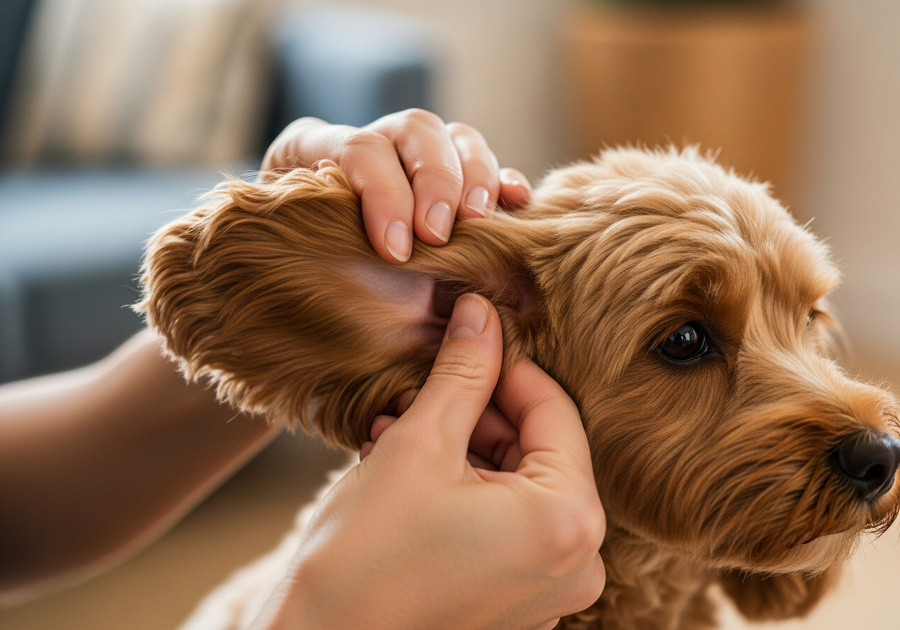
This is probably the most common day-to-day health issue Cavoodle owners deal with. The floppy, low-set ears typical of the breed trap warmth and moisture in the ear canal, creating exactly the environment that bacteria and yeast thrive in. Dogs that swim regularly or live in humid climates can be particularly prone to repeat infections.
Signs include head shaking, scratching at one or both ears, a sour or musty smell, redness at the ear opening, or a dark discharge. Some dogs become sensitive around the ears or tilt their head to one side. A dog with a chronic ear infection may also seem quieter or more irritable than usual.
Treatment typically involves medicated ear drops prescribed by your vet. Ongoing prevention matters just as much: weekly ear cleaning with a vet-recommended solution, and thorough drying of the ear canals after baths or swims. If your Cavoodle is getting repeat infections despite regular cleaning, it's worth asking your vet about underlying allergies, as these are often a contributing factor.
Skin Allergies and Atopic Dermatitis
Skin problems are one of the more frustrating cavoodle health issues to manage, largely because the root cause can be difficult to pinpoint. Both food allergies and environmental allergies (atopic dermatitis) are common in the breed, and both can present in similar ways: itchy skin, redness, recurring ear infections, paw licking, and in chronic cases, thickened or darkened skin.
Environmental triggers include grass pollens, dust mites, mould, and fleas. Food triggers are less common but do occur, with chicken, beef, and dairy among the more frequent culprits in dogs generally. Diagnosing food allergies properly requires a strict elimination diet under veterinary supervision, which takes time and consistency.
Management usually involves a combination of approaches depending on the cause: prescription shampoos or rinses, antihistamines, immunotherapy in more severe cases, and diet changes where food allergy is confirmed. Year-round flea control is also important, since flea allergy dermatitis is one of the most common allergic conditions in Australian dogs.
If your Cavoodle is constantly scratching or developing recurring skin or ear problems, get a vet assessment rather than cycling through over-the-counter products. Identifying the trigger early makes a significant difference to long-term comfort.
Mitral Valve Disease
This is the condition that Cavalier King Charles Spaniel owners know all too well, and it's one that Cavoodle owners should also understand. Mitral valve disease (MVD) is a degenerative condition where the mitral valve of the heart gradually deteriorates, causing blood to flow backwards and placing increasing strain on the heart over time.
Cavalier King Charles Spaniels have exceptionally high rates of MVD, with research suggesting the majority will develop the condition by middle age. Poodle genetics can reduce this risk in Cavoodles, but the inheritance pattern means some Cavoodles will still be affected.
Early MVD typically causes no obvious symptoms. The condition is usually first detected by a vet listening to the heart with a stethoscope, which is why regular cardiac check-ups matter for this breed, especially from five or six years of age. As the disease progresses, symptoms can include a soft cough (particularly at night or after exercise), reduced exercise tolerance, faster breathing, and in advanced stages, signs of heart failure.
There is no cure, but medication can slow progression and manage symptoms effectively in many dogs. Catching MVD early gives your vet more options. Annual or twice-yearly vet checks that include cardiac auscultation are recommended for Cavoodles as they age.
For a broader look at how health affects your dog's years, the guide on Cavoodle lifespan and what affects how long they live covers the full picture.
Hip Dysplasia and Patellar Luxation
Joint problems are common across many small and medium breeds, and Cavoodles are no exception. Two conditions come up regularly: hip dysplasia and patellar luxation.
Hip dysplasia is a developmental condition where the hip joint doesn't form correctly, leading to joint laxity and progressive arthritis. While it's more commonly associated with large breeds, it does occur in Cavoodles, particularly those from Miniature Poodle lines. Signs include stiffness after rest, difficulty jumping up, a bunny-hopping gait, or reluctance to exercise.
Patellar luxation, where the kneecap slips out of its groove, is very common in small breeds generally. It can range from mild (the kneecap pops out occasionally and the dog shakes its leg to reset it) to severe (the kneecap is permanently out of place and causes significant lameness). Mild cases often don't require treatment beyond monitoring and weight management. More severe grades may need surgical correction.
Keeping your Cavoodle at a healthy weight is one of the most effective things you can do for joint health at any stage of life. Extra bodyweight increases the load on joints and accelerates wear. Daily low-impact exercise, like walking and swimming, supports joint function without the high-impact stress of jumping or rough play on hard surfaces.
If your dog is showing signs of joint discomfort, speak with your vet about appropriate management. You might also find the article on joint supplements for Cavoodles in Australia useful as a starting point for understanding what nutritional support options are available.
Eye Conditions
Poodles carry a genetic predisposition to Progressive Retinal Atrophy (PRA), an inherited degenerative eye disease that causes the retinal cells to break down over time, eventually leading to blindness. Because Cavoodles inherit Poodle genetics, PRA is a known risk in the breed, and responsible breeders should be DNA testing for it.
PRA is not painful and dogs adapt remarkably well to gradual vision loss. Early signs include difficulty seeing in low light or at night, hesitation going down stairs, or becoming clumsier in unfamiliar environments. There is currently no treatment that reverses PRA, but knowing the status of your dog's parents before purchasing is the best form of prevention.
Other eye issues seen in Cavoodles include cataracts and tear duct problems (epiphora), which causes persistent wet staining beneath the eyes. Epiphora is mostly cosmetic but can occasionally indicate a blocked duct or underlying irritation that warrants attention.
If your Cavoodle's eyes look cloudy, if there's persistent staining, discharge, or redness, or if you notice any changes in their vision, a vet check is worthwhile. Eye problems are generally more manageable the earlier they're assessed.
Syringomyelia and Chiari-Like Malformation
This is a more serious inherited condition passed down from the Cavalier King Charles Spaniel side. Chiari-like malformation (CM) occurs when the skull is slightly too small for the brain, and this overcrowding can lead to syringomyelia (SM), a condition where fluid-filled cavities develop within the spinal cord.
The condition has sometimes been called "scratching disease" because one of the most characteristic signs is a dog that frequently scratches at the back of the neck or shoulder area, often without making contact, particularly during exercise or excitement. Other signs can include sensitivity around the head and neck, yelping without apparent cause, altered gait, or general discomfort.
SM cannot be diagnosed in puppies and typically doesn't present until after six months of age. The Poodle contribution to Cavoodle genetics does reduce the likelihood compared to purebred Cavaliers, but the condition can still occur. MRI is required for a definitive diagnosis. Management ranges from medication to manage pain and symptoms in milder cases through to surgery in more severe presentations.
If you notice your Cavoodle regularly scratching at the neck or seeming uncomfortable without an obvious cause, it's worth raising with your vet rather than assuming it's a skin issue.
Dental Disease
Small breed dogs are more prone to dental disease than larger breeds, and Cavoodles are no exception. Their compact jaw means teeth can crowd together, which makes it harder to clean between them and creates more opportunity for plaque buildup. Without regular dental care, this progresses to tartar, gum inflammation (gingivitis), and eventually periodontal disease, which causes pain, tooth loss, and can contribute to systemic health issues.
According to a 2019 report from the American Veterinary Medical Association, dental disease affects the majority of dogs over three years of age, yet it remains one of the most under-addressed health issues in dogs.
Daily tooth brushing is the gold standard for prevention. If your Cavoodle won't tolerate a toothbrush, dental chews, water additives, and dental wipes are helpful supplements, though not quite as effective as brushing. Professional dental cleans under anaesthesia are often needed periodically. Your vet will usually check your dog's teeth during routine visits and advise when a professional clean is due.
Epilepsy
Idiopathic epilepsy, where seizures occur without an identifiable underlying cause, is reported in both Poodles and Cavaliers, which means Cavoodles can inherit a predisposition to it. Not every Cavoodle that has a seizure has epilepsy (seizures can also result from toxin ingestion, low blood sugar, or other medical conditions), so accurate diagnosis matters.
A generalised seizure can look alarming: the dog may lose consciousness, paddle their legs, salivate heavily, or lose bladder control. Most seizures last under two minutes. The dog will typically be confused and disoriented afterwards. Single occasional seizures in an otherwise healthy adult dog may not require ongoing medication, but recurring seizures or seizures lasting more than five minutes require veterinary attention urgently.
If your Cavoodle has a seizure, note the time, duration, and what the seizure looked like, and contact your vet as soon as possible. Long-term management with anti-seizure medication can give dogs with epilepsy a good quality of life.
Digestive Issues and Gut Sensitivity
Some Cavoodles are prone to a sensitive gut, showing up as intermittent diarrhoea, loose stools, or occasional vomiting without an obvious trigger. This can be related to food intolerances, anxiety (Cavoodles are prone to separation anxiety, and stress directly affects gut function), or simply a naturally reactive digestive system.
Feeding a consistent, high-quality diet helps. Abrupt food changes are a common trigger for digestive upset, so any transition between foods should happen gradually over at least a week. Probiotics can support gut flora balance in dogs prone to digestive irregularity. The article on probiotics for Cavoodles in Australia covers what to look for and what evidence exists for their use in dogs.
If your Cavoodle has chronic or recurring digestive issues, a vet workup is worthwhile to rule out parasites, food allergy, inflammatory bowel conditions, or other underlying causes.
Anxiety and Separation-Related Problems
Cavoodles bond closely to their people. This is one of the traits that makes them such wonderful companions, but it also means they can be prone to anxiety, particularly separation anxiety when left alone. Signs range from mild (vocalising, pacing) to significant (destructive behaviour, inability to settle, self-directed licking or chewing).
Anxiety in dogs has real physiological effects, including on digestion and immune function, so it's not just a behavioural inconvenience. Early training to build comfort with alone time, consistent routines, and appropriate mental stimulation all help. In more significant cases, working with a veterinary behaviourist or certified trainer is the most effective path.
If your Cavoodle struggles with anxiety, the guide on dealing with separation anxiety in Cavoodles is a solid starting point.
What to Watch For: Signs Your Cavoodle Needs a Vet Check
Many of the conditions above share overlapping early signs. The following warrant prompt veterinary attention:
- Persistent scratching, especially around the neck, ears, or face
- Head shaking, ear odour, or discharge from the ears
- A cough that recurs, particularly at night or after exercise
- Stiffness on rising, reluctance to jump, or changes in gait
- Cloudiness, discharge, or visible changes in the eyes
- Any seizure activity, even if brief
- Chronic loose stools, vomiting, or unexplained weight loss
- Behaviour changes such as increased clinginess, aggression, or withdrawal
None of these signs necessarily indicate a serious condition on their own, but they all merit investigation. Catching problems early is almost always better for both the dog and the owner's wallet.
Choosing a Cavoodle from a Responsible Breeder
Prevention starts before you bring a dog home. A responsible Cavoodle breeder will health test parent dogs for conditions that have known genetic tests available, including PRA, progressive rod-cone degeneration, and MVD. They should be able to show you health certificates for both parents, ideally including cardiac screening performed by a veterinary cardiologist.
Asking a breeder what health testing they do is one of the most important questions you can ask. A good breeder welcomes the question. Be cautious of breeders who dismiss health testing as unnecessary or can't provide documentation.
The Bottom Line
Cavoodles are genuinely healthy dogs for the most part, and most will live full, active lives with minimal serious health problems. But being aware of their inherited vulnerabilities, particularly ear infections, allergies, heart disease, joint conditions, and eye problems, means you're better placed to spot issues early and get the right help sooner.
Regular vet checks, a good diet, appropriate exercise, and knowing your individual dog's normal are the foundations of long-term health. If you want a clearer picture of what your Cavoodle might need as they move through different life stages, the Hero Health Assessment gives you a personalised plan based on your dog's age, weight, and lifestyle in under two minutes.


