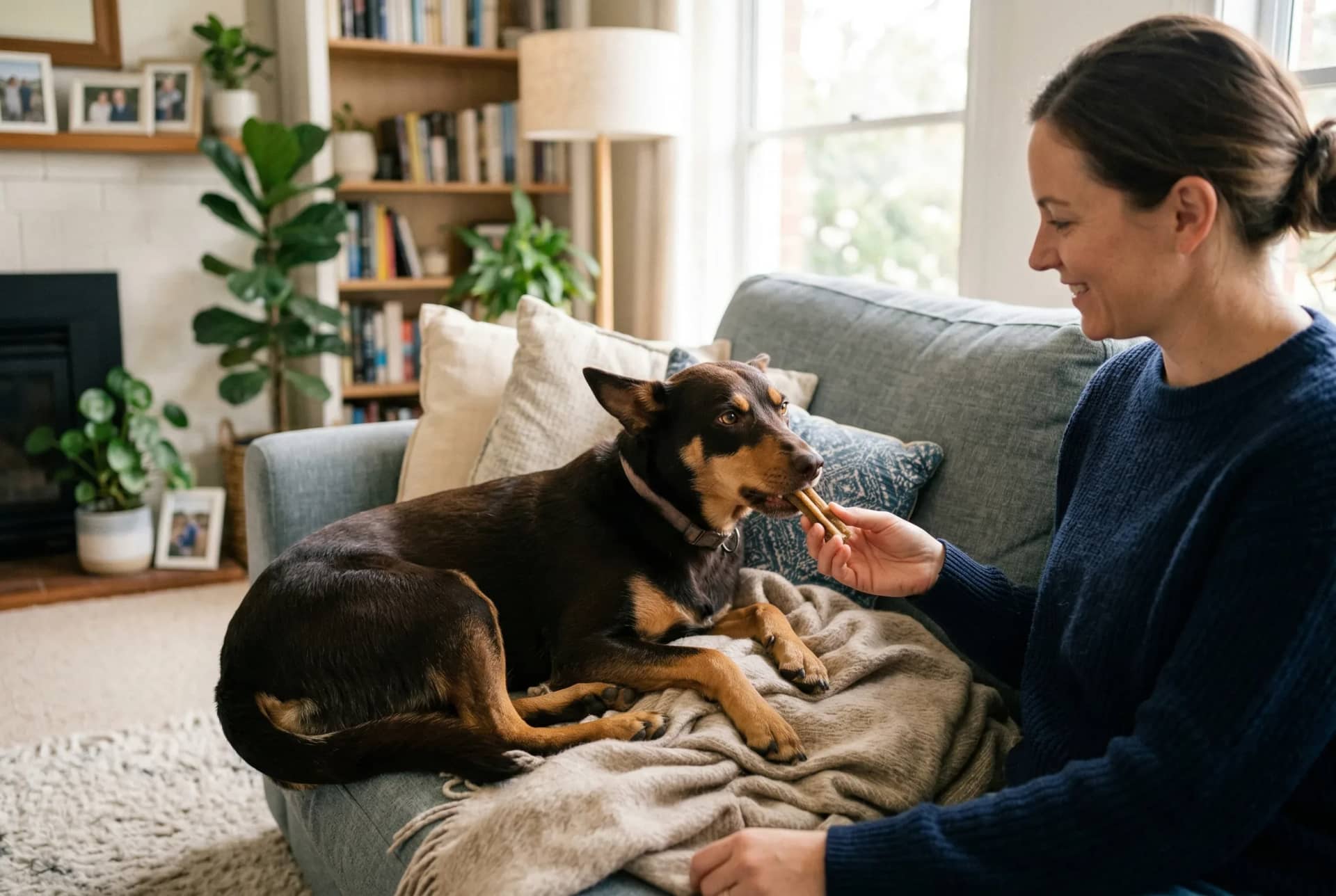

The first few weeks with a new puppy can be a lot. The whining at 2am, the pacing near the door, the wide eyes when anything unexpected happens. Some puppies settle in quickly; others take longer. Either way, you're watching your dog try to figure out a world that's still very new to them.
Calming supplements for puppies have become a popular tool for Australian dog owners navigating those tricky early months. But there's a lot of noise out there, and not every product is safe or appropriate for a puppy's still-developing system. This guide breaks down what actually works, what the science says, and how to support your puppy's calm behaviour from day one.
Why Puppies Experience Anxiety
Puppies are wired to feel stress. Their nervous systems are still maturing, they're learning what's safe and what's not, and every new sound, smell, or experience requires processing. This isn't a character flaw in your dog. It's biology.
Common puppy anxiety triggers include leaving the litter, moving to a new home, loud noises, being left alone for any length of time, and unfamiliar people or animals. According to Greencross Vets, signs of anxiety in dogs include lip licking, yawning, ears pinned back, panting without exertion, hiding, and destructive behaviour when left alone.
The good news: most puppies grow out of acute anxiety with consistency, positive reinforcement, and gradual exposure to new experiences. The question is how much support they need along the way, and whether a daily calming supplement might help.
Understanding dog anxiety signs and natural calming solutions is the first step to knowing what kind of support your puppy actually needs.
What to Look for in a Puppy Calming Supplement

Not all calming supplements are created equal, and some adult formulas aren't suitable for puppies under a certain age. When evaluating any supplement for a young dog, these are the key ingredients with a reasonable evidence base:
Magnesium
Magnesium plays a role in regulating the nervous system and supporting muscle relaxation. In humans, magnesium deficiency is strongly associated with anxiety and poor sleep quality. Similar pathways are thought to apply in dogs. A magnesium-containing supplement may support your puppy's ability to settle after periods of stimulation.
L-Tryptophan
L-tryptophan is an amino acid and a precursor to serotonin, the neurotransmitter associated with mood regulation and calm behaviour. Dogs can't produce tryptophan on their own. They get it from food, and supplementation may increase serotonin availability in the brain. Research into tryptophan supplementation in dogs shows mixed but generally positive results for settling anxious behaviour over time.
Vitamin B1 (Thiamine)
Thiamine supports healthy neurological function. It's particularly relevant for puppies whose nervous systems are still developing. Low thiamine levels are associated with heightened stress responses in mammals, making it a useful addition to a daily calming formula.
Ashwagandha
Ashwagandha (Withania somnifera) is an adaptogenic herb with a growing body of research in dogs specifically. A randomised controlled trial published via PMC (National Institutes of Health) found that ashwagandha supplementation was associated with significant reductions in signs of fear and anxiety and a lower cortisol-to-creatinine ratio in dogs. The cortisol finding is relevant: lower cortisol means less physiological stress response.
Chamomile
Chamomile is one of the most well-studied herbal calming agents. In dogs, it's been used for centuries in folk remedies for its mild calming and anti-anxiety properties. It's generally considered safe for dogs in appropriate doses and works best as part of a broader formula rather than as a standalone supplement.
Jerusalem Artichoke
Jerusalem artichoke acts as a prebiotic, feeding beneficial gut bacteria. This matters for calm behaviour because of the gut-brain connection. Research is increasingly pointing to the gut microbiome as a significant factor in mood regulation. A more balanced gut can support a more settled nervous system. This makes Jerusalem artichoke an underrated ingredient in a calming formula.
Daily Support vs As-Needed Use: What's Right for Puppies?
This is one of the most common questions Australian puppy owners ask. Should you give calming supplements every day, or only when you know a stressful event is coming?
For puppies, the daily approach makes more sense in most cases. Here's why: puppies don't experience occasional, predictable anxiety. Their stress is chronic and low-grade, driven by the ongoing process of learning their world. Giving a supplement only when you anticipate a difficult moment means the rest of the day, the settling-in period, the separation practice, the first car ride, doesn't benefit from any nutritional support.
A daily routine also helps you assess whether the supplement is working. If you're only giving it before fireworks, you can't tell if it's making a genuine difference to your dog's baseline behaviour.
For a deeper breakdown of this topic, our guide on calming supplements for dogs: daily routine vs as-needed covers the science behind both approaches.
Are Calming Supplements Safe for Puppies?
Safety depends on the specific product, the ingredients, and the age of your puppy. A few important points:
- Check the minimum age on the label. Most reputable supplements specify whether they're suitable for puppies from 8 weeks, 12 weeks, or older. Never assume a product is safe without checking.
- Avoid supplements with heavy-dose melatonin or other compounds that are marketed as calming but work by making a dog drowsy. This isn't appropriate for daily puppy use.
- Look for vet-reviewed formulas. A vet-reviewed supplement means a veterinary professional has checked the ingredient list and dosing for safety. It doesn't replace a consultation, but it's a meaningful quality signal.
- Talk to your vet. If your puppy's anxiety is severe, persistent, or interfering with eating, socialising, or training, a veterinarian should assess them. Supplements support calm behaviour; they don't substitute for professional veterinary care or behaviour modification where those are needed.
The Gut-Brain Connection in Puppies
One thing most articles on puppy anxiety miss is the gut-brain link. The vagus nerve directly connects the digestive system to the brain, and research shows the composition of gut bacteria influences mood, stress resilience, and behaviour. Puppies who've just been weaned and moved to a new home often have disrupted gut microbiomes from the stress of transition, changes in diet, and new bacteria in a new environment.
This is why prebiotic ingredients like Jerusalem artichoke matter in a calming formula. They help restore balance to the gut environment, which in turn supports a more settled nervous system. If your puppy is experiencing both digestive upset and anxious behaviour, the two issues may be connected. See our guide on probiotics for puppies in Australia for more on gut health support for young dogs.
How to Support a Calm Puppy: Beyond Supplements
Supplements work best when they're part of a broader approach to settling an anxious puppy. The most effective strategies in combination include:
Consistent Routine
Puppies thrive on predictability. Feeding at the same times, walks at similar intervals, and bedtime cues all help a puppy's nervous system downregulate. When a puppy can anticipate what's coming next, the baseline anxiety of the unknown goes down.
Positive Socialisation
Careful, positive exposure to new people, environments, and experiences during the critical socialisation window (roughly 3 to 14 weeks, though ongoing socialisation matters through the first year) builds confidence and reduces fear-based reactivity later in life. The key word is positive: overwhelming a puppy with too much, too fast, creates the opposite effect.
Crate Training Done Right
A crate, when introduced gradually and associated with good things (meals, treats, naps), can become a genuine safe space for a puppy. This supports calm resting behaviour and gives your dog a place to self-soothe when the world gets too much.
Calm Owner Energy
Dogs read people well. A nervous, over-attentive owner who rushes to soothe every whimper can inadvertently reinforce anxious behaviour. Responding calmly and consistently, without drama in either direction, helps your puppy learn that new experiences are manageable.
What About Separation Anxiety in Puppies?
Separation anxiety deserves its own section because it's one of the most common concerns for new puppy owners in Australia. Most puppies cry when left alone at first. This is normal. The question is whether it escalates into a pattern of destructive behaviour, elimination accidents, or non-stop distress that persists well beyond the initial adjustment period.
Building independence gradually is key. Start with very short absences (even just leaving the room), return before your puppy reaches peak distress, and build up slowly. Pairing departure cues with calming supplements used daily may help take the edge off during this training process.
For a detailed guide on managing this, see our article on separation anxiety in dogs: natural supplements that help.
Thunderstorms, Fireworks, and Acute Triggers
Australian puppies growing up in suburban areas will encounter fireworks (New Year's Eve, Cracker Night in some states) and thunderstorms. These acute triggers are different from baseline anxiety and may require additional strategies on top of daily supplementation.
Safe spaces, white noise, desensitisation training, and staying calm yourself all help. For acute events, check with your vet about short-term options if your puppy's response is severe. Our guide on dog anxiety during thunderstorms and fireworks covers this in detail for Australian conditions.
Hero Calming Daily Chews: What's in the Formula
Hero Calming Daily Chews contain a combination of the ingredients discussed above: Magnesium, L-Tryptophan, Vitamin B1, Jerusalem Artichoke, Ashwagandha, and Chamomile. The formula is designed for daily use, supporting calm behaviour as part of a consistent routine rather than as an occasional intervention.
The chews are vet reviewed, made in Australia, and come with a lifetime money-back guarantee. At $59.95 per pack (or $50.96 with a subscription), they're a practical daily addition to a puppy's routine. You can shop Hero Calming Daily Chews or read more about the formula before committing.
One thing to be clear about: these chews support calm behaviour. They don't treat anxiety disorders, and they're not a substitute for training, socialisation, or veterinary care where those are needed.
If you're looking at the broader calming supplement category and want to compare options, our guide to the best calming treats for dogs in Australia 2026 covers the main products on the Australian market.
Not sure which Hero product is right for your dog? Our free dog health assessment takes two minutes and gives you a personalised recommendation based on your dog's age, breed, and health profile.