

The first few months of a puppy's life are a window you don't get back. Their immune system is developing, their gut is being colonised by billions of microorganisms for the first time, and almost everything they eat, lick, or chew becomes part of that foundation. Getting the gut right early matters more than most new dog owners realise.
So do puppies need probiotics? They can benefit significantly, particularly during high-stress periods like weaning, vaccination, or transitioning to solid food. But the type of probiotic you choose, and when you introduce it, makes a real difference to the outcome.
Why a puppy's gut is different
A puppy's digestive system is not just a smaller version of an adult dog's gut. It's structurally and microbiologically distinct, and significantly more vulnerable to disruption. According to a 2022 review in Frontiers in Veterinary Science, the canine gut microbiome undergoes substantial changes from birth through the first weeks of life, shaped by maternal transfer, early diet, and environmental exposure.
In the first weeks, a puppy's gut microbiome is naturally less stable than an adult dog's. This is normal developmental biology, not disease. But it does mean the gut is more susceptible to disruption from stress, diet changes, and pathogens during this critical window. Understanding this early vulnerability is why dog gut health support is increasingly being started earlier than it used to be.
The weaning period is particularly significant. Moving from mother's milk to solid food is one of the most stressful gut events in a dog's life. Loose stools, digestive upsets, and immune fluctuations are common. This is why vets often recommend gut support during and after weaning.
When should you start giving your puppy probiotics?

Most vets recommend waiting until a puppy is at least 8 weeks old before introducing any supplement, including probiotics. At that point, if your puppy is showing signs of digestive stress (loose stools, gas, sensitivity after food changes) or if you know a stressful event is coming such as vaccinations, travel, or rehoming, a daily probiotic is a reasonable option to discuss with your vet.
Key windows when gut support tends to make the most difference:
- Weaning (4 to 8 weeks): The transition from milk to solid food disrupts the gut. Probiotics started during or just after weaning may help stabilise the microbiome as it adapts to new food sources.
- Rehoming (8 to 12 weeks): Moving to a new home is stressful. Stress directly affects gut motility and microbiome diversity, and a supported gut can make the transition smoother for your puppy.
- Vaccination period: Immune activation can temporarily alter gut flora. Supporting the gut during this window is sensible preventive care.
- Antibiotic courses: If your puppy needs antibiotics for any reason, a yeast-based probiotic is particularly valuable because it survives antibiotic treatment. Standard bacterial probiotics don't. For a detailed look at this, read about probiotics for dogs after antibiotics and why the strain type matters so much.
What to look for in a puppy probiotic
Not all probiotics are equal, and the ones sold for humans are rarely suitable for dogs. When choosing a probiotic for your puppy, here's what actually matters.
Probiotic type: yeast vs bacterial strains
Most dog probiotics use bacterial strains, typically Lactobacillus or Bifidobacterium species. These can be useful, but they have a notable limitation: they don't survive antibiotic treatment. Antibiotics target bacteria, which means a bacterial probiotic taken during an antibiotic course will be wiped out along with the pathogens you're treating.
Saccharomyces boulardii takes a fundamentally different approach. It's a yeast, not a bacterium, which means antibiotics have no effect on it. A 2018 double-blinded, placebo-controlled study published in PubMed found S. boulardii beneficial for dogs with chronic enteropathies. And a 2024 study in Frontiers in Nutrition showed that supplementing female dogs with S. boulardii during gestation and lactation stabilised the gut at whelping and positively modulated the immunometabolic profile of their puppies. That's a meaningful finding for anyone thinking about early gut support.
Hero's Probiotic Daily Chews use S. boulardii as the active probiotic, delivering 10 billion CFU per soft chew. Rather than relying on a combination of bacterial strains, Hero takes a specialist approach with a single, highly researched, antibiotic-safe yeast species. For a broader look at what's available in Australia, the best dog probiotics 2026 guide compares the main options with full ingredient breakdowns.
CFU count
CFU stands for Colony Forming Units, the measure of live, active organisms in each dose. For puppies, a CFU count in the range of 1 to 10 billion per dose is appropriate. Higher isn't always better; what matters most is the strain's stability and its ability to survive through the gut environment.
Format and palatability
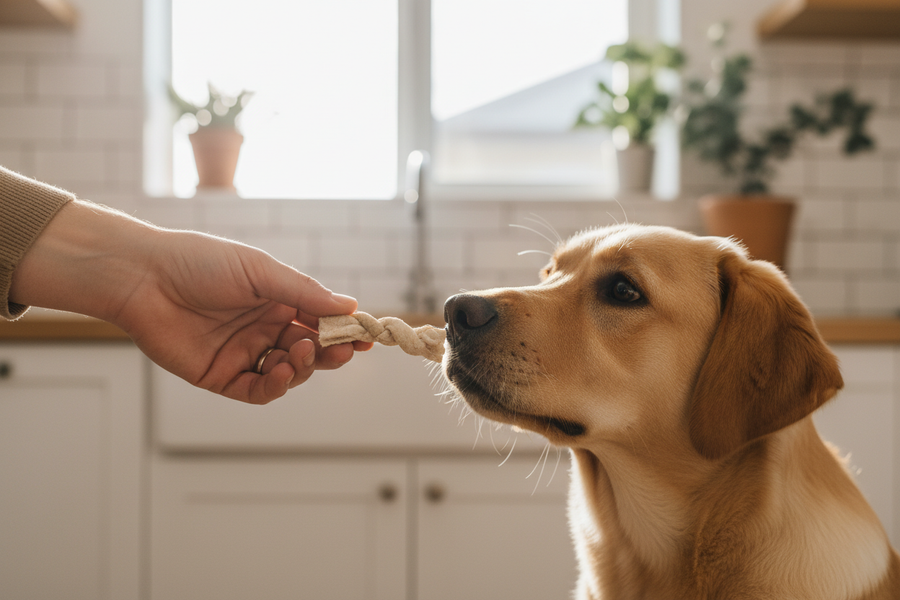
Powder supplements can be awkward to dose accurately for puppies, and getting a reluctant puppy to consume an unfamiliar powder isn't always straightforward. Soft chews are generally easier. They're palatable, portion-controlled, and most puppies treat them like a reward rather than a supplement, which makes daily dosing consistent.
Hypoallergenic formula
Puppies can develop food sensitivities early. A grain-free, wheat-free formula reduces the risk of introducing a new dietary allergen while you're actively trying to support the gut. Hero's chews are grain-free and hypoallergenic, which matters if your puppy has a sensitive system or you're still working out their dietary baseline.
Signs your puppy's gut needs support
Puppies don't always show dramatic symptoms when their gut is off. The earlier signs are often subtle, and easy to attribute to normal puppy behaviour. Watch for these indicators:
- Stools that vary significantly day to day (sometimes firm, sometimes loose, without an obvious dietary cause)
- Excessive gas or a noticeably persistent smell
- Mucus in the stool (occasional is normal during transitions; persistent is worth a vet check)
- Poor coat quality in the first months, especially dull or rough patches despite adequate nutrition
- Energy levels that seem disproportionately low for their age
- Scratching or itching without an obvious environmental cause
Many of these signs can have multiple causes. Always talk to your vet before starting any supplement, particularly if symptoms are persistent or your puppy is otherwise unwell. Gut support works best as a complement to good veterinary care, not a substitute for it.
How to introduce a probiotic to your puppy
Consistency matters more than timing. Giving the probiotic at the same time each day, ideally with a meal, builds a routine your puppy will quickly associate with food. Most puppies take to soft chews straight away.
For puppies under 5kg or very small breeds, start with half a chew and observe for any changes in stool consistency over the first week. Mild adjustment (slightly looser stools for two to three days) is normal as the gut adapts. If you see persistent loose stools or any other concern, pause and check with your vet.
For most puppies, the adjustment period is brief. Within 7 to 14 days, stool consistency typically improves and settles. Full gut microbiome benefits take longer, generally three to four weeks of consistent daily use.
The Australian context
Australian puppies face a few specific gut challenges worth knowing about. The warmer climate across much of the country creates conditions where certain gut pathogens are active year-round rather than seasonally. Heat stress during summer also affects gut motility and water absorption in the digestive tract.
The high prevalence of tick treatments and other antiparasitic medications in Australian dogs also makes antibiotic-safe probiotic options particularly relevant. Most Australian vets are familiar with S. boulardii and comfortable recommending it, particularly in situations involving antibiotic use or stress-related gut disruption. For a complete overview of what's available locally and how to read supplement labels, the guide to probiotics for dogs in Australia covers the full picture.
Supporting your puppy with Hero
If you're looking for a vet-reviewed, Australian-made probiotic designed for daily use, Hero's Probiotic Daily Chews deliver 10 billion CFU of S. boulardii per soft chew. Grain-free, hypoallergenic, and antibiotic-safe, they work with your puppy's developing gut. With a lifetime money-back guarantee, there's no risk in trying them for a few weeks to see how your puppy responds.
Frequently asked questions
Can you give a puppy human probiotics?
Human probiotics use strains and dosages designed for human gut flora, which differs significantly from a dog's. Some human probiotics also contain ingredients that are safe for people but unsuitable for dogs. Stick to dog-specific formulas. If in doubt, your vet can recommend an appropriate product for your puppy's age and weight.
How long does it take for probiotics to work in puppies?
Most puppies show improved stool consistency within 7 to 14 days of starting a daily probiotic. Full microbiome benefits take longer, typically three to four weeks of consistent daily use. Results vary depending on the puppy's starting point, their diet, and any underlying gut stress they're experiencing.
Are probiotics safe for very young puppies?
Most vet guidelines suggest waiting until 8 weeks of age before introducing supplements. Below that age, the gut is still very dependent on maternal milk and the immune factors it contains. Talk to your vet before supplementing a puppy under 8 weeks old.
Do puppies need probiotics if they're already healthy?
Healthy puppies can still benefit from daily probiotic support, particularly during stressful developmental windows like weaning, rehoming, and the vaccination period. Think of it as proactive gut support rather than a response to a problem. A stable gut microbiome from early on tends to mean fewer digestive upsets as your dog matures.
Can I give my puppy probiotics every day?
Yes. Daily supplementation is how probiotics work best. Occasional use provides limited benefit. The goal is a consistently supported gut microbiome throughout the developmental period and beyond. Once your puppy is in a stable routine, daily probiotic use is simple to maintain.