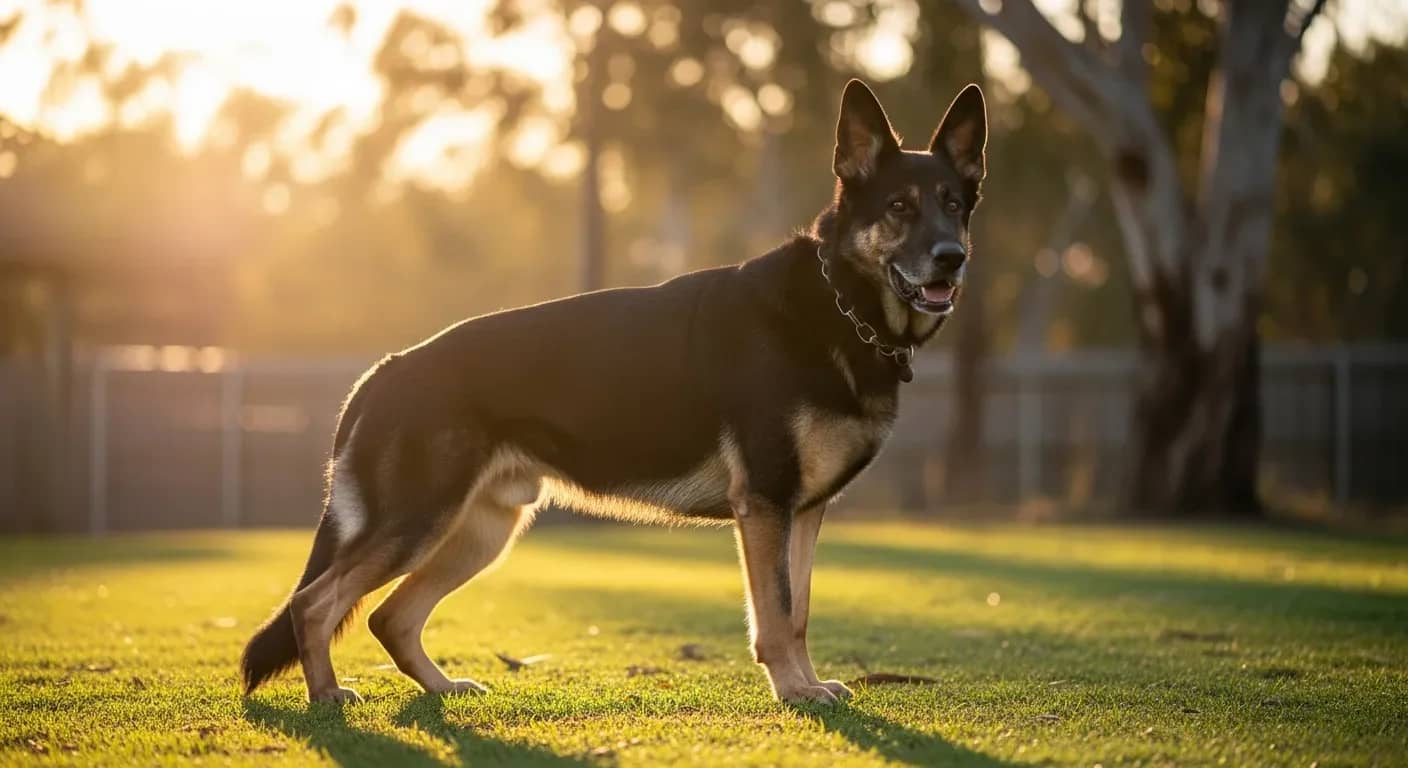

German Shepherds are one of the most capable dogs on earth. They are also one of the most gut-sensitive, and not by coincidence. The same intensity that makes them brilliant working dogs, responsive to stress, alert to every shift in their environment, plays out directly in their digestive tract. If your German Shepherd has been cycling through bouts of diarrhoea, gassy evenings, or a sensitive stomach that flares whenever life gets busy, a daily probiotic is one of the more evidence-backed steps you can take.
This guide covers why German Shepherds are particularly prone to digestive upsets, what to look for in a probiotic that will actually make a difference, and how to build it into their daily routine. We will also walk through the difference between yeast and bacterial probiotics, because it matters for this breed more than most.
Why German Shepherds Have Such Sensitive Stomachs
The German Shepherd breed carries a genuine predisposition to digestive problems that goes beyond what most owners realise. Understanding this context is what separates a useful probiotic routine from a random supplement on the shelf.
German Shepherds are the breed most associated with exocrine pancreatic insufficiency (EPI), a condition where the pancreas stops producing enough digestive enzymes. EPI is not rare in this breed. It is one of the most commonly diagnosed GSD health conditions in Australia, and it almost always presents as chronic diarrhoea, dramatic weight loss despite a good appetite, and a coat that deteriorates quickly. Small intestinal bacterial overgrowth (SIBO) frequently develops alongside EPI, and that is where a targeted probiotic can play a meaningful supporting role.
Beyond EPI, the breed is also overrepresented in inflammatory bowel disease diagnoses. A 2017 survey of breed predispositions to gastrointestinal disease in the Journal of Veterinary Internal Medicine found German Shepherds consistently appearing in the top three breeds for chronic enteropathies. Food sensitivities are common too, particularly to common proteins and grains, and these often show up as alternating soft stools and full diarrhoea alongside skin flares.
Then there is the stress factor. GSDs are high-drive animals. They are built to work, and when they do not have enough outlet or their routine gets disrupted, the gut notices. Stress changes the gut microbiome measurably, altering motility, increasing intestinal permeability, and shifting the bacterial balance toward dysbiosis. For a working-breed dog in a suburban home, that can mean a digestive system that is never quite settled. For a fuller picture of what German Shepherds tend to face across their lifespan, our guide to common German Shepherd health problems is worth reading alongside this one.
What to Look for in a Probiotic for German Shepherds
Australian pet shops carry plenty of probiotic products, most of them bacterial blends with broad label claims and very little breed-specific evidence behind them. For a German Shepherd, the choice matters. Here is what actually makes a difference.
1. Strain specificity over species count
More strains does not mean better. A 2018 study in the Veterinary Record found that dogs with chronic enteropathies showed significant improvement in stool quality, consistency, and clinical activity index when supplemented with Saccharomyces boulardii, a probiotic yeast, compared to placebo. S. boulardii is not a bacterium, it is a yeast, and it operates very differently to the Lactobacillus blends that dominate the pet supplement market. For a breed that deals with SIBO and chronic enteropathies at the rates GSDs do, strain specificity matters far more than strain count.
2. Antibiotic-safe is not optional for this breed
German Shepherds get antibiotics with some regularity. Ear infections, skin flares, post-surgical care, urinary tract infections, and tick-borne illness all tend to show up across a typical GSD lifespan, which our German Shepherd lifespan guide covers in more detail. Bacterial probiotics get wiped out by the same antibiotic your vet prescribed. You might be giving them daily and making no difference at all. Yeast probiotics like S. boulardii survive because antibiotics target bacteria, not yeast. A peer-reviewed trial cited by FullBucket Health's S. boulardii whitepaper found that dogs receiving S. boulardii during antibiotic treatment had zero antibiotic-associated diarrhoea, while 75% of the control group developed it, for an average of 6.5 days. That gap is significant if your GSD is on a long antibiotic course.
3. CFU count high enough to actually reach the gut
Look for at least 5 to 10 billion CFU per dose. Stomach acid destroys a significant portion of any probiotic before it reaches the intestine, so the starting count needs to be high enough that meaningful numbers survive. Products delivering less than 1 billion CFU are often not doing much by the time they arrive where they are needed.
4. Prebiotic and enzyme support alongside the probiotic
A probiotic works better with prebiotics feeding it. Look for a formula that includes both, ideally with digestive enzymes as well. For a breed where enzyme deficiency is already a concern, including them in a daily supplement is sensible insurance, though if your vet suspects EPI, a probiotic supplement is no substitute for dedicated enzyme replacement therapy.
5. A format your GSD will actually take daily
German Shepherds can be food motivated or completely indifferent depending on the individual. A soft chew that functions as a treat bypasses the hiding-tablets-in-cheese phase entirely. Consistency matters more than any ingredient, so the format needs to be something your dog accepts without negotiation every morning.
If you want a broader view of probiotic options available in Australia across different brands and formulations, our general probiotics for dogs in Australia guide covers the wider market.
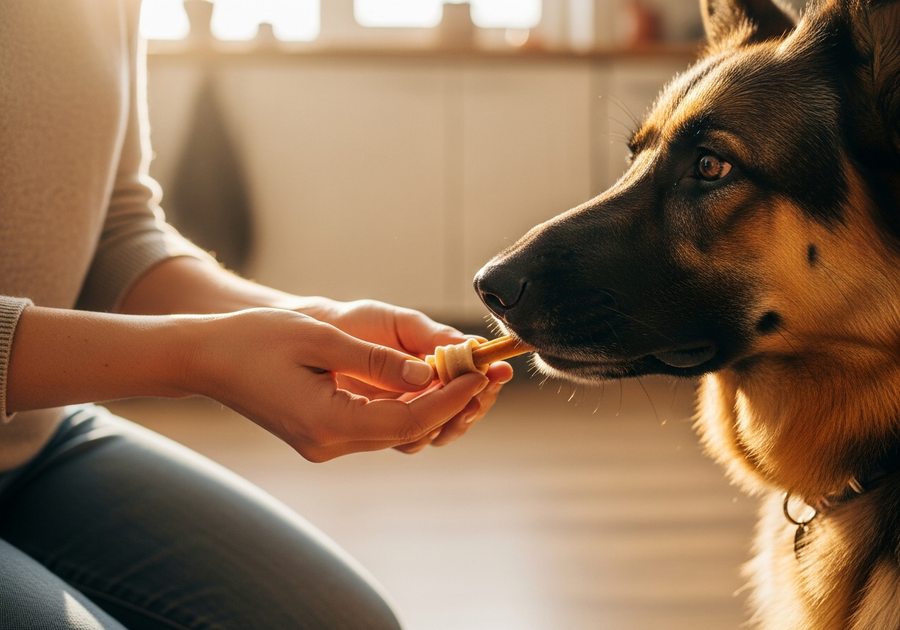
Hero Probiotic Daily Chews for German Shepherds
Most Australian pet supplement brands stock bacterial blends because they are easier to formulate and market. Hero takes a deliberately different approach with a single-organism formula built around S. boulardii at 10 billion CFU per chew, paired with prebiotics, bentonite, digestive enzymes, green banana powder, agave, and pectin. The formula is grain-free, wheat-free, and hypoallergenic, which matters for a breed with known food sensitivities. It is made in Australia and vet reviewed.
The single-species approach is not a cost-cutting measure. It is a deliberate choice based on where the evidence sits. S. boulardii is the probiotic strain with the strongest veterinary literature for the conditions German Shepherds face most often: antibiotic-associated diarrhoea, chronic enteropathies, and stress-driven gut upset. If your GSD is on antibiotics right now, this is the most important detail in the article. Hero Probiotic Daily Chews use a yeast probiotic specifically because it survives concurrent antibiotic treatment. Bacterial probiotics will not.
Not sure exactly what your German Shepherd needs? The Hero Health Assessment takes two minutes and gives you a personalised supplement plan based on your dog's age, weight, and health priorities.
Start the Free Assessment
How to Introduce a Probiotic to Your German Shepherd
German Shepherds are adaptable dogs, but their guts are not always. A sudden influx of a new organism can occasionally cause a brief loose stool or increased gas in the first few days as the microbiome adjusts. A gradual start avoids most of this.
Days 1 to 5: Half dose
Split the daily chew in half for the first three to five days. Give it with the morning meal so it enters the system when the gut is most active. Watch for any change in stool quality. A brief soft-stool day is normal and usually resolves by day two.
Days 6 to 28: Full daily dose
Move to the full daily dose once the gut has adjusted. Most German Shepherd owners notice a meaningful improvement in stool consistency and gas within 7 to 14 days. Coat condition and skin often improve over the following weeks. If your GSD is recovering from antibiotics, plan to continue the probiotic for at least the same number of weeks the antibiotic course ran, plus two additional weeks to allow the microbiome to fully restore.
Ongoing: Make it a daily habit
Gut health is not a course you finish. The microbiome is shaped continuously by food, exercise, stress, and environment. A daily chew gives it a consistent baseline. Think of it the same way you think about dental hygiene: the value accumulates through repetition, not a single dose.
Dosing by weight
Hero uses a weight-based dosing chart. An adult German Shepherd typically weighs 22 to 40 kg depending on sex and lineage. One chew per day is the standard dose for most adult dogs in that range. Check the pack label for the exact weight bracket, and talk to your vet before starting if your dog is under 6 months, pregnant, or on multiple medications simultaneously.
When to See the Vet Rather Than Reach for a Supplement
Probiotics support a healthy gut. They are not a treatment for acute illness or serious disease, and they should never delay a vet visit when one is genuinely warranted. Contact your vet straight away if your German Shepherd has:
- Bloody, black, or tarry stool
- Diarrhoea lasting more than 48 hours
- Vomiting more than twice in 24 hours, particularly if accompanied by lethargy
- A distended or painful abdomen (bloat risk is real in deep-chested breeds like the GSD)
- Rapid unexplained weight loss despite eating normally
- Greasy, foul-smelling, pale, or very voluminous stools (classic EPI presentation)
- Any combination of digestive symptoms plus deteriorating coat quality
That last set of signs, weight loss plus foul stools plus coat deterioration, is the EPI picture. EPI requires a TLI blood test to diagnose and enzyme replacement therapy to treat. A probiotic alone will not resolve it, and delaying diagnosis makes the condition harder to manage. Our guide to common German Shepherd health problems covers EPI, IBD, and the other conditions this breed faces with the detail you need before your next vet conversation.
Supporting Gut Health Beyond the Probiotic
German Shepherds do best when gut health is treated as a system, not a single supplement. The probiotic is one part of a broader picture.
Diet quality has a direct impact. High-quality protein sources, limited unnecessary fillers, and consistent feeding times all reduce the gut load that leads to dysbiosis. Raw or partially raw diets work well for some GSDs but require careful bacterial contamination management. Feeding the same food daily with gradual transitions when changing brands reduces the microbiome disruption that drives soft stools.
Exercise and mental stimulation also matter for digestive health in a breed this active. Chronic stress from under-stimulation raises cortisol, and elevated cortisol compromises gut barrier integrity over time. If your GSD is also dealing with joint issues that limit exercise, supporting their mobility becomes part of the gut health conversation too. The options in our guide to best joint supplements for German Shepherds are worth considering alongside a probiotic routine for dogs whose exercise is restricted by pain.
The Bottom Line
German Shepherds are predisposed to gut issues at a breed level, from EPI and chronic enteropathies to stress-driven dysbiosis and antibiotic-associated diarrhoea. A daily probiotic built around Saccharomyces boulardii addresses the most common underlying mechanisms: it supports the gut microbiome, survives antibiotic treatment, and is backed by veterinary evidence for chronic enteropathies in dogs specifically. Pair it with steady feeding, enough exercise, and attentive monitoring, and you give your GSD the gut foundation they need to stay well between vet visits.
Every German Shepherd is different. If you want to know exactly what your dog needs based on their age, weight, and current health, the Hero Health Assessment gives you a personalised recommendation in under two minutes.