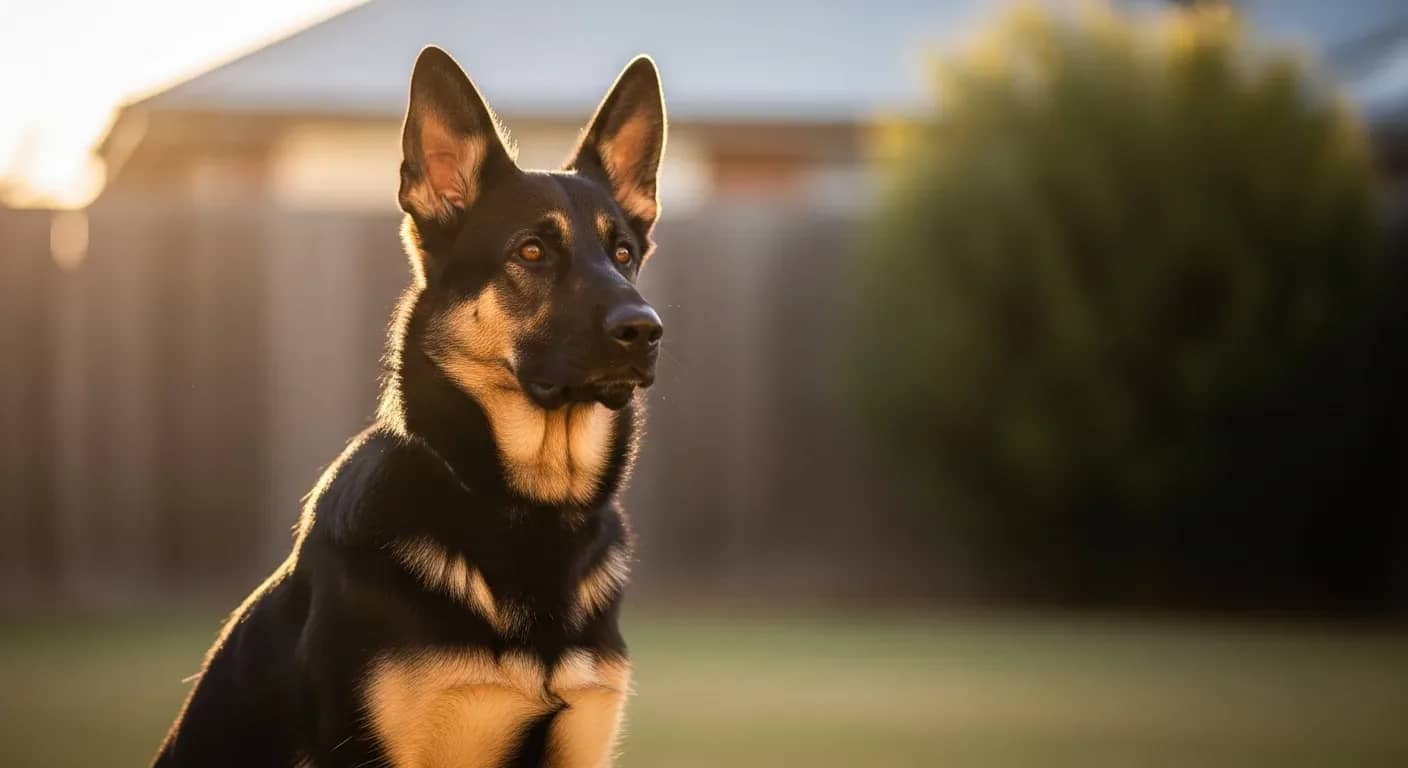

German Shepherds are one of Australia's most popular breeds, and it's easy to see why. They're loyal, intelligent, and endlessly devoted to their families. But that same genetic line that makes them exceptional working dogs also makes them prone to a specific set of health conditions that every owner should know about before they appear.
Understanding what to watch for doesn't mean bracing for bad news. It means you can act early, ask your vet the right questions, and give your dog the best possible chance at a long, comfortable life. German Shepherds typically live 9 to 13 years, and much of that quality comes down to what you know and when.
Hip and Elbow Dysplasia
Hip dysplasia is probably the first thing most people associate with German Shepherds, and for good reason. A Swedish study of over 400 German Shepherds found that 49% had some degree of hip dysplasia, giving the breed a significantly higher risk compared to most others. In Australia, the German Shepherd Dog Council runs a hip and elbow scoring programme to help breeders reduce inherited risk over time, but even well-bred dogs can develop the condition.
Dysplasia occurs when the ball-and-socket joint forms incorrectly, causing the bones to grind rather than glide. Elbow dysplasia works similarly, affecting the foreleg joints. Both conditions tend to show up in the first year or two of life, though symptoms can intensify as dogs age and arthritis sets in.
Signs to watch for include a "bunny hopping" gait at the rear, reluctance to climb stairs, stiffness after rest, and reduced interest in exercise. Some dogs are stoic about pain and don't show obvious discomfort until the condition is quite advanced.
If your dog has been diagnosed with hip dysplasia, management focuses on maintaining a healthy weight, controlled exercise like swimming, and joint support. A vet may recommend anti-inflammatories, physiotherapy, or in severe cases, surgery. Catching changes early gives you far more options.
Degenerative Myelopathy
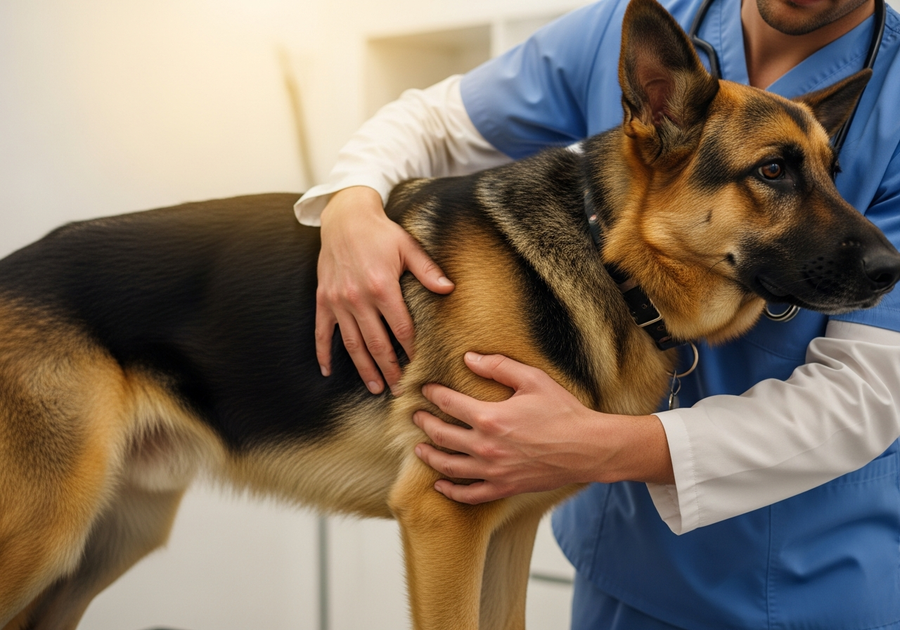
Degenerative myelopathy (DM) is a progressive neurological disease that attacks the spinal cord, and German Shepherds are one of the breeds most affected. It typically appears in dogs aged seven and older, beginning with weakness and wobbliness in the back legs. Over months to years, it advances to full paralysis of the hindquarters.
DM is caused by a mutation in the SOD1 gene, and affected dogs carry two copies of the mutated gene. Genetic testing can identify whether your dog is clear, a carrier, or at risk, and reputable breeders increasingly screen for this. There is no cure, but physical rehabilitation and supportive care can help maintain mobility and quality of life for longer.
The early signs are easy to miss or mistake for normal ageing: knuckling of the back paws, scuffing the nails on walks, or a gradual loss of coordination. If you notice your German Shepherd's rear end seems increasingly uncertain, a neurological exam and genetic test with your vet is worth pursuing. Early intervention with physiotherapy has shown genuine benefit in extending a dog's mobile period.
Exocrine Pancreatic Insufficiency (EPI)
EPI is a digestive condition where the pancreas fails to produce enough digestive enzymes, meaning food passes through without being properly absorbed. German Shepherds are the breed most commonly diagnosed with it, and it often appears in younger dogs, sometimes before they reach three years old.
The signs can be confusing at first. A dog with EPI is essentially starving despite eating well, because the nutrients aren't being absorbed. You'll typically see significant weight loss despite a good or even ravenous appetite, large volumes of pale or greasy faeces, and a noticeably dull coat. Some dogs eat faeces (their own or others') as a response to constant hunger.
EPI is manageable with enzyme replacement therapy, where powdered pancreatic enzymes are added to each meal. Most dogs respond well once the right dose is established. The German Shepherd's high predisposition to this condition is believed to be linked to pancreatic acinar atrophy, where immune-mediated destruction of the pancreas precedes the enzyme deficiency.
Supporting your GSD's gut health from an early age matters here. Probiotics formulated for German Shepherds can help maintain a healthy digestive environment, complementing any treatment your vet prescribes.
Bloat (Gastric Dilatation-Volvulus)
Bloat is a genuine emergency. It occurs when the stomach fills with gas and then twists on itself, cutting off blood supply to surrounding organs. Without treatment within hours, it can be fatal. German Shepherds, with their deep chests, are at higher risk than most breeds.
The signs come on fast: a visibly swollen or distended abdomen, unproductive retching, restlessness or obvious distress, and excessive drooling. If you see these signs together, go to an emergency vet immediately. Do not wait to see if it passes.
Prevention involves feeding two or three smaller meals throughout the day rather than one large one, avoiding vigorous exercise directly before or after meals, and using a slow-feeder bowl to prevent rapid eating. Some owners opt for a prophylactic gastropexy, a surgical procedure that tacks the stomach to the abdominal wall to prevent twisting, which is often done at the time of desexing. Talk to your vet about whether this makes sense for your dog.
More detail on this can be found in our guide to managing bloat in German Shepherds, including when to be concerned and what the surgical options look like.
Skin Problems and Allergies
German Shepherds are prone to several types of skin conditions, ranging from environmental allergies to food sensitivities to a breed-specific condition called German Shepherd pyoderma. This bacterial skin infection, which tends to develop on the dog's trunk, causes flaking, crusting, and hair loss, and can be recurrent without the right management.
Inhalant allergies (atopy) are common in the breed, triggered by pollens, dust mites, or moulds. Food allergies can also cause skin reactions, usually presenting as itching around the face, paws, ears, and belly. Moist dermatitis (hot spots) can develop quickly, especially in humid Australian summers.
Regular grooming is a frontline defence: checking the skin during brushing lets you catch any changes early. Watch for persistent scratching, paw licking, ear shaking, redness, or hair loss. If your dog is frequently itchy, a systematic approach with your vet, including allergy testing or a food elimination trial, will help identify and manage the trigger rather than just treating symptoms repeatedly.
Our guide to identifying and treating skin conditions in German Shepherds covers the most common presentations and what treatment typically involves.
Perianal Fistulas
Perianal fistulas are painful, ulcerating tunnels that form in the tissue around the anus. They're disproportionately common in German Shepherds, thought to be related to the breed's broad, low-set tail and the moist environment it creates. There's also a suspected immune component, with the body's own defences playing a role in the tissue damage.
Dogs with perianal fistulas may scoot or lick the area excessively, show reluctance to defecate, or have an unusual odour. The condition can be difficult to spot initially because dogs often groom the area, but on inspection the tissue around the anus will look ulcerated or raw.
Treatment has improved significantly over recent years, with immunosuppressive medications showing strong results where surgery alone previously had high recurrence rates. The earlier this condition is caught and treated, the better the outcomes. Any change in your dog's toilet habits or persistent attention to the rear end deserves a vet check.
Arthritis in Older German Shepherds
Given the breed's predisposition to joint problems earlier in life, it's no surprise that arthritis becomes a significant concern as German Shepherds age. The wear and tear accumulated over years, compounded by any dysplasia or earlier injury, leads to inflammation and progressive joint degeneration.
The signs are gradual: slowing down on walks, difficulty rising from rest, reluctance to jump into the car, or sleeping more. Some dogs compensate so well that owners only notice the problem has become serious when they try to change the routine.
Management works best when it's multi-modal. This typically means controlled, low-impact exercise (swimming is excellent), maintaining a lean body weight to reduce joint load, and appropriate pain relief from your vet. Joint supplements for German Shepherds containing MSM, collagen peptides, turmeric, and vitamin C can support joint tissue and help manage inflammation alongside a vet-prescribed treatment plan.
The detailed guide on managing arthritis in senior German Shepherds covers what the progression typically looks like and how to adapt your dog's daily life around it.
Not sure where your German Shepherd sits on the health spectrum? The Hero Health Assessment takes 2 minutes and gives you a personalised supplement plan based on your dog's age, weight, and lifestyle.
Start the Free AssessmentHaemophilia and Blood Disorders
German Shepherd males can inherit haemophilia A, a clotting disorder that means even minor injuries can cause prolonged bleeding. It's an X-linked condition, so females typically carry the gene without being affected themselves. In affected males, symptoms include unexplained bruising, prolonged bleeding from cuts or after surgery, and in severe cases, spontaneous internal bleeding.
Any GSD scheduled for surgery, including routine procedures like desexing, should have a coagulation screen beforehand. Breeders who test their breeding stock for this condition can significantly reduce its prevalence.
Other blood-related concerns in the breed include immune-mediated haemolytic anaemia and von Willebrand's disease, both of which affect the blood's ability to clot or carry oxygen properly. Regular vet checks that include blood panels help catch these conditions early.
What a Longer Life Looks Like
The German Shepherd's genetic profile comes with genuine risk factors, but none of this is inevitable. Dogs from responsible breeders who screen for hip dysplasia, DM, and haemophilia start with a significantly better baseline. What you do from there, including diet, weight management, regular vet checks, and appropriate supplementation, shapes how those risks play out in real life.
For context on what to expect across your dog's life stages, the guide to German Shepherd lifespan covers how to approach each phase proactively rather than reactively.
The Bottom Line
German Shepherds are remarkably resilient dogs, but they carry a specific set of inherited risks that owners should know about from the start. Hip and elbow dysplasia, degenerative myelopathy, EPI, bloat, skin conditions, perianal fistulas, and arthritis are the conditions most worth watching for in Australia. None of them are guaranteed, and most are significantly more manageable when caught early.
Every German Shepherd is different. If you want to know exactly what your dog needs right now, the Hero Health Assessment will give you a personalised recommendation in under two minutes.