

If you own a Pug, you are already familiar with the flatulence. The wheezing, the snoring, the gas that clears a room without warning. These things are part of life with a Pug, and most owners learn to accept them with good humour. But persistent digestive issues, loose stools, a dull coat, or a stomach that seems easily upset are worth paying attention to. They are often signs that the gut needs a bit more support.
Probiotics are one of the more practical tools for supporting canine digestive health, and for Pugs specifically, they come with some advantages that go beyond what most people expect. This guide covers why Pugs are prone to gut issues, what to look for in a probiotic, and why the type of probiotic you choose matters more than you might think.
Why Pugs Are Prone to Digestive Issues
Pugs are a brachycephalic breed, meaning their short, flat skull shape compresses their nasal passages, soft palate, and throat. That anatomy affects more than breathing. When a Pug eats or drinks, it swallows more air than other breeds because of its shortened airway structure. This is called aerophagia, and it is one reason Pugs are so prone to flatulence and bloating even on a good diet.
The digestive implications go further. Brachycephalic breeds often show increased gut motility changes, and many Pugs have sensitive digestive systems that react to food changes, stress, or even a slightly different batch of their regular food. The American Kennel Club notes that Pugs are among the breeds with a higher tendency toward food sensitivities and allergies, which compounds the digestive picture.
Skin fold dermatitis is another common Pug problem, and treating it often involves antibiotics. The same goes for the respiratory infections Pugs are prone to. Repeated antibiotic courses disrupt the gut microbiome each time, which is why digestive issues in Pugs can become a recurring cycle rather than a one-off event. For more on the health conditions your Pug may face over their lifetime, the common Pug health problems guide covers the full picture.
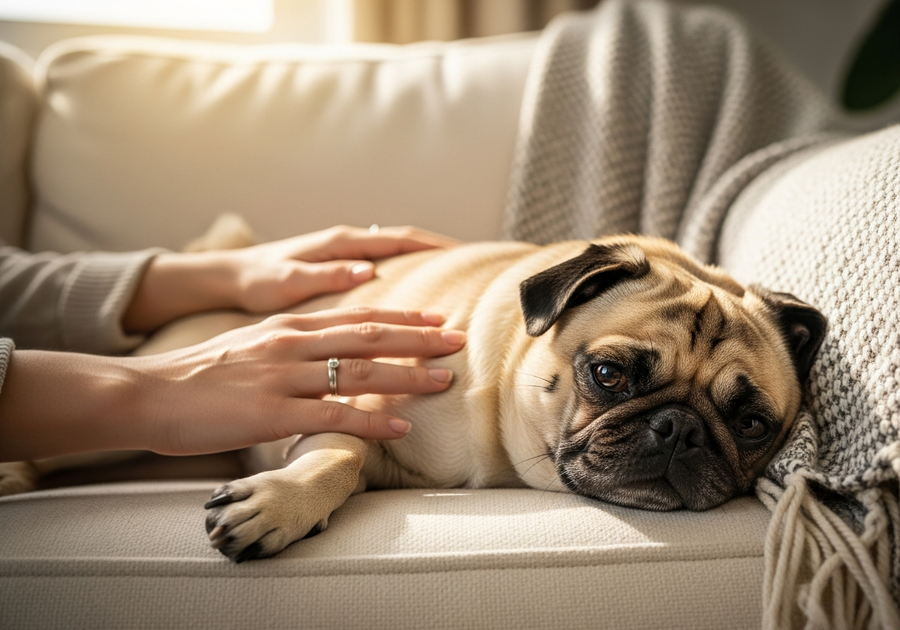
Signs Your Pug May Benefit from Probiotic Support
Some digestive symptoms in Pugs are breed-normal. Others signal that the gut balance is genuinely off and could use some help. The distinction matters because a supplement cannot fix what needs a vet visit, but it can make a meaningful difference for dogs operating in the grey zone between healthy and struggling.
Signs that often respond well to probiotic support include:
- Frequent soft stools or loose stool episodes that are not linked to a clear dietary cause
- Excessive gas beyond the breed-typical flatulence, particularly if it has worsened or is accompanied by bloating
- Intermittent vomiting of partially digested food, especially after meals
- Dull or flaky coat with no clear skin condition diagnosis, which can indicate poor nutrient absorption
- Low appetite or inconsistent eating in a dog that was previously food-motivated
- Digestive upset following a course of antibiotics such as loose stools, flatulence, or reduced appetite that persists after the treatment ends
If your Pug shows any of these signs, it is worth a vet conversation before starting any supplement. Persistent digestive symptoms sometimes indicate an underlying condition that needs diagnosis first. Once you have ruled out anything serious, a daily probiotic is a reasonable ongoing support.
What to Look for in a Probiotic for Pugs
Not all probiotics are built the same, and this matters when choosing one for a breed with Pug-specific considerations. Here is what to prioritise.
Hypoallergenic formula
Pugs are more allergy-prone than many breeds. A probiotic that contains wheat, grain, or common allergens can trigger the very reactions you are trying to reduce. Look for grain-free, wheat-free formulas that use limited ingredients. The fewer the additives, the lower the risk of a reaction in a sensitive dog.
The right probiotic organism
Most pet probiotics use bacterial strains such as Lactobacillus or Bifidobacterium. These are well-studied and effective in healthy dogs. But they have one significant drawback: they are destroyed by antibiotics. Since Pugs cycle through antibiotic treatment more often than average due to skin fold infections and respiratory issues, this limitation is worth knowing about.
Saccharomyces boulardii is a yeast-based probiotic, not a bacterium. Because antibiotics specifically target bacteria, they leave S. boulardii completely intact. A course of amoxicillin for a skin fold infection will wipe out beneficial gut bacteria, but S. boulardii keeps working throughout. Research published in Microorganisms has confirmed the resilience of S. boulardii in gut-disrupting conditions, which is part of why it is increasingly used in clinical and veterinary settings.
Digestive enzyme support
Some probiotic formulas include digestive enzymes alongside the probiotic organism. For Pugs with impaired digestive efficiency, which is common in brachycephalic breeds, this combination can help break down food more effectively, reduce gas production, and support better nutrient absorption.
Prebiotic inclusion
Prebiotics feed the beneficial bacteria and organisms already present in the gut. A formula that pairs the probiotic with a prebiotic gives the supplementation more traction, particularly after an antibiotic course has disrupted the microbial balance. Green banana powder acts as a prebiotic fibre and has the added benefit of supporting firm stools.
Why the Antibiotic-Safe Factor Matters More for Pugs
This point deserves more than a passing mention because it changes how you think about probiotic supplementation for this breed.
Most dog owners who give their dogs a bacterial probiotic stop during antibiotic treatment, on the reasonable assumption that the antibiotic will just kill it anyway. Then they restart after the course. This leaves a gap exactly when gut support is most needed, because antibiotics cause significant disruption to the microbiome during treatment, not just after it.
With a yeast-based probiotic like Saccharomyces boulardii, there is no need to pause. You can continue giving it throughout the antibiotic course because antibiotics do not kill yeast. Studies on S. boulardii have found it supports gut barrier integrity and reduces antibiotic-associated diarrhoea in both people and animals.
For a breed like the Pug that may have multiple antibiotic courses over a lifetime, this is not a minor point. It is a structural advantage that bacterial probiotics simply cannot offer. The gut disruption that follows each antibiotic course accumulates. A yeast probiotic that continues working throughout means that disruption is smaller each time.
Building a Daily Probiotic Routine for Your Pug
The key word is daily. A probiotic that you only reach for when your Pug is obviously unwell is less effective than one given consistently every day as part of a routine.
Gut microbiome balance is maintained through consistency. Sporadic supplementation gives the beneficial organisms a foothold but not enough stability to sustain meaningful change. Most Pug owners find that 3 to 4 weeks of daily use is when they start noticing a difference: less gas, firmer stools, a coat that looks a bit better.
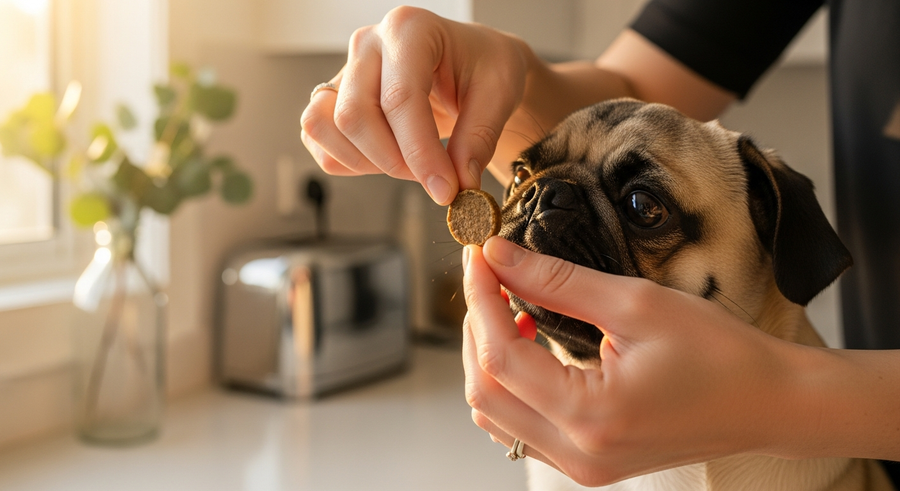
Tying the supplement to a fixed routine moment helps. For most Pugs, mealtime is the easiest anchor point. Giving the chew just before or with the morning meal means it becomes part of a predictable sequence your dog will come to expect.
Hero Probiotic Chews contain Saccharomyces boulardii at 10 Billion CFU per chew, alongside prebiotics, digestive enzymes, green banana powder, bentonite, agave, and pectin. They are grain-free and wheat-free, which matters for a breed with Pug allergy tendencies. The soft chew format helps too, since Pugs can struggle with harder treats because of their compressed jaw structure. Most Pugs accept them as part of the meal without any resistance.
If your Pug also has joint stiffness or mobility concerns, which is common given the breed's compact, low-slung body structure, it is worth reading about joint supplement options for Pugs alongside probiotic support. Many Pug owners address both together as part of a daily wellbeing routine.
Pugs have a relatively long lifespan of 12 to 15 years compared to many breeds. Establishing good daily supplement habits early means you are supporting their gut health across more of those years, not just when a problem surfaces.
Not sure exactly what your Pug needs? The Hero Health Assessment takes 2 minutes and gives you a personalised supplement plan based on your dog's age, weight, and current health concerns.
Start the Free AssessmentWhen to Talk to Your Vet
Probiotics are well-tolerated and generally safe for healthy adult dogs, but there are situations where a vet conversation should come first.
Talk to your vet before starting a probiotic if your Pug:
- Has ongoing digestive symptoms that have not been investigated (persistent vomiting, blood in stools, significant weight loss)
- Is currently being treated for a gastrointestinal condition
- Is immunocompromised or has a serious underlying health condition
- Is a very young puppy where microbiome development is still in progress
Probiotics are not a substitute for veterinary diagnosis. If your Pug's gut symptoms are significant or getting worse, that needs an investigation, not a supplement. But for otherwise healthy dogs with typical breed-related digestive tendencies, a daily probiotic is a reasonable, low-risk addition to their routine.
It is also worth discussing with your vet the option of continuing S. boulardii through any future antibiotic courses, since its antibiotic-safe profile means there is no clinical reason to pause it during treatment.
The Bottom Line
Pugs and digestive issues are well-acquainted. Their anatomy, their allergy tendencies, and their medical history make gut support a worthwhile investment for most Pug owners. A daily probiotic with Saccharomyces boulardii checks the boxes that matter most for this breed: hypoallergenic, antibiotic-safe, and genuinely effective at supporting the gut balance that Pugs lose more readily than other dogs.
Every Pug is different. If you want a personalised plan based on your dog's age, weight, and specific health picture, the Hero Health Assessment gives you a tailored recommendation in under two minutes.