

You know that look your Chihuahua gives you from across the room. Alert, a little suspicious, deeply certain they're the most important creature in any space they occupy. It's hard to believe something that confident could ever be fragile. But Chihuahuas, for all their attitude, carry a handful of health vulnerabilities that every owner should know about.
Most of these conditions are manageable when caught early. Some are entirely preventable with the right daily habits. Others just need monitoring so you know when to call your vet. None of them should be a surprise.
This guide covers the Chihuahua health problems Australian owners encounter most often, what to watch for, and what actually helps.
Patellar Luxation: The Kneecap Problem That Affects Most Small Breeds
Patellar luxation, where the kneecap slides out of its normal groove, is one of the most common orthopaedic conditions in Chihuahuas. Research published in VCOT: Veterinary and Comparative Orthopaedics and Traumatology found that medial patellar luxation occurs at a rate 12 times higher in small breed dogs than in large breeds. Chihuahuas are among the most frequently affected.
The condition is usually hereditary. A Chihuahua with a grade 1 luxation may skip a step occasionally and show no other signs. Grade 3 or 4 luxations are more serious, with the kneecap staying out of place much of the time and causing persistent lameness or a distinctive "bunny-hop" gait in the back legs.
Signs to watch for
- Occasional skipping or hopping on a back leg
- Reluctance to jump up or use stairs
- A back leg held up for a few seconds before being placed down normally
- Stiffness after rest, especially in the morning
Your vet can grade patellar luxation during a physical exam. Mild cases are often managed with weight control, controlled exercise, and joint support. For a deeper look at management options, our guide on coping with patellar luxation in Chihuahuas covers what to expect at each grade. More severe grades may need surgical correction. The sooner it's identified, the more options you have.
Supporting joint health early matters for Chihuahuas, particularly as they age. If you want to understand how long Chihuahuas typically live and what health factors influence longevity, our breed guide covers it in detail.
Dental Disease: The Silent Problem in a Very Small Mouth
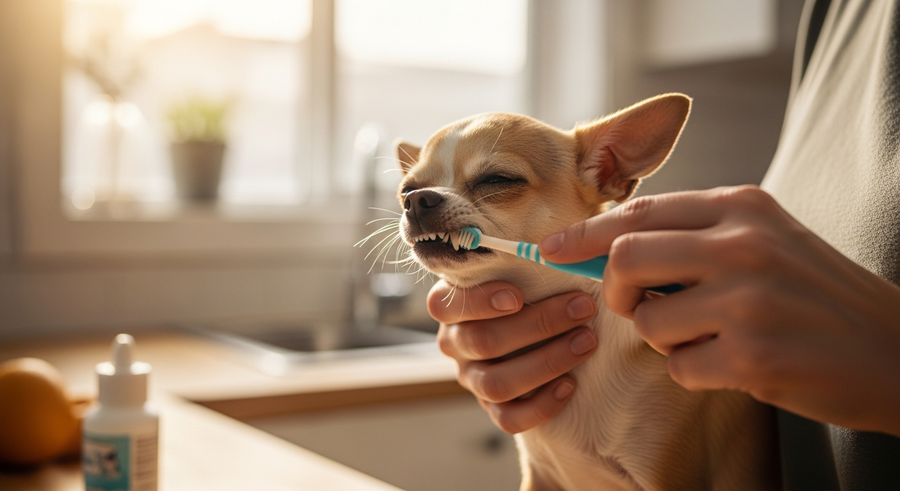
Dental disease is arguably the most underestimated health issue in Chihuahuas. Their mouths are tiny but they carry a full set of adult teeth, which means overcrowding is almost inevitable. Baby teeth frequently don't fall out on their own, creating double rows that trap food and accelerate plaque buildup.
A 2021 study published in the Journal of Veterinary Dentistry found that extra-small breeds, including Chihuahuas, were up to five times more likely to be diagnosed with periodontal disease than giant breeds. Most Chihuahuas show signs of gum disease by age three if teeth aren't being cleaned regularly.
This matters beyond just bad breath. Advanced periodontal disease allows bacteria to enter the bloodstream, which can affect the heart, kidneys, and liver. In a breed already predisposed to heart problems, this is a connection worth taking seriously.
What helps
- Daily tooth brushing with a dog-safe toothpaste (start young, go slowly)
- Annual dental checks with your vet, with professional cleaning when needed
- Dental chews and toys that encourage mechanical cleaning
- Ask your vet about retained baby teeth, which may need removal
Many Chihuahua owners discover dental disease late because dogs rarely show obvious pain. If your Chi is dropping food, pawing at their mouth, or has noticeably bad breath, a vet check is overdue.

Hypoglycaemia: A Risk That's Highest in Young and Small Dogs
Hypoglycaemia, or low blood sugar, can happen to any dog but Chihuahuas are particularly vulnerable due to their small body mass. Puppies under four months are at the highest risk. An adult Chihuahua that misses meals, overexerts without eating, or is stressed can also experience a hypoglycaemic episode.
The signs can escalate fast. A dog that seems tired becomes disoriented, then shaky, then unresponsive. This is a genuine emergency.
Warning signs
- Sudden lethargy or weakness
- Wobbling, muscle tremors, or loss of coordination
- Glassy or unfocused eyes
- Collapse or unresponsiveness in severe cases
If you suspect a hypoglycaemic episode, rubbing a small amount of honey or corn syrup on the gums can raise blood sugar quickly while you get to the vet. This is a first-aid measure, not a substitute for veterinary care.
Prevention is straightforward: regular small meals, avoiding prolonged gaps between feeds (especially for puppies), and not letting tiny Chihuahuas overexert themselves. If episodes recur in an adult dog, your vet should investigate underlying causes including liver disease or insulinoma.
Tracheal Collapse: That Honking Cough Has a Cause
A collapsed trachea is one of the more distinctive Chihuahua health problems, and many owners hear it before they understand what it is. The characteristic sound is a harsh, honking cough, often triggered by excitement, drinking water, or pressure on the throat.
The trachea (windpipe) is held open by rings of cartilage. In some Chihuahuas, these rings are weaker than normal, causing the trachea to partially flatten during breathing. It's not always serious, but it can worsen over time and can occasionally cause respiratory distress.
Things that make it worse
- Collars that put pressure on the throat (harnesses are strongly preferred)
- Obesity, which increases pressure on the airway
- Excitement, exercise, or heat
- Respiratory infections
Mild cases are often managed with weight control, harness use, and avoiding triggers. More significant cases may need medication to reduce airway inflammation. Surgery is an option for severe cases, though it's less commonly needed.
If your Chihuahua makes this sound regularly, get them assessed. Some owners also confuse it with other respiratory signs; if you're not sure what's normal, our breakdown of why Chihuahuas cough can help you tell the difference. A vet can usually confirm tracheal collapse with chest X-rays or fluoroscopy.
Heart Disease: Mitral Valve Disease and Pulmonic Stenosis
Heart disease is a leading cause of death in older Chihuahuas. The two most common forms in this breed are mitral valve disease (MVD) and pulmonic stenosis.
Mitral valve disease develops when the valve between the left chambers of the heart degenerates over time, causing a leakage that the heart has to work harder to compensate for. It's often detected first as a murmur during a routine vet check, long before any symptoms appear. Pulmonic stenosis is a congenital narrowing of the valve leading out of the right side of the heart, and it's typically identified in younger dogs.
Signs that may suggest heart trouble
- A new or changing heart murmur (detected by your vet)
- Exercise intolerance or tiring quickly on walks
- Persistent cough, especially at night
- Laboured or fast breathing at rest
- Reduced appetite or weight loss
Annual cardiac checks become increasingly important from middle age onwards for Chihuahuas. If your vet detects a murmur, they may recommend an echocardiogram (cardiac ultrasound) to assess the heart properly. Early diagnosis allows for monitoring and, when appropriate, medication that can extend quality of life significantly.
Hydrocephalus: What the Soft Spot Actually Means
Many Chihuahua puppies are born with a molera, an open fontanelle (soft spot) on the top of the skull. This is accepted within the breed standard and, for most dogs, it closes or remains small with no complications. However, a larger or persistent open fontanelle can be associated with hydrocephalus, a condition where cerebrospinal fluid accumulates in the brain and increases pressure on brain tissue.
Hydrocephalus ranges from mild and barely noticeable to severe and life-limiting. Signs typically appear in puppies under six months.
What to watch for in puppies
- A dome-shaped or unusually large skull
- Eyes that point downward or outward ("sunset sign")
- Difficulty learning, house-training problems, or slow development
- Seizures
- Circling or loss of balance
If you have a Chihuahua puppy showing any of these signs, veterinary assessment is important. MRI is the gold standard for diagnosis. Mild cases may require only monitoring; severe cases may need medication to reduce fluid pressure or surgical intervention.
When buying or adopting a Chihuahua puppy, ask the breeder about the parents' health history. Responsible breeders in Australia screen for patellar luxation and take cardiac health seriously.
Eye Problems: The Vulnerability of Large Eyes in Small Faces
Chihuahuas have prominent, large eyes set in a shallow socket, which makes them more exposed than in most other breeds. That anatomy creates a higher risk of eye injuries, corneal ulcers, and chronic dry eye (keratoconjunctivitis sicca).
Dry eye occurs when tear production is insufficient to lubricate the eye properly. It causes chronic discomfort, increased risk of infection, and can lead to corneal scarring and vision loss if untreated. It's more common in Chihuahuas than many owners realise.
Eye warning signs
- Frequent squinting or blinking
- Sticky discharge, especially yellow or green
- Cloudiness or dullness on the surface of the eye
- Pawing at the eye or rubbing the face
- Redness around the eye
Eye conditions tend to progress quickly in dogs. If you notice any of these signs, a vet check within 24 hours is sensible. Corneal ulcers in particular can worsen rapidly without treatment.
Outdoors, be cautious about grasses, twigs, and anything at face height for a small dog walking close to the ground. UV-protective dog goggles exist and are used by some Chihuahua owners, though they take time to get used to.
Building a Health Routine That Works for This Breed
Chihuahuas can live 15 years or longer with good care. A few consistent habits make a meaningful difference across all the health areas above.
Vet checks twice a year from middle age onwards. Many of the conditions covered here, including heart murmurs, early dental disease, and patellar progression, are found incidentally during routine exams. Catching things early keeps your options open.
Harness instead of collar. Every Chihuahua with any history of tracheal issues, or even just as a precaution, should walk on a harness that distributes pressure across the chest rather than the throat.
Weight management matters more than it looks. A Chihuahua carrying even 500 grams of extra weight is adding real strain to already small joints and a trachea that may already be marginal. The ideal weight for most adult Chihuahuas is between 1.8 and 2.7 kilograms. Our guide to maintaining a healthy Chihuahua weight explains how to assess body condition and manage it over time.
Teeth, regularly. Daily brushing sounds ambitious, but three or four times a week genuinely makes a difference. Starting young makes it far easier. Ask your vet for a demonstration if you've never done it before.
Digestive support for small dogs. Chihuahuas can be sensitive eaters with digestive systems that respond poorly to dietary changes or stress. Regular small meals, consistent food choices, and support for gut health during stressful periods (travel, vet visits, changes at home) helps them stay settled. If you want to understand how probiotics can support gut health in dogs generally, the signs your dog may need a probiotic is a good starting point.
Understanding the full picture of your Chihuahua's health also means understanding what to expect over their lifetime. The Australian guide to dog supplements in 2026 covers what the research actually supports for small breed daily health.
Every Chihuahua is different. The Hero Health Assessment takes 2 minutes and gives you a personalised supplement plan based on your dog's age, weight, and health history.
Start the Free AssessmentThe Bottom Line
Chihuahuas are one of the healthiest breeds when their specific vulnerabilities are managed well. Patellar luxation, dental disease, hypoglycaemia, tracheal collapse, heart disease, hydrocephalus, and eye problems are all more predictable than random. Knowing what to watch for means you're rarely caught off guard.
Talk to your vet about a health monitoring plan that fits your dog's age and history. If you want to know exactly what your Chihuahua needs at their current life stage, the Hero Health Assessment gives you a tailored recommendation in under two minutes.