

Your Spoodle is one of Australia's most loved family dogs. Friendly, low-shedding, and endlessly affectionate, they've climbed to rank #14 on TheVetShed's 2025 breed popularity list and show no signs of slowing down. But there's a side of Spoodle ownership that doesn't come up at the puppy park: these dogs inherit health tendencies from both Cocker Spaniel and Poodle lines, and knowing what to watch for makes a real difference to how many good years you get together.
The good news is that Spoodles are generally a healthy crossbreed. Most live between 12 and 15 years with the right care. The conditions below are not guaranteed outcomes, they're risk patterns worth knowing so you can catch anything early, choose a responsible breeder, and set your dog up for a long, comfortable life.
The Most Common Spoodle Health Issues in Australia
Because Spoodles are a cross between a Cocker Spaniel and a Miniature Poodle (sometimes a Standard), they can inherit health tendencies from both parent breeds. Some of these conditions overlap: both parent breeds carry risk for ear disease, eye conditions, and joint problems, which is why they show up so consistently in Spoodles even from reputable breeders.
Understanding this genetic background isn't about worry. It's about being the kind of owner who notices a change early, books a vet check before things escalate, and makes daily choices that support long-term health. If you want a broader look at what shapes your Spoodle's life expectancy, read our guide on Spoodle lifespan and how long they live.
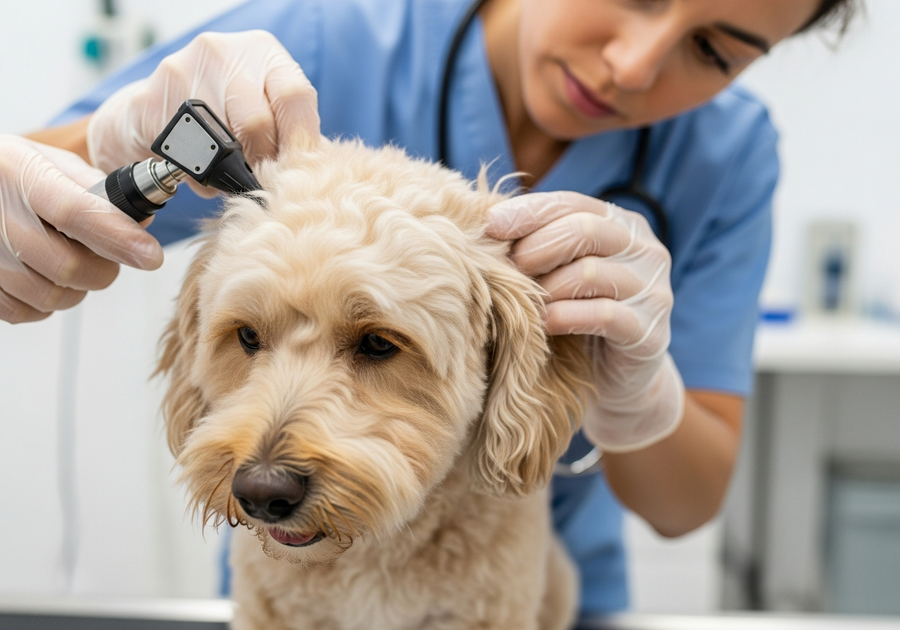
Ear Infections: The Number One Concern for Spoodles
Ask any Spoodle owner what they've spent the most money on at the vet, and ear infections will come up more often than anything else. Both Cocker Spaniels and Poodles are known for ear trouble, and the Spoodle inherits that floppy, hair-filled ear canal from both sides. Reduced airflow, trapped moisture from swimming or bathing, and natural wax build-up create conditions where bacteria and yeast thrive.
According to the VCA Animal Hospitals, Cocker Spaniels and Poodles are among the breeds most predisposed to otitis externa (outer ear infections). Spoodles sit at the intersection of both risk profiles.
Signs to watch for
- Persistent head shaking or tilting
- Scratching at one or both ears
- A yeasty or unpleasant smell from the ear
- Brown or dark discharge visible in the ear canal
- Redness or swelling around the ear opening
- Wincing or pulling away when you touch the ears
What helps
Regular ear cleaning with a vet-approved solution is the single most effective prevention strategy. Dry the ears thoroughly after swimming or bathing. Some owners ask their groomer to keep the hair inside the ear canal trimmed back, which improves airflow and reduces moisture retention. If your Spoodle swims frequently, a post-swim ear rinse becomes a non-negotiable part of the routine.
Recurring ear infections often have an underlying cause, usually allergies or an immune response. If your dog gets more than two or three infections per year, a vet check for food or environmental allergies is worth pursuing rather than just treating the infection each time.
Skin Allergies: Itchy Dogs and Their Triggers
Allergic skin disease is the second most common concern vets see in Spoodles. It shows up as chronic itching, red or inflamed skin, and recurring infections, particularly in the ears, armpits, groin, and between the toes. The condition often goes hand-in-hand with ear infections because the same inflammatory response drives both.
Triggers fall into two categories. Food allergies typically involve proteins, most commonly chicken, beef, or dairy. Environmental allergies involve pollens, dust mites, and mould spores, and often get worse at particular times of year. Flea allergy dermatitis, where a single flea bite triggers a widespread skin response, is also common in allergy-prone dogs.
Managing skin allergies long-term
Diagnosis is the first step. An elimination diet (usually an 8 to 12 week process using a novel protein your dog has never eaten before) is the gold standard for identifying food triggers. Environmental allergy testing can be done through a veterinary dermatologist. Once you know the triggers, management becomes much more practical.
Keeping the skin barrier healthy matters too. Regular bathing with a gentle, pH-balanced shampoo can reduce allergen load on the coat and skin. Omega-3 fatty acids, found in fish oil, have solid research behind them for reducing skin inflammation in dogs prone to allergies. Talk to your vet about dosing. A healthy gut also plays a role in managing immune responses, so digestive health is worth keeping in mind alongside skin management.
Progressive Retinal Atrophy: What Spoodle Owners Need to Know About PRA
Progressive Retinal Atrophy (PRA) is a genetic eye disease that causes the retina to gradually degenerate, eventually leading to blindness. It is one of the most important health concerns in Spoodles specifically because both Poodles and Cocker Spaniels are known carriers of PRA-related genes.
According to Animal Eye Care Australia, PRA is regularly seen in Poodles and Cocker Spaniels, which are the two parent breeds of the Spoodle. Both breeds carry prcd-PRA (a form that can be detected via DNA testing), which means a Spoodle from two untested parents has a real risk of being affected.
Early signs of PRA
- Hesitation in dim light or at dusk
- Bumping into furniture or obstacles, especially in unfamiliar settings
- Night blindness (reluctance to go outside after dark)
- Increased anxiety in low-light situations
- Eyes appearing more reflective than usual (tapetal reflection visible in normal light)
There is no treatment for PRA. However, dogs adapt well to vision loss when their environment remains consistent and familiar. The most important action is choosing a Spoodle from a breeder who DNA tests both parents for PRA before breeding. As the RightPaw breeding standards guide notes, PRA DNA testing is one of the core recommended health tests for Spoodle breeders. If your breeder cannot show you PRA clear certificates for both parents, that is a red flag.

Patellar Luxation and Hip Dysplasia: Joint Problems in Spoodles
Joint problems are common in small to medium breeds, and Spoodles are no exception. Two conditions come up regularly: patellar luxation (a slipping kneecap) and hip dysplasia (a developmental problem with the hip joint).
Patellar Luxation
Patellar luxation happens when the kneecap slides out of its normal groove, either temporarily or permanently. In mild cases, you might notice your Spoodle doing a brief "skipping" movement during a walk, where they hold one leg up for a few steps before continuing normally. In more severe cases, the dog is noticeably lame and in pain.
Grades range from 1 (occasional slipping with no pain) to 4 (permanently dislocated, requiring surgery). Most Spoodles with patellar luxation sit at grades 1 or 2 and can be managed with weight control and physiotherapy. Grade 3 or 4 luxations typically require surgical correction to prevent arthritis from developing in the joint over time.
Hip Dysplasia
Hip dysplasia is more common in medium to larger Spoodles, particularly those with Standard Poodle ancestry. The hip joint forms incorrectly during growth, leading to instability, pain, and eventual arthritis. Signs include stiffness after rest, reluctance to jump or use stairs, reduced activity levels, and a "bunny hopping" movement in the hind legs.
Maintaining a healthy body weight is the most impactful thing you can do to manage hip dysplasia in a Spoodle. Every extra kilogram of body weight adds significant load on the hip joint. Regular low-impact exercise, swimming in particular, keeps the muscles supporting the joint strong without the stress of high-impact activity. Joint supplement support may also help, and joint health in dogs is an area worth discussing with your vet from middle age onwards.
Breeder testing for joint conditions
Responsible Spoodle breeders screen both parent dogs for hip dysplasia using hip scoring certificates and test for patellar luxation grading. If a breeder skips these assessments, the risk of joint problems in the offspring increases significantly. Ask to see hip scores and patellar grading for both the sire and dam before committing to a puppy.
Not sure which health areas to focus on for your Spoodle? The Hero Health Assessment takes 2 minutes and builds a personalised health plan based on your dog's age, weight, and lifestyle.
Start the Free AssessmentDental Disease: Often Overlooked, Very Common
Dental disease is one of the most widespread health problems in dogs, and Spoodles are particularly vulnerable because their compact jaw can lead to tooth crowding. When teeth sit close together, plaque and tartar accumulate faster, gum disease develops earlier, and tooth loss can follow.
Studies suggest that by age 3, more than 80% of dogs show some degree of periodontal disease. In Spoodles, dental problems often show up earlier than this because of jaw structure inherited from the Cocker Spaniel line. Bad breath is the first sign most owners notice, but by the time a dog's breath is noticeably unpleasant, the gum disease is usually already established.
Prevention is the only real strategy
Daily tooth brushing is the gold standard. Start when your Spoodle is a puppy so they accept it as a normal part of the routine. Use a dog-specific toothpaste (human toothpaste is toxic to dogs) and a soft brush. If daily brushing isn't realistic, aim for three to four times per week.
Dental chews and water additives can help reduce plaque between brushes but are not a substitute for brushing. Annual dental checks at the vet are important, and your vet may recommend professional cleaning under anaesthetic once significant tartar has built up.
Epilepsy: What Spoodle Owners Should Know
Epilepsy occurs in Spoodles more often than in many other crossbreeds, likely because both Cocker Spaniels and Poodles carry some genetic predisposition to seizure disorders. Idiopathic epilepsy (where no underlying cause is found) typically first appears in dogs between 1 and 5 years of age.
A seizure can look alarming. The dog may fall on their side, paddle with their legs, salivate heavily, lose bladder or bowel control, and appear confused and disoriented for several minutes afterwards (called the post-ictal phase). Most seizures last between 30 seconds and 2 minutes. A seizure lasting more than 5 minutes (status epilepticus) is a veterinary emergency.
When to see a vet
Any dog experiencing a first seizure should be seen by a vet as soon as possible. Blood tests and other diagnostics help rule out secondary causes like toxin exposure, liver disease, or a brain tumour before a diagnosis of idiopathic epilepsy is made. Many dogs with epilepsy live full, normal lives on long-term medication and require monitoring but no other significant management changes.
Digestive Sensitivity: Gut Health in Spoodles
Spoodles can be prone to digestive sensitivity, particularly if their diet changes frequently or if they've been through a course of antibiotics. Loose stools, gas, and intermittent vomiting are the most common signs. In some dogs, this reflects a sensitive gut microbiome that responds quickly to dietary changes, stress, or environmental shifts.
Supporting gut health proactively is worthwhile. A high-quality, consistent diet forms the foundation. Probiotic support can help maintain a stable gut microbiome, particularly during and after antibiotic treatment or periods of stress. For more on this, the dog gut health guide covers what to look for and why it matters.
If your Spoodle has recurring digestive issues, a vet check is worth doing to rule out food intolerance, inflammatory bowel disease, or parasites before assuming it's straightforward sensitivity. Keep a simple diary of symptoms, diet, and any changes in routine, as this information helps your vet significantly.
How to Give Your Spoodle the Best Health Outcomes
Most of the conditions above aren't inevitable. Many can be delayed, managed, or avoided entirely with the right approach from the start.
- Choose a health-tested breeder. PRA DNA testing, hip scoring, and patellar grading are non-negotiable for Spoodles. Ask to see certificates. A good breeder will have them and will be happy to share them.
- Schedule routine vet visits. Six-monthly checks, rather than annual ones, help catch ear infections, dental disease, and early joint changes before they become significant problems.
- Maintain a healthy weight. Being even slightly overweight significantly increases the risk and severity of joint problems, as well as metabolic conditions. Your vet can help you identify your Spoodle's ideal weight range.
- Clean ears consistently. Weekly ear checks and regular cleaning with an appropriate solution prevent the majority of ear infections before they start.
- Brush teeth regularly. Start young. It makes a real difference to dental health long-term.
- Know the signs. Changes in gait, night vision, energy levels, or eating habits are worth noting and discussing with your vet sooner rather than later.
Spoodles are genuinely wonderful dogs. The 12 to 15 years you get with them goes fast, and the healthier they are throughout, the better those years are for everyone. A bit of preventive effort now pays off in a big way down the track.
The Bottom Line
Spoodles face real health risks from both their Cocker Spaniel and Poodle parentage, including ear infections, skin allergies, PRA, joint problems, dental disease, epilepsy, and digestive sensitivity. None of these are guaranteed, and many can be significantly reduced with the right breeder choices, routine vet care, and daily health habits.
Every Spoodle is different. If you want to know exactly which areas to focus on for your dog's specific age, weight, and lifestyle, the Hero Health Assessment will give you a personalised plan in under two minutes.