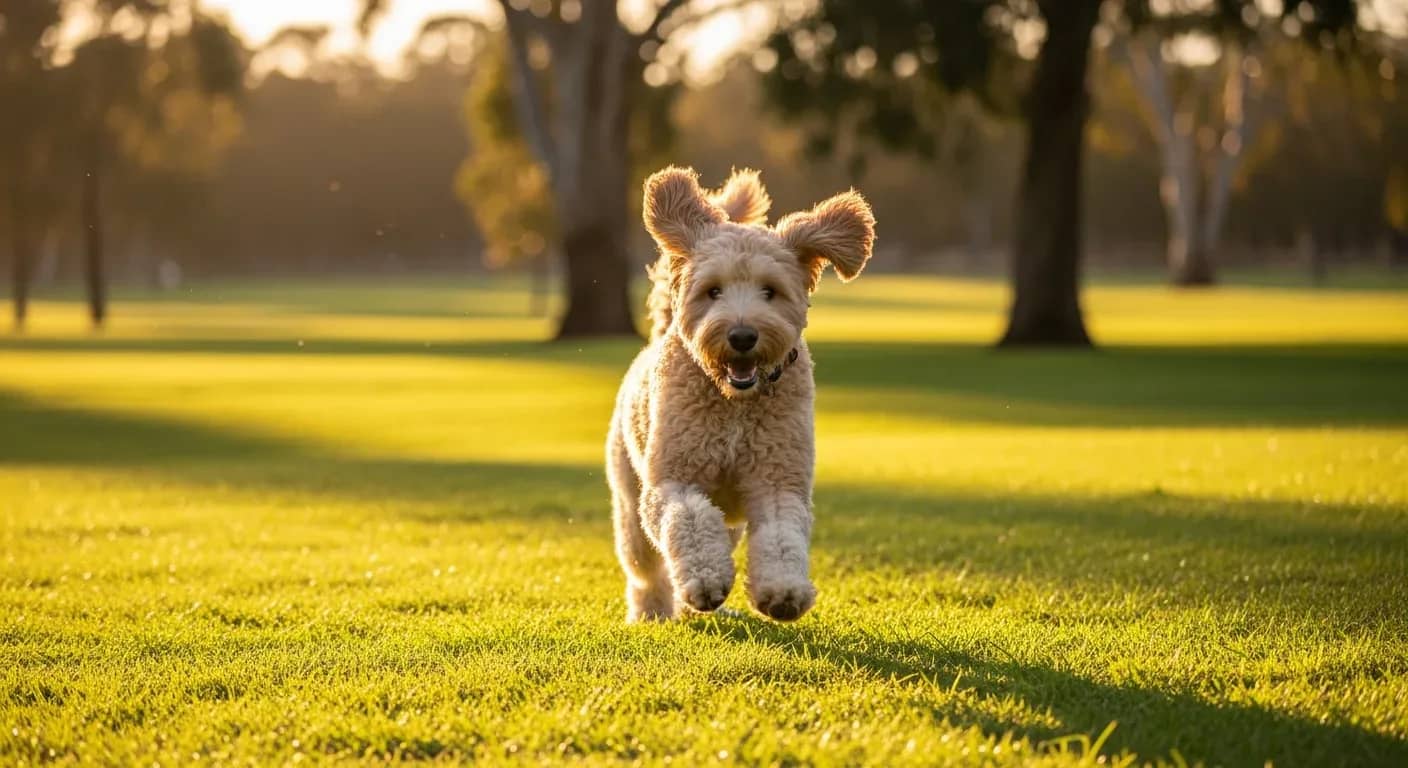

Groodles have become one of Australia's most popular family dogs, prized for their gentle nature and low-shedding coats. What is less commonly discussed is the digestive side of Groodle health. Both Poodles and Golden Retrievers can carry a predisposition to gut sensitivity, and that heritage shows up more often than owners expect.
The good news: gut health is highly responsive to daily support. A targeted probiotic routine can make a measurable difference to your Groodle's digestion, comfort, and overall wellbeing.
Why Groodles Can Be Prone to Digestive Sensitivity
Groodles inherit their digestive tendencies from two parent breeds with distinct gut profiles:
- Poodles are well known for having sensitive stomachs, prone to bloating and episodes of loose stools in response to dietary changes or stress.
- Golden Retrievers can be sensitive to grain-based diets and certain proteins, which can present as chronic soft stools, skin reactions driven by gut inflammation, or recurring ear issues.
The result: a meaningful proportion of Groodles, particularly those with more Poodle-dominant genetics, will experience some degree of digestive variability across their lives. This is often triggered by stress (travel, new households, routine changes), diet transitions, or antibiotic courses.
Signs Your Groodle's Gut Needs Support
Gut health issues in Groodles do not always present as classic diarrhoea. Watch for:
- Loose or inconsistent stools (soft most days, occasionally runny)
- Frequent grass eating (a common self-soothing behaviour for nausea)
- Gurgling stomach sounds, especially at night
- Increased wind or bloating after meals
- Recurring ear infections or itchy skin (gut inflammation can drive both)
- Stool changes after a vet visit, boarding, or routine disruption
Any one of these, particularly if recurring, is worth addressing through diet and daily gut support rather than just managing symptoms.
How Probiotics Work for Dogs
A probiotic introduces beneficial microorganisms to the gut to support a balanced microbiome. In dogs, a well-functioning gut microbiome supports:
- Consistent stool formation and transit
- Nutrient absorption from food
- Immune system calibration (70-80% of the immune system is gut-associated)
- Resistance to opportunistic gut pathogens
For Groodles specifically, the most relevant benefit is microbial stability: supporting a gut environment that does not destabilise easily in response to stress, travel, or medication.
What Makes Hero's Probiotic Formula Different
Most dog probiotics use bacterial strains as their active ingredient. Hero takes a different approach, using Saccharomyces boulardii, a yeast probiotic rather than a bacterium.
This distinction matters for several reasons:
- Antibiotic-safe: Because S. boulardii is a yeast, antibiotics do not affect it. Dogs can take Hero Probiotic Chews simultaneously with antibiotic treatment without the supplement being neutralised. This is a significant practical advantage for any breed prone to infections.
- Temperature stability: Yeast organisms are more stable at room temperature than many bacterial strains, making shelf life and storage simpler.
- Targeted efficacy: S. boulardii has a strong evidence base for supporting gut stability and reducing antibiotic-associated digestive upset in animal studies.
Each Hero Probiotic Chew delivers 10 Billion CFU of S. boulardii. The formula also includes prebiotics, digestive enzymes, green banana powder, bentonite, agave, and pectin. These support the probiotic's effectiveness and broader digestive function.
The chews are grain-free and hypoallergenic, which matters for Groodles whose owners chose the breed partly for their allergy-friendly profile. Find the full formula at Hero Probiotic Daily Chews.
When to Start a Probiotic Routine
There is no wrong time to start gut support, but these are the highest-value windows:
- Puppyhood (8-16 weeks): The gut microbiome is establishing. Starting a probiotic during this window can support a healthier baseline.
- Before and during antibiotic courses: Antibiotics disrupt the gut microbiome significantly. S. boulardii is safe to give simultaneously and helps maintain gut stability through treatment.
- After boarding, travel, or rehoming: Stress is one of the most common gut disruptors in dogs. A probiotic in the 2-4 weeks around a stressful event can reduce the impact.
- After any food transition: Changing diet brands or protein sources can trigger transit changes. A probiotic eases the shift.
Gut Health in Context: What Else Helps
Probiotics work best alongside the right dietary foundation:
- Consistent feeding: Same meals, same times, same portion sizes. Groodles with sensitive guts respond well to routine.
- Protein source awareness: Some Groodles do better on novel protein (kangaroo, venison) if they are reacting to common proteins (chicken, beef). A food elimination trial with vet guidance is the right diagnostic path.
- Stress reduction: Anxiety and gut health are connected. Groodles are social dogs that do poorly in isolation. Prolonged separation anxiety can manifest as gut issues.
For the complete picture on canine gut health, Dog Gut Health: Signs, Causes and Daily Support is the full reference guide. For the broader Australian probiotic market, see Best Dog Probiotics Australia 2026.