

What Labradoodle temperament is usually like
Labradoodles are popular for a reason: they’re often friendly, bright, and very people-focused. Most families describe them as affectionate dogs that want to be involved in everything happening at home.
That said, “Labradoodle temperament” isn’t one fixed personality. Some dogs lean more Labrador (outgoing, food-motivated, energetic), while others lean more Poodle (sensitive, highly alert, quick to learn patterns). Your dog can be a mix of both from one day to the next.
Research on doodle behaviour suggests Labradoodles are generally not extreme for fear or aggression traits compared with many purebreds, but early socialisation and training still shape long-term behaviour outcomes.
The personality traits most owners notice first
1) High social drive
Many Labradoodles want company. They often do best in homes where someone is around for part of the day, or where their day includes structured interaction, training, and enrichment.
2) Fast learning, for good and bad habits
These dogs learn routines quickly. That’s a huge advantage in training, but it also means they can rehearse unwanted habits fast if boundaries are inconsistent.
3) Emotional sensitivity
Plenty of Labradoodles respond strongly to household tone and stress. Calm, reward-based training usually gets better long-term behaviour than harsh corrections.
4) Moderate to high energy
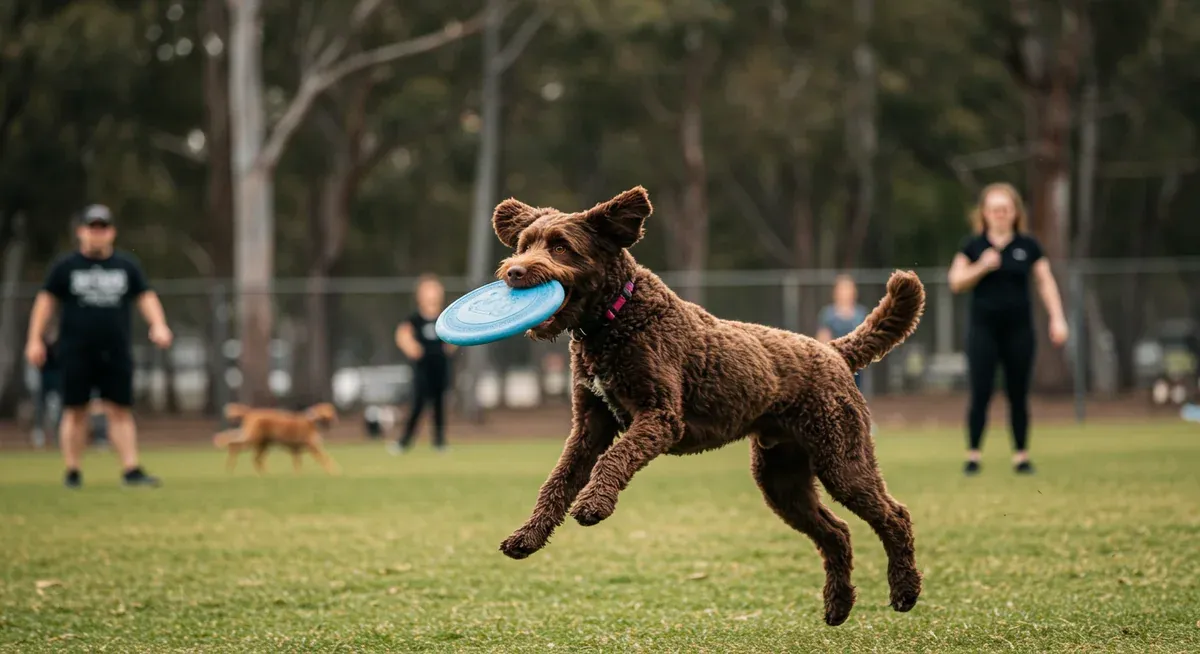
A Labradoodle that isn’t getting enough physical and mental work can look “naughty” when they’re actually bored. Daily movement plus brain work is non-negotiable for this breed type.
How much exercise do Labradoodles really need?
Most adult Labradoodles need around 60+ minutes of meaningful daily activity, and many need more depending on age and line. A short walk alone usually isn’t enough.
Good weekly mix:
- Brisk walks or hikes
- Fetch or retrieval work
- Scent games and puzzle feeding
- Short training sessions (5–10 minutes, multiple times per day)
If your dog is still restless at home after exercise, it usually means mental enrichment is the missing piece, more physical output.
Training approach that suits Labradoodles
Reward-based training is the best fit for most Labradoodles. They’re typically responsive, sensitive, and eager to engage, which makes positive reinforcement both effective and sustainable.
If you want practical step-by-step help, this can be a useful companion read: benefits of crate training your Goldendoodle.
And if your dog struggles with alone time, this pattern is worth understanding early: Labs and separation anxiety: how to manage it effectively. For broader command-building basics, this can help too: training fundamentals and consistency tips.
What can go wrong (and how to prevent it)
Under-socialisation in puppy months
Without structured exposure to people, dogs, sounds, and new environments, sensitive Labradoodles can become anxious or reactive later.
Inconsistent boundaries
If one person allows a behaviour and another corrects it, progress slows down. Consistency across the household matters more than “perfect” technique.
Not enough recovery time
Some energetic dogs are over-stimulated, not under-exercised. Build in decompression: sniff walks, predictable quiet time, and calm settling routines.
A practical daily rhythm that works for most Labradoodles
- Morning: movement + brief training (focus/recall basics)
- Midday: enrichment (puzzle feeder, sniff game, short play burst)
- Evening: second walk/play + calm settle routine
- Weekly: one new environment or social exposure session
For owners juggling behaviour concerns in related doodle mixes, this can also help with context: how to handle a Goldendoodle’s anxiety.

When to involve your vet or a qualified behaviour professional
Get support early if you notice:
- Persistent anxiety that isn’t improving with routine changes
- Escalating reactivity to people or dogs
- Resource guarding, snapping, or bite incidents
- Sudden behaviour changes with no obvious trigger
Behaviour change can sometimes have medical drivers (pain, GI discomfort, endocrine issues), so early vet input is smart.
What evidence says in plain terms
- Expression of behavioural traits in Goldendoodles and Labradoodles (open-access study)
- AVSAB position statement supporting reward-based dog training
Taken together, the evidence aligns with what experienced owners see: Labradoodles can be excellent family companions when exercise, enrichment, and consistent training are in place from early on.
Bottom line
Most Labradoodles are social, intelligent, and affectionate, but they thrive when their day includes structure, stimulation, and clear boundaries. If you meet those needs early, temperament issues are usually far easier to prevent than to fix later.
If your dog is showing skin-related discomfort alongside behaviour changes, this may also be relevant: coping with Labradoodle skin problems.