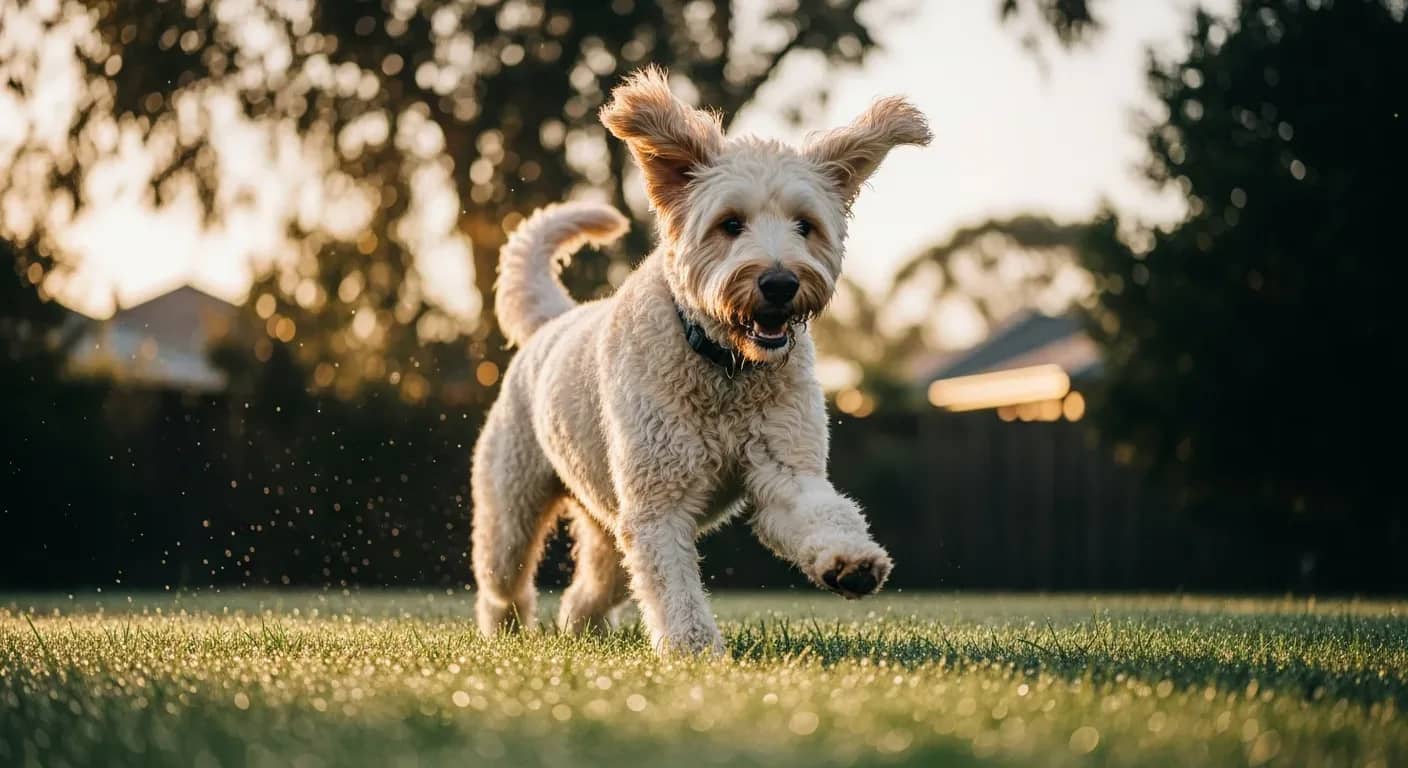

You notice it on a Tuesday morning. Your Labradoodle, usually the first one at the back door, is slow to get up. She makes it outside eventually, tail still wagging, but something is off. You file it away, telling yourself she probably slept funny.
That hesitation matters. Labradoodles are one of Australia's most loved family dogs, and for good reason: they're smart, affectionate, and typically hardy. But both parent breeds, the Labrador and the Poodle, carry their own genetic predispositions. Knowing what to watch for means you can act early, before a manageable issue becomes a significant one.
This guide covers the most common health conditions in Labradoodles, what the early signs look like, and what proactive care tends to make the biggest difference. For context on how these health factors affect your dog's overall life expectancy, our guide to Labradoodle lifespan is worth reading alongside this one.
Are Labradoodles Generally a Healthy Breed?
Yes, on balance. Labradoodles typically live between 12 and 15 years and tend to stay active and energetic well into their senior years. As a hybrid breed, they may benefit from what's called heterosis, sometimes called hybrid vigour, where a broader gene pool reduces the expression of certain inherited disorders.
That said, hybrid vigour is not a health guarantee. Labradoodles inherit potential vulnerabilities from both the Labrador and the Poodle side of the family. According to Greencross Vets Australia, the most commonly seen conditions include joint dysplasia, progressive retinal atrophy, and ear infections. Digestive sensitivities and skin allergies are also well-documented in the breed.
A lot comes down to genetics and early care. A reputable breeder will screen for the major heritable conditions, but that's just the starting point. Regular vet checkups, appropriate exercise, and attention to what your dog is telling you with her body are what make the biggest practical difference.
Hip and Elbow Dysplasia
Joint dysplasia is the health issue most commonly associated with Labradoodles, particularly in medium and standard-sized dogs. Both hip dysplasia and elbow dysplasia involve abnormal joint development, where the ball-and-socket doesn't fit correctly. Over time, this leads to wear, inflammation, and eventually arthritis.
The Labrador Retriever is one of the breeds most frequently diagnosed with hip dysplasia in Australia, according to the Orthopedic Foundation for Animals, and that genetic tendency passes through to Labradoodle offspring. The condition is influenced by both genetics and environment, meaning factors like rapid growth, excess body weight, and high-impact exercise during puppyhood can increase risk even in genetically sound dogs.
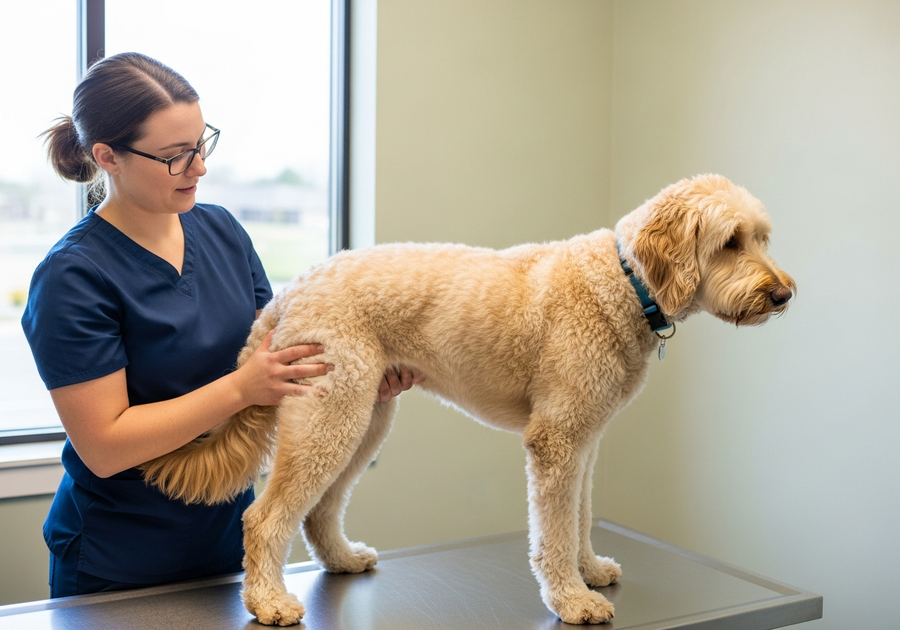
Early signs to watch for include:
- Reluctance to jump up or climb stairs
- A bunny-hopping gait at the back end when running
- Stiffness after rest, particularly on cold mornings
- Reduced range of motion in the hindquarters
- Sitting in an unusual position, with one or both back legs off to the side
If you notice any of these signs, a vet examination with X-rays will confirm what's going on. If you're not sure whether what you're seeing warrants a call to your vet, our overview of signs your dog needs joint support breaks down the specific early indicators by age and activity level.
Management typically starts with weight control, measured exercise (low-impact activities like swimming are ideal), and physical therapy. Joint supplements that include MSM, collagen peptides, turmeric, and vitamin C can support cartilage integrity and may help slow progression, though they're a complementary tool rather than a replacement for veterinary assessment. Severe cases may require surgery.
For daily joint support, look for an Australian-made supplement with ingredients shown to support cartilage and reduce inflammation. Hero's Joint Daily Chews, which contain MSM, collagen peptides, turmeric, and ascorbic acid, are vet-reviewed and grain-free. You can find them at Hero Joint Chews.
Progressive Retinal Atrophy
Progressive Retinal Atrophy (PRA) is a hereditary eye condition inherited primarily through the Poodle line. It involves the gradual degeneration of photoreceptor cells in the retina, starting with the rods (responsible for low-light vision) and, in most cases, eventually progressing to full vision loss.
PRA is not painful, which makes it easy to miss in the early stages. Dogs adapt remarkably well to deteriorating vision, especially in familiar environments. The signs that catch owners' attention tend to be behavioural:
- Difficulty navigating at dusk or in dim lighting
- Hesitation before entering dark rooms
- Bumping into furniture, especially in new environments
- Increased anxiety or clinginess at night
- Enlarged, reflective pupils (tapetum becomes more visible)
There's currently no cure for PRA. Responsible breeders DNA-test their stock to avoid passing the gene forward, but if your Labradoodle does develop it, the practical approach is environmental management: keep furniture in consistent positions, use baby gates near stairs, add scent markers to doorways, and keep your dog's routine predictable. Most dogs with PRA continue to live full, happy lives with appropriate support.
If you notice any of the signs above, a veterinary ophthalmologist can confirm the diagnosis and stage the condition.
Ear Infections
Ear infections are one of the most frequent reasons Labradoodle owners end up at the vet. The anatomy is the culprit: floppy ears combined with a dense, often woolly coat around and inside the ear canal create the perfect environment for moisture to accumulate. Bacteria and yeast thrive in warm, moist conditions, and Labradoodles that swim regularly face an even higher risk.
Otitis externa (outer ear infection) is the most common form. Recurring infections can eventually affect the middle ear if left unmanaged.
Watch for these signs:
- Head shaking or frequent ear scratching
- A sour, yeasty, or musty smell from the ears
- Visible redness or swelling in the ear canal
- Dark or discoloured discharge
- Sensitivity when you touch the ears
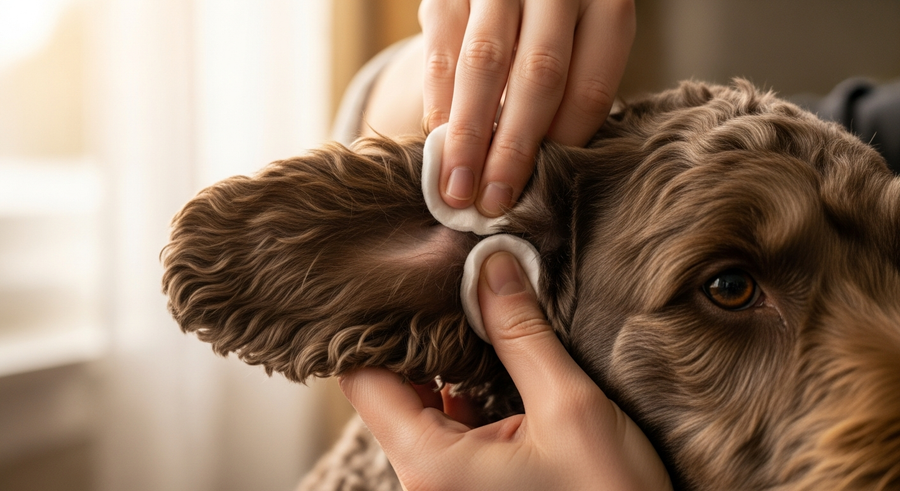
Regular ear maintenance makes a real difference. After swimming or bathing, dry the ear canal with a soft cloth and consider a vet-recommended ear-drying solution. If your vet recommends it, have a groomer thin or remove the hair inside the ear canal, which improves airflow. A confirmed infection will need veterinary treatment: the specific cause (bacterial or yeast) determines whether antibacterial or antifungal medication is appropriate.
Dogs with recurrent ear infections often have an underlying sensitivity, whether dietary or environmental, that's driving the inflammation. Allergies and ear infections frequently go together in Labradoodles.
Skin Allergies and Sensitivities
Atopy (environmental allergies) and food sensitivities are common in Labradoodles, with the Poodle line thought to contribute genetic sensitivity to allergens. Australian Labradoodles in particular deal with a range of local environmental triggers, from grass pollens to dust mites, that can drive year-round or seasonal skin flare-ups.
Skin issues in Labradoodles tend to present as:
- Persistent itching, particularly at the paws, face, armpits, and groin
- Red, inflamed skin or recurring hot spots
- Hair thinning in affected areas
- Recurring ear infections (a connected symptom)
- Paw-licking or chewing behaviour that won't resolve
For a deeper look at what's behind these reactions and how to manage them, our dedicated guide to Labradoodle skin problems covers the most common triggers and treatment approaches.
Diagnosis often involves an elimination diet trial to rule out food allergies, plus allergy testing for environmental triggers. Management varies depending on the cause, but generally includes a hypoallergenic or limited-ingredient diet, consistent flea prevention (flea saliva is a common trigger), medicated shampoos, and sometimes veterinary-prescribed medications for severe flare-ups.
Gut health also plays a role here. There's growing evidence that digestive health and immune function are closely connected, and dogs with ongoing digestive issues sometimes show concurrent skin problems. Supporting gut health in dogs through diet and appropriate supplementation may benefit skin and allergy management over time.
Digestive Sensitivities and Gut Issues
Labradoodles are known for having somewhat delicate digestive systems. Some inherit this tendency from the Labrador side, particularly a tendency to eat too fast or too much. Others have genuine food sensitivities that result in chronic loose stools or intermittent digestive upset.
Common presentations include:
- Soft stools or recurring diarrhoea without an obvious cause
- Vomiting after meals, particularly if eating too quickly
- Excessive gas and bloating
- Irregular appetite or food fussiness
- Grass-eating behaviour (often a sign of nausea)
If you're wondering whether your dog's digestive symptoms warrant a probiotic or something else, the signs your dog needs a probiotic guide is worth checking. Consistent stool quality issues, recovery after antibiotics, or stress-related gut upsets are all situations where gut support may help.
Diet consistency matters a great deal for Labradoodles. Frequent changes in food, heavy treats, or rich table scraps can tip a sensitive system into trouble. When looking at gut support supplements, supporting your dog's gut health with a probiotic can help maintain a healthy microbiome, particularly through challenging periods like illness, travel, or dietary transitions.
Bloat (Gastric Dilatation-Volvulus)
Standard-sized Labradoodles, with their deep, broad chests, carry a higher risk of Gastric Dilatation-Volvulus (GDV), commonly called bloat. This is a genuine emergency: the stomach fills with gas and then twists, trapping the gas inside and cutting off blood supply to the stomach wall and surrounding organs. Without immediate veterinary intervention, it can be fatal within hours.
Knowing the signs could save your dog's life:
- A visibly swollen or hard belly, often developing rapidly
- Unproductive retching (attempting to vomit but producing little or nothing)
- Restlessness, pacing, or inability to settle
- Hunched posture or signs of pain when the abdomen is touched
- Rapid deterioration into collapse
If you see these signs, treat it as an emergency. Don't wait to see if it passes.
Prevention focuses on reducing the known risk factors: feed two or three smaller meals rather than one large one, use a slow-feeder bowl if your dog eats quickly, and restrict high-intensity exercise for at least an hour before and after meals. For high-risk dogs, some vets recommend a preventative surgical procedure called gastropexy, which anchors the stomach to prevent it from twisting. Discuss this with your vet, particularly if you have a standard-sized Labradoodle.
What Proactive Labradoodle Owners Do Differently
The owners who see the best outcomes aren't just responsive to problems as they arise. They build habits that reduce risk before symptoms appear.
Regular Vet Checkups
Annual health examinations allow your vet to pick up early changes in joint mobility, eye health, and ear condition before they become serious. Senior Labradoodles, from around age 7 onwards, benefit from twice-yearly checks. Mention any behavioural changes you've noticed, including hesitation on stairs, changes in sleep quality, or shifts in activity level. These often point to something worth investigating.
Weight Management
Excess weight is one of the most significant modifiable risk factors for both joint disease and GDV. Even moderate overweight status accelerates joint wear and increases the load on an already-vulnerable area. Most Labradoodles are highly food-motivated, which makes it easy to overfeed without realising it. Ask your vet for a body condition score assessment and adjust portions if needed.
Appropriate Exercise
Labradoodles need daily exercise, but the type matters. High-impact repetitive activity on hard surfaces, jumping, and sudden stops put significant stress on developing or already-compromised joints. Swimming, leash walks, and play in soft-surface environments are far gentler. For puppies, the guideline is roughly five minutes of exercise per month of age, twice daily, until growth plates close at around 12 to 18 months.
Ear Care Routine
Build ear checks into your weekly grooming routine. Look for discharge, smell for anything off, and gently wipe the outer canal with a vet-approved ear cleaner. Dry ears thoroughly after every swim or bath. Catching an infection early means a much shorter treatment course.
Know Your Dog's Normal
The owners who catch things early are those who know exactly how their dog moves, eats, and behaves on a good day. When something is off, even subtly, they notice. Trust that instinct. A quick vet call to check whether something warrants an appointment is always better than waiting.
Not sure which health areas to prioritise for your Labradoodle? The Hero Health Assessment takes about two minutes and gives you a personalised supplement plan based on your dog's age, weight, and lifestyle.
Start the Free AssessmentThe Bottom Line
Labradoodles are genuinely strong, healthy dogs that, with good care, live long and active lives. The conditions they're prone to, particularly joint dysplasia, ear infections, and digestive sensitivities, are manageable when caught early and supported with the right approach.
Watch your dog's movement, maintain a healthy weight, keep those ears clean and dry, and build a relationship with a vet who knows Labradoodles well. These habits won't eliminate every health challenge, but they will give your dog the best possible shot at a comfortable, energetic life all the way through to those greying senior years.
Every Labradoodle is a little different. For a personalised look at what your individual dog might benefit from most, the Hero Health Assessment gives you a tailored starting point in under two minutes.