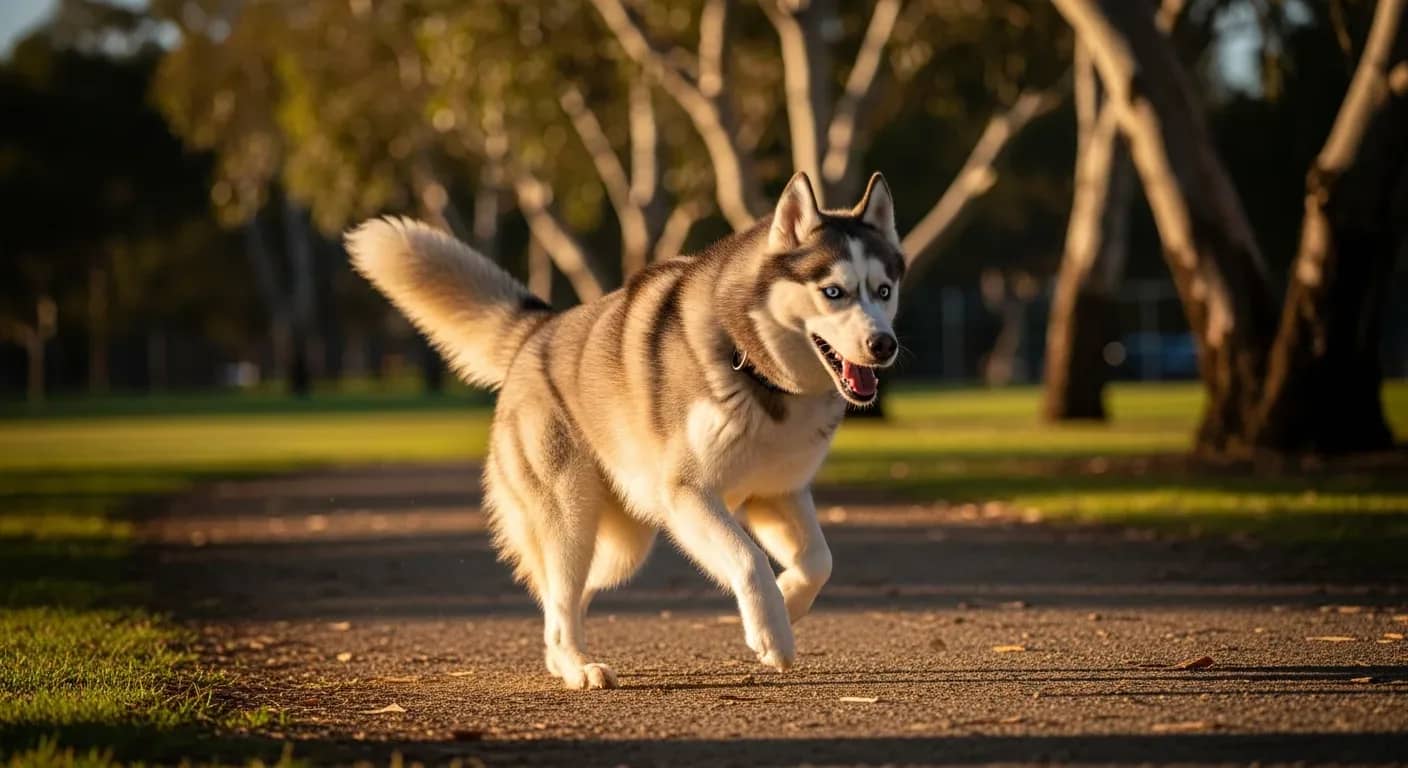
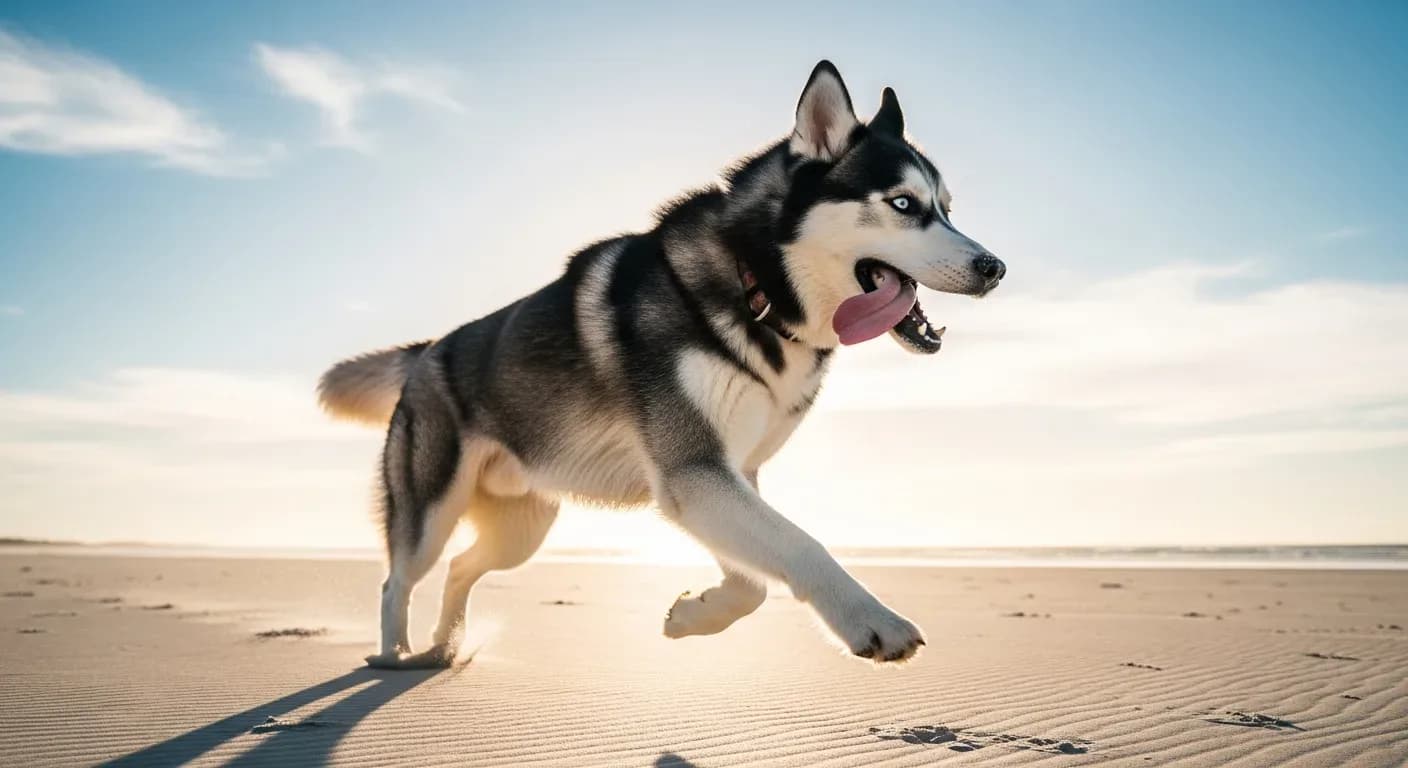
Siberian Huskies are a lot. Expressive, vocal, high-energy, and deeply social, they're one of the most personality-packed breeds you'll find in Australia. For many Husky owners, that personality comes with a side of anxiety, destructive boredom, or separation stress that can be genuinely hard to manage.
If you've been wondering whether a daily calming supplement could help, you're not alone. It's one of the most common questions in Husky owner communities. The short answer: yes, some supplements can support calmer behaviour in dogs, but only if they contain the right ingredients, and only as part of a broader approach to Husky wellbeing.
This guide covers what to look for, what the evidence says, and how to use calming supplements to get the best results for your Siberian Husky.
Why Siberian Huskies Can Struggle with Anxiety
Huskies were bred to run. A working Siberian Husky can cover 100 kilometres a day in the right conditions. When that drive doesn't have an outlet, which is most days for pet Huskies living in suburban Australia, it has to go somewhere. Sometimes it goes into howling. Sometimes it goes into digging. Sometimes it turns into separation anxiety that your neighbours will definitely notice.
The breed's intensely social nature makes things harder. Huskies are pack animals who genuinely struggle with being left alone. A Husky left home for 8 hours is likely to be stressed, not just bored. And stressed Huskies are creative in how they express that stress.
Common signs of anxiety in Huskies include excessive howling or vocalising, destructive chewing, repetitive pacing, and refusing to eat when their person leaves. If any of those sound familiar, our guide to common Siberian Husky health problems covers the full picture of what to watch for across this breed, including anxiety triggers specific to Huskies.
Calming supplements won't solve a structural problem. A Husky who isn't getting enough exercise, mental stimulation, or social time will still be anxious regardless of what's in their bowl. But for Huskies who are otherwise well-cared-for and still show signs of daily stress, the right supplement can make a real difference to their baseline calm.
If separation anxiety is the specific issue, it's worth reading through our full guide on Husky separation anxiety, which covers behavioural strategies alongside supplement support.
What to Look for in a Calming Supplement
The calming supplement market in Australia is crowded, and not all products deliver what they promise on the label. Many rely on very small amounts of active ingredients that won't achieve much at the actual serving size. Here's what the evidence supports for canine calm behaviour.
Magnesium
Magnesium plays a direct role in the nervous system's ability to regulate stress responses. Dogs with low magnesium levels show heightened reactivity and anxiety-linked behaviour more often. A magnesium-containing supplement supports the kind of steady, regulated nervous system that helps a high-energy breed like a Husky stay grounded through exciting or stressful situations.
L-Tryptophan
L-tryptophan is an amino acid that serves as a precursor to serotonin. Research published in the Journal of Nutritional Science found that dietary tryptophan supplementation reduced anxiety-related behaviours in dogs. It's one of the most well-studied ingredients in the canine calming space, and the mechanism is clear: more serotonin precursor means the brain has the raw materials to support calmer states.
Ashwagandha
Ashwagandha is an adaptogenic herb with a long history in wellness, and it's increasingly used in veterinary formulations. Adaptogens work by helping the body regulate its stress response over time, building resilience rather than causing sedation. For a breed that lives in a constant state of high alert, an adaptogenic approach suits the Husky's nervous system particularly well.
Chamomile
Chamomile is widely recognised for its calming properties. Its active compound, apigenin, binds to receptors in the nervous system associated with reduced anxiety. Chamomile works gently and consistently. It won't knock your dog out, but as a daily ingredient it supports a settled baseline and calmer nervous system state.
Vitamin B1 (Thiamine)
Thiamine plays a key role in how the nervous system uses glucose for energy. Deficiencies in B1 are linked to neurological excitability in dogs. Supplementing with thiamine supports normal nervous system function, which can reduce over-reactivity in breeds already wired to be alert and responsive.
Jerusalem Artichoke
Jerusalem artichoke is a prebiotic fibre that feeds beneficial gut bacteria. This might not sound like a calming ingredient, but the gut-brain connection in dogs is well-established. The gut-brain axis means that gut microbiome health directly influences mood-related neurotransmitter production, including serotonin. Supporting gut health through prebiotics is one of the more overlooked routes to supporting calmer behaviour.
According to VCA Animal Hospitals, natural calming supplements containing amino acids and herbal compounds are increasingly recommended as part of a multi-modal anxiety management approach for dogs. The key is looking for a formula that combines several of these ingredients rather than relying on a single active compound.
What Results to Expect and When
Most pet owners notice initial changes within 2 to 3 weeks of consistent daily use. By weeks 4 to 6, the effects are typically more pronounced. Dogs may show reduced reactivity on walks, less distress during departures, and a generally more settled temperament throughout the day. Results vary by individual dog, and Huskies with severe anxiety may need behavioural intervention alongside supplements for the best outcome.
The Importance of Daily, Consistent Use
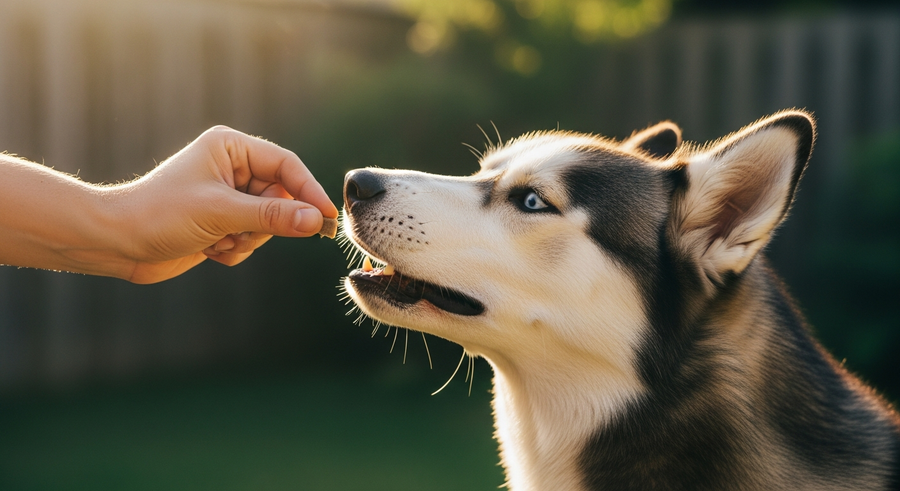
Beyond ingredients, the delivery format matters. Calming supplements come in powders, oils, treats, and soft chews. For most Huskies, a soft chew is the practical winner. It's easy to work into a daily routine, your dog sees it as a treat rather than medicine, and the dose stays consistent because you know exactly how much your dog has consumed each day.
Daily use is essential. Unlike as-needed medications, the supplement ingredients described above work best when they're consistent in your dog's system. A chew given every morning for 4 to 6 weeks will show more measurable results than one given occasionally during stressful events. Think of it as building a foundation rather than putting out fires.
Huskies are also notoriously smart and strong-willed, as anyone who has tried to train one knows. A supplement that tastes good enough to be eaten willingly every single day is worth its weight. If your dog refuses it, you'll end up skipping doses, and inconsistency undermines the whole approach.
How Calming Supplements Fit Into Your Husky's Routine
The most effective calming supplement protocol for a Husky pairs daily supplementation with the breed's other non-negotiables: adequate physical exercise (at least 1 to 2 hours of genuine aerobic activity daily), mental stimulation through training or enrichment games, and predictable daily routines that reduce uncertainty.
Supplements work best when the fundamentals are already in place. If your Husky is under-exercised, a calming chew will do very little. But for a Husky who is adequately stimulated and still shows signs of background anxiety or reactivity, a well-formulated daily supplement addresses what exercise and routine alone can't fix: the underlying nervous system state.
Training and mental structure play a big role in managing Husky anxiety. See our guide on the Siberian Husky temperament for a deeper look at what drives their behaviour and how to work with it. Combining good training with daily supplement support gives you the best chance of meaningful improvement.
Always check with your vet before starting any new supplement, particularly if your Husky is already on medication or has an existing health condition. A vet who knows your dog can help you assess whether anxiety is the whole picture or whether there's something else worth investigating.
Not sure which Hero supplement suits your Husky? The Hero Health Assessment takes 2 minutes and gives you a personalised recommendation based on your dog's age, weight, and lifestyle.
Start the Free AssessmentWhat We Recommend for Siberian Huskies
If you're looking for a daily calming supplement with evidence-backed ingredients, Hero's Calming Daily Chews contain Magnesium, L-tryptophan, Vitamin B1, Jerusalem Artichoke, Ashwagandha, and Chamomile. They're made in Australia, vet-reviewed, and come in a soft chew format that most dogs eat willingly. A daily routine approach, rather than as-needed dosing, means you're building calm over time rather than chasing it.
You can find them at Hero Calming Daily Chews ($59.95 for approximately 60 chews, or $50.96 on subscription with a 15% saving).
If your Husky's anxiety is linked to joint discomfort as they age, that physical stress can amplify behavioural anxiety. Our guide to joint supplements for Siberian Huskies covers that side of the picture and what to look for in a collagen-first joint formula.
The Bottom Line
Siberian Huskies are a high-needs breed when it comes to mental and emotional wellbeing. Their anxiety is real, it's breed-typical, and it deserves to be taken seriously rather than managed with a single quick fix.
A daily calming supplement with Magnesium, L-tryptophan, Ashwagandha, Chamomile, and Vitamin B1 can meaningfully support a calmer baseline for an anxious Husky. It works best alongside adequate exercise, mental enrichment, and consistent routines, and it's most effective when used daily rather than only on stressful days.
Every Husky is different. If you want to know exactly what your dog needs based on their age, weight, and lifestyle, the Hero Health Assessment will give you a personalised recommendation in under two minutes.