
Siberian Huskies are stunning, high-energy dogs with a personality as big as their howl. If you've welcomed one into your home, you already know just how unique this breed is. What many new owners don't realise is that Huskies carry some specific genetic vulnerabilities that are worth knowing about long before any symptoms appear.
Australia's climate presents its own challenges for this northern breed. Understanding what health conditions are most common in Siberian Huskies gives you the best chance of catching problems early and keeping your dog healthy for longer.
This guide covers the conditions most frequently seen in Huskies, what signs to watch for at home, and when to get your vet involved. For an overview of how these conditions affect your dog's overall lifespan, the Siberian Husky lifespan guide is a good starting point.
Eye Conditions: The Most Breed-Specific Risk
Eye problems are the health concern most closely associated with Siberian Huskies. Compared to most other breeds, Huskies have a significantly higher rate of hereditary eye disease. According to the Orthopedic Foundation for Animals (OFA), Siberian Huskies rank among the breeds with the highest prevalence of hereditary eye disease in screening programmes. Some of these conditions are detectable even in young dogs.
Hereditary Juvenile Cataracts
Unlike the age-related cataracts common in senior dogs, Huskies can develop cataracts as young as 6 months of age. This hereditary form is caused by a genetic mutation and can affect one or both eyes. You might notice a blue-white cloudiness over the lens, squinting, or your dog bumping into objects in low light.
Reputable breeders in Australia screen for this condition before breeding. If you're getting a Husky puppy, ask to see evidence that both parents have been eye tested through a veterinary ophthalmologist. Cataracts in young dogs can be surgically removed, but early diagnosis gives the best outcome.
Progressive Retinal Atrophy (PRA)
Progressive retinal atrophy causes the photoreceptors at the back of the eye to slowly degenerate over time. It's a gradual process, and many dogs compensate well until the condition is quite advanced. Early signs include difficulty seeing in dim light, hesitation on stairs at night, or reluctance to enter dark rooms.
There is currently no treatment that reverses PRA, but DNA testing can identify carrier dogs before breeding. If your Husky is diagnosed, adjustments to your home environment can help them adapt and maintain quality of life for years.
Corneal Dystrophy
This condition affects the cornea (the clear outer surface of the eye) and typically appears as a white or grey opacity. It's more common in female Huskies and usually develops in early adulthood. Most dogs with corneal dystrophy remain comfortable and maintain functional vision, though the condition should be monitored regularly by a vet.
Hip Dysplasia and Joint Health
Despite being built for endurance rather than raw power, Siberian Huskies are not immune to hip dysplasia. This condition occurs when the hip joint doesn't develop correctly, leading to loose articulation and, over time, the kind of joint wear that causes pain and reduced mobility. The Greencross Vets breed guide for Siberian Huskies lists hip dysplasia as one of the primary conditions to watch for in the breed.
Huskies affected by hip dysplasia may show subtle signs at first: a slight reluctance to jump, a bunny-hop gait at speed, or stiffness after rest. As the condition progresses, signs become more obvious.
Weight management plays a significant role in how comfortable a Husky with dysplasia remains. Keeping your dog lean reduces mechanical stress on the joints considerably. If you're researching supplement options, it's worth knowing that not all joint supplements take the same approach. Some products use MSM, Collagen Peptides, Turmeric, and Vitamin C rather than the glucosamine and chondroitin combination found in many traditional products. Always discuss with your vet which approach suits your dog's specific situation.
Hypothyroidism
The thyroid gland regulates metabolism, and when it underproduces hormones, the effects show up across the whole body. Hypothyroidism is one of the more common internal health problems in Siberian Huskies, and it often goes undiagnosed for a while because the signs develop slowly and can look like normal ageing.
Classic signs include unexplained weight gain despite no change in diet, a coat that becomes dull or sparse, lethargy, and skin that feels thickened or scaly. Some dogs also develop recurring skin infections or seem unusually cold-sensitive. Skin changes from hypothyroidism can look similar to some Siberian Husky allergy symptoms, which is one reason a proper diagnosis matters before treating.
The good news is that hypothyroidism is manageable. A simple blood test checks thyroid hormone levels, and once confirmed, daily oral medication keeps it well controlled. Most dogs on treatment return to their normal energy levels and coat condition within a few months.
Zinc Deficiency and Skin Problems
This one is genuinely unique to Siberian Huskies (and a handful of other northern breeds). Huskies can have a genetic predisposition to zinc-responsive dermatosis, a condition where the dog either cannot absorb zinc efficiently from their diet or requires more of it than other breeds.
The signs are distinctive: crusty, scaly skin around the muzzle, eyes, and ears, and sometimes on the paw pads. The affected areas can look raw and may develop secondary infections. Without treatment, the condition progresses.
This is not the same as a simple dietary zinc deficiency from low-quality food. Even Huskies on premium diets can develop this condition due to absorption issues. Your vet can diagnose it and prescribe zinc supplementation at appropriate doses. Self-supplementing without a diagnosis is not recommended, as zinc toxicity is a real risk in dogs.
Coat and Skin Conditions
Some Huskies develop follicular dysplasia, a hair follicle abnormality that causes patchy coat loss, typically on the body rather than the face and legs. The affected areas may look moth-eaten or uneven, and the skin beneath can be flaky or hyperpigmented.
This condition doesn't cause pain or illness, but it's worth investigating because it can look like mange, ringworm, or hormonal skin disease at first glance. A vet visit and sometimes a skin biopsy will clarify the diagnosis. Beyond dysplasia, Huskies are known for significant seasonal shedding and coat-related concerns. The guide to why Siberian Huskies shed so much covers normal coat cycles versus signs of a health problem.
Bloat (Gastric Dilatation-Volvulus)
Bloat is a life-threatening emergency that occurs when the stomach fills with gas and then twists on itself, cutting off blood supply. While it's most common in large, deep-chested breeds like Great Danes and German Shepherds, Siberian Huskies are considered at moderate risk.
Signs come on rapidly: unproductive retching, a distended abdomen that looks drum-tight, drooling, and extreme restlessness. A dog with bloat needs emergency veterinary care within hours. There is no home treatment.
You can reduce (but not eliminate) the risk by feeding two smaller meals per day rather than one large one, avoiding vigorous exercise in the hour before and after meals, and using a slow-feeder bowl if your Husky eats quickly. More detail on feeding schedules and meal composition is covered in the Siberian Husky nutrition guide.
What Australian Husky Owners Should Know About Vet Care
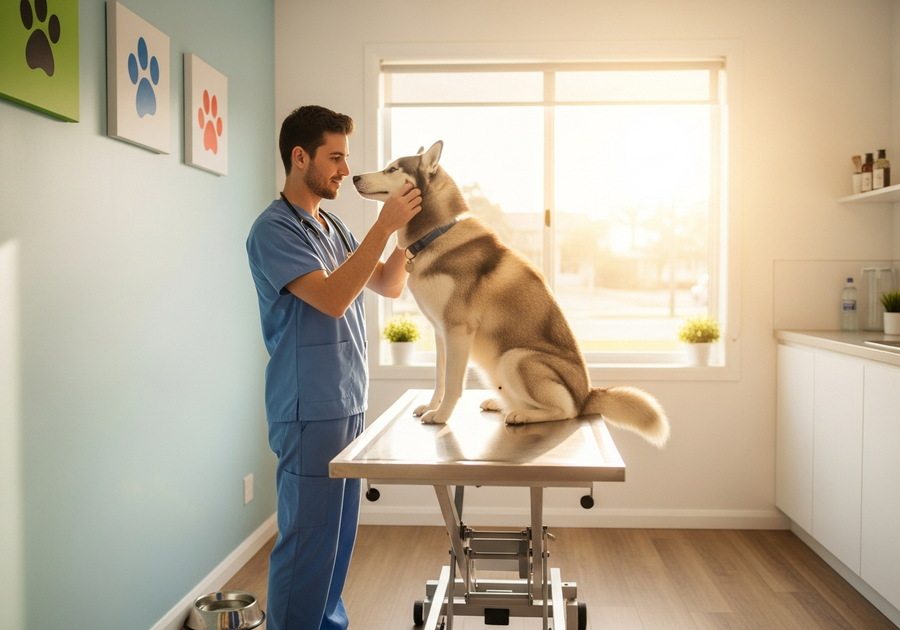
Regular veterinary check-ups matter more for Huskies than for many other breeds, given the number of hereditary conditions that can present gradually. Many of the conditions listed above are far easier to manage when caught early.
Annual eye exams with a veterinary ophthalmologist are worth considering, especially if you're unsure of your dog's breeding history. Thyroid panels can be added to routine bloodwork as your dog ages. And keeping records of any coat, skin, or behaviour changes makes it much easier for your vet to spot patterns.
Australia's warm climate also means heat stress is a genuine concern for a breed designed for cold conditions. Huskies can and do overheat in Australian summers. Access to shade and cool water, avoiding exercise in peak heat, and being alert to signs of heat exhaustion are essential habits for Australian Husky owners.
Not sure where to start with your Husky's health? The Hero Health Assessment takes 2 minutes and gives you a personalised supplement plan based on your dog's age, weight, and lifestyle.
Start the Free AssessmentSupporting Gut and Immune Health
Huskies with skin conditions, recurrent infections, or those recovering from antibiotic treatment often benefit from gut health support. A healthy digestive system underpins immune function, nutrient absorption, and skin integrity. If your Husky is prone to digestive upset or has been through a course of antibiotics, it's worth discussing probiotic support with your vet.
Understanding the full picture of your Husky's care, including training, exercise needs, and temperament, helps you spot when something seems off. The guide to Siberian Husky temperament explains the breed's baseline behaviour so you can recognise meaningful changes more easily.
The Bottom Line
Siberian Huskies are generally a resilient, active breed with a lifespan of 12 to 15 years. The most common health concerns, including eye conditions, hip dysplasia, hypothyroidism, and zinc-responsive skin problems, are all manageable when identified early.
The best thing you can do as a Husky owner is build a relationship with a vet who knows the breed, keep up with preventive screening, and pay attention to the subtle signs that something has changed. Your Husky can't tell you when something's wrong, but they give you plenty of signals if you know what to look for.
Every Husky is different. If you want to know exactly what your dog needs, the Hero Health Assessment will give you a personalised recommendation in under two minutes.