

Most Australian Shepherd owners know their dog is clever, high-energy, and deeply bonded to their family. What fewer realise is that Aussies tend to have reactive digestive systems. Gut health problems are surprisingly common in the breed, and understanding why that happens is the first step to managing it well.
A daily probiotic is one of the most practical tools available. This guide covers what makes Australian Shepherds specifically prone to gut issues, what to look for in a probiotic, and what the research actually says about how probiotics help.
Why Australian Shepherds Are More Prone to Digestive Problems
The Australian Shepherd's gut sensitivity has real biological roots. A few breed-specific traits combine to make their digestive systems more reactive than the average dog.
The most significant is the MDR1 gene mutation (also called the ABCB1 mutation), which affects roughly 50% of Australian Shepherds. This mutation alters how affected dogs process certain medications, a fact well recognised by veterinary specialists. Many vets who work closely with the breed observe that MDR1-positive Aussies tend to show broader systemic sensitivity, including in their gut. The American Kennel Club includes MDR1 sensitivity among the Australian Shepherd breed's key health notes. Knowing about it early is a useful flag for owners.
Australian Shepherds also carry a higher-than-average rate of food sensitivities and intolerances. Common triggers include chicken, beef, and grain-based fillers. For a fuller picture of the health issues in Australian Shepherds that owners commonly encounter, our breed health guide covers the full spectrum.
Finally, Aussies are bred to work. They anticipate, move, and problem-solve constantly. When that energy has nowhere to go, stress hormones can directly affect gut motility. The gut-brain connection is well-established in dogs, and high-drive breeds like Aussies feel that connection acutely. Loose stools during boarding stays, owner absences, or low-stimulation periods are a pattern many Aussie owners recognise.
What Probiotics Do for Your Aussie's Gut
Probiotics introduce beneficial microorganisms to the gut that help maintain the balance of the microbiome. A well-balanced gut microbiome does more than prevent runny stools. It supports immune function, nutrient absorption, and mood regulation through the gut-brain axis.
For Australian Shepherds specifically, a daily probiotic can help in a few targeted ways:
- Stabilising the gut during dietary changes: Aussies with food sensitivities often go through several diet trials before finding the right food. Each transition can cause temporary digestive upset. Probiotics help buffer that transition period.
- Supporting recovery after antibiotics: Antibiotics eliminate beneficial gut bacteria alongside harmful ones. Replenishing the microbiome during and after treatment matters for any dog, and particularly for Aussies who may need careful medication management due to MDR1.
- Reducing stress-related gut symptoms: Research in Frontiers in Veterinary Science confirms the link between psychological stress and gut inflammation in dogs. Daily probiotic supplementation may help moderate the gut's response to stress triggers.
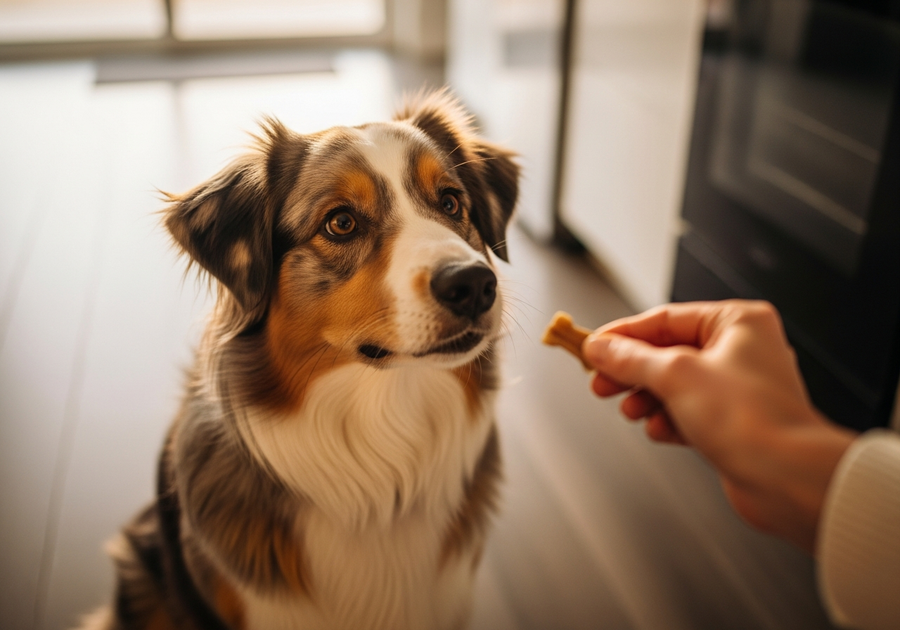
Yeast Probiotics vs Bacterial Probiotics: What the Difference Means for Aussies
Most probiotic products for dogs use bacterial strains: Lactobacillus, Bifidobacterium, Enterococcus. These can be effective, but they come with one practical limitation. They're killed by antibiotics. If your Aussie ever needs a course of amoxicillin or another antibiotic, a bacterial probiotic won't survive the treatment period.
A yeast-based probiotic works through a completely different mechanism. Saccharomyces boulardii (S. boulardii) is a beneficial yeast, not a bacterium, so antibiotics don't target it. It can be given alongside antibiotic treatment without losing its benefit. For a breed where careful medication management is already part of ownership, this is a practical advantage.
The research supporting S. boulardii in dogs is solid. A study at PubMed Central found that S. boulardii supplementation improved stool quality in dogs with digestive disruption. The mechanism involves neutralising certain toxins, supporting the gut's mucosal lining, and stimulating secretory IgA, a key part of gut-level immune defence. For a deeper comparison of how a yeast probiotic for dogs compares to bacterial options, our full explainer covers the science in plain language.
One practical detail worth knowing: because S. boulardii is classified as a yeast, it doesn't compete with or interfere with any bacterial strains your dog's gut already produces naturally. It works alongside the existing microbiome rather than trying to replace it, which matters for dogs like Aussies who may already have a sensitive, reactive gut baseline.
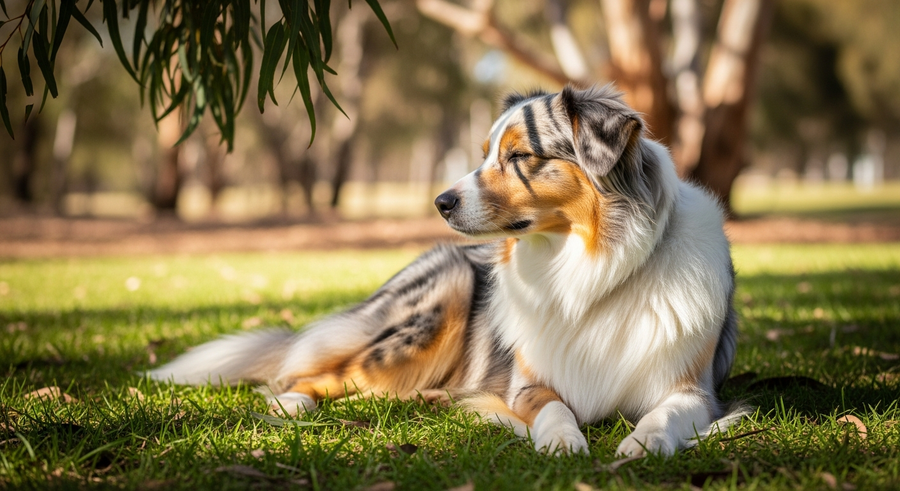
What to Look for in a Probiotic for Your Australian Shepherd
Not all dog probiotics are created equal, and the label doesn't always tell you what you need to know. Here's what actually matters when choosing for an Aussie.
Grain-free and hypoallergenic formula
Given the breed's food sensitivity profile, the probiotic itself shouldn't be a trigger. Look for grain-free, wheat-free formulas with no common allergens like chicken meal or corn filler. Fewer ingredients means a lower risk of a reaction.
A meaningful CFU count
CFU stands for colony-forming units, the standard measure of live microorganisms per dose. Many over-the-counter options sit below 1 billion CFU, which research suggests may be insufficient for a meaningful effect on gut microbiome composition. A daily dose of 10 billion CFU provides enough live organisms to consistently influence the gut environment.
Antibiotic compatibility
If your Aussie has been on antibiotic treatment or is likely to need it, choose a probiotic that survives antibiotics. Yeast-based options like S. boulardii are unaffected by antibiotic courses. Bacterial strains are not.
Soft chew format
Supplements your dog won't accept are supplements that don't work. Soft chews that dogs treat as daily snacks make dosing consistent, and consistency is what builds a resilient microbiome over time. Powder formats mixed into food are harder to dose accurately and less reliable with picky eaters.
Not sure exactly what your Australian Shepherd needs? The Hero Health Assessment takes 2 minutes and gives you a personalised supplement plan based on your dog's age, weight, and lifestyle.
Start the Free AssessmentHero Probiotic Daily Chews: A Good Fit for Australian Shepherds
Hero's Probiotic Daily Chews use Saccharomyces boulardii as the sole active probiotic, at 10 billion CFU per chew. It's a single-species, yeast-based formula, which means it's antibiotic-safe and won't be disrupted if your Aussie needs medication at any point. The formula is grain-free and wheat-free, making it well-suited to Australian Shepherds with food sensitivities.
The chews also include prebiotics, digestive enzymes, and green banana powder, which support the S. boulardii in doing its job more effectively. They're vet reviewed, made in Australia, and backed by a lifetime money-back guarantee. Most Aussies accept the chews as part of their daily routine without any fuss, which solves the consistency problem that undermines so many supplement regimens. Find out more about the Hero Probiotic Daily Chews if you'd like to try them.
One note worth making: Hero's formula takes a specialist yeast-based approach rather than using bacterial probiotic strains. S. boulardii works through its own distinct mechanism, and for Aussies who may need antibiotic courses at some point, a yeast that survives antibiotic treatment offers a practical advantage that bacterial options cannot match.
When to Start and What to Expect
Probiotics are safe for daily use in dogs of any age. For Australian Shepherds, starting before significant gut problems appear gives the microbiome the best chance to establish a healthy baseline. Puppies over 8 weeks can safely start daily probiotic supplementation, and many owners find that introducing a routine during puppyhood makes the habit much easier to maintain through adulthood.
In the first one to two weeks, it's common to see a brief adjustment period where stools are slightly looser than usual. This is the microbiome recalibrating, not a reaction to the probiotic itself. Most dogs settle into a stable pattern within a fortnight.
If your Aussie has a known digestive condition, or if symptoms persist beyond three weeks, talk to your vet. Probiotics support gut health. They don't treat underlying conditions like inflammatory bowel disease, parasites, or pancreatitis, which need proper veterinary assessment.
For owners thinking beyond gut health, Australian Shepherds also benefit from joint support as they age. Our guide to joint supplements for Australian Shepherds covers what the breed specifically needs for long-term mobility.
Aussies tend to live 12 to 15 years. Building good daily habits early pays dividends through every life stage. Our guide on how long Australian Shepherds live covers the health milestones worth watching for at each stage.
The Bottom Line
Australian Shepherds are prone to digestive sensitivity for real, breed-specific reasons: the MDR1 gene mutation, higher rates of food intolerances, and a stress-reactive gut. A daily probiotic doesn't resolve all of that, but it gives the gut microbiome consistent support that helps manage the effects over time.
For the breed, a yeast-based probiotic like S. boulardii offers a practical advantage over bacterial options, particularly its antibiotic-safe quality. Grain-free formula, 10 billion CFU daily dosing, and a soft chew format your dog will actually accept round out what to look for.
Every Australian Shepherd is different. If you want to know exactly what your dog needs based on their age, weight, and lifestyle, the Hero Health Assessment gives you a personalised recommendation in under two minutes.