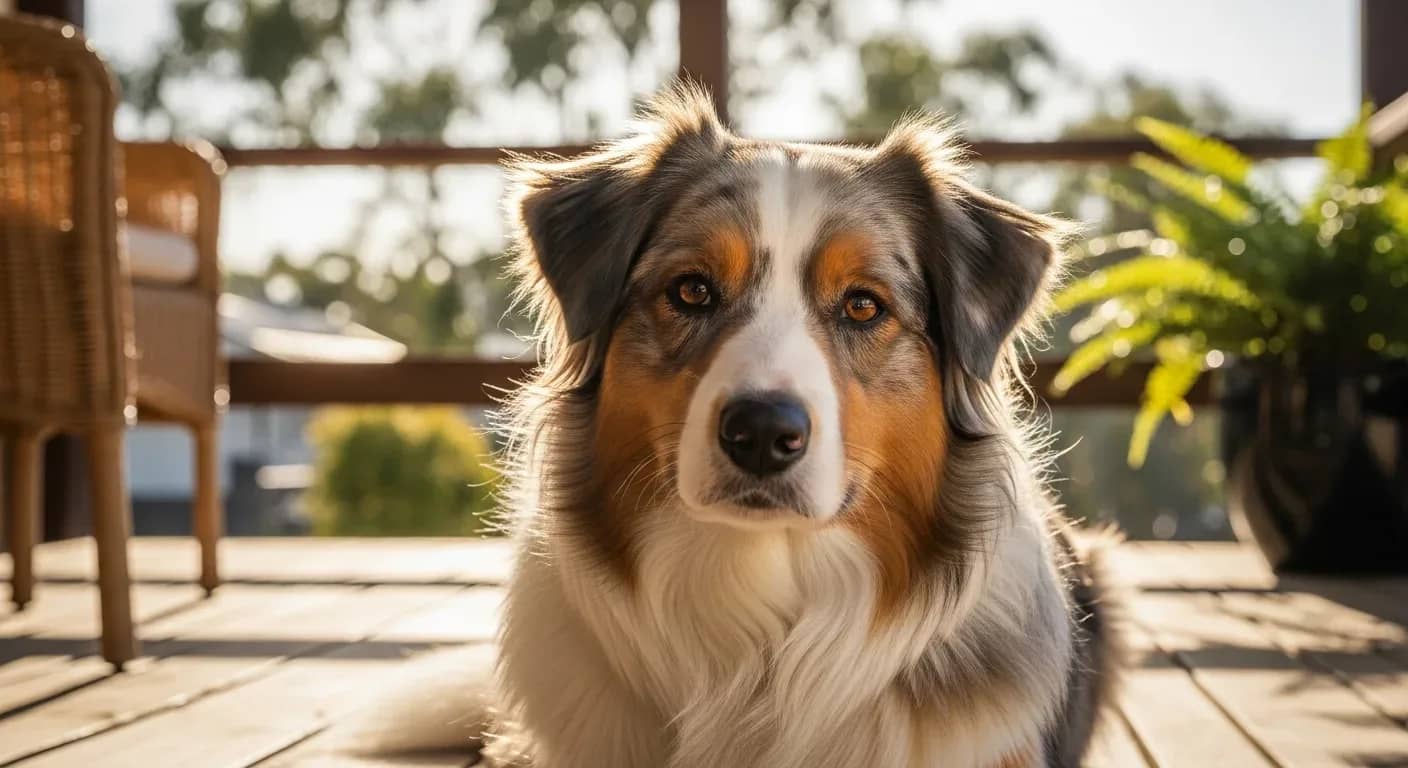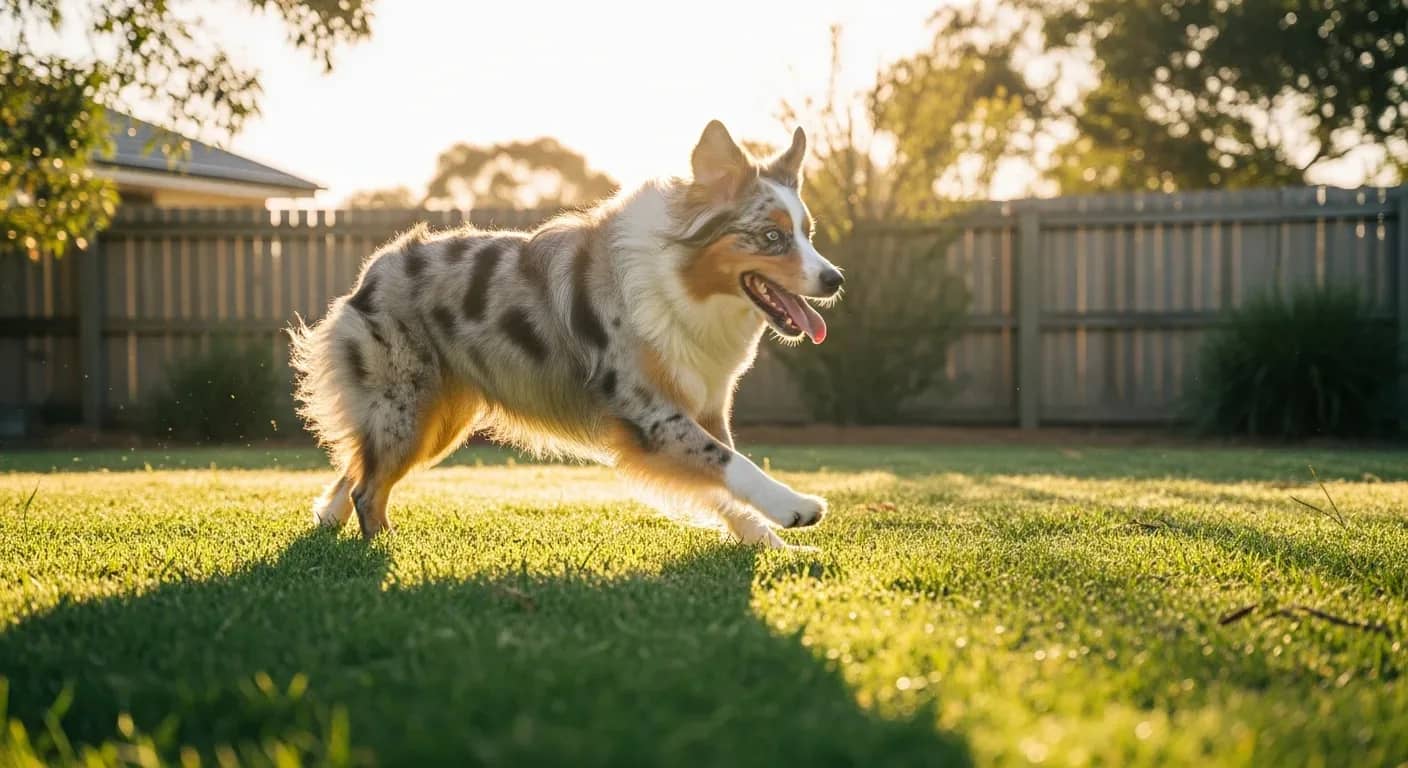

You know the look. That tucked-tail hesitation before your Aussie runs down the back steps. The squinting in bright light. The restless pacing that never quite settles. Australian Shepherds are resilient, sharp, and wired to work, but underneath all that energy, a handful of health conditions show up in this breed far more than others.
Most of them are manageable. Some are preventable if you know what to watch for early. And a few are things every new Aussie owner should understand before they even bring their puppy home.
This guide covers the most common Australian Shepherd health problems, what causes them, what signs to watch for in your dog, and what vets typically recommend for long-term support.
Hip and Elbow Dysplasia
Hip dysplasia is probably the condition most Aussie owners have already heard of, and for good reason. It affects a significant proportion of herding breeds, including Australian Shepherds, and tends to worsen quietly over months or years before owners notice anything obvious.
Dysplasia means the joint didn't form correctly. With hip dysplasia, the ball and socket of the hip joint fit loosely, which causes grinding and gradual cartilage damage over time. Elbow dysplasia is a similar developmental problem affecting the front legs, and according to the Australian Shepherd Club of America, elbow dysplasia may actually be more common in Aussies than many owners realise.
Early signs are easy to miss. Watch for:
- Reluctance to run or jump after rest periods
- A "bunny hop" gait when running (both rear legs moving together)
- Stiffness after sleeping or lying down
- Narrowed stance in the rear legs
- Decreased interest in exercise compared to their usual level
Reputable breeders screen breeding dogs for both conditions before mating. If you're buying a puppy, ask to see the OFA (Orthopedic Foundation for Animals) or PennHIP scores for both parents. Dogs with normal or excellent hip scores are less likely to pass dysplasia to their pups, though genetics isn't the whole story. Rapid weight gain in puppyhood, high-impact exercise during growth phases, and diet all contribute to how joints develop.
For dogs already showing signs, your vet will likely recommend a combination of weight management, controlled low-impact exercise, physiotherapy, and in some cases anti-inflammatory medication. Supporting joint health in Australian Shepherds early, before symptoms appear, gives you the most options. If your Aussie is over two years old, it's worth discussing a joint assessment at your next vet visit.
Eye Conditions
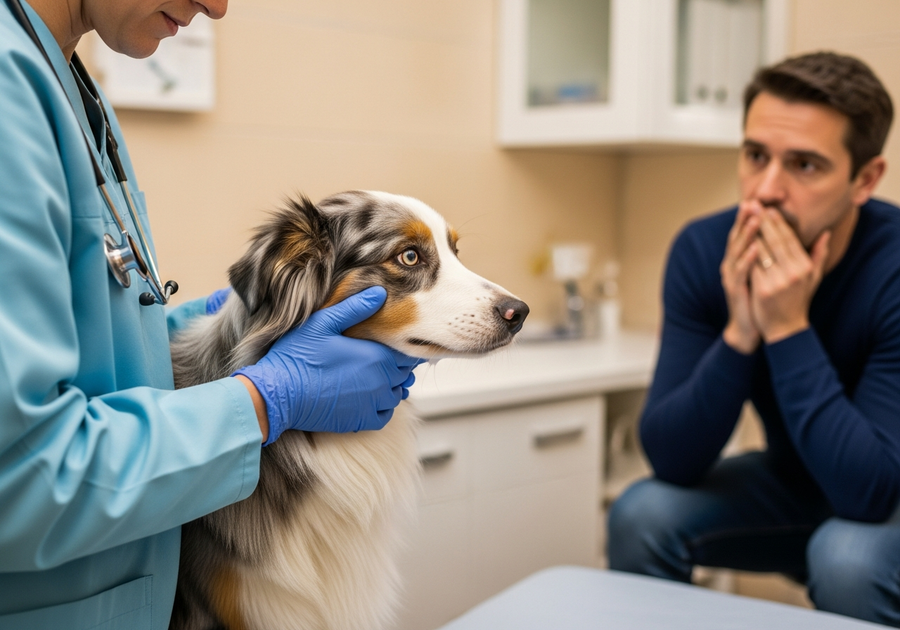
Australian Shepherds carry a higher-than-average genetic load for eye problems. Being a collie-type herding breed, they inherited several hereditary eye conditions that have persisted through generations of selective breeding.
Collie Eye Anomaly (CEA)
CEA is a developmental condition affecting the choroid, the layer of tissue that nourishes the retina. In mild cases it causes no significant vision loss. In severe cases it leads to retinal detachment and blindness. CEA is present from birth and can only be detected via ophthalmoscopic exam in young puppies (ideally before 8 weeks of age, before the condition becomes obscured by pigmentation).
Progressive Retinal Atrophy (PRA)
PRA causes the photoreceptors in the retina to break down over time, leading to night blindness first, then gradual total vision loss. Unlike CEA, PRA appears later in life, typically between 3 and 9 years of age. It's a painless condition, but there's currently no treatment. DNA testing exists for the forms of PRA found in Australian Shepherds, and responsible breeders test for it.
Hereditary Cataracts
Hereditary cataracts in Aussies are caused by a mutation in the HSF4 gene, distinct from the age-related cataracts seen in older dogs of any breed. They can appear early in life and progress to significant vision impairment. The ASCA (Australian Shepherd Club of America) recommends annual eye exams for breeding dogs and DNA testing for the HSF4 mutation.
Signs that may suggest eye problems in your Aussie include cloudiness or haziness in the eye, bumping into objects in low light, reluctance to navigate stairs in the dark, or obvious squinting and discharge. Any of these warrant a prompt vet check. An annual eye exam as part of your Aussie's routine wellness visit is a reasonable precaution given the breed's genetic predisposition.
The MDR1 Gene Mutation
This one surprises a lot of Aussie owners, and it's important enough to cover carefully.
The MDR1 (also called ABCB1) gene mutation is more common in herding breeds than any other group, and Australian Shepherds have one of the highest rates of any breed. Research from Washington State University's Veterinary Clinical Pharmacology Laboratory found that approximately 50% of Australian Shepherds carry at least one copy of the MDR1 mutation, and around 25% carry two copies.
The MDR1 gene normally produces a protein (P-glycoprotein) that acts as a pump, removing certain drugs from brain tissue before they reach toxic levels. Dogs with the mutation have reduced or absent pump function, which means some common medications can accumulate in the brain and cause serious neurological reactions, including seizures, coma, and in severe cases, death.
The medications most commonly flagged for MDR1-affected dogs include:
- Ivermectin (used in some heartworm preventatives and parasite treatments)
- Loperamide (the active ingredient in Imodium)
- Certain chemotherapy drugs
- Some sedatives and pain medications
- Several antiparasitic drugs used in livestock (relevant for dogs on farms)
This doesn't mean these medications are always dangerous for every Aussie. It means the dose matters enormously, and a dose that's safe for a non-affected dog may be toxic for an MDR1-affected one. Many Australian vets will recommend MDR1 gene testing before using medications that interact with this pathway, particularly for herding breeds.
Testing is a simple cheek swab and can be arranged through your vet or directly through services like Orivet or the UC Davis Veterinary Genetics Laboratory. Knowing your dog's MDR1 status before any medical event puts you and your vet in a much better position.
Epilepsy and Seizure Disorders
Idiopathic epilepsy is more prevalent in Australian Shepherds than in the general dog population, though exact prevalence figures are difficult to pin down. "Idiopathic" means the epilepsy has no identifiable underlying cause, it's a genetic predisposition rather than a response to injury, toxins, or other disease.
Seizures in Aussies typically first appear between 6 months and 5 years of age. They can range from brief focal episodes (twitching, staring, unusual behaviour lasting seconds) to full tonic-clonic seizures with loss of consciousness, paddling, and disorientation.
A single isolated seizure isn't always cause for immediate medication, but it warrants a full veterinary workup to rule out other causes. If seizures happen more than once a month, last longer than 5 minutes, or occur in clusters, most vets will recommend anticonvulsant medication. Several effective options are available, and many epileptic dogs lead full, active lives with appropriate management.
If your Aussie has a seizure, note the time it starts, how long it lasts, and what the dog does during and after. This information is valuable for your vet. Keep the environment calm and clear of hazards, but don't restrain the dog or put anything near its mouth.
Skin Allergies and Sensitivities
Australian Shepherds are among the breeds more prone to atopic dermatitis, an allergic skin condition triggered by environmental allergens like pollen, dust mites, and mould. Food sensitivities also appear with some regularity in the breed.
Typical signs include:
- Persistent licking of the paws, particularly after being outside
- Rubbing the face on carpet or furniture
- Red, inflamed skin between the toes or in the groin area
- Recurrent ear infections
- Hot spots or areas of raw, weeping skin
Seasonal patterns can help identify environmental triggers. If your Aussie's skin flares every spring but is fine in winter, pollen is the more likely culprit than diet. Year-round symptoms that correlate with diet changes suggest food sensitivity.
There's also a strong connection between Australian Shepherd allergies and gut health. Research published in the Journal of Veterinary Internal Medicine has shown that dogs with atopic dermatitis often have altered gut microbiome composition compared to healthy dogs. Supporting digestive health as part of an overall approach to skin management is something many integrative vets recommend. Your vet is the right first point of contact for confirming the allergy type and guiding treatment.
Anxiety and Behavioural Health
Australian Shepherds were bred to work all day alongside humans and make complex decisions independently. That intelligence and energy is what makes them brilliant companions. It also means they're genuinely vulnerable to anxiety when their mental and physical needs aren't met.
Separation anxiety is particularly common in the breed. Aussies that don't get adequate exercise, mental stimulation, or social time can develop destructive behaviours, excessive vocalisation, and genuine distress when left alone. This isn't stubbornness or naughtiness. It's a predictable response from a highly intelligent working dog in an under-stimulating environment.
Beyond separation anxiety, Aussies can be sensitive to noise, new environments, and changes in routine. If you've noticed your dog struggling with anxious behaviours, our guide on calming an anxious Australian Shepherd covers both environmental management and daily support strategies that actually work.
Behavioural support works best as a multi-layered approach: adequate daily exercise (Aussies typically need at least 1.5 to 2 hours), mental stimulation (puzzle feeders, training sessions, scent work), predictable routines, and in some cases, professional guidance from a behaviourist. Your vet can also assess whether any medication or supplementation is appropriate to support your dog's calm baseline.
Double Merle and the Breeding Concern Specific to Australia
This section matters particularly for Australian Shepherd owners in Australia who may be sourcing puppies from breeders or rescues with inconsistent documentation.
Merle is a coat pattern produced by a dominant gene that creates a marbled, mottled appearance. When two merle-patterned dogs are bred together, approximately 25% of their offspring will be "double merle," inheriting two copies of the merle gene.
Double merle dogs suffer significantly higher rates of blindness, deafness, and microphthalmia (abnormally small eyes). The Australian Shepherd Club of Australia and responsible breeders strongly oppose merle-to-merle breeding. However, as the breed has grown in popularity, less regulated backyard breeding has increased the number of double merle dogs in the population.
If you're looking at an Aussie puppy with an all-white or mostly white coat (a visual marker of double merle in some cases), ask about the parents' coat colours and whether genetic testing was done. A reputable breeder will know exactly what they've produced and why.
Gut Health and Digestion
Not every health problem in Australian Shepherds is genetic or structural. The gut plays a significant role in overall health, immune function, and even behaviour, and active, high-drive breeds like Aussies can be prone to stress-related digestive upsets.
Digestive sensitivity in the breed can manifest as loose stools after exercise or environmental changes, recurrent gas, or variable appetite. Dogs that travel frequently, compete in dog sports, or have intense exercise regimens sometimes show signs of gut dysbiosis, an imbalance in the gut microbiome that affects nutrient absorption and stool quality.
Supporting gut health through diet quality and daily supplementation is something many Aussie owners and vets explore. If you're looking at what to look for in a daily probiotic for your dog, the best dog probiotics guide for Australia covers the key differences between yeast-based and bacterial probiotic strains, including which are antibiotic-safe.
Supporting Your Australian Shepherd's Long-Term Health
Most of the conditions above are manageable, and several are significantly reduced in impact with early action. A few practical steps that apply across almost every Australian Shepherd health concern:
- Know the breed's genetic testing panel: Hip and elbow scoring, MDR1 testing, HSF4 (cataracts), CEA, and PRA DNA tests are all available and recommended by the ASCA.
- Choose your breeder carefully: Reputable breeders test their breeding stock and provide health certificates. Ask to see them. This matters more for this breed than for many others.
- Annual eye exams: Given the variety of eye conditions the breed is prone to, this is worth adding to your annual wellness routine.
- Watch the weight: Excess body weight significantly accelerates joint deterioration in dogs genetically predisposed to dysplasia. Aussies can be easy keepers (meaning they maintain weight efficiently), and their high energy can mask the problem.
- Always tell your vet your Aussie hasn't been tested for MDR1 if you don't know their status. This is particularly important before any anaesthetic procedure, parasite treatment, or anti-nausea medication.
Your Aussie's long-term health also depends on ongoing conversations with your vet. As they age, their needs shift. What was appropriate at 2 isn't always right at 8. If you're thinking about what a long, healthy life looks like for an Australian Shepherd, planning for preventative care at each life stage is where that starts.
For ongoing joint and gut support, many Aussie owners find that daily chews offering targeted ingredients make it easier to maintain consistency. If you're researching options, the best dog supplements guide for Australia covers what to look for based on your dog's specific needs.
The Bottom Line
Australian Shepherds are genuinely healthy dogs when bred responsibly and managed well. The conditions above don't affect every Aussie, and many of the risks can be reduced with the right screening, breeder choice, and early support.
The most important thing is knowing what to watch for. An Aussie who hesitates at the stairs, squints in the sun, or shows sudden behavioural changes isn't just having an off day: those can be early signals worth taking to your vet.
Every Australian Shepherd is different, and your vet is the best resource for personalised guidance on health screening, medication safety for MDR1-sensitive dogs, and long-term management for any conditions your dog develops. If you want to understand your individual dog's risks better, the Hero Health Assessment takes about two minutes and gives you a personalised supplement recommendation based on your dog's age, weight, and breed. Start the free assessment here.