

If you own a Labrador, you already know they eat everything. Socks, grass, leftovers off the bench, things you'd rather not think about. That enthusiastic approach to food is part of what makes them so loveable, but it also puts their digestive system under constant pressure.
Labradors have a known genetic quirk that makes them especially food-motivated and prone to gut disruptions. Their digestive tracts can go from fine to chaotic surprisingly fast, whether from dietary indiscretion, stress, or antibiotic treatment. Probiotics have become one of the most discussed tools for supporting gut health in dogs, and for Labs specifically, the research is genuinely interesting.
This guide covers what the science says about probiotics for Labradors, what to look for on the label, and how to pick a product that actually works rather than just looking good on a shelf. All product claims here have been checked against vet-reviewed sources.
Why Labradors Have Gut Health Challenges
Labrador Retrievers are genetically predisposed to food obsession. A 2016 study published in Cell Metabolism identified a variant in the POMC gene (pro-opiomelanocortin) that disrupts the signals telling Labs they are full. This mutation is found in roughly 23% of Labradors, and it is even more common in working dog lines. The result: Labs eat more, eat faster, and are far more likely to steal food or scavenge.
This eating behaviour directly affects gut health. Rapid eating, dietary indiscretion, and frequent food changes all disrupt the balance of microorganisms in the gut. A 2025 longitudinal study in Animal Microbiome tracked the gut microbiota of Labrador Retriever puppies and found that external factors, including antibiotic use, gastrointestinal health events, and lifestyle variables, had measurable effects on microbiome composition during development.
Beyond food obsession, Labs are also one of the breeds most commonly prescribed antibiotics due to ear infections, skin folds, and other recurring health issues. Antibiotics are effective at treating bacterial infections, but they also disrupt the gut microbiome in the process. This is where probiotics, particularly certain specialist strains, can play a meaningful supportive role.
What Probiotics Actually Do for Dogs
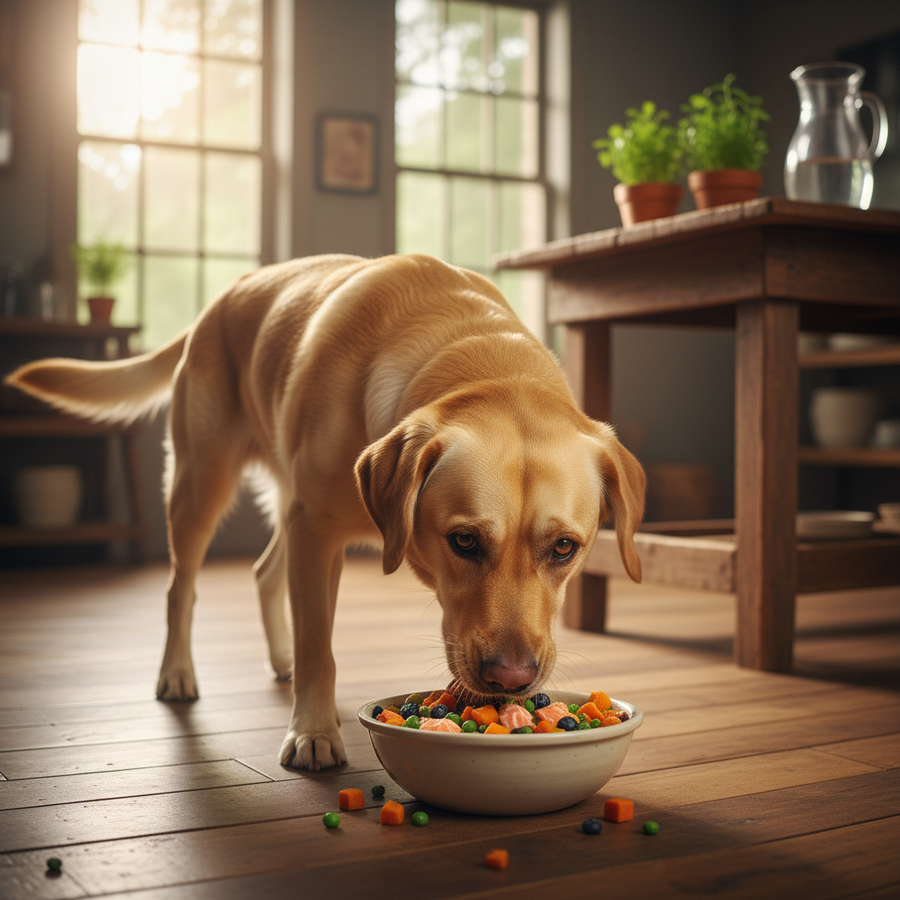
Probiotics are live microorganisms that, when given in adequate amounts, support the host's digestive function. For dogs, the primary documented benefits include improved stool consistency, reduced duration of acute diarrhoea, support for gut barrier integrity, and assistance during and after antibiotic treatment.
A comprehensive review published in PMC (National Library of Medicine) found that gut probiotics support digestive health in dogs and cats through multiple mechanisms: modulating the gut microbiome, supporting the intestinal epithelial barrier, and influencing immune function. The evidence base for probiotics in dogs has grown substantially in recent years, though the effectiveness of any probiotic depends heavily on the strain and CFU count.
Not every probiotic works the same way. Bacterial strains are widely used in human probiotics and appear in many pet products. Hero takes a different approach, using Saccharomyces boulardii, a probiotic yeast rather than a bacterium. This distinction matters a great deal for Labs that are frequently on antibiotics.
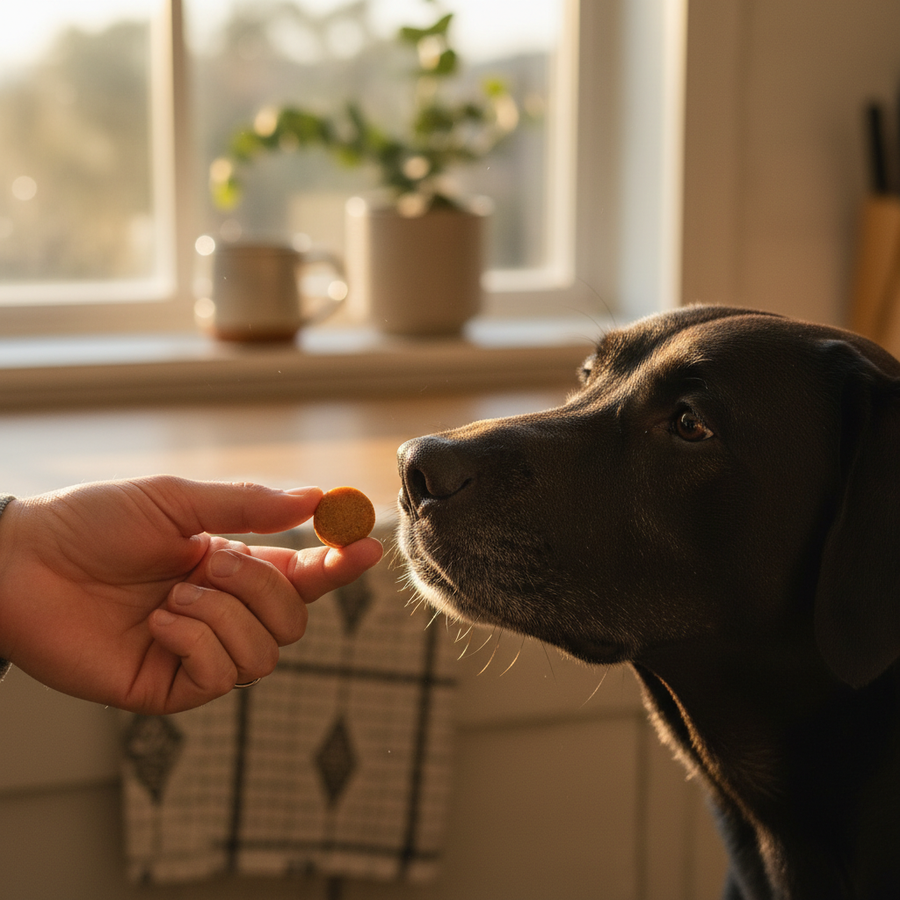
The Antibiotic-Safe Advantage: Why Strain Matters for Labs
Here is where many Lab owners get surprised. If your dog is taking antibiotics, most bacterial probiotic strains are destroyed along with the harmful bacteria. The antibiotics cannot distinguish between unwanted pathogens and the beneficial bacteria in your probiotic supplement.
Saccharomyces boulardii works differently. Because it is a yeast, not a bacterium, antibiotics have no effect on it. You can continue giving it during antibiotic treatment without it being wiped out. A double-blind, placebo-controlled study published in PubMed examined S. boulardii in dogs with chronic enteropathies and found it was safe and well tolerated. More broadly, S. boulardii has been validated in multiple species for preventing antibiotic-associated diarrhoea.
For a breed like the Labrador, which cycles through ear infections and skin conditions that often require antibiotic courses, this antibiotic-safe property is genuinely useful. Dogs on longer-term probiotic routines, including seniors, benefit similarly. The guide on probiotics for senior dogs in Australia covers how needs can shift with age. You do not need to pause gut support during treatment.
If you are exploring broader gut health support for your dog beyond just the probiotic species, the dog gut health hub covers the full picture, including diet, fibre, and when to see a vet.
Key Ingredients to Look For
A quality probiotic product for Labradors should include more than just the probiotic strain itself. Supporting ingredients make a meaningful difference in how well the probiotic works and how well your dog's gut handles it.
Prebiotics
Prebiotics are dietary fibres that feed beneficial gut bacteria. They are not the same as probiotics. Think of them as the food that helps the probiotic thrive once it reaches the gut. Without prebiotic support, a probiotic may pass through without establishing any meaningful presence. Look for products that include prebiotics alongside the active probiotic strain.
Digestive Enzymes
Enzymes like protease, lipase, and amylase help break down proteins, fats, and carbohydrates respectively. For Labs, who often eat fast and do not fully chew their food, digestive enzyme support can improve nutrient absorption and reduce the burden on the lower gut. Some probiotic chews include a blend of enzymes specifically to support this.
Green Banana Powder
Green banana powder is a source of resistant starch, which acts as a prebiotic fibre. It passes through the small intestine largely intact and then ferments in the large intestine, feeding beneficial microbes. It is a well-tolerated source of prebiotic fibre that is gentle on sensitive stomachs.
Format: Why Soft Chews Make Sense for Labs
Labs are enthusiastic eaters, which means getting them to take a supplement is rarely the problem. But the format still matters for compliance and effectiveness. Soft chews tend to be more palatable than capsules or powders, and since Labs love food, a chew can become part of a daily routine easily. Avoid formats that require hiding in food if your Lab is a fast, indiscriminate eater, as the probiotic can get mixed up in ways that affect viability.
How to Give Probiotics to a Labrador
Consistency is the most important factor. Probiotics work through ongoing colonisation and microbiome support, not as a one-time fix. Daily supplementation maintains a stable environment in the gut. Giving it only when your Lab has a stomach upset is like watering a plant only when it is already wilting.
The best time to give a probiotic chew is with or just before a meal. This helps buffer the probiotic through the stomach acid environment on its way to the gut. For S. boulardii specifically, research in humans suggests it has reasonable acid tolerance, though consistent administration with food is still the preferred approach.
If your Lab has just finished a course of antibiotics, continuing daily probiotic supplementation for at least two to four weeks after the course ends gives the gut microbiome time to re-establish. Some vets recommend longer depending on the length of the antibiotic course.
For more on the timing and approach around antibiotic use specifically, the guide on probiotics for dogs after antibiotics covers the evidence in detail.
When to See a Vet First
Probiotics are a supportive supplement, not a treatment. If your Labrador has persistent diarrhoea lasting more than 48 hours, blood in the stool, vomiting alongside gut symptoms, or has lost significant weight, see a vet before starting any supplement routine. These can be signs of conditions that need clinical investigation, including inflammatory bowel disease, parasites, or other gastrointestinal problems.
Similarly, if your Lab is on medications beyond just a short antibiotic course, discuss any supplements with your vet first. This is especially relevant for Labs on long-term medication for epilepsy, thyroid conditions, or joint pain, as gut health can affect how those medications are absorbed.
Probiotics are generally considered very safe for dogs, but personalised vet guidance is always the right starting point for any health concern.
Labrador-Specific Gut Health Tips
Beyond supplementation, a few breed-specific habits make a real difference for Lab gut health.
Slow feeder bowls are worth considering. Labs eat fast by nature, and swallowing large amounts of air with food contributes to bloating and can worsen digestive discomfort. A puzzle feeder or raised slow feeder bowl extends meal time and reduces the volume of air ingested. It also reduces the risk of bloat (gastric dilatation-volvulus), which Labs are predisposed to as a deep-chested breed.
Keeping dietary changes gradual matters too. Even a sudden switch between two good quality foods can send a Lab's gut into temporary chaos. When changing food, transition over seven to ten days, mixing increasing proportions of the new food with the old. Running a probiotic through a food transition period can help buffer the gut microbiome during the change.
If your Labrador has puppies in the household or is a recently adopted adult, the gut microbiome is still establishing itself. The research on Labrador puppy gut microbiota development suggests that early life factors, including diet and antibiotic exposure, have lasting effects on microbiome composition. Starting probiotic support early is a reasonable approach that many vets endorse. There is a full breakdown on probiotics for puppies in Australia if your Lab is still young.
For a comprehensive comparison of what to look for across all dog probiotics on the Australian market, the best dog probiotics Australia guide covers the landscape in full, with criteria for evaluating any product you encounter.
Hero Probiotic Daily Chews: What Is in Them
Hero's Probiotic Daily Chews use Saccharomyces boulardii as the active probiotic strain, at 10 billion CFU per chew. That is a single-species, specialist approach. The rationale is that S. boulardii is one of the best-researched probiotic organisms for gut support in dogs, and its antibiotic-safe property makes it particularly useful for breeds like the Labrador that frequently need antibiotic courses.
The formula also includes prebiotics to support S. boulardii colonisation, digestive enzymes, green banana powder (resistant starch for prebiotic fibre), bentonite, agave, and pectin. The chews are grain-free, wheat-free, and hypoallergenic, which is relevant for Labs with food sensitivities. They are made in Australia and vet reviewed.
One thing worth being clear about: Hero's formula is deliberately yeast-based rather than bacterial. That is the design choice behind the antibiotic-safe advantage. If you want to try them, you can find Hero Probiotic Daily Chews on the Hero Pet Health website, with free shipping over $69 and a lifetime money-back guarantee.

