

If you share your home with a beagle, you already know they are nose-first creatures built for adventure. That happy, determined trot and those warm brown eyes have made them one of Australia's most loved family dogs. But like every breed, beagles carry a specific set of health tendencies that every owner deserves to understand before a problem catches them off guard.
This guide covers the most common beagle health problems, what signs to watch for, and what practical steps you can take to support your dog's wellbeing at every life stage.
Obesity: The Number One Health Threat in Beagles
Ask any vet who regularly sees beagles what concerns them most about the breed, and the answer is almost always weight. Beagles are extraordinarily food-driven dogs. Their sense of smell is second only to the bloodhound, and that instinct was bred to follow a scent for hours. In a domestic setting, that drive gets redirected toward any food source they can find, beg for, or steal off the kitchen bench.
The result is that beagles are one of the breeds most commonly diagnosed with obesity in Australia. Excess weight in a beagle is not just a cosmetic concern. It directly worsens joint stress, increases the risk of intervertebral disc disease, strains the heart, and shortens lifespan. A beagle carrying even two extra kilograms is carrying a meaningful health burden.
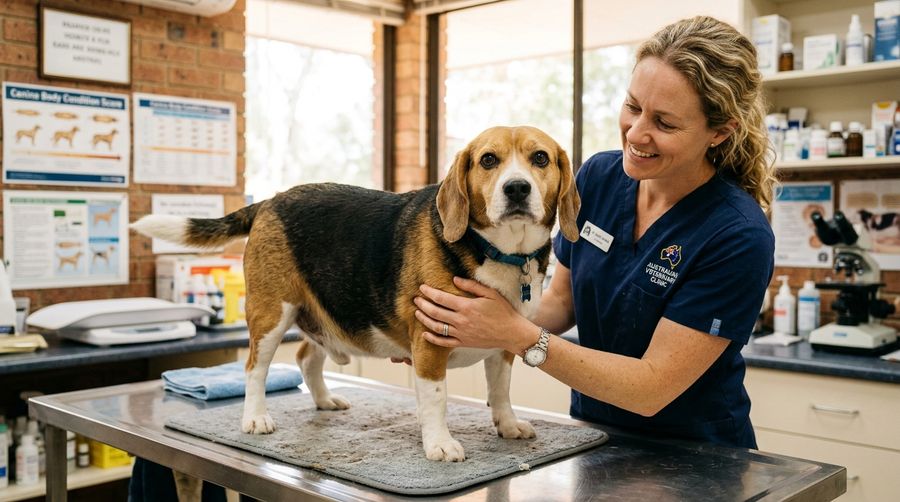
A healthy adult beagle typically weighs between 10 and 11 kg for the 13-inch variety and up to 14 kg for the larger 15-inch variety. Run your hands along the ribcage: you should be able to feel the ribs clearly without pressing. If you cannot, a weight conversation with your vet is overdue.
Portion control is the most effective tool. Measure food by weight, not cups. Split the daily ration into two meals. Treats should make up no more than 10% of total daily calories, and high-value treats should be replaced with low-calorie alternatives like small pieces of carrot or green bean. Two hours of exercise per day is the minimum recommendation for an adult beagle.
Ear Infections: A Structural Problem
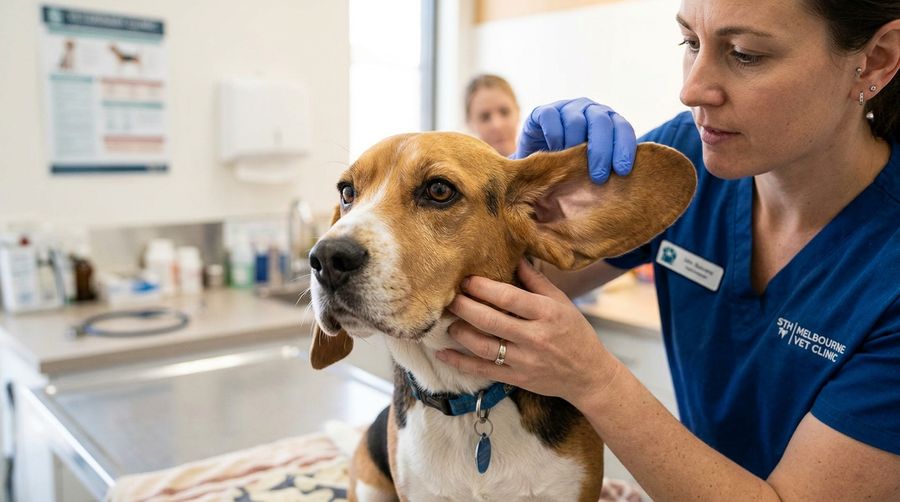
Those long, velvety, floppy ears are part of what makes beagles so endearing. They are also the reason beagles are disproportionately prone to ear infections. The heavy ear flap lies flat against the head, blocking airflow into the ear canal and creating a warm, moist, dark environment where bacteria (particularly Pseudomonas) and yeast (Malassezia) thrive.
Beagles that swim regularly, live in humid climates, or have underlying allergies are at highest risk. Signs of an ear infection include head shaking, scratching at the ear, a dark or waxy discharge, an unpleasant smell, and visible redness inside the canal.
Most infections respond well to cleaning and topical medication when caught early. The problem for many beagle owners is that infections recur. Recurring ear infections are almost always a symptom of something deeper, most commonly environmental or food allergies, or thyroid disease. If your beagle is getting ear infections every few months, a proper workup to find the root cause is a better investment than treating each episode in isolation.
Weekly ear checks and gentle cleaning after swims or baths go a long way toward prevention. Use a vet-recommended ear cleaner, apply it to a cotton ball rather than pouring it directly into the canal, and never use cotton swabs.
Intervertebral Disc Disease (IVDD)
Beagles are chondrodystrophic dogs, meaning they carry genetics that affect cartilage development. While this trait is most severe in dachshunds, beagles share a version of it, which makes their intervertebral discs age and harden faster than in non-chondrodystrophic breeds. Research suggests that 99% of beagles carry genetic predisposition to disc degeneration.
IVDD occurs when the cushioning discs between the vertebrae of the spine deteriorate, bulge, or rupture. In beagles, the neck and mid-back are the most commonly affected regions. A ruptured disc puts pressure on the spinal cord, and the outcome can range from localised pain to partial or complete hind limb paralysis in severe cases.
Warning signs to act on immediately
- Reluctance to jump or use stairs when they normally would
- A hunched or arched back posture
- Crying or yelping when touched along the spine or when picked up
- Wobbling, crossing of the back legs, or knuckling of the paws
- Sudden loss of bladder or bowel control
Contact your vet the same day if you notice any combination of these signs. Treatment outcomes for IVDD are significantly better when intervention happens early. Medical management works for mild cases. Surgical decompression is often recommended for moderate to severe cases, with good recovery statistics when owners act quickly.
Day to day, using ramps or steps to furniture and the car reduces spinal impact. Supporting the full length of your beagle's body when lifting protects the disc column. Maintaining a healthy weight is one of the most direct things you can do to reduce disc stress over a lifetime.
Epilepsy and Seizures
Idiopathic epilepsy is one of the better-documented inherited conditions in beagles. Studies have found the breed is significantly overrepresented in epilepsy diagnoses compared to dogs overall, with some research estimating that up to 5% of beagles experience seizures at some point in their life.
Idiopathic epilepsy typically first appears in dogs between one and five years of age. Seizures can present as full grand mal episodes, where the dog collapses, paddles their legs, salivates heavily and loses consciousness, or as focal seizures with more subtle signs like facial twitching, sudden flank-staring, or a brief episode of confusion.
A first seizure is always a reason to see a vet, ideally within 24 hours unless the seizure lasts more than two to three minutes or multiple seizures cluster together, in which case it is an emergency. Epilepsy is managed with anticonvulsant medication, most commonly phenobarbitone or potassium bromide in Australia. With consistent management, the majority of epileptic beagles live good quality lives.
Hip Dysplasia
Hip dysplasia in beagles is a joint condition where the hip socket does not develop correctly, causing the ball and socket to grind rather than glide smoothly. According to the Orthopedic Foundation for Animals, approximately 18.5% of beagles tested have abnormal hips, placing them at moderate breed risk.
The onset is typically gradual. Early signs include difficulty rising after rest, reluctance to run or climb stairs, a bunny-hopping gait at speed, and a visible narrowing of the muscle over the hindquarters over time. Pain tends to worsen with cold weather and after heavy exercise.
Hip dysplasia is managed rather than cured. Weight management is the most important factor in slowing progression. Anti-inflammatory medication, physiotherapy, hydrotherapy, and joint supplements all play a role in maintaining quality of life. Surgical options exist for severe cases in younger dogs. A vet with orthopaedic experience can assess the degree of involvement and build an appropriate management plan.
Hypothyroidism
The thyroid gland regulates metabolism across almost every system in the body. When it underperforms, everything slows down. Hypothyroidism is a relatively common endocrine condition in beagles, typically developing in middle-aged dogs.
Classic signs include unexplained weight gain despite normal food intake, lethargy, intolerance to cold, thinning of the coat, symmetrical hair loss on the body (often with normal hair on the head and limbs), and a dull, dry coat texture. Some dogs develop a thickened, puffy facial expression.
Hypothyroidism is confirmed through a blood panel measuring thyroid hormone levels. Treatment is straightforward: daily oral thyroxine supplementation. Most dogs respond noticeably within six to eight weeks of starting treatment. The medication is lifelong but affordable and generally very well tolerated. The key is not writing off the symptoms as "just getting older."
Eye Conditions
Beagles are prone to several hereditary and acquired eye conditions. Glaucoma, progressive retinal atrophy, cataracts, cherry eye, and microphthalmia (abnormally small eyes) are all documented in the breed.
Glaucoma is a painful build-up of pressure inside the eye. Signs include redness, cloudiness, tearing, squinting, and a noticeably enlarged or protruding eyeball in advanced cases. It progresses quickly and can cause permanent vision loss within days. If you notice these signs, contact a vet the same afternoon.
Progressive retinal atrophy (PRA) is an inherited degeneration of the retina that causes gradual vision loss and eventually complete blindness. It is painless, and affected dogs often compensate well in familiar environments. There is no treatment, but reputable breeders test for PRA before breeding.
Cherry eye occurs when the gland of the third eyelid prolapses, appearing as a pink or red fleshy mass in the inner corner of the eye. It looks dramatic but is not an emergency. Surgical repositioning is the standard treatment and tends to have good outcomes when performed early.
Any eye discharge, squinting, redness, or pawing at the eye should prompt a vet visit rather than a wait-and-see approach. Eye problems tend to progress faster than owners expect.
Dental Disease
Dental disease is the most underestimated health problem across all dog breeds in Australia, and beagles are no exception. Most dogs will show measurable periodontal disease by three years of age if their teeth are not actively maintained. By the time there is obvious bad breath or visible tartar, significant damage is often already present beneath the gumline.
Advanced dental disease is not just a mouth problem. Chronic infection in the gums releases bacteria into the bloodstream, placing low-grade stress on the heart, liver, and kidneys over years. The connection between dental disease and organ health is well established in veterinary medicine.
Daily toothbrushing with a dog-specific toothpaste remains the gold standard. If your beagle will not tolerate a brush, enzymatic toothpastes applied with a finger, dental chews, and water additives all provide some benefit. Annual professional dental cleaning under anaesthesia allows the vet to probe beneath the gumline and remove calculus that home care cannot reach. The procedure is routine and the quality of life improvement for dogs post-clean is often dramatic.
Beagle Pain Syndrome (Steroid-Responsive Meningitis-Arteritis)
Despite being named after the breed, Beagle Pain Syndrome technically affects multiple dog breeds. The condition involves immune-mediated inflammation of the blood vessels supplying the meninges (the membranes surrounding the brain and spinal cord). It most commonly strikes young dogs between five months and two years of age.
The presentation is distinctive: sudden, severe neck pain and stiffness, a hunched posture, reluctance to lower the head, muscle spasms, fever, and extreme sensitivity to being touched. Affected dogs are often described as looking terrified or in acute distress without an obvious cause.
The good news is that Beagle Pain Syndrome responds well to corticosteroids when diagnosed promptly. Most dogs return to normal within weeks of starting treatment. Some require long-term low-dose management to prevent relapse, but the prognosis is generally good with appropriate care.
Skin Conditions and Allergies
Environmental allergies (atopy) are common in beagles. Reactions to grasses, pollens, dust mites, and moulds typically appear as itchy skin, paw licking, recurring ear infections, and belly redness. Symptoms often start between one and three years of age and worsen seasonally in many Australian climates.
Food allergies, while less common than environmental allergies, also occur and can produce similar skin and gastrointestinal signs. A proper elimination diet trial, usually lasting eight to twelve weeks with a single novel protein or hydrolysed protein diet, is needed to diagnose food allergy properly.
Mast cell tumours, a type of skin cancer, occur in beagles and are worth knowing about. Any new skin lump on your beagle should be checked by a vet. A fine needle aspirate can usually identify a mast cell tumour quickly, and early treatment significantly improves outcomes.
Not sure where your beagle's health gaps are? The Hero Health Assessment takes 2 minutes and gives you a personalised supplement plan based on your dog's age, weight, and lifestyle.
Start the Free AssessmentHow Long Do Beagles Live?
Despite their health tendencies, beagles are a hardy, long-lived breed. With good management, regular vet checks, and attentive day-to-day care, a lifespan of 12 to 15 years is realistic. Keeping weight under control and maintaining dental health are the two biggest contributors to longevity. Our full beagle lifespan guide covers which factors most reliably predict a long, healthy life in the breed.
The Bottom Line
Beagles face a specific set of health challenges that come partly from their genetics and partly from that irresistible food-first personality. Obesity tops the list of practical concerns, but epilepsy, ear infections, IVDD, hypothyroidism, and hip dysplasia all deserve attention. The conditions covered here are not inevitable. Many beagles live full, comfortable lives because their owners learned what to watch for and built good habits early.
If you want a clearer picture of what your beagle specifically needs, the Hero Health Assessment will give you a personalised recommendation in under two minutes.